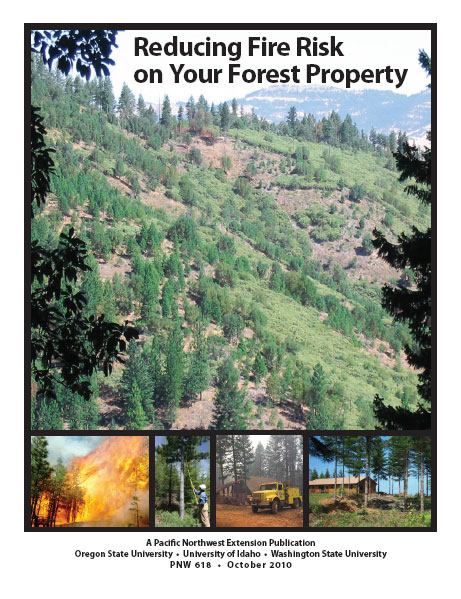
Reducing Fire Risk on Your Forest Property
$12.00
The degree of wildfire risk depends on both the probability of an ignition and the potential for loss of trees, homes, and even lives. Whether you own a few acres or thousands, this publication will help you make your property more resistant to wildfire damage as well as improve overall forest health and wildlife habitat. By following the guidelines in this publication, fires that do occur will be less severe.
Published: October 2010
Reviewed: October 2018
30 in stock
Related publications
-
Winter in the Woods: A Winter Guide to Deciduous Native Plants in Western Washington
Want to add a new dimension to your cold winter walk in the woods? This easy-to-use guide can help you do just that. You don't have to be a botanist to learn to appreciate the…
- Pages:
- 52
- Published:
- February 1999
- Revised:
- January 2013
- Reprinted:
- January 2026
- SKU:
- MISC0274
Price: $6.60 -
Woody Debris Microsites Enhance Conifer Seedling Survival During Extreme Summer Heat
Fallen dead wood has often been considered a nuisance and a fire hazard, but many now recognize its ecological value for wildlife habitat, nutrient cycling, and moisture retention. Learn about the “microsite effect” and how…
- Published:
- May 2026
- SKU:
- TB112E
Authors: -
Trees of Washington
Keys to native conifers and broadleaf trees of Washington. Individual profiles of 32 native trees provide sketches of range, leaf and tree shape, fruit and bark characteristics.
- Pages:
- 44
- Published:
- April 1951
- Reprinted:
- May 2024
- SKU:
- EB0440
Authors:Price: $5.50 -
Wildlife Ecology and Forest Habitat
Discusses how to manage habitat for deer, elk, bear, birds, cougar, lynx, bobcat, wolf, coyote, fox, and small mammals.
Authors:Price: $2.20