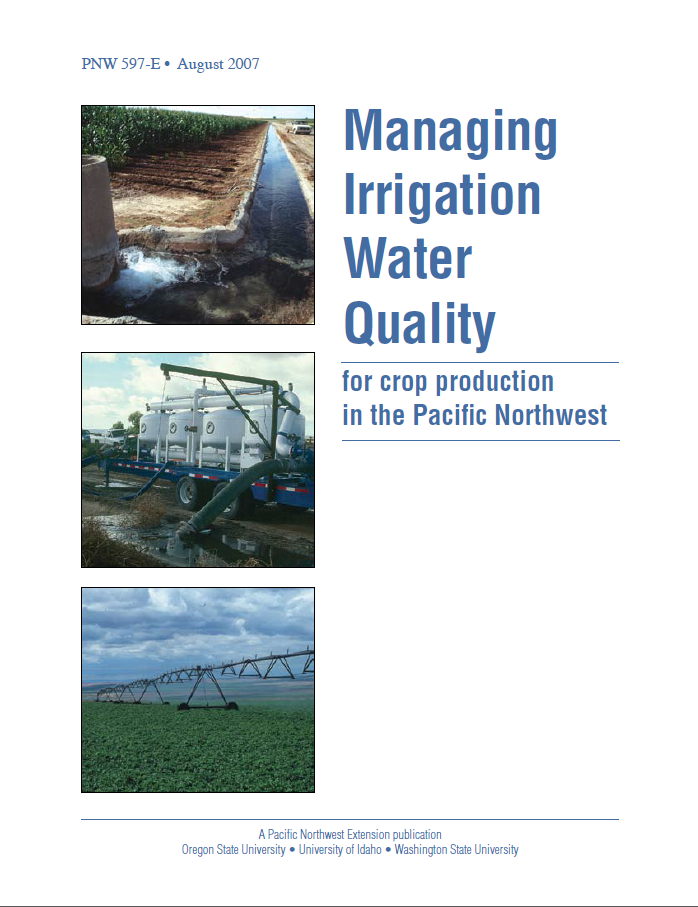
Managing Irrigation Water Quality for Crop Production in the Pacific Northwest
Water management can be a practical and financial challenge in any situation. This publication focuses on analyses used for typical agricultural irrigation water sources.
Published: August 2007
Reviewed: January 2018
Hurry! Only left in stock.
Related publications
-
Best Management Practices for Maintaining Sand-Based, Natural Grass Athletic Fields
This publication recommends specific ways to manage sand-based fields, which require more frequent fertilization, irrigation, and cultivation for proper maintenance than native soil fields. Replaces P ...
- Published:
- September 2015
- Reviewed:
- January 2024
- SKU:
- PNW676
-
Best Management Practices for Construction of Sand-Based, Natural Athletic Fields for Football and Soccer
Sand-based, natural turfgrass and synthetic surfaces are the two best options for athletic fields in the rainy Pacific Northwest. Comparatively, natural fields are less expensive to construct and repl ...
- Revised:
- August 2015
- Reviewed:
- January 2024
- SKU:
- PNW675
-
Backyard Composting (Home Garden Series)
Composting reduces waste and provides an inexpensive treatment for home gardens and landscapes. Gardeners have long made and used compost because of the way it improves garden soil. Home composting transforms yard debris and food…
- Published:
- August 1994
- Revised:
- March 2017
- SKU:
- EB1784E
Authors: -
A Guide to the Fining of Wine
If you've ever had a problem with the quality of the products from your winemaking efforts, you'll want to read this publication.
- Pages:
- 16
- Published:
- May 2009
- SKU:
- EM016
Authors:Price: $1.65