Growing Wasabi in the Pacific Northwest
Description
Wasabi has potential for high returns for small-acreage growers. This pub details proven growing methods and requirements for a successful Wasabi crop.
Table of Contents
- Introduction
- Cultivar Selection
-
Propagation Methods
- Tissue Culture
- Vegetative Propagation
- Seeds
- Seedling Box Method
- Seedling Bed Method
Introduction
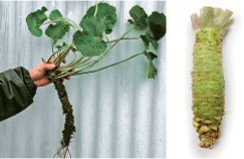
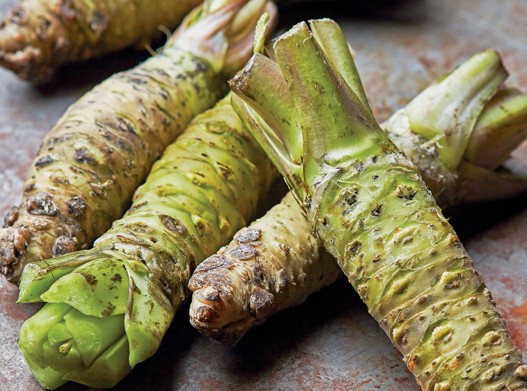
Photos by Carol Miles and C.I. Chadwick (l), and Getty (r).
Wasabi (Wasabia japonica [Miq.] Matsum. syn. Eutrema japonicum) is a perennial plant native to Japan. It is a member of a plant family commonly known as mustards and, like them, is primarily used as a condiment. Scientifically, wasabi is considered a member of the Cruciferaceae or Brassicaceae family. Grown for its unique, enlarged stem (Figure 1), wasabi has a hot, pungent flavor provided by the compound allyl isothiocyanate (Iwashina 2016). This compound stimulates nasal passages more than the tongue (Cameron & Cruz 2004). Although similar to horseradish (Armoracia rusticana), another perennial brassica, there is a subtle flavor difference. Wasabi flavor quickly disappears in the mouth, leaving a lingering, sweet taste with no burning sensation (Chadwick et al. 1993).
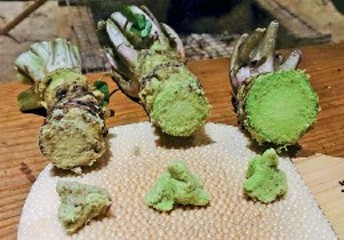
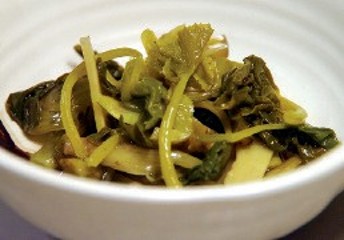
Premium markets require fresh wasabi stems. Although popular press articles sometimes described this structure as a rhizome or root, botanically it is a stem. Marketable stems are 2–4 in. in diameter and 6–12 in. long. Stems are grated to form a thick green paste (Figure 2). In this form wasabi is commonly served with sushi, sashimi, and noodles. Small or imperfect wasabi stems are dried, powdered and used in processed foods such as crackers or as a condiment paste packaged in squeezable tubes (Chadwick 1990). Wasabi leaves and flowers can be used in fresh salads and petioles can be pickled (Sparrow 2001).
Though wasabi is a staple condiment in Japanese cuisine, it is used sparingly to enhance the flavor of European and North American foods such as specialty dips, salad dressings, nuts, and cheese.
Because of its unique growing requirements, wasabi is an expensive product. In the marketplace horseradish, which is easier and therefore cheaper to grow, is often substituted for wasabi. Many markets recognize “real” or “genuine” wasabi as superior and distinct from mislabeled “fake” wasabi that is a mix of American or western horseradish, mustard, soy sauce, and green food coloring (Ferdman 2014).
Wasabi thrives in cool, moist, temperate climates. It is poorly adapted to most regions of the United States but does grow well in coastal regions of the Pacific Northwest. Wasabi is very suitable for small-acreage production because it is a high-value crop. However, growers need to become familiar with the unique production requirements of wasabi.
This publication outlines all aspects of wasabi production, including cultivar selection, plant propagation, horticultural practices, soil fertility, harvest, storage, and pest management. Since wasabi is still a new crop in the United States, information on its production here is limited. Japanese authors writing on native growing conditions and experiences are the major source of information in this publication. Growers in the Pacific Northwest are advised to experiment with this research and adapt the findings for their particular environment.
Cultivar Selection
Approximately 20 known wasabi cultivars are grown in Japan. They differ from one another in their stem shape and size; leaf size, shape, number, and color; and plant tolerance to temperature. Cultivars are region-specific in Japan; that is, certain cultivars are grown only in certain areas. Table 1 summarizes the characteristics of 18 wasabi cultivars.
Because wasabi has only recently been introduced to the United States, sufficient quantities of plant material or seed for commercial production may be difficult to find. Generally, only ‘Daruma’ and ‘Mazuma’ cultivars are commonly available, with costs ranging from 80¢ (per seed) to $25 (per single plant). Some suppliers charge considerably less per plant when multiple plants are ordered. Wasabi plants are available from suppliers in the United States, Canada, Japan, Taiwan, and New Zealand. Search for suppliers via the internet and compare prices and supply conditions.
Propagation Methods
Wasabi is commonly propagated from tissue culture, stem offshoots, and seed. Plants produced by tissue culture are genetically identical to their mother plant and have the same potential to produce a high-quality stem. Tissue culture plants are also disease-free. Stem offshoots are produced around the crown of the wasabi plant and are clones of the mother plant and so are identical. They do have the potential to carry disease, though. Japanese farmers use seed propagation to avoid disease spread and rejuvenate a wasabi crop (Chadwick 1990). If you are growing wasabi to produce seed, bear in mind that wasabi flowers are self-incompatible (Palmer 2012).
Tissue Culture
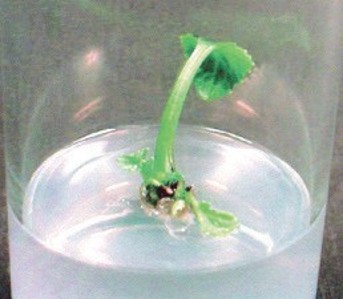
In Asia, wasabi has been propagated through tissue culture for several decades. Tissue culture, or micropropagation, is the process of culturing a small piece of plant tissue (e.g., stem, root, leaf, or bud) in a test tube. The plant tissue is called an explant. Explants will grow into a plantlet that can then be planted in a greenhouse or field (Figure 3). Plants from Test Tubes (Kyte et al. 2013) is recommended for anyone interested in learning more about, and experimenting with, tissue culture.
Suppliers use tissue culture to quickly produce many plantlets that should become high-yielding disease-free plants. The major challenge with tissue culture is the heavy bacterial contamination rate in explants and the high cost of generating clean plants. Losses of up to 60% in tissue culture propagation are not uncommon. In 1994, experimental micro-propagation of peduncle (inflorescence stem) explant material (Potts 1994) at Washington State University successfully produced 100% disease-free plantlets. Shoot apices, embryo, pollen, callus, and protoplast culture are all possible sources for micropropagating wasabi.
Table 1. Eighteen cultivars of wasabi commonly grown in Japan (Chadwick 1990).| Cultivar | Stem | Leaves and Petioles | Disease Notes | Growth Habit |
|---|---|---|---|---|
| ‘Daruma’ | Thick, green, excellent flavor | Heart-shaped or round; green leaves and petioles | Tolerant of soft rot and Phoma | Upright to spreading |
| ‘Fuji Daruma’ | High grade within one year | Heart-shaped, round, and thick leaves; green to purple petiole | N/A | Spreading |
| ‘Izawa Daruma’ | Large size, high quality | Heart-shaped, dark green leaves; thick light purple petiole | N/A | Spreading |
| ‘Mochi Daruma’ | Large and sticky, high quality | Long round leaves; thick green petioles | Susceptible to Bacterial soft rot | Spreading |
| ‘Ozawa Daruma’ | Medium, soft flesh, high quality | Heart-shaped leaves; petioles green to light purple | N/A | N/A |
| ‘Hangen’ | Thin and long, low quality | N/A | Tolerant of soft rot | N/A |
| ‘Iwami’ | Large and thick, good quality, late maturing | Heart-shaped or round green leaves; petioles dark red | N/A | N/A |
| ‘Mazuma’ | Large and stiff, good storage, poor market quality | Spreading leaves; petioles purple and green | Susceptible to soft rot and blackleg | Spreading |
| ‘Midori’ | Quick growth | Heart-shaped brilliant green leaves; petioles thin blue- green | N/A | Upright |
| ‘Sabumi’ | Thin, long, light purple, high yielding, high quality | Heart-shaped, long light green leaves; petioles thin and very light green | N/A | N/A |
| ‘Sanbe’ | Large, high quality | Heart-shaped, light green leaves; petioles green with red vascular tissue | N/A | N/A |
| ‘Sanpoo’ | Early, spindle shaped, inferior quality | Heart-shaped, green leaves | Tolerant of soft rot | N/A |
| ‘Shimane 3’ | Conical, good quality | Spreading, round and light green leaves; petioles reddish or greenish white and red at maturity | Tolerant of soft rot and Phoma | Spreading |
| ‘Shimane Zairai’ | Spindle shaped, light brown, sticky and excellent quality | Red petioles | Susceptible to soft rot and Phoma | Spreading |
| ‘Shizukei 12’ | Medium sized, high quality | Heart-shaped, large, green leaves; petioles fat and light green | Tolerant of soft rot | Spreading |
| ‘Shizukei 13’ | Thick, light green, strong spicy and sweet | Many heart-shaped, large green leaves; petioles thick, light purple to green | N/A | Spreading |
| ‘Sugita 25’ | Medium sized, green, high quality | Many heart-shaped green leaves; petioles thick, light purple to green | Tolerant of soft rot | N/A |
| ‘Kamogiko 13’ | High quality, spicy and sticky | Heart-shaped large green leaves; petioles thick, light purple | Tolerant of soft rot | Spreading |
Tissue culture plants need to be acclimatized before transplanting. Transfer young tissue culture plants to seedling trays filled with potting mix in the greenhouse, then grow under high humidity conditions. This step is necessary to ensure good root development. After several weeks or a few months, plants are ready to be transferred to pots or a nursery bed. Mail-order tissue-cultured wasabi plants arrive at this stage. Transfer them into a nursery bed following the procedures outlined below for seedlings.
Vegetative Propagation
Plantlets (stem offshoots) are produced around the crown of the mother plant and can be used to vegetatively propagate wasabi. Each mother plant can produce up to 20 plantlets depending on the cultivar. Plantlets should be at least 1½ in. tall, with 4–5 leaves and a healthy appearance and color (i.e., dark green, not chlorotic, and no symptoms of disease such as leaf spots). When you harvest wasabi plants for market, cut the plantlets from the mother plant and immediately replant. If plantlets are too small to plant directly into a field, grow them first in a nursery bed as described below for seedlings. Focusing on the top inch or so of the crown, cut each stem into 5 wedge-shaped pieces. Each piece would likely contain 4–5 small plantlets. Sterilize each piece by rinsing 3 times in a 0.05% bleach solution (Chadwick 1990). Place stem wedges in a 50:50 mix of sand and compost, in planting boxes or trays, in a greenhouse, with a temperature range of 45°F–55°F with 90–95% humidity. In about 2 months, plantlets will begin to grow. Once plantlets have 4–5 leaves, remove them from the stem piece and plant out as described below for seedlings.
Harvest and replant field wasabi in early spring or fall when rains provide adequate moisture for root establishment and temperatures are cool. Repeat this cycle of vegetative propagation for no more than 3 generations, or as long as the plants are healthy and produce disease-free plantlets. When the mother plants become too diseased to produce viable offshoots, start over with new, disease-free plants produced from tissue culture or seed. Using disease-free plants as often as possible will minimize the risk of plant diseases.
Seeds
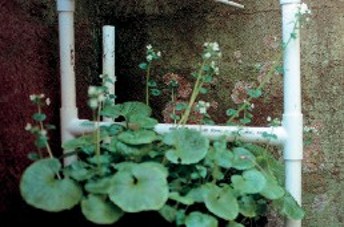
Wasabi begins to flower in January, peaks in April, and ends in May (Figure 4). Seed pods are mature and ready for harvest 50 to 60 days after flowering is complete. Vernalization, or cold temperature induction of flowering, appears to be a prerequisite; however, optimum temperature and duration are unknown. Flowers that bloom from late March to early April appear to produce the maximum number of viable seeds. Overall, these seeds also have a lower dormancy and therefore germinate faster than seeds that develop in either warm (≥ 73°F) or cold temperatures (≤ 46°F) (Adachi 1987).
In general, freshly harvested wasabi seeds have a high dormancy and fail to germinate. In nature, cold winter temperatures break the dormancy of wasabi seeds and they begin to sprout in February. Artificial cold treatment (stratification) can be used to break seed dormancy. (Tatsuyama et al. 1983) found that 41°F for 2 months was optimal for seed germination in ‘Daruma’ and ‘Shimane’ cultivars. Optimal stratification time and temperature likely vary depending on the cultivar. Specifics for other cultivars are unknown at this time. Store all varieties of wasabi seeds in an airtight refrigerated container to provide the cold temperatures needed for germination. Alternatively, seed dormancy reportedly can be artificially broken by soaking seed in 100 ppm gibberellic acid for five days (Palmer 2012).
Plant wasabi seeds anytime in February through March, when the outside temperature range is most likely to be 50°F–57°F. This timing will achieve the best germination. In Japan, the seedling box method and seedling bed method are both used to start seedlings.
Seedling Box Method
The seedling box method utilizes planting boxes that are approximately 4 in. deep with bottom drainage holes. A 1½-in. layer of a well-draining germination or rooting medium, such as a vermiculite-perlite-peat mix, works as a base. Sow wasabi seeds approximately 2 in. apart in the planting box and cover with ½ in. of the germination mix (Suzuki 1968). Keep the boxes in an unheated greenhouse, and water so the seeds stay moist. It is important not to saturate the potting mix. The seeds should germinate in 20 days.
After the first true leaves (not cotyledons) appear, apply a dilute liquid fertilizer (1–5 lb N-P-K per acre) once a week. Use black shade cloth (up to 80% shade) to protect wasabi seedlings from sunburn. Wait 4 to 6 months, or until the wasabi plants are 2 in. tall and have at least 4 leaves, then transplant the seedlings into an outside nursery bed under 50–80% shade. The amount of shading will depend on the amount of sunlight in your area; if plants appear wilted, weak and/or chlorotic, then increase the level of shade.
Use a 50:50 sand and compost mix or a seedling starting mix with additional perlite to provide good drainage. Make sure the seedlings are 2 in. apart and covered so that their crowns are about½ in. above the soil surface. Use a misting or micro-irrigation system to maintain moist soil without saturation. This system is an excellent match for wasabi seedling production. In about 2 months, the seedlings should be 4 in. tall. Transplant them into the field where they will grow until harvested. September through October is the best time to transplant wasabi. Plants must become established before temperatures drop below freezing.
Seedling Bed Method
To utilize the seedling bed method, sow wasabi seeds in a field hoop house in late winter. For field hoop house designs, see Portable Field Hoop house (Miles and Labine 2009) and The Hoop house Handbook (Byczynski 2006).
In regions where temperatures fall below freezing, delay seeding until the outside temperature is 50°F–57°F. Use a sand and compost mix that provides good drainage for the bed fill. Plant seeds 2 in. apart and ½ in. deep. Once the seedlings reach a height of 2 in., transplant them outside into a nursery bed as described above.
Growing Environment
In nature, wasabi grows on the shaded, wet banks of cold mountain streams and springs. Under cultivation, wasabi appears to grow best in heavy shade and shallow, clear, cold running water. Sites that are naturally suited for wasabi production also have ferns, trout, salamanders, wild parsley, and/ or butterbur (Adachi 1987). It is unknown how long wasabi plants take to reach marketable size, or whether stems reach high quality, when grown in natural environments.
Wasabi is generally cultivated by either a semiaquatic system or a field system. In Japan, most wasabi is produced in semiaquatic systems, and those stems are sold to premium markets. The field system is common in Taiwan, a major wasabi-producing country, in which whole plants are harvested and shipped to Japan for processing.
Semiaquatic System
A traditional semiaquatic system provides a continuous flow of cool, clean water. To mimic this system, find or build a suitable semiaquatic site. An alternating on-off flow system may also be effective. Before starting a crop, research local water laws as well as any license and/or regulatory requirements. For example, in Washington State, a Hydraulic Project Approval permit must be obtained before installing (and maintaining) water diversions, even if water is returned to its source.
Balance water flow with proper air temperature, water temperature, pH, and electrical conductivity levels. Measure air temperature 2 ft above the plants. It should be 46°F–64°F, with 54°F–59°F as the ideal range. When the air temperature rises above 82°F, wasabi plants may become heat-damaged and infected by soft rot (Erwinia aroideae). Air temperatures below 46°F can slow or stop plant growth. At 27°F, plants begin to freeze and may become damaged if temperatures decline further or remain low for extended periods of time (Chadwick 1990, Adachi 1987).
In a semiaquatic system, water temperature is one of the most critical factors. The ideal water temperature range is 54°F–59°F. This range should be the same as the air temperature surrounding the plants. When the water temperature rises above this point, oxygen levels in the water drop and plant growth is inhibited. Spring water generally has high levels of oxygen and is considered optimal for semiaquatic wasabi cultivation (Chadwick 1990).
Measure the water pH in a semiaquatic system. It should be near neutral or slightly acidic (6.0–7.0 pH). Low electrical conductivity (between 0.03 and 0.2 milliohm per cm) in the water is also needed to effectively grow wasabi. Electrical conductivity is a measure of the total salt content of water, based on the flow of electrical current through the sample. The higher the salt content, the greater the flow of electrical current. Measure nitrogen concentrations: you need less than 0.1 ppm ammonia-nitrogen in the water and no nitrite-nitrogen (Chadwick 1990). Due to the fragile nature of the water system and regulations governing water quality, applying additional fertilizer is not allowed.
The quantity of water required for wasabi production is dependent on its growing environment (Adachi 1987, Suzuki 1968). In general, a constant and stable flow of about 19 gallons of water per second is required for a one-acre semi-aquatic wasabi field.
The Tatamiishi System, or Rock Mat Semiaquatic System
The Tatamiishi system, or rock mat semiaquatic system, is most commonly used in Japan for wasabi production because growers believe it produces the highest quality stems (Figure 5) (Chadwick et al. 1993). Form beds that are generally 16–33 ft wide and 33–49 ft long. Layer each bed with a 2-inch layer of sand on top of a 3-inch layer of gravel (from 1/4 to 3/8 in. in diameter, referred to by gravel suppliers as “minus” or “chips”). Beneath the gravel, place a 16–40-inch layer of small rocks (about 3 in. in diameter) to provide rapid water filtration.
To mimic the Tatamiishi system (Chadwick 1990), construct gentle slopes of 1–4% and ensure a water flow rate of 5–6 in. per second (Adachi 1987, Toda 1987). In this system, 2 wasabi stems can be produced per square foot and be ready for harvest in 16–20 months. Hillside terracing provides the best flow and most efficient use of water. Arrange water flow through each terrace so it filters down through the sand, gravel, and rocks that make up the bed, and out to a ditch at the bottom (Adachi 1987, Toda 1987). Beds should be built so there is no leakage from the sides. On the side of the bed, plastic or large rocks mortared together with smaller rocks can be used to contain the water (Chadwick 1990).
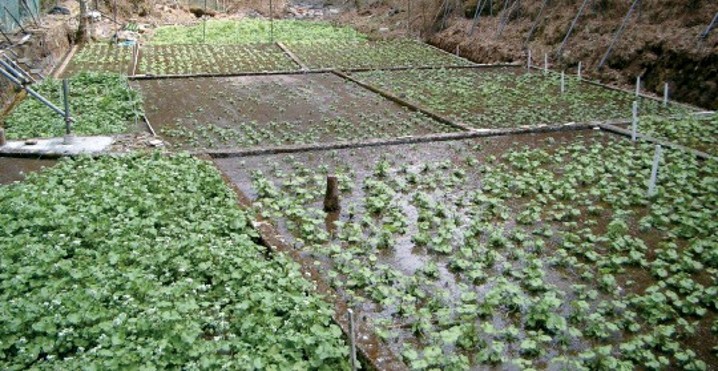
Even when slope and water flow rate are moderate (½ in. or 1 cm per second), wasabi plants will grow without support and the stems will be straight and of the highest quality. Wasabi stems grown in beds that have a strong water flow will be shrimp-shaped, which is not desirable (Adachi 1987). In strong water flow situations, place large, flat stones or plastic pipes at the base of each plant on the upstream side. These materials will divert water flow around the plant. Plastic pipes must have a 3–3½-in. diameter and be 2½–3 in. tall. When placed over the plant, so that half the pipe is above the surface of the sand and half is below, the water flow will be directed under the pipe to keep the plant cool. This technique also reduces water bug and soft rot damage but may increase aphid problems. In addition, stems and petioles may become smaller and less colorful.
Greenhouse Production
Hydroponic greenhouse systems are not used in Japan. Despite no instructional literature, some growers in the United States and Canada have successfully used this system. A semiaquatic system can be built within a greenhouse, on a slight slope, to provide the correct shade and water flow needed to produce high quality wasabi (Figure 6). The general guidelines for semiaquatic production should be followed, with adjustments to flow rate and nutrition as needed, based on plant observations.
Field Soil System
Wasabi is a shade-loving plant and is predominantly grown under shade trees or nets. Air temperatures of 43°F–68°F are required for good production. If the environment is naturally overcast and cool, especially during summer months, shading may not be necessary (Adachi 1987). When air temperature reaches 77°F, or wasabi leaves are exposed to too much direct solar radiation, the likelihood of soft rot (Erwinia aroideae), black leg (Phoma spp.), and leaf burn increases. If temperatures are too cool (32°F–43°F), plant growth slows or stops. When the temperature falls below 27°F, frost damage can occur. Although the apical meristem and/or central stem may freeze, offshoots will likely survive and regrow once temperatures increase (Chadwick 1990).
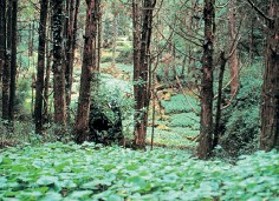
Plant trees such as black alder or poplar to provide summer shading for wasabi plants. In Taiwan, upland wasabi is grown under large evergreen trees that provide shade year-round, and the soil remains moist through rainfall and dew (Figure 7). In some places in Japan, wasabi is grown in persimmon orchards with one tree per 1,000 square feet. Some of these orchard systems are over 300 years old.
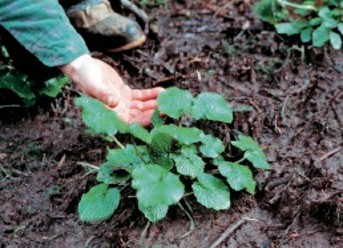
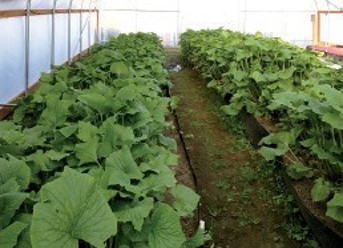
A small study in coastal western Washington showed that wasabi can also be grown under an evergreen canopy (C. Miles, personal observation; Figure 8). Field trials at the Washington State University Long Beach Research and Extension Unit indicate that wasabi will grow without shade, though the quality of the stems is unknown (Kim Patten, WSU Long Beach, personal communication with C. Miles). A grower in northwest Washington has grown wasabi in raised soil beds in a high tunnel, however, the quality of the stem is unknown (Figure 9). High tunnels may be well suited to regions where winter temperatures fall below freezing, but shading will be needed from late spring to early fall to prevent temperatures from exceeding 77°F. Another grower option is to cover wasabi plants with straw to provide more shade (Chadwick 1990). Assess potential growing sites to determine if only summer shade is required, or if year-round shade is necessary to keep temperature and moisture within the desirable range.
Wasabi grows best in soils that are high in organic matter; have an open, friable structure; and good drainage. In general, soils such as deep alluvial loam, sandy loam, or sandy clay loam are well suited for wasabi production. Sandy soils will need annual additions of organic matter and heavier soils need to have adequate drainage. Drainage-amending materials include pumice, sand or ground gravel of approximately one inch (Sparrow 2004).
Irrigation
Use irrigation in field production systems to 1) maintain soil moisture levels, 2) provide humidity, and 3) cool the plants. Micro-irrigation systems are suited to wasabi production because they maintain good soil moisture and high humidity in the canopy. Keep wasabi roots moist but not saturated. Base irrigation schedule on plant observations (e.g., wilted plants trigger more irrigation; root rot is a sign of over-irrigation).
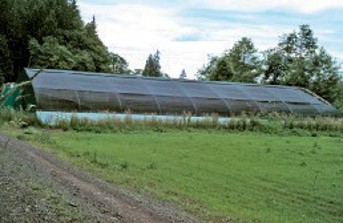
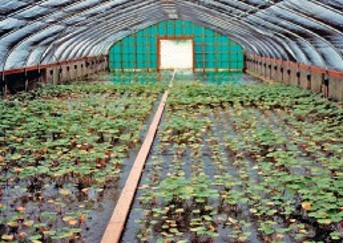
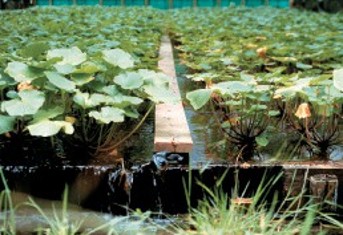
Photos by Carol Miles.
Fertilizer
Optimum fertilizer recommendations for wasabi are unknown. In semiaquatic systems in Japan, water comes from rice fields that lie above the wasabi terraces. Phosphorus levels in this water range from 0.06 to 2.2 ppm, and potassium levels average between 2.0 and 3.0 ppm. Since these levels appear to meet plant needs, no additional fertilizer is added. In other areas of Japan, a slow-release fertilizer such as 12-12-12 (N-P-K) is applied to the water at the rate of 0.02 lb per square foot. A foliar application of sulfur is sometimes made 1–3 months before harvest to increase isothiocyanate concentration. In New Zealand, high quality ‘Daruma’ wasabi contained a concentration of 2486 ppm isothiocyanates in harvested stems when 560 kg. S/ hectare was added 380 days after planting (Cragie, 2002). However, adding fertilizers to semiaquatic systems where water returns to a stream or other natural water source is illegal in the Pacific Northwest. Growers should conduct both water and soil tests prior to planting wasabi to determine nutrient availability.
For wasabi field production, use compost from poultry or dairy manure, green manure, or 12-12-12 fertilizer, at a rate of 100 lb plant-available N per acre. These should be broadcast and incorporated into the soil before planting. If your soil is boron-deficient, broadcast borax at the rate of 18 lb per acre, or band (place fertilizer in a band down the plant row) 9 lb per acre at planting. Apply sodium molybdate at 0.9 lb per acre, or as a foliar spray at 0.5 gallons per acre, for soils that are molybdenum-deficient (Sparrow 2004). Include 25–40 lb ofsulfur (sulfate form) per acre prior to planting (Oregon State University, 2010). Alternatively, apply 40–50 lb sulfur per acre (as finer-than-40-mesh-ground elemental S) the preceding year.
Planting
Plant wasabi, in semiaquatic or field soil systems, so that the crown of the plant is approximately ½ in. above the soil surface. Depending upon the intensity of the sun in your growing area, provide extra shade until the plants are established and throughout the summer thereafter. If leaves appear limp or wilted, increase the humidity around the plants by misting systems. Note that inadequate root development and/or contact with the planting medium may be the source of the problem if wilting continues. In a field system, check soil moisture levels. If there is no change in the color of leaves within a week and petioles remain wilted, remove the plants and replant in a different area.
Weed Control
Once plants are established, keep the planting area weed-free by hand-pulling or mechanical cultivation since no herbicides are registered for use on wasabi. In a semiaquatic system, there will be very few weeds. A recent Canadian study found that weeds near a wasabi planting contained the identical white blister rust fungi as that found infecting the commercial wasabi crop (MacDonald and Punja 2017). Keep the area surrounding the wasabi crop as weed-free as possible to decrease the potential for creating disease reservoirs.
Harvest
Harvest wasabi by pulling up the plants by hand. There is no commercial machinery available for this purpose. Any removed plantlets can immediately be replanted, if they appear healthy. Harvest and replant wasabi at the same time, in the fall or spring, when growing conditions are best due to cool temperatures and high moisture levels. Evaluate wasabi early in its second year of growth (when it should begin to reach its peak harvestable size and before flowering). Develop a harvesting schedule that best meets the needs of the plant.
Wasabi stems are the most desirable part of the plant and should be 6 in. long and 2 in. in diameter before harvest. The highest quality stems are evenly tapered, especially for the fresh market. Uneven tapering (Figure 1) indicates that growing conditions were variable. At harvest, the stems are pale to dark green inside (Figure 2). A medium green stem makes an excellent paste when grated and will bring the highest price in Asian markets. Many buyers consider very dark or very light-colored stems unsuitable, which translates into a lower price. If wasabi stems are being dried and used for paste, a dark green internal color is acceptable. Wasabi leaves have a milder flavor than the stem and can also be sold as a garnish or for salads or used in the same way as arugula or mustard greens.
Wash the stems thoroughly to remove any soil and debris after the plants are harvested. Remove any dead or dying leaves and diseased portions of the stem. If necessary, trim the base of the stem to remove disease. Wasabi grown in soil-based systems often require such trimming. Note however, that knowledgeable buyers recognize this connection and consider excessively trimmed stems to be of low quality.
Keep the crown intact, even when plantlets are removed during harvest. Retain the newest, healthiest, center leaves and remove the older, outside leaves. Fresh market buyers prefer a few leaves on the plant as an indicator of freshness. Trim leaf stems evenly, to approximately one-third their original length, although this length may vary among markets (Sparrow 2004).
Storage
Store wasabi stems in cold, humid conditions such as a refrigerated cooler. Good quality can be maintained in this environment for up to 4 weeks. In grocery stores, display wasabi in the misting section with other fresh vegetables. Keep stems moist and cool to prevent desiccation. At home, wrap stems in a damp paper towel and place in the refrigerator. These practices will keep wasabi fresh for several weeks (Sparrow 2004).
Pests and Diseases
Wasabi, as a member of the Cruciferaceae or Brassicaceae family, is subject to many pests and diseases that attack other crops in this family. Many of these pests and diseases cause deterioration in wasabi stem quality and yield. Avoid chemical controls due to the delicate nature of wasabi production systems (stream habitats) and lack of approved pesticides. Since wasabi is infrequently grown in the Pacific Northwest, the severity of any of pest problem is unknown. The pest and disease discussion below is meant to help the reader identify potential problems and prevent their occurrence.
Foliar Pests
Aphids are potentially serious pests of wasabi because of their ability to vector viruses and cause leaf discoloration and distortion. The green peach aphid, Myzus persicae (Sulzer) and the turnip aphid (Lipaphis pseudobrassicae Davis), are known to attack wasabi leaves. The poplar petiole gall aphid (Pemphigus populitransversus Riley) has been found on wasabi roots (Adachi 1987, MacDonald et al. 2017).
Moths. Cabbage and alfalfa loopers (Trichoplusia ni and Autographa californica) are nocturnal, light-colored moths whose larvae damage wasabi roots and shoots in Japan’s field-grown wasabi. The imported cabbageworm (Pieris rapae) has been found in wasabi nurseries and semiaquatic wasabi fields; the caterpillar form feeds on leaves and stems. Larvae of the diamond back moth (Plutella xylostella) damage wasabi leaves in field and polyhouse systems (Adachi 1987, MacDonald et al. 2017). The archived Extension publication Recognizing economically important caterpillar pests of Pacific Northwest row crops (PDF document) (Antonelli et al. 2000) provides color photographs and lifecycle information for this key pest group.
Crane flies. Adult European crane fly (Tripula paludosa) and common crane fly (Tripula oleraceae) are mosquito-like in shape, and brown or gray with dark markings on their wings. Monitor adult crane fly. They do not feed on wasabi but their larvae, which are gray to black and live in moist soil, feed on wasabi stems.
Slugs (Deroceras reticulatum) can feed on all parts of wasabi, damaging its market value (Adachi 1987). Slugs are particularly damaging to young plants and can cause complete plant loss in some cases. Control of slugs is most critical in the first two months after planting. Remove slugs by hand.
Bacterial Diseases
Internal black rot. This syndrome is caused by Pectobacterium sp. (formerly Erwinia) and Pseudomonas sp. in combination with the fungal pathogen Phoma sp. The veins of infected wasabi plants turn dark, dark spots then appear, and the spots later become milky with a putrid odor. Leaves turn yellow and die, and roots also turn yellow, but plants may recover and regrow (Adachi 1987).
Pectobacterium aroideae and P. carotovorum require moist conditions to thrive and usually infect wasabi plants through wounds. P. aroideae can be spread over a wide range of air temperatures from 32°F to 99°F but is likely to peak during summer months when air temperatures reach 93°F and water temperatures are at 64°F. Plant resistant cultivars such as ‘Sanpoo,’ ‘Shimane 3,’ and ‘Daruma’ to avoid internal black rot syndrome. Provide shade of up to 70% and cool (55°F–59°F), silt-free water. This should minimize disease spread (Adachi 1987). Rooting medium surrounding diseased plants can contain P. carotovorum and may be a recurring source of inoculum for neighboring plants or plants that are placed in the same medium (Rodriguez and Punja 2005).
Vascular wilt. Corynebacterium causes vascular wilt, blight, and leaf spotting in wasabi grown in semiaquatic systems. Leaves appear oil-soaked, leaf veins are broken, and stem and root vascular tissues are damaged. Though the pathogen remains year-round in semiaquatic wasabi fields, this disease is infrequent in soil-based wasabi fields (Adachi 1987). Use fresh plantlets and/or disease-free seedlings to minimize infection.
Fungal Diseases
Black leg. Phoma wasabiae and other Phoma species that cause black leg are the most destructive of all fungi affecting wasabi in Japan. They have been recently isolated in western Canada from wasabi grown in commercial greenhouses (Punja et al. 2017). These pathogens overwinter as mycelia in seeds or infected plant tissue (Roberts and Boothroyd 1984).
Black leg often infects wasabi seedlings with the onset of warm weather (≥ 73°F). Look for the first symptom of this disease on wasabi plants: black spotting on the leaves, petiole, and stem surfaces, which spreads inside to the vascular area. Leaves will develop irregular and circular spots, which eventually result in holes. Leaf veins darken and leaves droop due to weakened vascular tissue, but remain on the plant since premature production of abscisic acid is absent (Adachi 1987, Takuda and Hirosawa 1975). The disease eventually destroys the whole vascular system by causing necrosis. Disease lesions can cause secondary infections to spread onto other plants.
Although black leg is difficult to prevent, some measures can be taken to minimize the spread and severity of infection. Limit vegetative propagation to 3 consecutive years, use only disease-free seedlings as planting material, control water insects that wound wasabi plants, and harvest wasabi early from infected fields (Adachi 1987).
White blister rust. The fungus Albugo wasabiae Hara. syn Albugo candida causes white blister rust. Symptoms include small, shiny spots that appear on the underside of leaves and grow larger and turn milky white. Leaf veins, flowering stems, and seed pods can all become affected. The organism infects when air temperatures range from 45°F to 46°F, it spreads at 55°F–57°F and stops growth at 66°F–68°F. Diseased plants are typically seen in spring and fall (Adachi 1987, MacDonald & Punja 2017).
Downy mildew. On wasabi, this disease is caused by Peronospora alliariae Gäumann. Disease symptoms include leaves that turn yellowish-green to dark brown on top and have gray mildew on the underside. Affected leaves eventually dry up and die. The fungus grows faster in humid and warm conditions (77°F) and remains dormant through the winter (Adachi 1987).
Damping off. This disease, caused by the pathogen Pellicularia filamentosa (Pat.) Rogers, affects all stages of wasabi. In seeds, damping off decreases vigor or prevents germination, and in seedlings, stems become weak and plants fall over. Mature plants turn yellow and then black when affected by this pathogen. P. filamentosa has been found in both soil and plant tissues. Wasabi grown in semiaquatic systems are generally unaffected by damping off.
White mold. The fungus Sclerotinia sclerotiorum causes white mold on wasabi leaves. Symptoms of this disease include cottony or watery soft rot. Seed harvested from plants affected by white mold can have reduced germination rates and may cause reduced stand establishment in nursery bed production (Adachi 1987).
Club root. Wasabi roots can be attacked by the fungus Plasmodiophora brassicae Woronin. Symptoms include hypertrophy or swelling. The vascular system of infected wasabi roots becomes restricted and plants develop signs of nutritional and water stress (Roberts and Boothroyd 1984). The club root pathogen is infectious from 48°F to 81°F. To prevent club root in wasabi production, avoid humid and infected areas during wasabi cultivation and raise the soil pH above 7.0 with agricultural lime (Adachi 1987) and practice strict phytosanitary protocols from plant introductions through harvest.
References
- Adachi, S. 1987. Wasabi Saibai (in Japanese). Shizuoka Experiment Station Publication, Shizuoka, Japan.
- Antonelli, A.L., P.J. Landolt, D.F. Mayer, and H.W. Homan. 2000. Recognizing economically important caterpillar pests of Pacific Northwest row crops. Washington State University Extension, EB1892 (PDF document). Out of print.
- Byczynski, L., ed. 2006. The Hoop house Handbook. 2nd ed. Lawrence, KS: Fairplain Publications.
- Cameron, David S. and Raul M. Cruz. 2004. The Wasabi Effect. Presentation at American Academy of Otolaryngology-Head and Neck Surgery Foundation Annual Meeting, Sept. 19–22, Jacob Javits Convention Center, New York City, NY.
- Chadwick, C.I. 1990. Wasabi, Wasabia japonica (Miq.) Matsum., a Semi-Aquatic Crop from Japan. MS thesis, Washington State University.
- Chadwick, C.I., T.A. Lumpkin, and L.R. Elberson. 1993. The Botany, Uses and Production of Wasabia japonica (Miq.) (Cruciferaceae) Matsum. Economic Botany 47 (2): 113–135.
- Cragie, R. A. 2002. Yield and Quality Response of Wasabi (Wasabia japonica (Miq.) Matsumara) to nitrogen and Sulphur fertilisers. Master’s Thesis. Lincoln University, Canterbury, New Zealand.
- Ferdman, R.O. 2014. The wasabi sushi restaurants serve is pretty much never actual wasabi. The Washington Post.
- Iwashina, T. 2016. Eutrema japonicum Brassicaceae. Curtis’s Botanical Magazine 33 (3) p. 217–225.
- Kyte, L., J. Kleyn, H. Scoggins, and M. Bridgen. 2013. Plants from Test Tubes: An Introduction to Micropropagation. 4th ed. Portland, OR: Timber Press.
- MacDonald J.L., and Z. Punja. 2017. Occurrence of botrytis leaf blight, anthracnose leaf spot, and white blister rust on Wasabia japonica in British Columbia. Canadian Journal of Plant Pathology 39(1): 60–71.
- MacDonald, J.L., E. Maw, and P. Clarke. 2017. First Identifications of Aphid and Diamondback Moth Populations on Wasabi in British Columbia. J. Entomol. Soc. Brit. Columbia 114: 93–96.
- Miles, C.A. and P. Labine. 2009. Portable Field Hoop house. Washington State University Extension, EM015.
- Oregon State University. 2010. Oregon Vegetables: Broccoli. Accessed July 2, 2018.
- Palmer, J. 2012. Germination and growth of wasabi (Wasabi japonica (Miq.) Matsumara). New Zealand Journal of Crop and Horticultural Science, 18:2-3, 161–164.
- Potts, S.E. 1994. Germplasm Preservation of Wasabia spp. (Japanese horseradish). MS thesis, Washington State University.
- Punja, Z. K, W. A. Chandanie, X. Chen and G. Rodriguez. 2017. Phoma Leaf Spot of Wasabi (Wasabia japonica) Caused by Leptosphaeria biglobosa. Plant Pathology 66 (3) p. 480-489.
- Roberts, D.A. and C.W. Boothroyd. 1984. Fundamentals of Plant Pathology. 2nd ed. New York: W.H. Freeman and Company.
- Rodriguez, G. and Z. Punja. 2005. Vascular blackening of wasabi rhizomes caused by Pectobacterium carotovorum subsp. carotovorum. European Journal of Plant Pathology 124(3): 483–493.
- Sparrow, A. 2001. Evaluation and Development of Wasabi Production for the East Asian Market. Rural Industries Research & Development Corporation. RIRDC Publication No 01/33.
- Sparrow, A. 2004. Wasabi. In The New Crop Industries Handbook, edited by S. Salvin, M. Bourke, and T. Byrne, 98–103. Canberra, Australia: Rural Industries Research and Development (PDF document).
- Suzuki, M. 1968. Wasabi. Unpublished report. Kyoto University, Japan.
- Takuda, T. and T. Hirosawa. 1975. Several Factors for the Formation of Pycnidia Phoma wasabiae on Diseased Leaves of Wasabi, Wasabia japonica (in Japanese). Kinki Hugoku Agricultural Research 50: 53–57
- Tatsuyama, K., H. Egawa, H. Yamamoto, H. Kubota, and S. Furusho. 1983. Studies on Dormancy Breaking of Wasabi (Wasabia japonica) Seed and Seedling Culture in Greenhouses (in Japanese). Noson Kaihatsu (Shimane University) 12: 15–19.
- Toda, M. 1987. Simple Root Crops: Wasabi. Tokita Seed Company, Japan. 6 (5): 795–799.

By
Carol A. Miles, Professor and Vegetable Extension Specialist, Department of Horticulture, WSU Mount Vernon Northwestern Washington Research and Extension Center
Catherine H. Daniels, Associate Professor and Extension Specialist, Department of Entomology, WSU Puyallup Research and Extension Center
Published and distributed in furtherance of the Acts of Congress of May 8 and June 30, 1914, by Washington State University Extension, Oregon State University Extension Service, University of Idaho Extension, and the U.S. Department of Agriculture cooperating. WSU Extension programs, activities, materials, and policies comply with federal and state laws and regulations on nondiscrimination regarding race, sex, religion, age, color, creed, and national or ethnic origin; physical, mental, or sensory disability; marital status or sexual orientation; and status as a Vietnam-era or disabled veteran. Washington State University Extension, Oregon State University Extension Service, and University of Idaho Extension are Equal Opportunity Employers. Evidence of noncompliance may be reported through your local Extension office. Trade names have been used to simplify information; no endorsement is intended.
Pacific Northwest Extension publications contain material written and produced for public distribution. You may reprint written material, provided you do not use it to endorse a commercial product. Please reference by title and credit Pacific Northwest Extension publications.
Copyright © Washington State University.
Pacific Northwest Extension publications are produced cooperatively by the three Pacific Northwest land-grant universities: Washington State University, Oregon State University, and the University of Idaho. Similar crops, climate, and topography create a natural geographic unit that crosses state lines. Since 1949, the PNW program has published more than 650 titles, preventing duplication of effort, broadening the availability of faculty specialists, and substantially reducing costs for the participating states. Published July 2019.