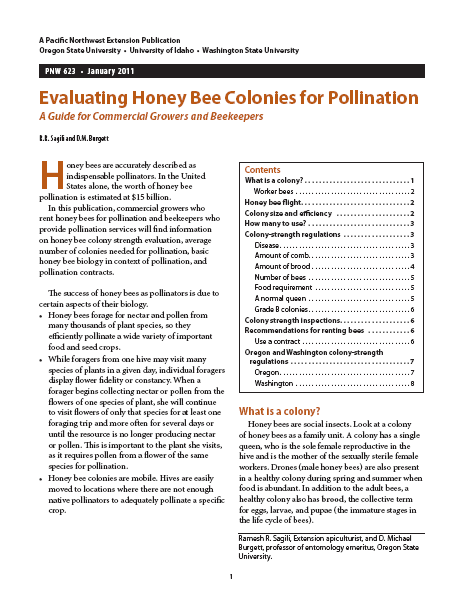
Evaluating Honey Bee Colonies for Pollination: A Guide for Commercial Growers and Beekeepers
Explains the use of managed honey bee colonies in pollinating agricultural crops, currently valued at $15 billion in the United States. Includes details on colony strength evaluation and regulatio …
Published: January 2011
Reviewed: January 2024
Hurry! Only left in stock.
Related publications
-
2026 Crop Protection Guide for Tree Fruits in Washington
ATTENTION: 2026 now available! This publication outlines examples of pesticides registered on orchard insect, disease, and weed pests in Washington State. Includes efficacy and toxicity charts.
- Pages:
- 186
- Published:
- January 2026
- SKU:
- EB0419
Authors:Price: $27.00 -
Vineyard Nutrient Management in Washington State
Understanding the nutrient requirements of perennial fruit crops is paramount to the longevity and sustainability of a commercial operation. This guide provides basic information on grape plant nutrition and management.
- Published:
- January 2018
- SKU:
- EM111E
-
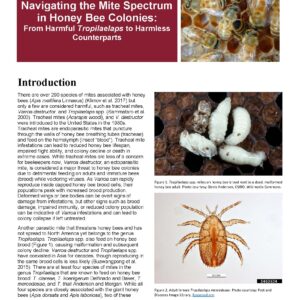
Navigating the Mite Spectrum in Honey Bee Colonies: From Harmful Tropilaelaps to Harmless Counterparts
Comparing the well-known with the lesser-known honey bee mites, this publication describes detection methods, life cycle and damage, and management recommendations and surveillance strategies for beekeepers. Those working in US apiculture should be on the…
- Pages:
- 9
- Published:
- May 2025
- SKU:
- FS399E
-

DVD Set-Sprayer Prep & Calibration
Watch this free video here! Sprayer Prep with John & Daryl Discusses sprayer set up, label requirements, principles of nozzling, and pressure.
Authors: