Description
Revised: September 2021
Pages: 16
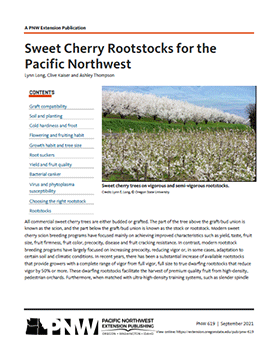
This publication presents the current level of understanding of the major cherry rootstocks as they pertain to the Pacific Northwest.
Cherry growers have many options when it comes to choosing rootstocks. The combination of new dwarfing rootstocks with high-density training systems leads to earlier production. But growers need to consider soil fertility, scion choice and training systems when choosing rootstocks. Here are some guidelines that can help.
Page Count: 16
Revised: September 2021
Hurry! Only left in stock.
Describes a species of nematodes known to cause significant economic losses in wheat, barley, and oat crops grown in the Pacific Northwest. Includes ways to identify the pest and its specific damage.
Zebra chip is a destructive disease of potatoes first recorded in the Pacific Northwest in 2011. The region's experts provide information on the bacterium, vector biology, damage from both vector and ...
Authors explain reasons for treating seeds and describe appropriate uses against pathogens and soil insects (the major seed pests). Topics include seed pest management: cultural, physical, biological, ...
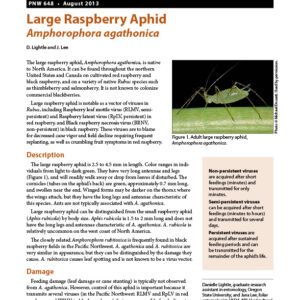
Large raspberry aphid, Amphorophora agathonica, is an important pest in red and black raspberries in the Pacific Northwest.