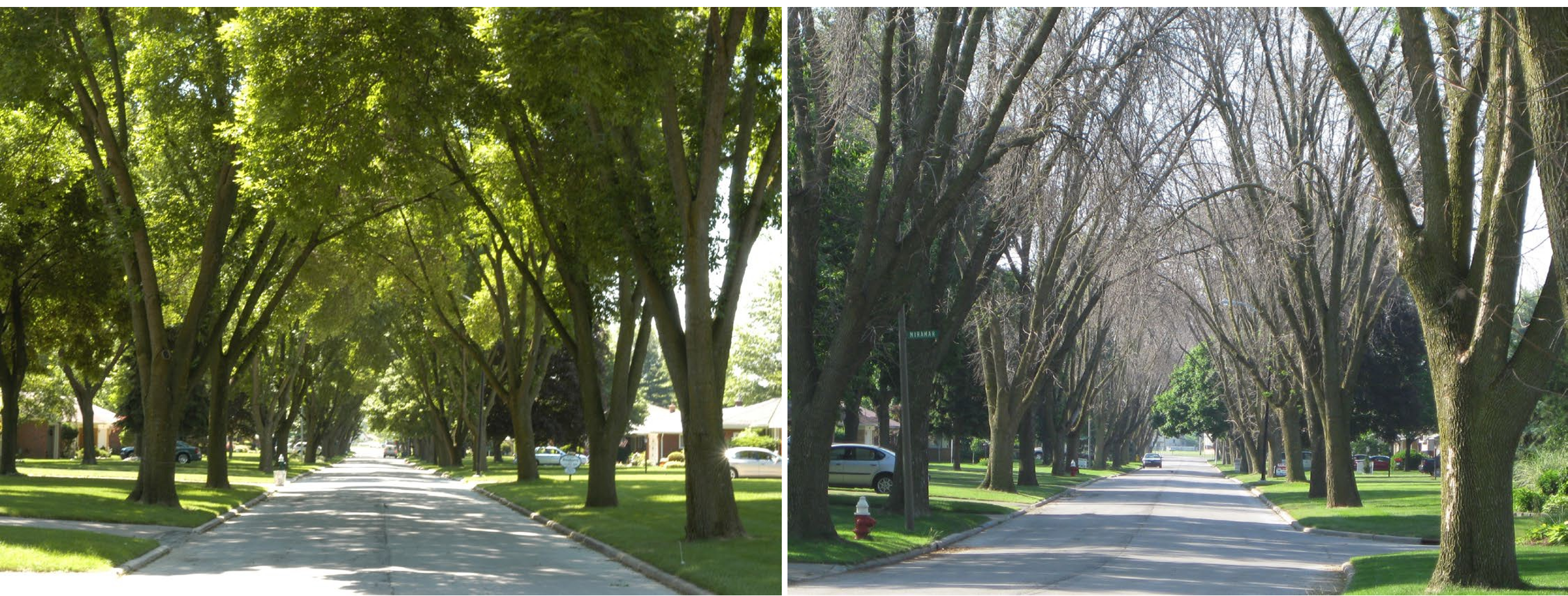
Figure 1. An ash-lined street in Toledo, Ohio, before (left) and after (right) an EAB infestation that caused complete mortality. Photos: D.A. Herms.
The emerald ash borer is an invasive, wood-boring beetle that causes nearly 100% mortality in infested ash trees: learn how to identify this pest and the latest management recommendations.
The emerald ash borer (EAB), Agrilus planipennis, is a destructive invasive insect pest that has caused almost 100% ash mortality where it has spread in North America (Knight et al. 2013) (Figure 1). Native to Asia, EAB was accidentally introduced in Michigan in the 1990s and has since spread across North America, killing hundreds of millions of ash trees (McCullough 2020). In June 2022, EAB was found infesting ash in northwest Oregon, near the Washington border (Oregon Department of Forestry 2022).
This publication summarizes EAB identification and current management recommendations. A separate Washington State University Extension publication, titled Emerald Ash Borer and Its Implications for Washington State, is available for readers looking for detailed information (Zobrist et al. 2023).
Figure 1. An ash-lined street in Toledo, Ohio, before (left) and after (right) an EAB infestation that caused complete mortality. Photos: D.A. Herms.
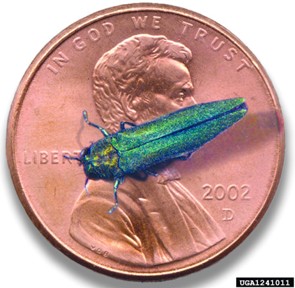
EAB belongs to the Buprestid beetle family, a family of metallic wood-boring beetles. Adults are about 1/2-inch (13 mm) long and are a bright, metallic, emerald-green color (Figure 2). Adults feed on ash foliage (Figure 3) in late spring to early summer. Several native insects resemble EAB, so correct identification is important. The Washington Invasive Species Council has an emerald ash borer look-alike guide that compares EAB to similar-looking PNW natives (see Recommended Resources).
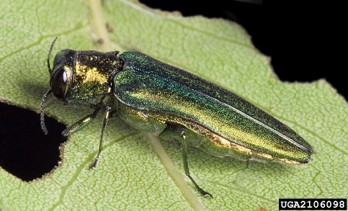
Foliar feeding by adult EAB does not cause serious harm—the damage is done by the larvae (McCullough 2020). EAB lay tiny, barely noticeable eggs in ash tree bark crevices. When the eggs hatch, the larvae chew through the bark and enter the nutrient-conducting tissue known as phloem. As they feed, larvae grow larger and molt several times. The larvae continue to bore deeper, eventually reaching the outer portion of the water-conducting xylem tissue (Wang et al. 2010). This disrupts water, nutrient, and energy flows, killing the tree.
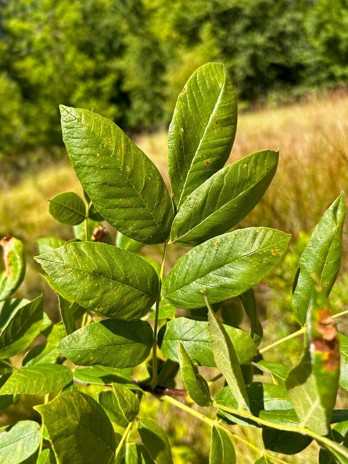
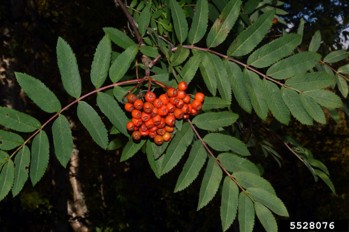
The Pacific Northwest native Oregon ash (Fraxinus latifolia) (Figure 4) is highly susceptible to EAB, as are other North American ash species commonly used ornamentally in Washington cities (Kelly et al. 2020). Two closely related species, white fringetree (Chionanthus virginicus) and common olive (Olea europaea), are also susceptible (Peterson and Cipollini 2020). Trees known as mountain ashes (Sorbus spp.) (Figure 5) are not true ashes and are not susceptible to EAB.
The loss of Oregon ash in natural areas will have significant ecological impacts, especially in southwest Washington where Oregon ash is most common in the state. In urban areas, dead ash trees will be unsightly, hazardous, and expensive for homeowners and municipalities to remove and replace.
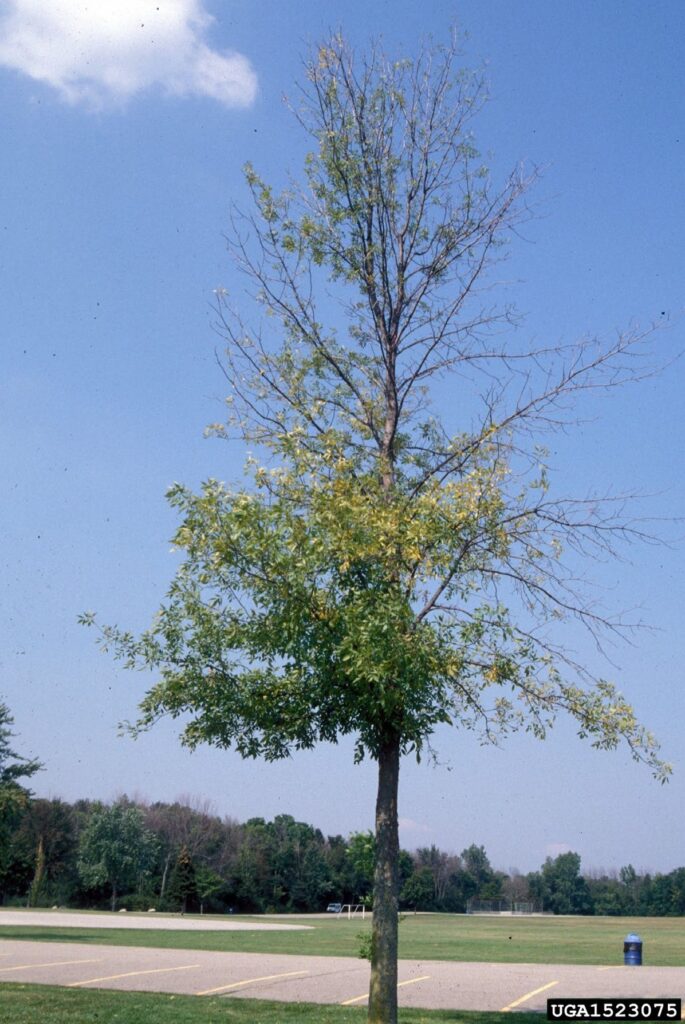
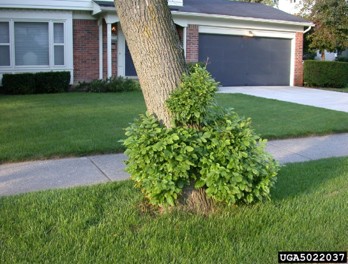
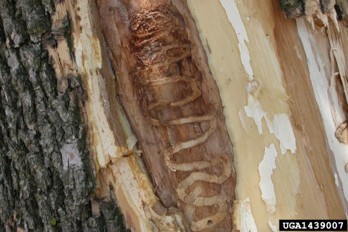
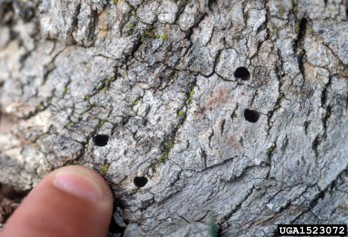
Tree symptoms include top-down crown dieback (Figure 6) and epicormic shoots at the base (Figure 7) or further up the trunk of the tree. Epicormic shoots are tender, green shoots emerging from hidden, dormant buds underneath the bark and are provoked by damage to emerge. They will look very out of place. Many other factors can cause similar symptoms (Shaw et al. 2023), so it is important to look for signs of infestations. Signs of EAB include serpentine feeding galleries under the bark (Figure 8) and D-shaped exit holes where the adults emerge (Figure 9). Early EAB detection is difficult, and several years usually pass between initial infestation and subsequent detection (Cappaert et al. 2005; McCullough 2020). Once signs of EAB appear, the tree is already heavily infested and considerably damaged.
Natural spread occurs when EAB adults emerge from infested trees and fly to new host trees where the females lay eggs. This spread is at most a few miles a year. Wider spread and large jumps in geography occur when humans move EAB-infested ash products like firewood or nursery stock (Cappaert et al. 2005; Muirhead et al. 2006).
Stopping the spread of EAB may be unrealistic. Slow Ash Mortality (SLAM) is an integrated approach to slowing the spread of EAB into new areas, giving communities more time to plan and respond (Poland and McCullough 2010). The management recommendations in this publication include strategies that can slow EAB spread in Washington to mitigate community impacts. While regulated management is not anticipated at the state level in Washington, the Washington Invasive Species Council has developed an Urban Forest Pest Readiness Playbook and the Washington Department of Natural Resources has developed recommendations for Washington communities (see Recommended Resources below).
Understanding the potential impact of EAB requires knowledge about the locality and density of host species in Washington lands and communities. Knowing where vulnerable trees are located can help guide management decisions for reducing the impacts on communities or preemptively increasing community resiliency to EAB. Municipalities may consider preemptive removal of ash in vulnerable communities or additional investment in monitoring of localities with high ash densities.
Preemptive removal of existing healthy ash trees that are not infested with EAB can have cost and logistical advantages compared to removing and destroying a large number of dead trees all at once. However, preemptive removal is not effective at controlling the overall spread of EAB, and treatment with insecticide injections (see section Emamectin Benzoate (EB) Stem Injections below) may be less expensive, less environmentally damaging, and more effective than preemptive removal (Kovacs et al. 2014; Sadof et al. 2017).
Avoid planting susceptible ash species and other host species, and remove them from recommended planting lists. For natural areas, Kral and Shaw (2023) list a variety of Oregon ash alternatives. Numerous other species can be used instead of ornamental ash trees.
If you suspect a new EAB infestation in Washington State, report your sighting to the Washington Invasive Species Council or contact your local WSU Extension office. Early detection is critical for containing and slowing the spread of EAB. Identify and monitor ash trees for signs, symptoms, and other indicators of EAB infestation.
Strategically setting up traps can help with early detection. Vertically hung, three-sided, purple or green prism traps (Figure 10) baited with an attractant are effective for detecting EAB (Poland et al. 2019). Another option is to create trap trees (Figure 11) by girdling selected ash trees in spring or summer to attract EAB. The trap trees can be removed and checked for EAB galleries in the fall or winter and then destroyed (McCullough 2020).
Insecticide stem injections can protect high-value trees and slow the spread of EAB. Injections of the systemic insecticide EB directly into the tree stem have proven to be an effective treatment and can protect trees for up to three years. When feasible, important trees should be treated when EAB is detected within 30 miles, and treatments should be repeated every two to three years (Herms et al. 2019). Even treating a few trees can mitigate the impact of EAB; the more trees that are treated in an area, the more effective this strategy will be (Mercader et al. 2016). Injections should be completed in mid to late spring after trees have leafed out, but before EAB lay eggs (Herms et al. 2019). Prioritize high-value trees for injection. EB products and application tools are available to licensed applicators. Other insecticides are available as injections, soil drenches, and basal sprays, but their active ingredients are not as effective or long-lasting as EB. See Emerald Ash Borer and Its Implications for Washington State (Zobrist et al. 2023) for more details. Foliar sprays are not effective. When applying an insecticide, ensure that the product and application method is legal in Washington and carefully read and follow all pesticide label instructions.
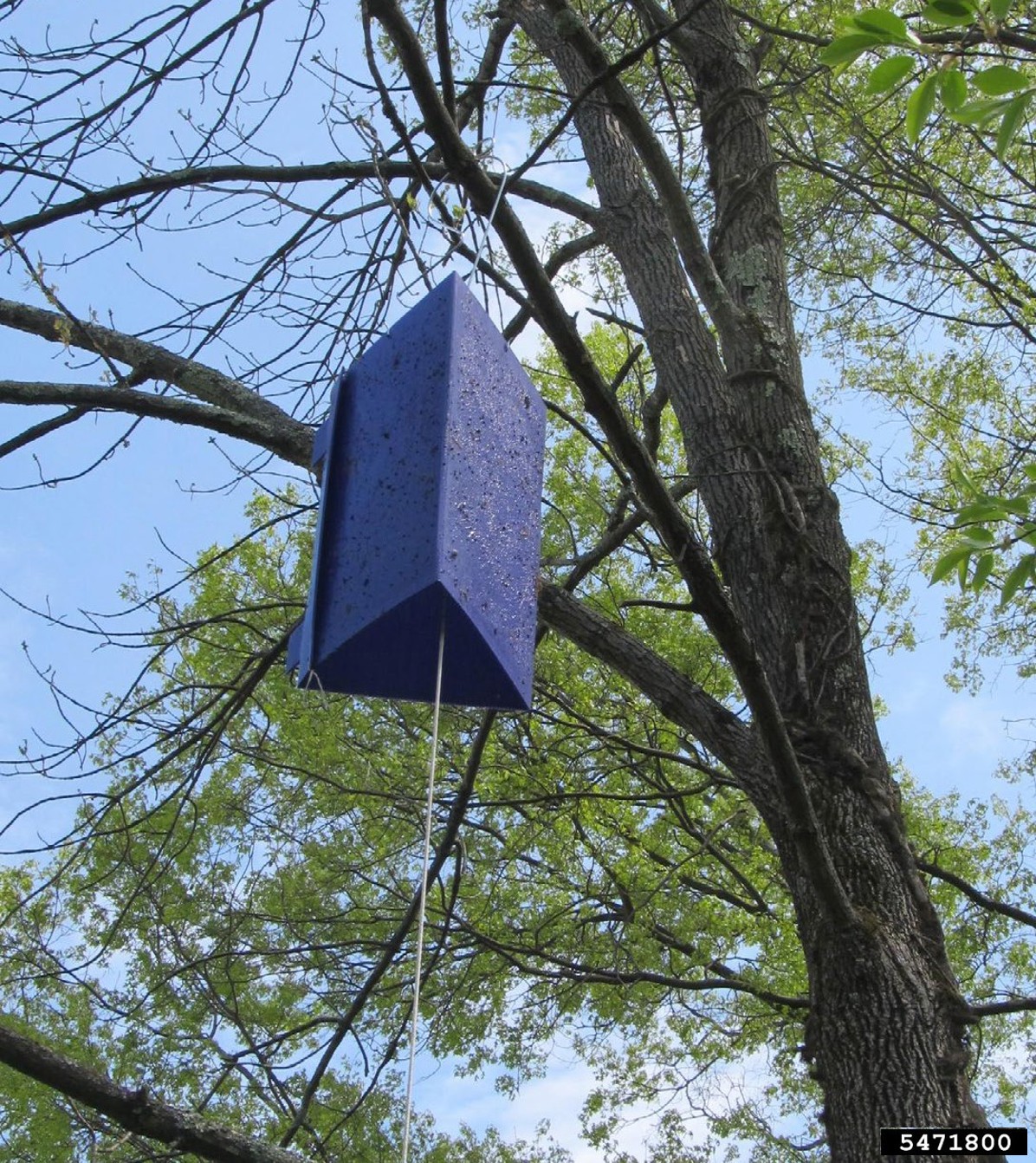
Figure 10. A three-sided purple prism trap. Photo: K.R. Law, USDA APHIS PPQ, Bugwood.org.
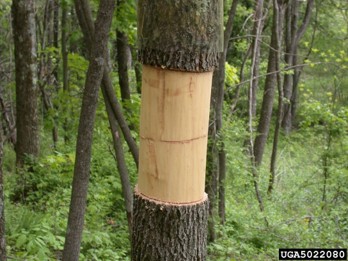
Figure 11. An ash tree that has been girdled to serve as an EAB trap tree. Photo: Pennsylvania Dept. of Conservation and Natural Resources—Forestry, Bugwood.org.
Tiny, stingless, parasitoid wasps approved for use in the US as post-outbreak biocontrols of EAB are helpful and may allow ash trees to regenerate (Duan et al. 2018; Gould et al. 2022). Parasitoids can be used together with EB injections for greater impact (McCullough 2020). Biocontrol release sites should be naturally wooded areas that are at least 40 acres in size, composed of at least 25% ash trees ranging in size from seedlings to mature trees, and not slated for harvest or development for at least the next five years (Gould et al. 2021). For qualifying release sites where EAB is active, public land managers can request parasitoids from USDA APHIS or by phone at 1-866-322-4512.
EAB-infested trees should be removed and disposed of in a way that destroys EAB larvae. One option for destroying EAB larvae is heat-treating infested material to a core temperature of at least 133°F (56°C) maintained for at least 30 minutes (Haack and Petrice 2022). Incineration of infested wood is another option, and air curtain burners have the advantage of portability and minimization of particulate pollution (Lee and Han 2017). A third option is to grind or chip infested material into pieces no larger than one inch (2.5 cm) in two dimensions, which can be done using a horizontal wood grinder with a one-inch screen (Mccullough et al. 2007).
Homeowners may lack the resources to properly remove and dispose of infested trees. Providing technical and financial assistance to homeowners may be necessary to mitigate community spread of EAB. If permits are required for tree removal, streamlining the permitting process for infested ash trees could facilitate more timely removal.
Provide public education and outreach on EAB identification and reporting, threats posed by EAB, treatment and prevention options, and the importance of not moving firewood. Interagency collaboration and communication can increase capacity, improve response, and provide consistent messaging to the public (Alexander et al. 2020). Coordinated management of ash trees on both public and private lands across multiple jurisdictions is more impactful and cost-effective than jurisdictions working independently (Kovacs et al. 2014).
Many of the recommendations discussed above also apply to private properties. In general, private property owners should identify vulnerable trees on their property, consider preemptive removal and planting of alternative species, and monitor regularly for early detection. When nearby infestations are detected, treat high-value trees. Remove and destroy infested trees.
Identify your ash trees and monitor them carefully for signs, symptoms, and other indicators of EAB infestation. Report suspected EAB sightings to the Washington Invasive Species Council. If possible, collect a specimen of a suspected EAB, put it in a plastic bag, freeze it to kill the insect, and submit the specimen to the WSU Plant and Insect Diagnostic Laboratory for positive identification.
To avoid spreading EAB or other invasive pests, firewood should never be moved to other locations. Instead of bringing firewood from home to campgrounds or parks, purchase locally-sourced firewood when you arrive at your destination. In other words, “buy it where you burn it.” For more information, see the Don’t Move Firewood project.
Stem injections of EB are highly effective in preventing EAB damage. Begin treatment in mid to late spring when EAB is detected within 30 miles and repeat treatments every two to three years. Treatment must be done by a licensed applicator. There are less-effective soil drench products available to homeowners—see Emerald Ash Borer and Its Implications for Washington State (Zobrist et al. 2023) for details. Carefully read and follow all pesticide label instructions.
Remove any EAB-infested landscape trees, and ask local authorities about disposal options. Some property owners may have access to tree removal programs for assisting with the costs of removals. Check with your local municipality or county Extension specialist for assistance.
Kevin W. Zobrist, Professor, Extension Forestry, Washington State University
Rachel A. Bomberger, Department of Entomology, Washington State University
Molly N. Darr, Forest Health Extension Specialist, Department of Entomology, Washington State University
Jenny R. Glass, Diagnostic Plant Pathologist, Washington State University
Joseph M. Hulbert, Post Doctoral Research Associate, Department of Plant Pathology, Washington State University
Emily S. Roberts, Urban Forestry Technician, Washington Department of Natural Resources
Copyright © Washington State University
WSU Extension publications contain material written and produced for public distribution. Alternate formats of our educational materials are available upon request for persons with disabilities. Please contact Washington State University Extension for more information.
Issued by Washington State University Extension and the US Department of Agriculture in furtherance of the Acts of May 8 and June 30, 1914. Extension programs and policies are consistent with federal and state laws and regulations on nondiscrimination regarding race, sex, religion, age, color, creed, and national or ethnic origin; physical, mental, or sensory disability; marital status or sexual orientation; and status as a Vietnam-era or disabled veteran. Evidence of noncompliance may be reported through your local WSU Extension office. Trade names have been used to simplify information; no endorsement is intended. Published October 2023.