Growing Roses in Washington State: Common Disease and Insect Problems (Home Garden Series)
Description
Roses are arguably the most attractive flowering shrub in Washington State and a favorite of home gardeners. To keep your roses looking beautiful and healthy, fending off disease and pests is importan ...
Roses are easy to grow in Washington State gardens, but they can be impaired by numerous disease and insect problems. These pests may require some management to keep the shrubs in good health and looking attractive. Some of the problems can be avoided with sound rose care. Plant shrubs so they are spaced well enough apart to avoid crowding and allow for good air circulation. Avoid excessive nitrogen fertilization which promotes succulent growth that is more susceptible to attack by some diseases and insects.
When possible, plant rose cultivars resistant to the diseases common in your area. To determine a cultivar’s resistance, check the plant tag or the catalog from which you are ordering. In many areas there are local rose societies that have members with experience growing roses locally that are willing to provide you with information on cultivars that perform well locally.
Inspect your roses frequently to watch for signs of disease or insect problems. Many problems are easier to management, if you catch them early.
In addition to this publication, you may want to also consult two companion WSU Extension publications, FS166E Growing Roses in Washington State: Planting Roses and FS164E Growing Roses in Washington State: A Seasonal Calendar.
The most common disease and insect problems that occur on roses in Washington are listed below. Rose disease and pest management is best accomplished by prevention. For current chemical management of these insects and diseases refer to the WSU Hortsense website.
Black Spot
Symptoms
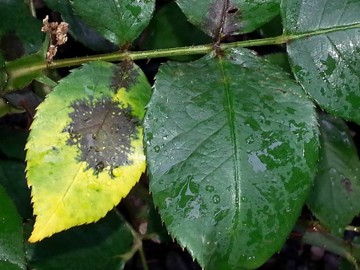
This fungal disease shows up as round black spots on the leaves with or without accompanying leaf yellowing (Figure 1) and often followed by leaf drop. On stems or canes, the disease will appear as small purple to black spots. Black spot is very common in regions of the state with high amounts of rainfall and humidity. While in the drier areas black spot is less frequent, it can be a problem if the shrubs receive overhead irrigation.
Corrective Action
As with powdery mildew, prune adequately in early spring to allow for good air circulation, remove and discard diseased leaves when they first appear, rake and discard fallen leaves from infected plants, and plant black spot-resistant cultivars. This helps limit the spread of the disease. Do not compost the leaves from infected plants. When practical, manage supplemental irrigation to reduce the length of time plant surfaces remain wet.
Botrytis Blight
Symptoms
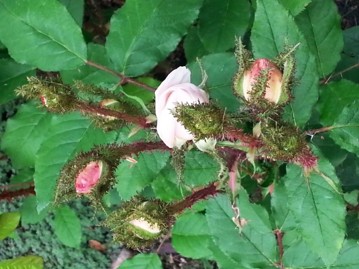
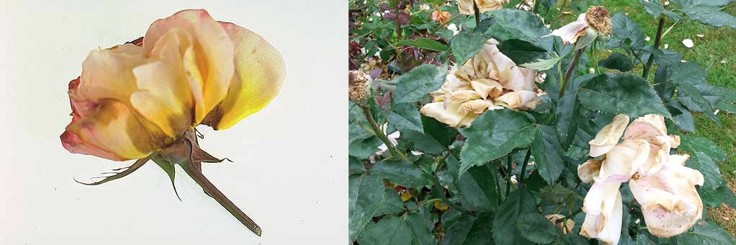
This disease is characterized by a woolly gray to brown fungal growth on the surface of unopened or partially opened flower buds (Figure 2). On opened buds, multiple tiny spots on the petals are symptoms of the disease. Brown, sunken target-like cankers on the canes and cane dieback are also symptoms of the disease. Conditions favorable to this disease are cool, wet weather.
Corrective Action
As with other rose fungal diseases, prune shrubs in early spring to improve air circulation. Prune off and discard diseased flowers, buds, and canes to reduce the spread of the disease. Rake up and discard fallen leaves from infected plants. Do not compost.
Crown Gall
Symptoms
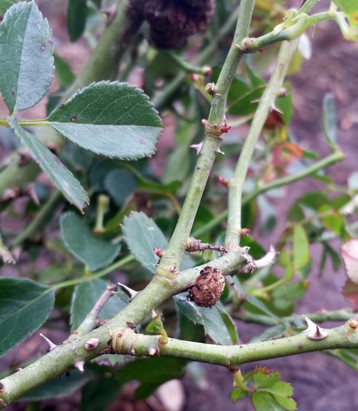
Crown gall is a growth of tissue found most commonly at ground level (Figure 3) near the base of a rose shrub, typically at the graft union between the rootstock and scion. It is caused by a bacteria found in the soil. New galls look somewhat like a cauliflower with a rough appearance that is often light in color. The galls become hard, brown, and cracked upon aging. A closely related bacteria (Agrobacterium rhizogenes) can induce a condition known as hairy root where the structural roots swell and numerous fibrous roots grow out of the swellings.
Corrective Action
Remove and destroy infected plants. Do not compost. It is important to note that the crown gall bacterium remains in the soil and there is no chemical available for killing it.
Prevention is the key to avoiding future infections. After removing the plant, disinfect any garden tools used with the infected plant. Also, be sure to wash your hands. When replacing the diseased plant, remove roots and replace the surrounding soil. Check any new plant for galls and use clean planting and pruning equipment. Avoid wounding the plant to prevent the entry of bacteria through a wound. When possible, replant with crown gall-resistant species or ones growing on crown gall-resistant rootstocks.
Powdery Mildew
Symptoms
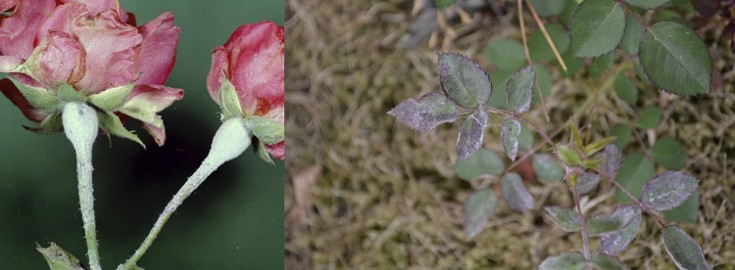
Powdery mildew fungus appears as a white powdery coating on stems, leaves, and buds (Figure 4). The shape of leaves may become distorted if an infection is severe. This fungal disease is favored when nights are cool, near 70 degrees F, at the same time high humidity or heavy dew occurs, but can also be a problem in eastern Washington during warm, dry summer weather.
Corrective Action
In early spring, prune roses adequately to promote good air circulation in and around the shrubs. To help limit the spread of the disease, remove and discard infected leaves as soon as they appear. Do not compost the infected leaves or flowers. Succulent growth is more susceptible to infection, so avoid the application of excess nitrogen that encourages this type of growth. At the end of the season, remove and discard fallen leaves from around infected plants and prune out badly infected canes. When planting new roses, consider planting powdery mildew-resistant cultivars.
Rose Mosaic
Symptoms
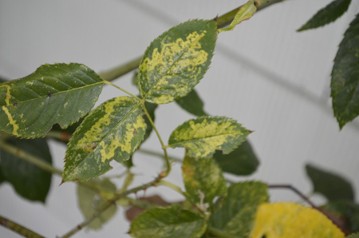
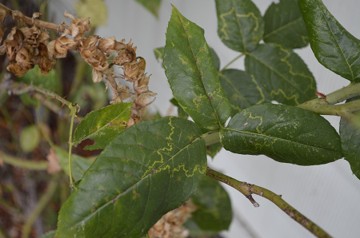
Several different mosaic viruses are associated with rose mosaic. Rose mosaic is often encountered by Washington State gardeners. Because rose mosaic can be caused by more than two different viruses, the symptoms of this disease are extremely variable. Symptoms include a yellow “mosaic” pattern or yellow splotches (Figure 5); yellow rings, bands (Figure 6), or wavy lines; and bright yellow veins. Infected roses may or may not exhibit leaf symptoms of rose mosaic but can lead to poor plant vigor and decreased flower production.
Corrective Action
Plants are not infected with the disease by insects or by pruning tools. Researchers generally agree that rose mosaic is spread via propagation when buds or cuttings are taken from infected plants to start new plants. If a plant growing in the garden shows symptoms of rose mosaic, there is no way to eliminate the disease from infected garden plants, but it will not spread to your other roses. However, you may want to remove the shrub because of the unattractive leaves and the possible reduced plant flowering and growth. It is recommended that gardeners only buy roses that are “clean” or certified as “virus tested.”
Rose Rust
Symptoms
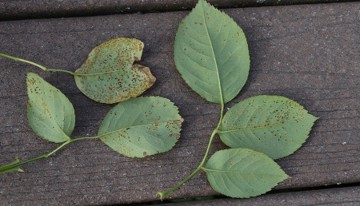
Figure 7. Rusty brown pustules on undersides of rose leaves are caused by rose rust fungi. Source: J. Glass.
Rose rust is a fungus disease caused by nine species of rust characterized by small orange to brown pustules or bumps on both the tops and bottoms of leaves (Figure 7), but the pustules are usually more numerous on the undersides of infected leaves. These lower leaf pustules are associated with yellow to brown spots on the top of the leaf. A severe infection can cause leaf drop. Late in the season the orange pustules will turn black.
Corrective Action
Remove potential sources of reinfection by raking up dead leaves and pruning out infected wood. Look for and remove any infected leaves early in the growing season. When possible, plant rose cultivars resistant to rust.
Stem Canker
Symptoms
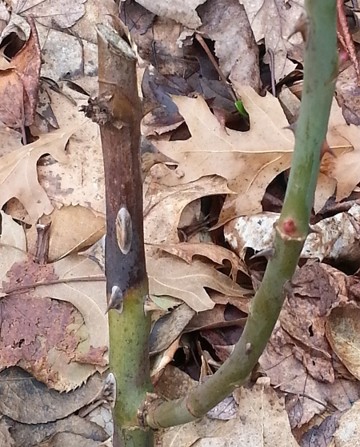
Dark cankers or necrotic lesions on rose canes (Figure 8) are caused by at least two different fungal diseases. These fungi enter the canes through wounds, such as pruning cuts, scratches from thorns, or insect damage. The cankers appear as dark brown or discolored spots on the canes. As the disease progresses, the cankers become larger, with the center of the canker becoming a lighter brown. The advancing edge of the canker will be reddish-purple to brown in color. Cankers may eventually become large enough to girdle the cane, causing the portion of the cane above the canker to die.
Corrective Action
Remove infected canes several inches below the cankered area if possible. Disinfect your pruning shears after each cut so you do not spread the disease pathogen onto subsequent fresh cuts. (See WSU publication FS131E Pruning Equipment for Home Gardeners.) Avoid injuring other canes when pruning. Do not mulch the shrubs with organic materials, like fir bark or wood chips, which stay moist during the winter and also keep canes damp. Maintain healthy plants, as plants weakened by climatic injury or disease are more susceptible to developing canker diseases.
Aphids
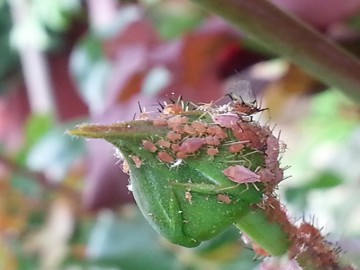
Aphids are small, pear-shaped insects that attack roses and many other types of plants. Aphids come in a variety of colors, including green, gray, black, and pink, depending on the species. They have mouthparts that allow them to feed on plants by sucking out plant sap. There are both wingless and winged forms of aphids. Rose aphids are pinkish in color and are attracted to tender young stems, leaves, and buds (Figure 9). Heavy feeding on young growth can cause distorted growth and diminish flower production and quality.
Corrective Action
Apply nitrogen fertilizer only when a soil test indicates it is needed for healthy growth. Excessive amounts of nitrogen promote succulent growth that encourages aphid populations. Use a strong spray of water to dislodge aphids from rose plants. Encourage natural predators that feed on aphids, like lady beetles and hover flies, and avoid the use of nonselective insecticides that will kill these insect predators along with the aphids.
Flower Thrips
Symptoms
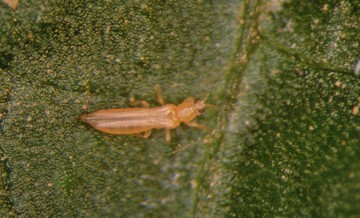
Western flower thrips are a common pest of roses in Washington. Thrips are very tiny insects (Figure 10) that use rasping mouthparts to rip open cells and then suck up the juices that leak out. They have yellow to tan-colored, thin bodies that are 1/5 inch in length. Gardeners will not usually detect thrips because they are so small and hide at the base of flower petals or within buds. Their feeding causes blotches on the flower petals and severe feeding can lead to a failure of flower buds to open. Because of their small size, thrips are often difficult to observe, but small black tarry spots of fecal deposits (called frass) are a sign of their presence.
Corrective Action
Timely removal of spent or badly infested blooms may help reduce the thrips population. Control weeds in and near your roses, as thrips feed on a variety of host plants including weeds. Frequent wetting of the foliage and blooms may help discourage thrips, but it also encourages fungal diseases. Protect beneficial insects that feed on thrips, such as ladybird beetles and lacewings.
Leafcutting Bees
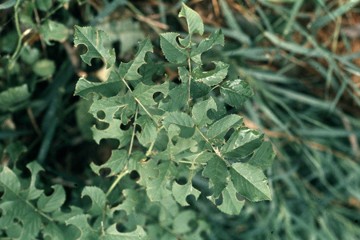
Leafcutting bees are rarely seen while they are at work making lacework out of the foliage of rose shrubs. The tell-tale indication that the leaf damage observed is the work of a leafcutting bee is the characteristic semi-circular shape of the cuts (Figure 11) that they make along the edges of leaves. Another sign of their presence can be holes in the ends of cut canes. These holes in the ends of cut canes are usually caused by solitary nesting bees, like the cutting bees, that make their nests in the hollowed out canes. Leaf cutting bees are among many pollinators that are beneficial to gardens. They are often mistaken for honeybees due to their similar coloring and size.
Corrective Action
The foliar damage created by leafcutting bees is mostly cosmetic and does not pose significant harm to the overall shrub. Unsightly leaves may be removed upon discovery. Leafcutting bees, other native bees, and honeybees are all important garden pollinators. To protect these important pollinators, the use of pesticides in the garden on roses or other flowering plants should be avoided when possible.
Leaf Rollers
Symptoms
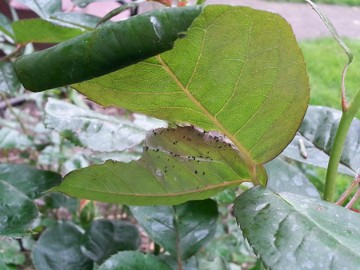
Leaf rollers are the larval (caterpillar) stage of certain moths, such as the oblique banded moth (Choristoneura rosaceana). Many leaf rollers are described as pale green caterpillars with a dark-colored head. They feed while wrapped within a rolled-up leaf (Figure 12). They are also known to cause damage to rosebuds by chewing holes through the many layers of petals.
Corrective action
As with the leafcutting bees, leaf rollers primarily cause aesthetic damage to foliage and blossoms. Remove and dispose of infested leaves and buds upon discovery.
Mossy Rose Gall
Symptoms
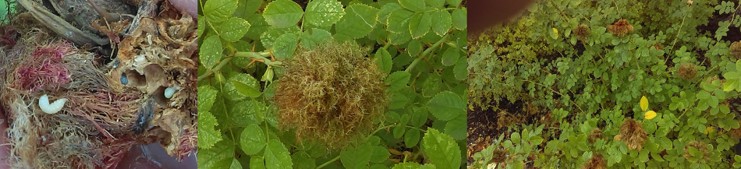
Mossy rose gall is caused by the Cynipid gall wasp, Diplolepis rosae, laying eggs in unopened leaf buds, and results in chemically induced distortion. A mossy rose gall (Figure 13) can be green to red in color, eventually turning hard and brown after the wasp emerges.
Corrective action
Often discovered and seen as a curiosity, the gall itself is relatively harmless to the overall health of the shrub. Remove any galls upon discovery.
Root Weevils
Symptoms
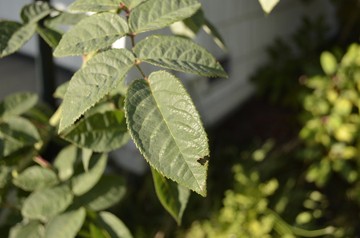
Roots weevils are several species of beetles that feed on roses, leaving behind notches along leaf edges (Figure 14). The adult beetles are black, gray, or dark brown beetles with short snout-like mouths that are difficult to find because they feed at night. Their larvae, or C-shaped legless grubs, live in the soil and feed on plant roots. Root weevils are not able to fly and move from place to place by walking or hitchhiking on plants or in plant debris or soil.
Corrective Action
Remove adults by handpicking late at night when they are actively feeding, or trap them by spreading a sheet or cardboard beneath the plants and then shaking the plant at night when they are feeding. The weevils will drop to the ground and can then be gathered up.
The introduction of parasitoids or beneficial nematodes may provide some control of a root weevil infestation. However, nematodes must be applied to the root zone where root weevil grubs are present. The nematodes are applied as a drench when the soil temperature is above 52 degrees F.
Rose Leafhoppers
Symptoms
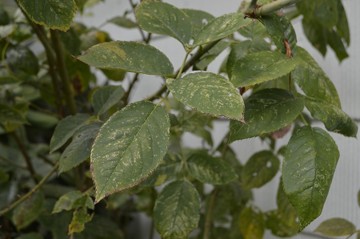
Rose leafhoppers are small, white to greenish-white, wedge or torpedo-shaped insects that quickly jump or fly off the plant when disturbed. They feed by sucking the sap out of plant cells, causing small blotches or stippling on the upper leaf surface (Figure 15). Heavy feeding can cause the leaves to turn whitish in color and lead to browning and leaf drop.
Corrective Action
Unless the infestation is severe and causes significant injury and leaf loss, leafhopper damage is considered primarily aesthetic. Natural predators can help with leafhopper management, so avoid using broad-spectrum insecticides that kill both the predators and the leafhoppers. Minor leafhopper damage should be tolerated.
Roseslugs and Sawflies
Symptoms
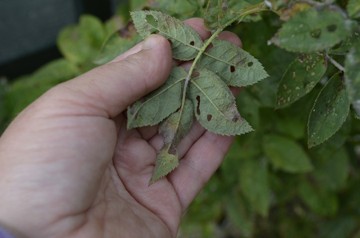
Roseslugs are small, green larvae that feed on the leaves of roses. Some roseslugs eat the upper layers of leaf tissues and leave only the lowest layer intact along with the veins; their feeding causes translucent blotches. Other roseslugs also eat the lower layer of tissue, creating holes in the leaves (Figure 16). Roseslugs are the larvae of small wasps called sawflies. There are three different types of sawflies and roseslugs that damage roses in Washington.
Corrective Action
If you notice the small, green larvae feeding on the leaves, handpick and destroy them. If too numerous to handpick, use a forceful stream of water to knock them off the leaves. Chemical control is seldom warranted because their damage is considered primarily aesthetic.
Rose Stem Girdler
Symptoms
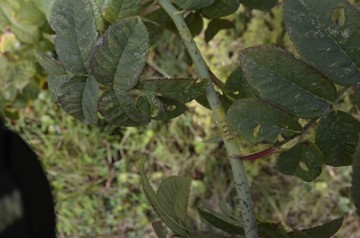
The adult of the rose stem girdler is a beetle that feeds on the edges of leaves, but this damage is considered minor. It is the larvae which cause significant injury by tunneling just below the bark and creating spiral groves along the cane (Figure 17). This injury may be accompanied by swelling and cracking of the cane. The damage may lead to the portion of the cane above the damage wilting and dying, or the cane may break off at that point.
Corrective Action
If noted during the growing season, cut the cane off below the swelling or where the cane has broken. Dispose of the damaged cane. The girdler overwinters in the canes as a pupa. During the dormant season, look for signs of swelling along the canes and prune several inches below the area to remove the pupa within the cane. Remove and destroy the portions you have pruned off.
Rose Stem Miner
Symptoms
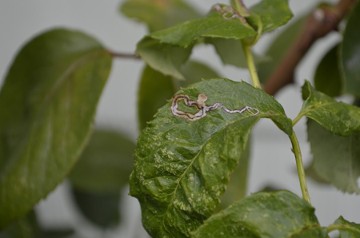
The adult rose stem miner is a small moth with larvae that feed beneath the surface of the leaf, making a winding, sinuous trail (Figure 18). The damage from this feeding is not harmful to the rose shrub’s overall health and is considered only aesthetically unpleasing.
Corrective Action
Because the trails only detract from the shrubs overall appearance, no corrective action is needed. However, infested leaves may be removed and destroyed to manage the damage.
Further Reading
- Kohlhauff, T., T. Harris, and R. Maleike. 2014. Pruning Equipment for Home Gardeners. Washington State University Extension Publication FS131E. Washington State University.
- Ophardt, M. 2015. Growing Roses in Washington State: Planting Roses. Washington State University Extension Publication FS166E. Washington State University.
- Ophardt, M. and S. Gray. 2015. Growing Roses in Washington State: A Seasonal Calendar. Washington State University Extension Publication FS164E. Washington State University.
- Pacific Northwest Extension Publication. 2015. Pacific Northwest Plant Disease Handbook. Oregon State University
- Pacific Northwest Extension Publication. 2015. Pacific Northwest Plant Insect Handbook. Oregon State University.
- WSU Extension. 2013. Hortsense: Home Gardener Fact Sheets for Managing Plant Problems with IPM or Integrated Pest Management. Washington State University.
By Marianne Ophardt, Director, WSU Benton County. Sheila Gray, Director, WSU Lewis County
Copyright 2016 Washington State University.
WSU Extension bulletins contain material written and produced for public distribution. Alternate formats of our educational materials are available upon request for persons with disabilities. Please contact Washington State University Extension for more information.
Issued by Washington State University Extension and the U.S. Department of Agriculture in furtherance of the Acts of May 8 and June 30, 1914. Extension programs and policies are consistent with federal and state laws and regulations on nondiscrimination regarding race, sex, religion, age, color, creed, and national or ethnic origin; physical, mental, or sensory disability; marital status or sexual orientation; and status as a Vietnam-era or disabled veteran. Evidence of noncompliance may be reported through your local WSU Extension office. Trade names have been used to simplify information; no endorsement is intended. Published November 2016.