Shallow-Rooting (18-36 inches)
- Broccoli
- Brussels Sprout
- Cabbage
- Cabbage, Chinese
- Cauliflower
- Celery
- Chicory (Endive)
- Corn
- Garlic
- Leek
- Lettuce
- Onion
- Parsley
- Potato
- Radish
- Spinach
This full-color guide to growing vegetables in a Washington home garden setting covers growing conditions, how to plant seeds and transplants, ways to arrange vegetables, integrated pest management me ...
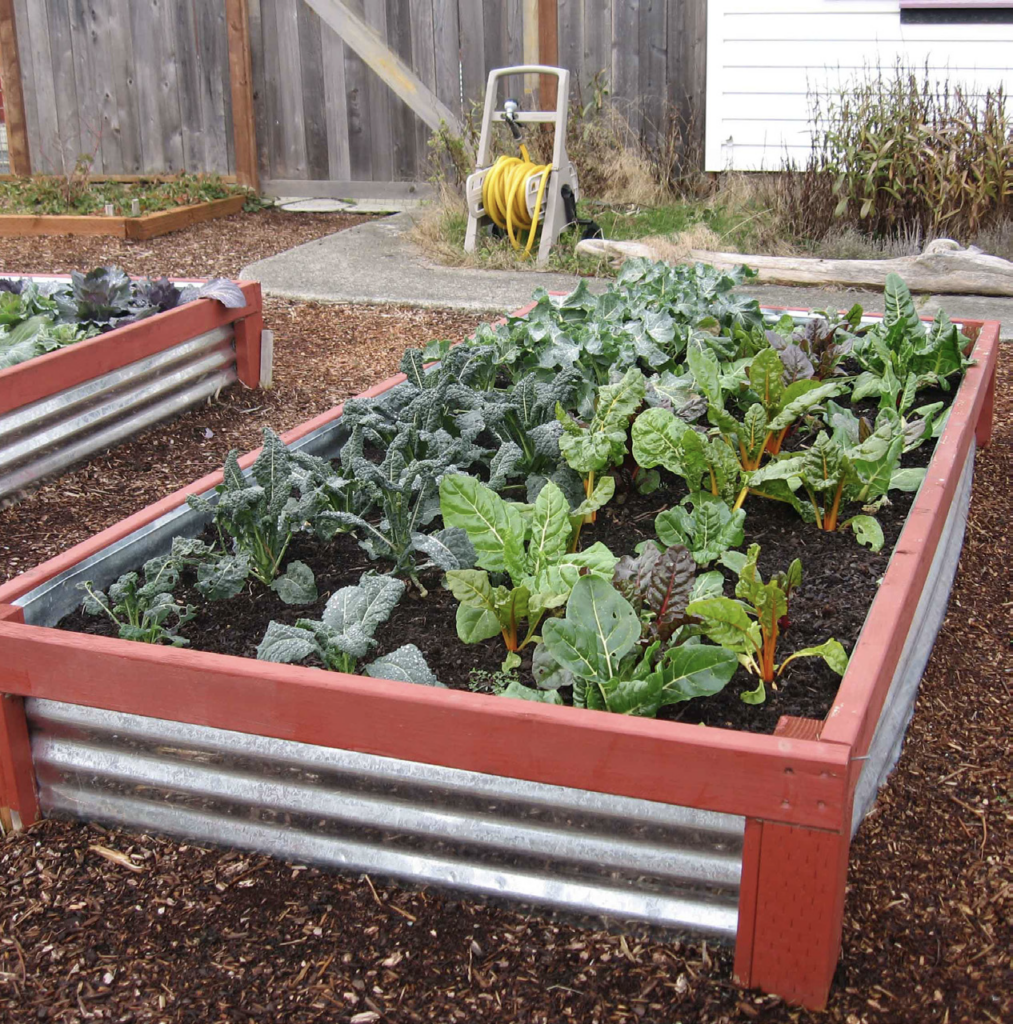
Planting a vegetable garden can supply you, your family, and your community with an abundance of fresh, healthy vegetables throughout the season. When properly done, gardening can also beautify your landscape, protect water quality, and conserve natural resources. Environmentally-sound gardening approaches will minimize the amount of purchased fertilizers you need by improving soil fertility through crop rotation and turning waste materials into valuable compost and fertilizer. Additional motivations for starting a vegetable garden include growing crops that are not commonly found in the stores or specialty markets in your area and experimenting with vegetables that are unfamiliar to you. Some examples of foods to explore with your family are shallots, edamame, corn salad, and fennel.
To be a successful vegetable gardener there are many considerations and choices you will need to make. Experiment each year to find the crops and techniques that best suit you and your garden site.
Convenience is important as you select a vegetable garden site, but full sun exposure and suitable soil are more important. Most vegetable crops require at least six hours of direct sunlight each day, so locate your garden for maximum exposure to available sunlight. Also take into account that vegetables require fertile, well-drained soil. If you live in an area that receives heavy rainfall, soil drainage is especially important. Soil drainage is determined mostly by the site but can be improved by using raised beds. Select a location with enough slope for surface drainage and sufficient subsoil permeability to allow water to drain through. You can add fertilizers to improve soil fertility and use organic matter to improve soil structure. If you are in an area where soils may be contaminated with heavy metals from heavy industry or old orchard practices, consult with your local Extension office or health department about how to conduct a soil test.
One of the most important factors to consider when selecting vegetable crops to grow in your garden is climate. Climate includes length of growing season (Figure 1A), first and last frost dates (Figures 1B and 1C), as well as temperatures during the season. The USDA plant hardiness zone map (Figure 2) provides information regarding extreme minimum temperatures for Washington.
Vegetables are generally divided into warm-season (summer) crops and cool-season (fall/winter/spring) crops (Table 1). Many warm-season vegetable crops require a longer growing season or warmer temperatures than are available west of the Cascade Mountains. In areas where temperature is limiting, row covers and plastic tunnels may be used to successfully grow these crops. Many cool-season crops can be grown throughout the winter in areas west of the Cascades, depending on the microclimate.
Table 1. Crops well-suited to warm and cool temperatures in Washington (adapted from Maynard and Hochmuth 1997, 89).
Eggplant, Okra, and Sweet Potato crops require the most warmth to be productive; in cooler areas they will need to be grown in plastic covered tunnels or greenhouses.
Artichoke, Globe Artichoke, Asparagus, Horseradish, and Rhubarb crops are perennial.
Figure 1. Washington climate factors affecting vegetable production: length of growing season (frost-free days) (A); average last killing frost date in spring (B); and average first killing frost date in fall (C) (adapted from Antonelli et al. 2004, 4).


The image is a color‑coded USDA Plant Hardiness Zone Map of Washington State. The title at the top reads “USDA Plant Hardiness Zone Map – Washington.” The map depicts average annual extreme minimum temperatures for the period 1976–2005 and categorizes the state into plant hardiness zones based on temperature ranges.
Washington State is shown with county boundaries, major cities, rivers, and regional labels. A legend appears on the left side of the map showing hardiness zones labeled 4a through 9a, each associated with a temperature range in both degrees Fahrenheit and Celsius. Cooler temperature zones are represented by shades of purple and blue, while warmer zones are shown in greens, yellows, and orange tones.
Western Washington, including the Olympic Peninsula, Puget Sound region, and coastal areas, is primarily shown in yellow and light green shades representing zones 7a, 7b, and 8a, with some areas reaching zone 8b near the coast and in urbanized regions around Seattle, Tacoma, Olympia, and Everett. The Olympic Peninsula and coastal counties such as Clallam, Jefferson, Grays Harbor, and Pacific are mostly in zone 7a to 8a.
The Puget Sound region, including cities such as Seattle, Tacoma, Everett, and Olympia, is mostly in zones 7b and 8a. Island County and San Juan County are also shown in relatively mild zones compared to surrounding inland areas.
Central Washington transitions to cooler zones shown in shades of green. Areas including Chelan, Douglas, Kittitas, Grant, Yakima, and Benton counties range mainly from zones 6a to 7a. The Cascade Mountain range is visible as a north–south band of cooler zones separating western and eastern Washington.
Eastern Washington varies by region. The Columbia Basin and southeastern counties, including Franklin, Walla Walla, Columbia, and Adams counties, are shown primarily in zones 6b to 7a. Northeastern Washington, including Ferry, Stevens, Pend Oreille, and parts of Spokane County, is shown in cooler zones, generally 5a to 6b, indicating lower average minimum winter temperatures.
Major rivers such as the Columbia River and Snake River are drawn and labeled. The Columbia River runs along parts of the southern and central regions of the state and forms part of the boundary with Oregon. The Snake River appears in the southeastern corner near the borders with Idaho and Oregon.
Major cities including Spokane, Wenatchee, Yakima, Pasco, Walla Walla, Vancouver, Bellingham, and Port Angeles are labeled for geographic reference. County names are printed across the map in white or black text for contrast.
At the bottom right of the image, scale bars indicate distance in both miles and kilometers. Logos for the USDA Agricultural Research Service and Oregon State University’s PRISM Climate Group appear in the lower left corner, indicating the data sources used to create the map.
Overall, the map visually communicates that western Washington has milder winter minimum temperatures suitable for warmer hardiness zones, while eastern and mountainous regions experience colder extremes and lower hardiness zones.
The wide assortment of vegetable plants that are commercially available have been selected for their performance under “normal” garden conditions, but in order to get the best results for your garden, you should also consider your specific microclimate and growing conditions. For example, the cool springs in western Washington can make it difficult to get good germination of crops that prefer warm soils. Refer to Gardening in the Inland Northwest (Fitzgerald 2001, MISC0304) for detailed growing guidelines suited to that area.
What you decide to grow in your vegetable garden depends on what you want from it. For example, you can trim your food budget by growing the more expensive vegetables that your family normally eats. Tomatoes, summer squash, and peppers usually cost more per pound in the store than other vegetables. Yet these crops can be productive in home gardens and require less space to grow than potatoes, cabbage, and winter squash which cost much less per pound.
Some vegetables such as tomatoes, sweet corn, and peas have better flavor and quality when they are picked at their prime maturity and prepared immediately after harvest. Other vegetables such as cabbage, potatoes, and onions can be left in the garden for several weeks after they reach harvestable size with little loss in flavor or texture. If your purpose is to grow vegetables that taste better than what you can buy at the grocery store, concentrate on those that benefit most from immediate use after harvest. Table 2 compares the relative quality, productivity, and monetary values of commonly-grown vegetables.
Table 2. Differences in quality, production, and value between common home-grown and store-bought vegetables in Washington (adapted from Antonelli et al. 2004, 3).| Vegetable | Garden & Store Difference in Quality | Production per Square Foot | Relative Monetary Value |
|---|---|---|---|
| Asparagus | high (this home-grown vegetable is far superior to the store-bought version) | medium | high |
| Bean, Green | medium (this home-grown vegetable is somewhat superior to the store-bought version) | high | medium |
| Beet | medium | high | medium |
| Bok Choy | low (there is little difference between the home-grown and store-bought versions) | medium | medium |
| Broccoli | medium | high | high |
| Brussels Sprout | medium | low | high |
| Cabbage | low | low | low |
| Carrot | medium | high | medium |
| Cauliflower | low | medium | high |
| Celery | low | medium | medium |
| Chard, Swiss | high | high | medium |
| Collards | medium | medium | high |
| Corn, Sweet | high | low | low |
| Cucumber | medium | medium | high |
| Edamame | high | medium | high |
| Eggplant | medium | low | high |
| Kale | medium | high | high |
| Kohlrabi | low | medium | medium |
| Leek | medium | medium | high |
| Lettuce, Leaf | medium | medium | high |
| Lettuce, Head | low | low | medium |
| Muskmelon (Cantaloupe) | low | low | medium |
| Onion, Bulb | low | medium | low |
| Onion, Green | high | high | high |
| Parsnip | low | medium | medium |
| Pea | high | medium | high |
| Pepper | medium | low | high |
| Potato | low | medium | low |
| Pumpkin | low | low | low |
| Radish | low | high | medium |
| Rhubarb | medium | high | high |
| Spinach | medium | medium | medium |
| Squash, Summer | high | high | high |
| Squash, Winter | low | medium | low |
| Tomato | high | medium | high |
| Turnip | low | high | medium |
| Watermelon | low | low | low |
To obtain fresh food from your vegetable garden throughout the season, make small plantings of each crop two to four times during the season so they mature in manageable quantities over time. If your intent is to can, dry, or freeze vegetables to eat later in the year, plant in large blocks so each crop is ready for processing at one time. Some vegetables such as winter squash, potatoes, and onions can be kept for several weeks or even months in a cool, dry storage room, such as a garage. Table 3 provides a guide for how many pounds of vegetables the average adult consumes in one year, both fresh and processed. Use this information to help you decide how much to plant of each crop for your household.
Table 3. Average home-grown vegetable productivity and consumption for crops commonly grown in Washington (adapted from Antonelli et al. 2004, 5).| Vegetable | Plants per 10-ft Row | Production per 10-ft Row | Avg. pounds of fresh vegetables consumed per adult per year | Avg. pounds of processed vegetables consumed per adult per year | Total Avg. pounds of fresh and processed vegetables consumed per adult per year |
|---|---|---|---|---|---|
| Asparagus | 10 | 5-8 lbs | 10 | 10 | 20 |
| Bean, Green | 35 | 6-8 lbs | 15 | 25 | 40 |
| Beet | 50 | 10-12 lbs | 3 | 4 | 7 |
| Broccoli | 10 | 10-12 lbs | 5 | 6 | 11 |
| Brussels Sprout | 10 | 6-8 lbs | 3 | 0 | 3 |
| Cabbage | 8 | 10-15 lbs | 10 | 10 | 20 |
| Carrot | 60-80 | 12 lbs | 8 | 8 | 16 |
| Cauliflower | 9 | 8-10 lbs | 6 | 9 | 15 |
| Celery | 20 | 15 lbs | 5 | 0 | 5 |
| Chard, Swiss | 20 | 30 lbs | 3 | 5 | 8 |
| Corn, Sweet | 20 | 3 doz ears | 17 | 33 | 50 |
| Cucumber | 5 | 2-3 doz | 6 | 12 | 18 |
| Eggplant | 5 | 15 eggplants | 2 | 3 | 5 |
| Kohlrabi | 30 | 7-8 lbs | 4 | 2 | 6 |
| Lettuce, Head | 10 | 10 lbs | 5 | 0 | 5 |
| Lettuce, Leaf | 30-60 | 5 lbs | 5 | 0 | 5 |
| Muskmelon (Cantaloupe) | 3 | 10-15 melons | 5 | 0 | 5 |
| Onion, Bulb | 40 | 10 lbs | 10 | 0 | 10 |
| Onion, Green | 60-80 | 2 lbs | 2 | 0 | 2 |
| Parsnip | 40 | 10-15 lbs | 5 | 0 | 5 |
| Pea | 60-100 | 10-12 lbs | 5 | 8 | 13 |
| Pepper | 6 | 20 lbs | 3 | 7 | 10 |
| Potato | 10 | 20 lbs | 70 | 0 | 70 |
| Pumpkin | 3 | 10 pumpkins | 10 | 10 | 20 |
| Radish | 100-120 | 3 lbs | 1 | 0 | 1 |
| Rhubarb | 3-4 | 15-20 lbs | 5 | 5 | 10 |
| Spinach | 30-40 | 5 lbs | 3 | 5 | 8 |
| Squash, Summer | 3 | 25 lbs | 7 | 10 | 17 |
| Squash, Winter | 2 | 20-30 lbs | 20 | 20 | 40 |
| Tomato | 8 | 30-50 lbs | 35 | 50 | 85 |
| Turnip | 30-40 | 20 lbs | 3 | 0 | 3 |
| Watermelon | 3 | 6-12 melons | 10 | 0 | 10 |

Only a few basic tools are needed for gardening. Many experienced gardeners use only a spade, rake, hoe, and trowel (Figure 3). Power tools can save labor and time in large gardens but have questionable value in smaller garden plots. Gardens of 1,000 square feet or less can be prepared and cared for with only a spade for turning the soil, a garden rake for smoothing the surface and pulverizing clods, a hoe for cultivating weeds, and a trowel for transplanting. Choose good quality tools that are comfortable for you to use.
Keep digging tools such as garden spades and round-point shovels sharp so that you can cut easily through the soil profile with a minimum of effort. When digging, cut widths of only 2–3 inches and turn the soil over, lifting the shovel only slightly. Overloading the shovel strains both the shovel handle and the gardener’s back, and does little to speed the tilling task.
Garden hoes are slicing tools designed to cut off plants at or slightly below the soil surface; never chop with a garden hoe. Round-top hoes and narrow-bladed onion hoes are designed to cut on the pull stroke. Flat-bladed scuffle hoes are designed to cut on the push stroke. Either type is designed to slice along the surface or in the upper one-half inch of soil. For deeper cultivation, use a triangular-shaped Warren hoe or three-tined cultivator. Combination tools that have slicing and cultivating edges are popular with some gardeners.
Use care and precision in planting vegetable seeds. Consult Table 4 for specifications regarding planting depth and spacing, germination, temperature, and days to maturity for most vegetable crops. Most seed packets provide directions for specific varieties. If planting depth is not specified, a general rule is to plant two times as deep as the diameter of the seed. Plant seeds slightly shallower in clay soils and slightly deeper in sandy soils.
Most vegetable seeds require moist and fine soil in a firm seedbed for successful germination and establishment. The top 2–6 inches of soil should be light and well-aerated. Rake the top of the bed to create a flat surface and crumble clods so that soil is smooth and fine. Seeds planted in cloddy soil will germinate poorly and often die, as the soil dries out quickly.
Form the seeding row with a hoe or a narrow stick. After sowing the seed, cover to the recommended depth and firm the soil over the seed. This can be done by gently tapping the row with the flat side of a hoe or rake for small seeded crops or walking one time over the seed row for large-seeded crops. In dry areas, form the seeding row at the bottom of a slight trench which will trap precipitation and irrigation water, keeping it around the plant where it is needed. In areas with heavy rainfall, plant in raised beds (see below) to allow for water drainage.
Sow seeds thinly but evenly. Spread small seeds evenly by gently tapping the edge of the seed packet to move the seeds over the edge a few at a time. Alternately, place a small amount of seed in the palm of one hand, take a small pinch of seed between the fingers of your other hand, and slowly move your fingers back and forth to drop seeds one at a time. It is difficult to sow small seeds thinly enough, so the stand will usually have to be thinned to the recommended row spacing after the seeds have germinated. Plant large seeds such as beans, corn, and squash at the recommended row spacing to avoid having to thin the stand later.
Table 4. Seeding recommendations for common vegetable crops grown in Washington (adapted from Kumar et al. 2009, 3-4).| Vegetable | Depth to Plant (inch) | Distance Between Plants (inch) | Distance Between Rows (inch) | Number of Days to Germinate | Optimum Soil Temperature Range (°F) | Base Air Temperature for Growth (°F) | Weeks to Grow to Transplant Size | Days to Maturity |
|---|---|---|---|---|---|---|---|---|
| Artichoke | ¼-½ | 18 | 36 | 8-14 | 65-82 | 50 | 6-8 | 85-120 |
| Arugula | ¼ | 6 | 10-12 | 7-14 | 45-75 | 40-55 | Direct Seeded | 30-40 |
| Asparagus, Seed | 1½ | 12 | 18-36 | 24-30 | 50-85 | 40 | 12-14 | 2-3 years |
| Asparagus, Crown | 6-9 | 12 | 18-36 | 12-20 | 60-85 | 40 | Direct Seeded | 1-2 years |
| Celtuce | ¼ | 8 | 10-20 | 7-10 | 50-80 | 50-60 | 4-5 | 80 |
| Bean, Bush | 1½-2 | 2 | 18-30 | 6-14 | 60-90 | 50 | Direct Seeded | 50-70 |
| Bean, Lima Bush | 1½-2 | 3 | 18-30 | 7-12 | 70-85 | 55 | Direct Seeded | 75-80 |
| Bean, Lima Pole | 1½-2 | 3-4 | 24-36 | 7-12 | 75-85 | 55 | Direct Seeded | 85-90 |
| Bean, Pole | 1½-2 | 3 | 24-36 | 6-14 | 60-85 | 50 | Direct Seeded | 55-65 |
| Bean, Scarlet Runner | 1½-2 | 4-6 | 36-48 | 8-16 | 65-85 | 50 | Direct Seeded | 60-70 |
| Bean, Yardlong | 1 | 3 | 24-36 | 6-13 | 60 | 50 | Direct Seeded | 75-85 |
| Beet | ½-1 | 3 | 12-18 | 7-10 | 50-85 | 40 | Direct Seeded | 45-55 |
| Belgian Endive (Witloof Chicory) | ¼-½ | 4-8 | 18-24 | 7-21 | 50-75 | 45 | 4-6 | 100-120 |
| Black-Eyed Pea (Cowpea, Southern Pea) | 1-1½ | 2-4 | 24-30 | 7-14 | 70-85 | 65 | Direct Seeded | 105-125 |
| Bok Choy | ¼-½ | 4-12 | 10-18 | 5-14 | 50-80 | 45 | 4-5 | 30-50 |
| Broccoli | ¼-½ | 12-18 | 18-24 | 3-10 | 50-60 | 40 | 5-6 | 50-80 |
| Brussels Sprout | ¼-½ | 18-24 | 24-36 | 3-10 | 45-85 | 40 | 5-6 | 80-105 |
| Cabbage | ¼-½ | 12-24 | 24-36 | 4-10 | 50-90 | 50 | 5-6 | 65-95 |
| Cabbage, Chinese | ¼-½ | 10-18 | 18-30 | 4-10 | 60-85 | 50 | 4-6 | 70-90 |
| Carrot | ¼-½ | 1-2 | 12-24 | 7-21 | 50-75 | 45 | Direct Seeded | 60-80 |
| Cauliflower | ¼-½ | 18 | 24-36 | 4-10 | 45-85 | 50 | 5-6 | 65-80 |
| Celeriac | ⅛ | 8 | 24-36 | 9-21 | 70-75 | 60 | 10 | 90-120 |
| Celery | ⅛ | 8 | 24-36 | 9-21 | 60-70 | 45 | 10-12 | 120-140 |
| Chard, Swiss | ½ | 4-12 | 18-24 | 7-14 | 50-85 | 40 | Direct Seeded | 55-65 |
| Chicory (Endive, Escarole) | ½ | 8-10 | 12-24 | 5-9 | 50-80 | 40 | 4-6 | 50-60 |
| Chicory, Italian Dandelion | ¼-½ | 8-10 | 12-16 | 7-14 | 50-75 | 40 | Direct Seeded | 45-55 |
| Chive | ¼-½ | 2-4 | 12-18 | 7-21 | 50-70 | 45 | 4-6 | 80-90 |
| Collards | ½-¾ | 8-18 | 18-30 | 4-10 | 40-85 | 40 | 5-6 | 65-85 |
| Corn, Sweet | 2 | 6-12 | 24-36 | 6-10 | 60-90 | 48 | Direct Seeded | 65-90 |
| Corn Salad (Mâche, Feldsalat) | ¼-½ | 4-6 | 6-18 | 10-14 | 50-65 | 40 | Direct Seeded | 45-55 |
| Cress | ¼-½ | 4-6 | 3-4 | 4-10 | 55-75 | 45 | Direct Seeded | 25-45 |
| Cucumber | 1 | 12-18 | 36-48 | 6-10 | 70-95 | 55 | 4-5 | 45-65 |
| Edamame | 1½-2 | 2-3 | 24-30 | 6-14 | 55 | 50 | Direct Seeded | 85-100 |
| Eggplant | ¼-½ | 18 | 24-36 | 7-14 | 70-90 | 60 | 6-9 | 75-95 |
| Fennel (Finocchio) | ¼-½ | 10-12 | 24-36 | 12-18 | 50-75 | 30 | 6-8 | 100-120 |
| Garbanzo (Chickpea) | 1½-2½ | 3-4 | 24-30 | 6-12 | 45 | 65 | Direct Seeded | 85-125 |
| Garlic | 2 | 4-6 | 12-24 | 6-10 | 35-50 | 30 | Direct Seeded | 90-150 |
| Horseradish | 4 | 12-24 | 24-48 | 10-20 | 45-75 | 40 | Direct Seeded | 140-160 |
| Jerusalem Artichoke (Sunchoke) | 4 | 12-18 | 36-48 | 10-20 | 65-90 | 50 | Direct Seeded | 110-150 |
| Kale | ¼-½ | 8-12 | 18-24 | 3-10 | 60-90 | 40 | 5-6 | 55-80 |
| Kohlrabi | ¼-½ | 8 | 18-24 | 3-10 | 50-80 | 40 | 6-8 | 60-70 |
| Leek | ¼-½ | 4-6 | 18-24 | 7-12 | 45-90 | 35 | 10-12 | 80-90 |
| Lettuce, Head | ⅛-¼ | 12-14 | 18-24 | 4-10 | 40-80 | 40 | 4-6 | 55-80 |
| Lettuce, Leaf | ⅛-¼ | 2-4 | 4-6 | 7-10 | 50-80 | 40 | 4-6 | 45-60 |
| Muskmelon (Cantaloupe) | 1 | 24-36 | 36-48 | 4-8 | 75-95 | 50 | 3-4 | 75-95 |
| Mustard Greens | ¼-½ | 8-18 | 12-24 | 3-10 | 45-85 | 35 | 5-6 | 35-65 |
| New Zealand Spinach | ¼-½ | 6 | 24 | 5-10 | 60-75 | 50 | 4-6 | 70-80 |
| Onion, Set | 1-2 | 2-3 | 12-24 | n/a | 50-90 | 40 | Direct Seeded | 90-110 |
| Onion, Seed | ¼-½ | 1-2 | 12-18 | 10-20 | 50-90 | 40 | 5-6 | 80-120 |
| Parsley | ¼-½ | 2-4 | 12-18 | 20-30 | 50-85 | 35 | 6-8 | 75-90 |
| Parsnip | ¼-½ | 2-3 | 18-24 | 20-25 | 50-85 | 45 | Direct Seeded | 100-120 |
| Pea | 1-2 | 2-3 | 18-36 | 6-15 | 45-85 | 40 | Direct Seeded | 65-85 |
| Pepper | ¼-½ | 18-24 | 12-24 | 10-20 | 65-95 | 50 | 6-8 | 60-80 |
| Potato | 2-3 | 12 | 30-36 | 14-21 | 40 | 40 | Direct Seeded | 90-105 |
| Pumpkin | 1-1½ | 36 | 72 | 6-10 | 70-90 | 45 | 4-6 | 70-110 |
| Radicchio | ¼-½ | 8-10 | 8-18 | 7-10 | 45-85 | 40 | 4-6 | 65-90 |
| Radish | ½ | 1-2 | 6-12 | 3-10 | 50-65 | 40 | Direct Seeded | 20-30 |
| Rutabaga | ½ | 6-8 | 18-24 | 3-10 | 45-85 | 40 | Direct Seeded | 80-90 |
| Salsify | ½ | 3-4 | 18-24 | 14-20 | 55-75 | 40 | Direct Seeded | 110-150 |
| Shallot | 1 | 4-6 | 12-18 | 18 | 45-95 | 32 | Direct Seeded | 60-75 |
| Spinach | ½ | 2-4 | 12-18 | 6-14 | 45-75 | 15-20 | Direct Seeded | 30-40 |
| Squash, Summer | 1-1½ | 18-24 | 36-48 | 3-12 | 70-95 | 45 | 4-6 | 45-60 |
| Squash, Winter | 1-1½ | 24-36 | 72 | 6-10 | 60-90 | 45 | 4-6 | 85-120 |
| Sweet Potato | 1-2 | 12-18 | 36-48 | 14-20 | 75-80 | 60 | Direct Seeded | 150 |
| Tomatillo | ¼-½ | 18-36 | 36-48 | 6-14 | 70-85 | 51 | 5-6 | 55-90 |
| Tomato | ¼-½ | 18-36 | 36-48 | 6-14 | 70-85 | 51 | 5-6 | 55-90 |
| Tomato, Ground Cherry (Husk Tomato) | ¼-½ | 18-24 | 36 | 6-13 | 70-85 | 51 | 6-7 | 90-100 |
| Turnip | ¼-½ | 2-3 | 12-18 | 3-10 | 40-85 | 35 | Direct Seeded | 40-50 |
| Watermelon | 1-1½ | 24-36 | 48-60 | 3-12 | 60-95 | 55 | 4-6 | 80-100 |
While it is not necessary that each plant have the exact recommended spacing (Table 4), the average density should not exceed those recommendations. If planted too far apart, vegetable plants will not reach their optimum yield. Additionally, weeds will be more likely to grow in the open area. If planted too close, plants will compete with their neighbors for light, water, and fertilizer. An overly dense planting is also more likely to have disease. These issues will decrease vegetable yield and quality.
Fall crops such as cabbage, kale, broccoli, and lettuce can be direct-seeded in the garden in short dense rows or patches and transplanted as needed (Figure 4). Transplant fall crops into areas where spring or summer crops have been completely harvested and the plants have been removed by cutting them off at the soil surface. This leaves roots in place and causes the least disturbance to the soil. By leaving the roots in place, they will decompose deep in the soil, leaving channels that allow water to drain and worms to move more freely.

Suggested seeding, transplanting, and harvesting dates for most vegetable crops are listed in Table 5. Experiment with these dates in your area and adjust as needed to create a year-round vegetable production calendar that is tailored to your growing conditions.
Table 5. Suggested planting calendar for vegetable crops in the Pacific Northwest; specific dates should be obtained by experimenting in your area (adapted from Miles et al. 2010, 6-29–31).


One way to achieve an earlier harvest date for vegetables is to transplant them into your garden. Most vegetables can be readily transplant-ed with the exception of root crops such as carrots, beets, and radishes. An advantage of growing your own transplants is that you get to choose the specific varieties for each crop. Oftentimes stores only sell nationally-recognized varieties and these may not be best-suited for your area or taste preference. A sunny, warm area is the main requirement for growing transplants. All vegetable plants need high light intensity to develop normal growth. Less than full daylight exposure causes spindly, weak growth which will not produce satisfactory transplants. Warm-season vegetables such as tomato, pepper, and eggplant prefer 70–75°F day temperatures and 55–60°F night temperatures for best development.
These are about normal windowsill temperatures in the average home. Cool-season crops such as broccoli, lettuce, and cabbage do well with 65–75°F day and 50–55°F night temperatures.
Determine when to sow each vegetable seed by selecting the date you intend to transplant to your garden; count backwards on your calendar the approximate number of weeks needed to grow that vegetable (see Table 4). Do not seed too early, as plants can become root bound in their pots and this can delay their establishment after transplanting.
Vegetable transplants do best in a light potting soil with good water-holding capacity. You can choose among the many commercial potting mixes available for starting seed or prepare your own potting soil by thoroughly mixing together equal parts of garden soil, vermiculite, and fine peat moss. Compost or coir can be used instead of peat moss. Only use garden soil that has not been associated with diseased plants.
Harden vegetable plants for 4–7 days before transplanting them to your garden. Hardening will prepare the transplants to endure the colder outdoor temperatures, direct sun rays, and variable moisture. Harden transplants in the following steps that each takes 1–2 days:
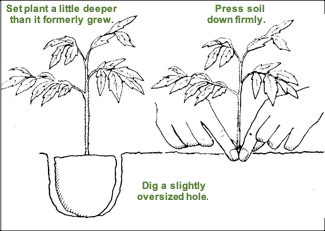
Dig a transplant hole that is about 1 inch wider and deeper than the transplant pot. If you want to add compost, dig the transplant hole another 1–2 inches deeper and place 1–2 inches of compost in the bottom of the hole. Set the transplant into the soil so that it is slightly deeper than the starting container (Figure 5). Place ½–1 inch of soil over the top of the potting mix and press down firmly so the transplant is secure. When transplanting peat pots, cover the pot rim with soil to prevent it from acting as a wick that draws moisture away from the roots.
Transplant in the late afternoon or on a cool, misty day to reduce transplant shock. Do not expose the roots to drying air. Water the transplanted vegetables immediately to settle the soil around the roots and reduce shock. Apply a small amount of soluble or liquid fertilizer around each transplant. The directions for mixing a starter solution appear on all soluble fertilizer products. Follow the directions carefully, and do not add more fertilizer to the solution than is recommended, as this can burn the transplant.
Arranging vegetable plants within your garden area depends mainly on the amount of space and time you have available and the types of crops you choose to grow. You can maximize your garden space by planting several rows of a crop according to the distance information in Table 4. Use this spacing to separate plants in the same row and between rows. Plants will be almost touching when they are fully grown. For small plants such as lettuce, radishes, and spinach, plant four to six rows to-gether. For plants that are knee high, plant two or three rows together. For taller plants, such as corn, plant in a single or double row. You do not need walking room next to each row, but you do need enough space to reach every plant for harvest.
The planting of crops in long rows started when livestock were used to cultivate gardens. Out of tradition, many gardeners still grow their vegetables in rows. Row planting may be the most efficient planting technique if you mechanically seed and weed your garden, but beds are more space-efficient and weed control is more effective when crops are closer together.
Raised beds are ideal for growing most vegetables and the yield per square foot is often greater than that from single rows. The use of raised beds allows you to concentrate soil preparation and fertility in small areas, resulting in effective use of soil amendments. A higher percentage of the available growing space is used, there is less room for weeds to grow, and water can be used more efficiently. Raised beds are a good choice for perennial crops in wet areas to ensure that the soil around the plants remains well-drained throughout the winter.
The width of a raised bed should allow you to reach from both sides into the middle of the bed (e.g., 3–4 feet). The length of the bed should fit the available garden space and your need to move around the ends. If you are gardening with children, shorter beds may be best to allow easy access.
Beds can be built up by adding compost and mixing it together with soil. This improves the soil structure and is especially effective if the native soil is compacted or poorly drained. Raised beds improve drainage by allowing water to drain from the bed into the alleyway through the force of gravity. A drier soil warms sooner and stays warmer longer, allowing for earlier spring planting and later fall production. Depending on how tall you make your beds they can also be easier to plant, weed, and water. Raised beds can be placed on hard surfaces, slopes, and rooftops to make use of space that would normally be considered unusable for gardens.
To create a raised bed, first remove all grass and weeds from the area. Place a layer of compost 4–6 inches deep on the ground so that it covers the desired width and length of the bed. Remove the topsoil from the surrounding four sides and place on top of the compost. Place 2 inches of fresh compost on the surface of the bed before planting each season’s crop. See Raised Beds (Cogger 2012, FS075E) for more information.
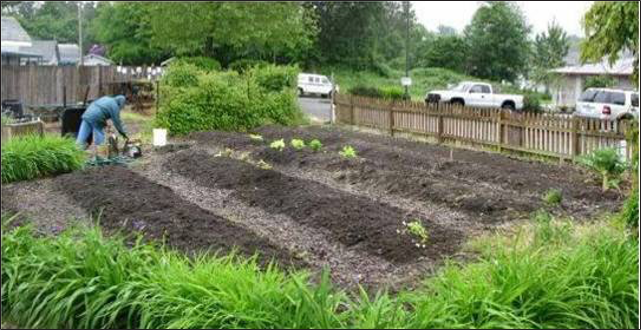
It is not necessary to frame a raised bed (Figure 6). Having an unframed bed allows you to change the bed shape and location each year, and costs less to build. Unframed beds need to be re-shaped each year, which you can easily do by raking any soil and compost that may have slipped or washed into the alley way back onto the bed.
Wood is the traditional material used to construct frames for raised beds (Figure 7A). Untreated wood will last several years, while treated wood can last twice as long. Today, treated wood that does not contain toxic chemicals is available; be sure to select this type of treated wood to frame your raised beds. Alternatively, plastic lumber and galvanized metal (Figure 7B) are useful for framing raised beds because they are longer-lasting. These materials are also lighter than wood, and therefore can be more easily moved from one location to another if needed. To construct a framed raised bed, first level the ground on all sides of the bed so that the soil does not wash out under the frame.
In a straw bale garden, the crops are grown in the tops of straw bales, creating a raised bed that is a convenient height for care and harvest.
Straw bales are placed on the soil surface and there is no need to dig into the soil, which can be very useful if your garden soil is unsuitable for growing vegetables. Use bales made from straw, not hay, to make a straw bale garden. (Straw is the stem of a grain plant that has been cut after the grain has been harvested, whereas hay is the whole plant harvested while still somewhat immature. Hay usually contains many seeds which will sprout into weeds.)
To construct a straw bale bed, place the straw bales in the area where they will be used, as they will be too heavy to move after you prepare them for planting. To prepare the bales for planting (also called conditioning), wet the bales thoroughly for 7–10 days so they are saturated. This will start the decomposition process, which is necessary to prevent the bales from heating after your planting is complete. Let the bales rest for 3–5 days, then add 3 inches of a 50/50 compost and soil mixture to the top of the bale. Straw does not hold water as well as garden soil, so be sure to water frequently throughout the growing season, especially when it is hot or dry.
Straw bales are best-suited for crops that grow to a medium height and develop a relatively deep rooting system, such as tomatoes, peppers, eggplant, squash, melons, and herbs. Potatoes and other vegetable crops that have the edible portion below ground are not well-suited for growing in straw bales. Tall crops such as corn do not work well in straw bales because the plants will fall over.
This method of intensive gardening is best suited to crops that are planted close together, and can be used with raised beds or flat areas. Arrange the plantings in 1-foot squares to maximize space and make it easier to plan how much of each crop you will grow. Plant each square with a different crop. Follow the recommendations in Table 4 to determine how many plants of each crop to place in each square. This planting technique facilitates companion planting and crop rotation (see below). The mixtures of crops can also provide visual appeal in the garden.
Using vertical space frees the ground space for other crops. Examples of vegetables that grow well vertically on a trellis or fence are peas, pole beans, and cucumbers (Figure 8). Melons and small-fruiting pumpkins or winter squash can be grown on A-frames or strong trellises to take up less space, but you will need to support the fruit. Take into consideration the shade that trellised plants will cast on the garden and do not plant heat-loving or late-maturing plants in the shade of the trellis. Plants that do well with cooler temperatures, such as brassicas, or that bolt with high temperatures, such as lettuce, are well-suited to being grown on the shady side of trellises.

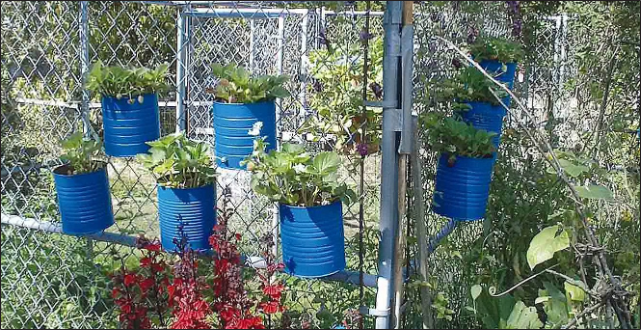
Another type of vertical gardening involves hanging containers from vertical structures or poles. Tomatoes are well-suited for this production technique, as they will spill over the sides of the containers, buckets, or bags and grow upside down. Tin cans, shoe caddies, or gutters can be hung on fences and walls and filled with soil and plants as long as you take care not to plant anything that will get too big for the amount of soil and space around the plant (Figure 9). Water frequently and fertilize often.
Whole walls can be covered in smaller plants like spinach with the help of a grid to hold soil and water in place. Lettuce and strawberries are well-suited to being grown this way, as they have a shallow rooting system and are both low- and fast-growing.
If you have extremely limited space or poor soil conditions, growing your vegetables in containers is a good strategy to achieve healthy plants. Containers that can be used for vegetable gardening range from ceramic and terracotta pots to whiskey barrels and cattle troughs. You can make a container out of most anything as long as it has a drainage hole and will hold a gallon or more of good soil or potting media. Add a stake to support plants, as they may fall over. The stake can be placed in the container, attached to the outside of the container, or in the ground next to it. Vegetable Gardening in Containers (pdf) (Masabni 2009, E-545) provides more information on container gardening, including ideal vegetable types and guidelines for care when using this method of growing.
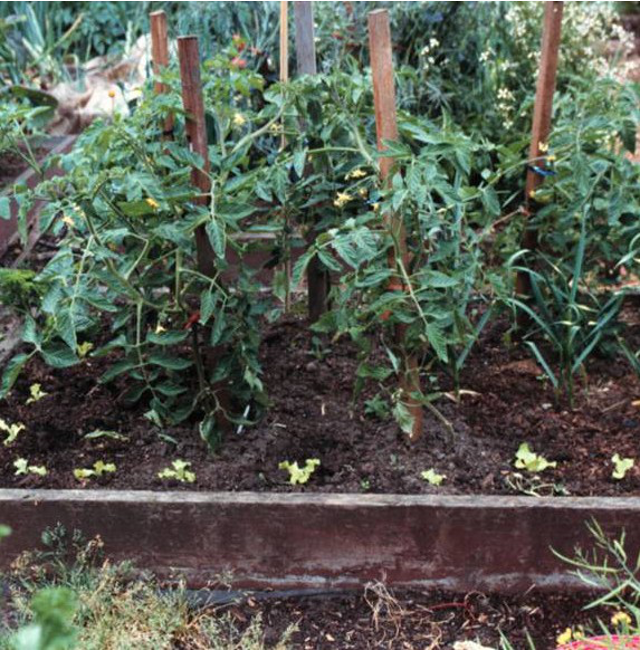
Planting two or more crops in the same bed area or in adjacent rows is referred to as intercropping. Intercropping is used to share above- and below-ground space or use the space more efficiently with slow- and faster-growing crops. See Table 6 for rooting depths of some common vegetable crops. An example of intercropping is to plant a row of fast-growing radishes between rows of slow-growing carrots or onions. Harvest the radishes as they mature, and you will have space for the carrots or onions. Or, plant fast-growing and shallow-rooted lettuce between slow-growing and deep-rooted tomato plants (Figure 10). The lettuce will be ready to harvest by the time the tomato plants need the room.
Table 6. General rooting depths of some common vegetable crops grown in Washington (adapted from Maynard and Hochmuth 1997, 221).
When intercropping is used in such a way that the plants benefit nearby crops, it is referred to as companion planting. Adjacent plants interact on many different levels, but benefits derived from companion planting may include soil nutrient additions from one crop to the other, pollinator attraction, and pest management. For example, intercropped legume crops can “fix” atmospheric nitrogen via bacteria. This nitrogen will be available to adjacent or following crops when the legume plant’s roots decay. Companion planting can help attract pollinators, improving pollination for certain crops that may be less desirable to pollinators. Mixing plants together in a raised bed or row can also interfere with an insect’s ability to find its host. This method of pest management is most effective against pests that locate their host by visual or olfactory (smell) cues, such as carrot rust fly. However, there is little evidence that shows effective companion planting strategies for pest management.
Succession planting is the planting of a second, third, or fourth crop after the first crop has been sown or harvested. An example of succession planting is seeding a crop every two weeks for three or four plantings so that it will mature a week or two apart throughout the season. This planting method is well-suited to crops that mature in 40–60 days and are harvested once, such as turnips, beets, radishes, lettuce, and kohlrabi.
Another way to achieve a succession crop is to harvest a single planting at different stages of maturity. This method is especially well-suited to leaf crops that can be harvested very young and are used as a salad or braising mix. Salad crops include lettuce, arugula, kale, mustard, and beets. Braising crops include bok choy, mustard, kale, turnip, and collards. For example, broadcast lettuce seed and when plants have 4–6 leaves, harvest every other plant as baby leaf lettuce. Once plants have 8–10 leaves, harvest 2–4 outer leaves per plant every week for salad. When plants become crowded or lettuce heads begin to form, harvest every other plant. Harvest remaining plants before they bolt. Bolting refers to forming a flower stalk, which can create a bitter flavor in the plant.
Onions are another crop that can be harvested at several stages of maturity. Plant onion seed, sets (small bulbs), or transplants 1 inch apart in the row; when plants are pencil-size, begin harvesting up to two-thirds of the plants as green onions, leaving one plant every 3 inches to produce a large bulb.
Rotating crops by family (Table 7) helps prevent soil-borne diseases, such as Verticillium wilt and Phytophthora root rot that are common in the Pacific Northwest, from building up in the soil. Follow a 5–7 year rotation if possible, which means not planting crops within the same family in the same bed or row for 5–7 years.
Table 7. Vegetable crop classification by family, genus, and species.
New Zealand Spinach, Tetagonia expansa
Sweet Potato, Ipomoea batatas
Corn, Sweet, Zea mays var. rugosa
Corn Salad, Valerianella oliteris
Many vegetable crops have rather shallow root systems (18 inches or less). If the soil becomes too dry, their growth may be seriously limited. Most vegetable crops require 1 inch of water per week for optimum production. If your area does not receive this amount of rainfall each week during the growing season, you will need to irrigate your garden using overhead sprinklers, soaker hoses, drip tape or hand watering. For specific irrigation methods and amounts, see Drip Irrigation for the Yard and Garden (Peters 2011, FS030E) and Watering Home Gardens and Landscape Plants (Ophardt 2001, EB1090).
A good garden soil allows water to enter and excess water to drain from the root zone. It has the capacity to hold water, air, and nutrients and make them available for plants and microorganisms. It has a stable structure that is easy to dig and resists erosion. Additional detail on soil management and organic fertilizers is available in Home Gardener’s Guide to Soils and Fertilizers (Cogger 2005, EB1971E). Soil improvements with mulches are described below in the context of integrated pest management (IPM).
Insect pests, diseases, weeds, birds, rodents and other vertebrate ani-mals can affect your garden’s productivity and aesthetics. In combi-nation, they have an additive effect. For example, rodents, insects, and diseases tend to be more common in weedy gardens. IPM is the science of using multiple targeted tactics that maximize plant pest and disease control and minimize environmental impact. Among the wide range of IPM options is cultivation, mulching, physically excluding or removing pests, advancing planting or harvest dates, interplanting, using resistant plant varieties, enhancing the number of biocontrol organisms or environments that support them, and applying environ-mentally-friendly pesticides.
In addition to the general IPM information presented here, Pest Control in Home Vegetable Gardens (Antonelli 2009, EM009) provides an over-view of insect pests common to vegetable crops grown in Washington.
The most effective IPM strategy is prevention. In home vegetable gardens, this is best accomplished by choosing plant varieties that are resistant to the insect pests and diseases common to a specific area. Such varieties are also more likely to produce good yields.
Weeds can cause significant damage by competing with vegetable plants for sunlight, water, and nutrients. For the most effective control, target weeds at the seedling stage, before they become large enough to interfere with vegetable crop development. Use shallow, frequent cultivation with a hoe to manage small or shallowly-rooted weeds. Hoeing following a light rain both manages weeds and prevents crusting of the soil surface. However, digging in saturated soil can destroy soil structure and result in soil compaction, which prevents roots from desirable plants growing deeper into the soil and accessing nutrients.
By applying organic or synthetic mulches to the soil surface, you can minimize weeds, improve soil quality, modify soil temperature, and increase water conservation. In addition, mulching can prevent soil erosion, eliminate crop damage caused by deep cultivation or hoeing, and help keep crops free of soil particles.
Common organic mulches are wood chips, compost, grass clippings, newspaper, cardboard, and straw; common synthetic mulches are plas-tic and landscape fabric. Mulches affect weed growth by blocking light, and in the case of black plastic, landscape fabric, and cardboard, also act as a physical barrier to weed growth. Mulches can be a key part of garden weed management, but they do not completely control weeds. They also have limited effectiveness against perennial weeds such as horsetail, quackgrass, and morning glory that can send rhizomes or roots considerable distances. In areas of heavy rainfall, synthetic mulches may cause water to pool on the surface or become runoff.
Mulches can also be used to help regulate soil temperatures. Depending on the type of mulch chosen, it can either increase or decrease soil temperature. Organic mulches insulate the soil, resulting in lower temperatures and less drastic temperature fluctuations. This can be a disadvantage in the spring when warm soil temperatures are needed to speed germination and crop growth. In the heat of summer, however, organic mulches can be a benefit by keeping soils cooler. Black plastic mulch absorbs heat and warms the soil in the spring and summer, creating a better environment early in the season for warm-season crops such as melons, tomatoes, and peppers. See Using Biodegradable Plastics as Agricultural Mulches (Corbin et al. 2013, FS103E) for another option.
Apply organic mulches when vegetable plants are 2–3 inches tall, leaving 2–3 inches around the plant unmulched. If you apply mulch to a newly-seeded area, do not cover the seed row with the mulch. Before applying mulch, first remove weed seedlings from the area. If you are using drip irrigation, lay the drip tape on the bed or next to the row (not closer than 2 inches to the vegetable plant) before applying the mulch. Coarse-textured mulch materials, such as straw or grass clippings, are more desirable than fine or flat materials, such as sawdust or leaves. If fine or flat materials are used, loosen them occasionally to prevent sealing the soil surface. Only a thin layer (less than 1 inch) of organic mulch is needed to con-serve soil moisture, and 2 inches or more is desirable for weed control.
Use bark mulches or wood chips around perennial plantings and on pathways. To create an attractive and effective weed barrier, first place a thick layer of newspapers or cardboard on the soil surface, then cover with bark, wood chips, or straw. This can be an excellent way to manage weeds in alleyways. When the mulch decomposes, rake it onto the bed and place a fresh layer of both in the alleyway. Do not till bark or wood chip mulches into the soil close to plants, as they will tie up nitrogen as they decompose.
Synthetic mulches should be removed and discarded at the end of the season or when they are no longer useful as mulches. Organic mulch materials can be turned into the soil with a spade or rototiller or placed in your compost pile. A benefit of using an organic mulch material is that it adds organic matter to the soil. If you are gardening in the winter or live in an area with heavy rainfall or wind, do not remove organic mulch. Leaving organic mulch on the soil surface will protect the soil from wind and water erosion and reduce weed germination. The organic mulch will break down over the winter, creating a rich top layer of humus. This method is suitable for minimum or no-till gardening.
Regular removal of plant debris during the growing season is another useful preventive IPM method. Many plant diseases and some insect pests overwinter in gardens on dead plants or vegetables that were not harvested. Do not compost infected plant material, as many home composts do not become hot enough to reliably kill disease-causing organisms, weed seeds, or insects. Similarly, tilling any remaining plant material after the growing season into your garden can cause insect pest and disease problems the following season.
Look for problems in your garden each week and treat appropriately before the damage becomes severe. It is important to accurately identify the problems in order to determine how best to control it. For help in identifying insect pests and diseases, contact the Master Gardener clinic in your county. Be prepared to select the type of management program you are prepared to use, such as no-chemical, organic-only, or conventional pesticides.
To enjoy the highest quality flavor and texture from the vegetables you grow, harvest them at their prime maturity. If you are new to gardening and unsure about the best size or stage of maturity for your vegetable crops, try them at different stages and see what you prefer. The following are some general guidelines.
Pick tomatoes when they are fully colored but still firm. When picked at this stage, the tomatoes can be stored for 1–2 weeks. Overripe tomatoes quickly lose flavor as well as texture.
Snap beans are best when the bean is just beginning to develop in the pod. However, some people prefer them at a slightly more mature stage. When beans are full-size, they can be harvested and shelled.
Harvest summer squash when they are 4–7 inches long and the skin feels soft and rubbery. Once the skin begins to feel smooth or slick, they are past the best eating stage.
Harvest sweet corn as soon as the kernels are well-filled and milky. The tip of the ear within the husk should be blunt and not pointed. If in doubt, peel back the husk and examine the tip before you break off the ear. If it is not ready, just fold the husk back over the ear, and check again in a week or so.
Begin to harvest head lettuce and cabbage as soon as the heads become firm. If you have a number of plants, you may want to begin harvesting when they are immature, which will spread out the harvest over the growing season. Cabbages with firm heads can be given a quarter-turn twist to break part of the roots and slow growth. This can also help prevent splitting.
Beets, turnips, and kohlrabi are usually best at 2–2½ inches in diameter. They will grow larger if harvest is delayed, but may lose flavor and become woody.
Harvest winter squash (hubbard, acorn, butternut, etc.) when they are fully mature and the skin is hard and waxy. Winter squash can be left in the garden until cold or wet weather begins in the fall, but need to be harvested before temperatures remain below 40°F for several days at a time. Pick winter squash with the stems attached.
Many vegetables can be stored for several weeks or even months before they lose flavor and quality. Optimum storage conditions are described in The Commercial Storage of Fruits, Vegetables, and Florist and Nursery Stocks (Gross et al. 2004).
Information on how to preserve the vegetables you grow is available from the USDA National Center for Home Food Preservation website, hosted by the University of Georgia.
For a broad range of information on growing specific vegetable crops, visit the WSU Extension Online Store and enter “Home Garden Series” in the search bar.
By Carol Miles, Vegetable Extension Specialist, WSU Department of Horticulture; Gale Sterrett, Program Assistant, WSU Department of Horticulture; Lyn Hesnault, Program Assistant, WSU Department of Horti-culture; Chris Benedict, Regional Extension Specialist, WSU Whatcom County Extension; and Catherine Daniels, Pesticide Coordinator, WSU Puyallup Research and Extension Center.
All photographs by Carol Miles unless otherwise indicated.
Use pesticides with care. Apply them only to plants, animals, or sites as listed on the label. When mixing and applying pesticides, follow all label precautions to protect yourself and others around you. It is a violation of the law to disregard label directions. If pesticides are spilled on skin or clothing, remove clothing and wash skin thoroughly. Store pesticides in their original containers and keep them out of the reach of children, pets, and livestock.
Copyright 2013 Washington State University
WSU Extension bulletins contain material written and produced for public distribution. Alternate formats of our educational materials are available upon request for persons with disabilities. Please contact Washington State University Extension for more information.
You may download copies of this and other publications from WSU Extension.
Issued by Washington State University Extension and the U.S. Department of Agriculture in furtherance of the Acts of May 8 and June 30, 1914. Extension programs and policies are consistent with federal and state laws and regulations on nondiscrimination regarding race, sex, religion, age, color, creed, and national or ethnic origin; physical, mental, or sensory disability; marital status or sexual orientation; and status as a Viet-nam-era or disabled veteran. Evidence of noncompliance may be reported through your local WSU Extension office. Trade names have been used to simplify information; no endorsement is intended. Published February 2013. This publication replaces EB0422 and EB0648.