Growing Cucumbers in Home Gardens (Home Garden Series)
Description
Information is provided on the definition, culture, and care of cucumbers when grown in home gardens. ...
Selecting Types to Plant
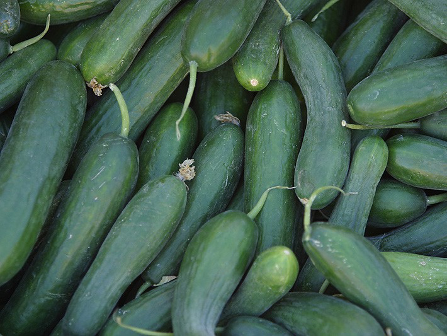
Pick varieties that appeal to both your taste and culinary use. Slicing cucumbers are primarily used for fresh eating and in salads. Pickling cucumbers, which form small fruit about 3 to 6 inches long, are suitable for pickling. These may also be eaten fresh, although it’s best to peel them first. There are also novelty types, such as the yellow, round lemon cucumber, or the foot-long Asian.
Be sure to select a variety that matures within the growing season of your geographic area. Most cucumbers require 50 to 70 days from planting to first harvest; and this may require a longer growing season than some areas in Washington allow. For western Washington gardens, select early maturing varieties.
Choosing a Planting Site
Cucumbers require full-sun exposure, and will grow best when planted in fertile, well-drained soils that contain a high level of organic matter. The plants need ample space, as the vines can reach three to five feet in length before setting fruit. Some gardeners grow cucumbers on a fence or trellis to save space and to keep the fruit off the ground. Trellising cucumbers can increase yields 2 to 3 times, due to better disease control (increased airflow reduces foliar diseases), less damage to vines during harvest, and more thorough harvesting. Cucumbers have moderate to high water needs, particularly during the heat of summer.
Planting Guidelines
Purchase seed from catalogs and garden centers. It is not recommended to plant cucumber seed that have been saved from the previous year, as they are unlikely to produce the same variety. When sowing seeds outdoors, germination is best when the soil temperature is at least 55 °F. Seeds can be planted in mid- to late-May, 4 to 5 seeds per hill (mounds of soil) at a depth of 1-inch. Space the hills 4 to 5 feet apart. When the plants develop two to three leaves, thin the plants to three well-spaced plants per hill. Cucumbers grow best when temperatures are between 70 and 95 °F. Cucumbers are frost-tender vegetables, meaning frost will kill the plants.
Cucumber plants may be started indoors (in the home or greenhouse) four to five weeks prior to transplanting in the garden. Plant seeds in 4-inch pots made of paper, compressed peat soil pellets (such as Jiffy-7’s), or even egg cartons. Transplant cucumber plants outdoors after the danger of frost has passed.
Pest Management
Diseases. Plant diseases can affect cucumber yield in home gardens. To reduce disease, avoid overhead watering to prevent water from splashing onto cucumber foliage. If plants are not growing properly, dig them out and discard them (do not compost). Gardeners should investigate problems with weak plants and why they failed to grow. The best strategy to combat plant disease is to avoid planting susceptible plants in an infected area, or by planting cucumber varieties bred for resistance to specific diseases.
Insects. When a gardener plants a few rows of cucumbers each year and rotates the plants within the garden from year to year, insect pest problems are few and rarely affect fruit quality. Healthy vines tolerate pest damage, while stressed (often water stressed) vines may attract insect pests. By periodically scouting cucumber plants for insect presence or signs of damage (leaf discoloration, insect feeding damage on leaves, vine tip dieback, surface marking on fruit), gardeners may anticipate problems and control pests before they jeopardize the health of the plant or quality of the fruit. Learn to recognize the beneficial insects, especially insect predators, and encourage their presence in your home landscape. Contact your local WSU Master Gardener program to assist you in identifying pests and beneficial insects.
Common Problems
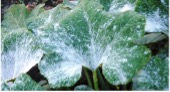
Powdery Mildew
A fungal problem common in eastern Washington.
Photo: R.S. Byther
Symptoms: Powdery white patches on leaves. Russet-like brown and dead areas on leaves.
Corrective Action: Promote good air circulation within plant canopy. Plant disease resistant varieties. Destroy infested material. Fungicides are not recommended.
Angular Leaf Spot
A bacterial problem frequently encountered in western Washington.
Photo: R.S. Byther
Symptoms: Leaves, stems, and fruit with water-soaked angular spots. Leaf lesions dry out and drop, leaving irregular holes.
Corrective Action: Avoid overhead watering. Plant disease resistant varieties. Rotate crops; do not plant cucumbers in consecutive years. There are few pesticides available to homeowners.
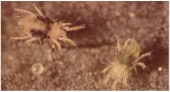
Spider Mites
A common problem in dry, hot areas, such as eastern Washington (or in greenhouses).
Photo: L.K. Tanigoshi
Symptoms: Whitish yellow stippling along leaf midrib. Leaves turn yellow, then bronze, and then die. Mites and webbing can be found on the underside of leaves.
Corrective Action: Wash aphids from plants with a strong stream of water. Drought stressed plants are susceptible to mites; water properly. There are insecticides labeled for use on cucumber to control these mites.* Avoid broad-spectrum insecticides that kill beneficial predators like ladybeetles, lacewings, and predatory mites.
*For a list of products available for home garden pests, consult the WSU Hortsense.
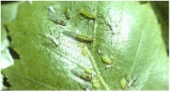
Aphids
Photo: A.L. Antonelli
Symptoms: Infested leaves will become curled all around the aphids. Aphids excrete honeydew—a sticky, shiny substance—that coats leaves.
Corrective Action: Wash aphids from plants with a strong stream of water. There are insecticides labeled for use on cucumber to control aphids. Avoid broad-spectrum insecticides that kill beneficial predators such as ladybeetles, lacewings, and predatory mites.
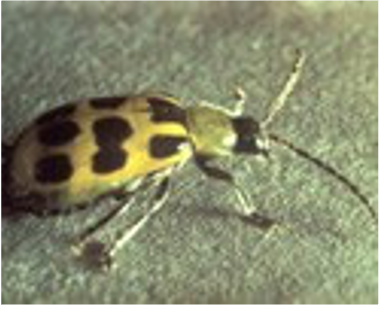
Western Spotted Cucumber Beetle
Photo: K. Grey
Symptoms: Adult beetles are about ¼ inch long, with black bodies and yellow wing covers with black spots. Adults feed on leaves of plants. Larvae may also feed on roots.
Corrective Action: Handpick and destroy eggs and bugs. Clean up vegetative debris in autumn to discourage overwintering beetles. There are insecticides labeled for use on cucumber to control these beetles.*
*For a list of products available for home garden pests, consult the WSU Hortsense.
Bitterness
Symptoms: Cucumbers taste bitter.
Corrective Action: This is a temporary problem caused by plant stress, for example, temperatures below 60°F or above 90°F, drought conditions, or poor plant nutrition. The bitter flavor can be reduced by peeling the cucumbers to remove cucurbitacin; a compound in the peel that causes bitterness.
Harvest and Storage
Harvest by size depending on intended use. Do not allow cucumbers to reach the yellowish stage as they become soft and bitter, and overall plant yield will be reduced. Frequent picking of cucumbers is essential to encourage new fruit. Harvest by cutting the stem ¼ inch above the fruit. Do not trample the vines any more than necessary to harvest the crop. After the final harvest, remove and compost remaining plant debris. Alternatively, turn under the remaining plant material in the fall to help replenish nutrients and contribute to the organic matter in the soil.
End Uses
Fresh eating cucumbers: Choose young cucumbers with tender skin. Wash and cut in desired slices or segments.
Pickling cucumbers: Visit the National Center for Home Food Preservation’s website for pickling information.
Further Reading
- Andress, E. and J. Harrison. 2006. So Easy to Preserve. The University of Georgia Cooperative Extension Bulletin 989.
- Foss, C. and A. Antonelli. 2011. Hortsense. Washington State University Extension.
- Miles, C. 2013. Home Vegetable Gardening in Washington. Washington State University Extension Publication EM057E.
- National Center for Home Food Preservation. University of Georgia.
- Pacific Northwest Vegetable Extension Group. 2012. Photo Gallery of Vegetable Problems. Washington State Univer-sity, Oregon State University, and University of Idaho.
- Photo Gallery of Vegetable Problems. Washington State University.
- Rabb, C.A. 2007. Pickling Vegetables. University of Idaho Extension Publication PNW355.
- Sanders, D and J. Davis. 2001. Trellised Cucumbers. North Carolina State University.
By Sheila Gray, WSU Lewis County Extension, Chehalis, WA.
Use pesticides with care. Apply them only to plants, animals, or sites as listed on the label. When mixing and applying pesticides, follow all label precautions to protect yourself and others around you. It is a violation of the law to disregard label directions. If pesticides are spilled on skin or clothing, remove clothing and wash skin thoroughly. Store pesticides in their original containers and keep them out of the reach of children, pets, and livestock.
Copyright 2013 Washington State University.
WSU Extension bulletins contain material written and produced for public distribution. Alternate formats of our educational materials are available upon request for persons with disabilities. Please contact Washington State University Extension for more information.
You may download copies of this and other publications from WSU Extension.
Issued by Washington State University Extension and the U.S. Department of Agriculture in furtherance of the Acts of May 8 and June 30, 1914. Extension programs and policies are consistent with federal and state laws and regulations on nondiscrimination regarding race, sex, religion, age, color, creed, and national or ethnic origin; physical, mental, or sensory disability; marital status or sexual orientation; and status as a Vietnam-era or disabled veteran. Evidence of noncompliance may be reported through your local WSU Extension office. Trade names have been used to simplify information; no endorsement is intended. Published April 2013.