Description
Table of Contents
- Introduction
-
Vineyard Economics
- Developing a Business Plan
- Status of the Washington, Oregon, and Idaho Wine Industries
-
Financing
- University Programs for Agriculture Business Development
- United States Department of Agriculture Natural Resource and Conservation Services (USDA NRCS)
Introduction
Vineyard establishment requires careful planning and implementation. This guide addresses factors that landowners need to consider before planting new vineyards in Idaho, Oregon, and Washington. These initial decisions regarding land suitability and purchase, vineyard establishment, and marketing are key to the future success of a business. While this guide is primarily focused on the vineyard and grape production aspects of the industry, essential information regarding winery establishment is also included where issues for the two overlap.
This publication provides online links throughout the text to reputable information from state and national Extension programs and other local, regional, and federal organizations. If you are reading this guide on electronic media, accessing these links will take you directly to the corresponding website.
Vineyard Economics
Vineyard establishment requires significant upfront investment, and it will take years before you will see a return on this investment. So that you are reasonably prepared for such an undertaking, it is important to create a thorough and well-defined business plan.
Developing a Business Plan
To develop a business plan, know the following:
- the average sales price for the different grape cultivars at harvest, which may vary tremendously between different viticulture areas and over time with wine production trends (see the Status of the Washington, Oregon, and Idaho Wine Industries section),
- how the grapes will be marketed (see the Location and Marketing section); and
- whether value will be added to the grapes by producing wine or if they will simply be sold to a winery or processor. It is ideal to develop a contract with a winery or processor before establishing a vineyard, but this is not always easily done. Often winemakers or purchasers will determine what variety to plant based on demand.
The following resources are currently available to provide guidance in developing a vineyard business plan (see also the Financing section).
Northwest Grapes Cost-of-Production Calculators provide a quick assessment of production costs, require little to no training before they can be used, and can be modified using specific production cost numbers.
Enterprise budgets for wine grapes in Oregon are available from OSU Extension and University of Idaho (UI) Extension has a number of publications regarding the feasibility of growing wine grapes. These publications provide economic scenarios at a snap shot in time and thus are subject to change based on cost of labor, use of mechanization, and changes in grape market. The information that changes less frequently is the details on vineyard inputs and labor hours required.
When planning, use these resources to guide you, but recognize that vineyard design decisions will impact the establishment costs and economic trajectory of a specific vineyard over time and a personalized farm business plan will be needed.
Status of the Washington, Oregon, and Idaho Wine Industries
The US Department of Agriculture National Agricultural Statistics Service (NASS) maintains annual production statistics for grapes from the two largest production regions in the United States: California and Washington. Limited information is available for other states. For information regarding grape cultivars being planted and harvested, current yields, prices per ton of harvested fruit, and winery production statistics, see the annual Grape Statistics Release for Washington State and Grape Statistics Release for Oregon State. Be sure to read reports from prior years to better understand trends in vineyard production. We also recommend reaching out to the various grower organizations listed in Location and Marketing, as they often develop routine industry reports which can be used to judge the health of the local industry. University of Idaho Extension has a publication on the value of the industry to the state. State industry groups, such as those listed in the Location and Marketing section of this manual, also maintain data on their members’ production statistics.
While national, regional, and local production statistics are a great way to see the current status of the grape industry, the key to a successful business is to have insight as to where the industry is going in the near and long term. Consult with potential buyers and statewide associations to understand future trends in production.
Financing
Research the availability of financing before making a commitment to buy land or establish a vineyard. The programs discussed below are designed to help find alternative funding sources; however, meeting with a local banker to discuss small business loan options is essential.
University Programs for Agriculture Business Development
When starting a business enterprise, there is great expense in establishment. For more information on finding funding sources for any size farm, see the OSU Small Farms Program, WSU Small Farms Program, or the UI Small Acreages and Local Food.
United States Department of Agriculture Natural Resource and Conservation Services (USDA NRCS)
USDA NRCS partners with private landowners and managers to conserve soil, water, and other natural resources. Of particular interest to prospective wine grape growers is the Environmental Quality Enhancement Program (EQIP), which is a voluntary conservation program for farmers that promotes agricultural production and environmental quality. The EQIP offers financial and technical assistance to eligible participants so that they may implement conservation management practices on eligible agricultural land. Participation in these programs is voluntary, but the use of a laboratory that is currently accredited by the North American Proficiency Testing Program for soil and tissue analyses is required. More information can be obtained for your state program in Oregon, Washington, or Idaho.
Location and Marketing
American Viticultural Areas (AVAs) are geographically unique grape-growing regions recognized by the US Alcohol and Tobacco Tax and Trade Bureau (TTB) under the Code of Federal Regulations Title 27, Part 9. To determine AVA boundaries, search specific appellations on the TTB website. Maps of AVAs are also available by contacting the US Geological Survey (1-800-HELP-MAP). Each area is characterized by specific growing conditions that affect grape or wine quality and differentiate cultivars from those grown in other areas. Locating a vineyard within a given AVA can improve grape marketing to wineries and provide benefits when selling wine.
For additional information on marketing, status of the industry, connections to other state agencies of interest, fee structures associated with membership in regional grower groups, and state taxation, contact the following organizations:
- Oregon Wine Board (OWB)
The OWB is a semi-independent state agency that manages marketing, research, and education initiatives that support the Oregon wine grape industry. The OWB is appointed by the governor and works on behalf of all Oregon wineries and independent growers throughout the state’s diverse wine-growing regions. All industry members in the state are members of this organization based on their payment of tonnage and production volume taxes that support the OWB. - Oregon Winegrowers Association (OWA)
The OWA is a voluntary membership-based organization that provides legislative and regulatory advocacy for the Oregon wine industry by presenting key issues for unified positive resolution before state and federal government agencies. To become an OWA member, individuals must have more than one acre of grapevines and/or serve as an owner, manager, or investor in a bonded winery in Oregon. - Washington Winegrowers Association
The WA Winegrowers advocates for the Washington wine industry by educating, promoting, representing, and unifying wine grape growers. The most important service to the membership is continuing education for a growing industry focused on premium quality. Membership includes vineyard and winery owners and suppliers. - Washington Wine Industry Foundation (WWIF)
The WWIF is a nonprofit organization that funds scholarships, educational events, outreach, and research for the Washington wine grape industry. It is funded through contributions and grants from individuals, organizations, and companies. - Washington State Wine Commission (WSWC)
The WSWC represents all licensed wineries and wine grape growers in the state of Washington. Funded almost entirely though grape and wine sales assessments, it is a government agency focused on raising awareness of Washington wines. - Washington State Grape Society
The Washington State Grape Society is made up of growers, industry personnel, educators, and researchers whose goal is to promote the advancement of the grape industry in Washington. It provides scholarship opportunities for students in viticulture, workshops for growers, and advocacy for legislative activities related to the viticulture industry. - Idaho Wine Commission (IWC)
The IWC (also called the Idaho Grape Growers and Wine Producers Commission) is an industry organization that provides marketing, promotion, and information resources in support of a more productive wine business climate in Idaho. With a small and growing industry, this organization focuses on marketing events, education, and research. It is funded by wine and grape tax assessments, and all vineyard and winery owners in the state are members.
Permits and Regulations
There are numerous rules and regulations for vineyard and winery businesses administered by federal, state, and local governments such as building and selling permits, establishment locations, and particulars on sales. Various legal components of the wine business vary by state, including the following: definitions of what constitutes a commercial winery, where you can establish a winery, where you may undertake sales, bonding, labeling of wines, and transportation of wines. The time it takes to obtain a license can also vary drastically by state. Check with your state organization for details and assistance. For information about regulations that involve the farming aspects of vineyard establishment, such as water use and water rights, please see the Site Suitability section of this manual.
Federal
The US Department of the Interior Bureau of Land Management (BLM) undertakes extensive land use planning through a collaborative approach with local, state, and tribal governments, the public, and stake-holder groups. They provide information on water laws and long-term use of public lands. The BLM is also responsible for managing all land status records. The Oregon and Washington office is housed in Portland, Oregon, and the Idaho office is in Boise, Idaho.
The US Department of Treasury’s Alcohol and Tobacco Tax and Trade Bureau (TTB) collects alcohol excise taxes and ensures that these products are labeled, advertised, and marketed in accordance with the law. Their focus is on protecting consumers and federal revenue. The TTB issues licenses and permits for bonding, deferments, transfers, transportation, and labeling that may take six months or more to be granted.
State and Local
Oregon
- Oregon State Legislature. The rules and regulations governing the minimum size of land for building a winery are contained in Oregon Revised Statutes. This statute defines the size of a winery in terms of gallons of wine produced as a function of the minimum acreage of a vineyard.
- County zoning codes. Each county in Oregon has its own ordinances governing land use and siting of a winery in unincorporated areas. Apply directly to the local county planning committee for a conditional use permit to site a winery or a vineyard with a potential future winery.
- City ordinances. Cities may have ordinances governing land use development within incorporated areas. Often, certain locations are identified for new commercial use within the city limits. Permit applications are available from planning committees.
Washington
- Washington State Legislature. The laws governing and defining wine business operation in Washington State are contained within the Revised Code of Washington under Alcohol Beverage Control and administered by the Washington State Liquor and Cannabis Board. These rules and regulations define the following: what constitutes a domestic winery or a winery as a distributor and/or retailer of estate wine, off-premise samples, domestic wine made into sparkling wine, and sales at qualifying farmers markets.
- County zoning ordinances. Each county in Washington has rules and regulations governing local land use in unincorporated zones. Contact the county land use planning department directly, as counties have specific regulations that require a potential future winery outlet to apply for both a conditional use permit and a site plan review.
- City ordinances. Each city in Washington has ordinances governing their incorporated zones. Contact the city planning department for further information concerning siting of a prospective winery/sales outlet.
Idaho
- Idaho State Legislature. The Idaho State Liquor Division regulates alcohol sales in the state of Idaho. The Idaho State Police regulate alcohol licensing for establishments and have information regarding direct shipping of wine in Idaho.
- County ordinances. The Idaho State Legislature, in Statutes, Title 23: Alcoholic Beverages, Chapter 13: County Option Kitchen and Table Wine Act, provides an outline for county law governing winery sales and sampling. In addition, each county has specific codes and ordinances which should be consulted before starting any winery or vineyard operation in Idaho.
- City ordinances. As with Oregon and Washington, understanding city ordinances in Idaho is critical if you plan to open a tasting room or operate a winery within city limits. Consult the city planning board for more information.
Eco-labeling Sustainability and Requirements
Certifying a vineyard for “green” practices or eco-labeling wine may help distinguish a product and provide market advantage. It is important to consider these approaches prior to vineyard establishment, as there are some basic farming principles that will differ based on certifications. Most eco-labels are based on marketing to the consumer and/or a winery that has increasing environmental awareness and interests towards sustainability.
Eco-labeling is generally based on one to three of the pillars of sustainability (see the Sustainability sidebar). To help you determine what is involved with each type of eco-labeling, the sections below include symbols that represent which pillars they address. The discussion is limited to the more common farm certifications and eco-labels used in the Pacific Northwest.

Organic Certification
There are numerous organic certification bodies nationwide that certify and administer the process of growing grapes organically. Typically it will take three years to convert vineyards that have been farmed conventionally to organic. During the second year of transition, fruit may be marketed as “in transition.” Examples of regional certification bodies include Oregon Tilth, Oregon Department of Agriculture Organic Certification Program, Washington Tilth, the WSDA Organic Food Program, and the Idaho State Department of Agriculture. While organizations may differ in their specific requirements for certification, all must adhere to the minimum standards set by the USDA National Organic Program.

International Organization for Biological and Integrated Control (IOBC)
The IOBC promotes the use of sustainable, environmentally safe, economically feasible, and socially acceptable control methods of pests and diseases of agricultural and forestry crops. This organization directs other certifying agencies throughout the United States and world, including LIVE (see below).
Salmon-Safe
Salmon-Safe is a certifying organization dedicated to restoring and maintaining healthy watersheds in relationship to land use in both agricultural and urban settings throughout California, Oregon, Washington, and British Columbia. The certification requires management practices that reduce storm water runoff and non-point source pollution, helping to protect Pacific Northwest salmon watersheds. The Salmon-Safe eco-label can be found on many diverse products throughout the Pacific Northwest. Salmon-Safe is one of the eco-labels that partners with other farming organizations such as LIVE, Sustainable WA, and Oregon Tilth.
Low Input Viticulture & Enology (LIVE)
LIVE is a nonprofit organization providing third party certification for vineyards using international standards of sustainable viticulture practices in wine grape production. They also certify wineries with standards in waste water management, carbon emissions, chemical use, and more. Vineyard and winery practices are based on a score system consisting of basic required practices, prohibited practices, and numerous ecological options. LIVE is an accredited member of the IOBC and Salmon-Safe.
SUSTAINABILITY
Sustainability is typically defined by how a practice impacts three defined pillars: the environment, economics, and social equality. The 1990 Farm Bill passed by Congress defined sustainable agriculture as “an integrated system of plant and animal production practices having a site-specific application that will, over the long term:
- satisfy human food and fiber needs;
- enhance environmental quality and the natural resource base upon which the agricultural economy depends;
- make the most efficient use of nonrenewable resources and on-farm resources and integrate, where appropriate, natural biological cycles and controls;
- sustain the economic viability of farm operations; and
- enhance the quality of life for farmers and society as a whole.”
Sustainable symbols for this manual:
ECO-LABELS
Also known as “green labels” for use on wines to inform consumers about associated environmentally friendly growing practices. The practices are usually backed by certification programs which focus on low-input, organic, or biodynamic production and/or environmental stewardship. The Global Ecolabelling Network (GEN) offers extensive information about types of eco-labels, their credibility, and impacts.
Sustainable WA
Sustainable WA is a certification standard built on science-based information for sustainable grape pro-duction. It is third-party certified, and requires annual improvement and growth plan for participating vineyards. The program was built by the Washington wine-grape growing community, specifically for Washington winegrape vineyards.

Demeter USA (Biodynamic)
Demeter is the only biodynamic farming certification organization in the United States, and is part of the international Demeter organization. This certification program views the farm as a single living entity, and seeks to maintain farm longevity and ecosystem health by working with the natural rhythms of the environment, people, and animals that make up the whole system.
Food Alliance
This is a full system program that certifies farmers, processors, and distributors in North America. They focus on providing guidelines by which agricultural and food industry businesses can follow sustainable farming practices, provide safe and fair working conditions, practice humane treatment of animals, and embody environmental stewardship. Certified members are distributed throughout the United States, Canada, and Mexico. They also encompass a wide array of producers who are organic to conventional. This program is the result of an initial collaboration between OSU, WSU, and the Washington State Department of Agriculture.
Global GAP (Good Agricultural Practice)
Global GAP is a private sector group that sets voluntary standards for the certification of agricultural products, primarily in the fresh market. It provides a practical manual for good agricultural practices which can be used anywhere in the world, and is designed to reassure consumers that food products were produced with minimal environmental impacts and a high standard for worker safety. This program consists of an equal partnership of agricultural producers and retailers working to establish efficient certification standards and procedures.
Regenerative Agriculture Certifications
Regenerative agriculture is based on long-term sustain-ability with emphasis on the soil and ecosystem health. Many principles and practices of regenerative agriculture are shared in organic and biodynamic practices but may not be included in those certifications. Regenerative agriculture certification organizations include: A Greener World, Regenerative Organic Alliance, and Regenified.
Site Suitability
Whether developing existing farmland or purchasing new land, there are a number of critical issues to consider regarding the suitability of growing grapes, including climate, topography, soil characteristics, water availability, and environmental impacts.
Climate
Growing degree days
Season length (duration of frost free days) and accumulation of heat units or growing degree days (GDD) should be considered in selecting a site or grape cultivars for that site. Growing degree days are a measure of heat accumulated during the growing season, which generally runs from April 1 to October 31. A single growing degree day is calculated using the average daily temperature subtracted from a threshold (or base) temperature of 50˚F using the equation [(Tmax–Tmin)/2]–50˚F. Seasonal GDD is calculated by summing the daily GDD from 1 April to 31 October.
A GDD calculator is available from OSU’s Integrated Plant Protection Center (IPPC), and GDD accumulation on an exact weather station can be accessed on the IPPC’s US degree-day mapping calculator. Washington State University also has seasonal updates on long-term GDD accumulation and current season GDD accumulation. These GDD reports are available for representative sites within all Washington AVAs. Station-specific GDD accumulations can be downloaded from AgWeatherNet (AWN). Further information regarding historical GDD, seasonal and daily temperatures, precipitation, weather extremes, and other weather data may be obtained from various weather networks and databases that serve the Pacific Northwest:
- AgWeatherNet (WSU)
- Oregon Climate Summaries
- Oregon Climate Services
- Idaho Climate Services
- Agrimet Weather InfoNet (Pacific Northwest Cooperative Agricultural Weather Network)
Grape cultivars differ in their GDD and season length requirements. The basic guide presented in Table 1 provides an outline to assess whether the climate is suitable for cool, warm, or hot climate grape cultivars. Remember that cool-season and cold-hardy are not synonymous. Cold-hardiness is the plant’s ability to survive low temperature thresholds while dormant, while cool-season (or cool-climate) cultivars refer to those that ripen with a lower GDD accumulation.
Table 1. Some examples of Vitis vinifera suitable for cool, warm, or hot climate locations. Cultivars listed in multiple categories indicate that they are versatile in growing requirements, but different wine styles and profiles will likely result from growing in different climate classifications.*| Climate | GDD (base 50°F) | Cultivar |
|---|---|---|
| Cool Climate | 1800–2000 | Madeleine Angevine, Siegerrebe, Pinot Gris, Pinot Noir (rosé), Meunier (rosé), Chasselas, Muscat Ottonel |
| Cool Climate | 2000–2200 | Pinot Noir, Dolcetto, Gamay, Meunier, Chardonnay, Sauvignon Blanc, Verdelho, Green Veltliner, Riesling |
| Warm Climate | 2200–3000 | Cabernet Sauvignon, Merlot, Vigonier, Tempranillo, Petite Verdot, Malbec, Petite Sirah, Grenache, Cabernet Franc, Sangiovese |
| Hot Climate | >3000 | raisin grapes, table grapes** |
*Table modified from Gladstones, J. 1992. Maturity Groupings of Wine Grape Varieties. Chapter 7 in Viticulture and Environment, pp. 66–67. Adelaide, Australia: Wine Titles. Cultivars listed are not inclusive of all available varieties suitable for each climate category.
** Table grapes released from various US breeding programs are able to ripen in cooler climates. Examples include those from the University of Arkansas breeding program (Jupiter, Mars, Venus), American hybrid table grapes from Cornell University such as Himrod, and the Horticulture Research Institute of Ontario (Canada) variety Vanessa. For an additional list of table grape varieties, read Growing Table Grapes.
Spring and fall frosts
Frost typically affects grapes in late spring and early fall. Spring frosts following budbreak can kill emerging shoots, whereas fall frosts can kill the vine canopy and completely stop fruit ripening. Depending on the site, some form of frost protection may be needed to avoid these problems.
Winter freezes
Deep freezes (in the single digits or lower) in winter can kill buds and other above-ground parts of grapevines. This damage can vary dramatically depending on a number of factors. For more information concerning freeze protection, consult the Extension publications Grapevine Training Systems for Managing Winter Cold Injury and Assessing and Managing Cold Damage in Washington Vineyards, and WSU’s website on grapevine cold hardiness.
Topography
An assessment of site topography is vital for design and establishment of a successful vineyard. Slope and aspect determine sunlight exposure patterns, day length, heat accumulation, air drainage, frost and freeze risk, the potential presence of a perched water table, and safe operation of equipment on hillsides.
Large bodies of water (e.g., lakes, reservoirs, rivers) can have a moderating influence on temperature fluctuations. If extreme low temperatures are routinely experienced in an area, consider locating a vineyard near a large body of water to buffer temperature extremes. Both the size of, and proximity to, a body of water will influence these moderating effects.
Soils
While certain soil types are critical to vineyard success, they are only a fraction of the complete soils picture that should be considered during the establishment phase. When choosing a vineyard site, avoid (i) sites with a perched or high water table, (ii) shallow soils and/or soils with an impervious layer, (iii) soil depths less than 2 feet, areas with poor drainage, and (iv) soils that receive a negative recommendation after being submitted for analysis to an accredited laboratory.
Soil types
The Natural Resources Conservation Services (NRCS) Web Soil Survey website utilizes a comprehensive database of soils information to provide users with searchable, interactive soil maps. The website allows you to examine individual farms or parcels by address or GPS coordinates and obtain soil characteristics, slope, altitude, and more. While user manuals are provided within the online program, further assistance in using the website is available from your local or regional NRCS office. Printed soil maps may also be obtained from your local NRCS office.
Soil analysis
Before purchasing land for vineyard establishment, obtain a complete history of uses that may affect future plant growth and quality. Examples include crop production, pasture, USDA Conservation Reserve Enhancement Program (CREP) measures, and waste dumping. Pesticide (i.e., insecticides, fungicides, and herbicides) residues, heavy metal contamination, organic matter and pH should be assessed when you submit a soil sample for chemical and soil texture analysis.
Planting grapes in soils before any remaining pesticide, including herbicide, has broken down may result in debilitated plants or vine death. You need to be aware of any persistent herbicides (Table 2) that are likely to have been applied to fields used for wheat, peas, chickpeas, lima beans, soybeans, alfalfa, lentils, corn, clover, hay grass, ornamental horticulture crops, rangeland, Christmas tree farms, or forestry land.
Table 2. Active ingredients of herbicides with potential soil persistence. Some examples of common trade names registered for use on various crops in Oregon and Washington are given in parentheses. Caution: When in doubt, read the product label to determine the active ingredients.| Compound Class | Active Ingredients (Common Names) |
|---|---|
| Dinitroanilines | benefin (Balan); pendimethalin (Acumen, Pendant, Pendimax, Prowl, Pursuit, Stealth); trifluralin (Buckle, Treflan, TrIap, Trust) |
| Imidazolines | imazapyr (Arsenal, Lightning, Lineage); imazaquin (Scepter); imazethapyr (Pursuit) |
| Phenylureas | diuron (Direx, Diuron, Karmex); tebuthiuron (Spike) |
| Sulfonylureas | chlorsulfuron (Chisum, Chlormet, Cimarron, Finesse, Glean, Report, Telar); metsulfuron methyl (Accurate, Agility, Ally, Amtide, Canvas, Ciramet, Escort, Pasture, Plotter, Valuron); nicosulfuron (Accent, Clarion, Nicosh, Primero, Steadfast, Stout); primisulfuron (Beacon, Exceed, North Star, Spirit); sulfometuron methyl (Oust) |
| Triazines | atrazine (Bullet, Keystone); hexazinone (Velpar); simazine (Princep, Simazine) |
| Uracils | terbacil (Sinbar) |
| Plant growth regulators | clopyralid (Cody, Colt, Commando, Curtail, Cutback, Garrison, Prescott, Pyramid, Refute, Spur, Stinger, Widematch); picloram (Grazon, Outpost, Tordon, Triumph, Trooper) |
| Others | clomazone (Command, Strategy); sodium borates (Prev-Am Ultra) |
Collecting a soil sample is relatively easy; you can find basic information on the process in Soil Sampling for Home Gardens and Small Acreages. Once you collect a representative soil sample, submit it to your nearest analytical laboratory in Oregon, Washington, or Idaho for chemical analysis.
Soil analysis reports and formats may vary from lab to lab; however, the Soil Test Interpretation Guide will help you identify key components to manage. Soil pH is a common issue in vineyards, as wine grapes thrive in neutral soils. In the PNW, acidic soils are common in western Oregon and Washington, and basic soils are common in eastern Oregon, eastern Washington and Idaho. Extension guides on adjusting soil pH include: Acidifying Soil for Crop Production: Inland Pacific Northwest, Applying Limet to Raise Soil pH for Crop Production (Western Oregon), and Eastern Oregon Liming Guide. The need to rectify a surplus or deficiency of specific nutrients is also common. For further information about a specific soil analysis result, contact your local Extension office.
Chemical analysis can be expensive and inadequate (i.e., not all chemicals are identified), so a bioassay may be more feasible. You can conduct a bioassay by planting a cover crop into subsamples of the soil in question, monitoring their growth for a full season, and compare that to cover crops grown in uncontaminated soils.
Water Availability and Water Rights
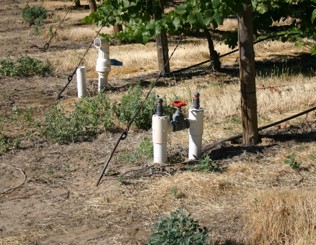
Water is necessary for successful vineyard establishment in all regions of the PNW. All semi-arid and arid regions of the PNW will require irrigation for the entire life of the vineyard; areas receiving generally-sufficient rainfall will likely not require irrigation, or only require supplemental irrigation in drought years. Consult the Water Resource Department in Oregon, the Department of Ecology in Washington, or the Department of Water Resources in Idaho.
Certain regions within the Pacific Northwest can produce grapes without irrigation. These areas include the Willamette Valley, western Washington, some parts of the Columbia Gorge, southern Oregon, and the upper foothills of the Blue Mountains in eastern Oregon. However, most of the precipitation that occurs throughout the Pacific Northwest is during the winter months, so vineyards in high precipitation areas may need supplemental irrigation during the summer for the first three to four years of establishment. The total rainfall in an area is not always as important as when the rain occurs relative to specific growth stages of the plants and the water holding capacity of the soil.
In Oregon, it is legal to purchase water from a city or other entity that has a water right authorizing municipal use within their defined service area. Contact the operations superintendent of public works for your local municipality for further details. It may be possible to have conditional (temporary) water rights for use on land that is establishing grapevines. Contact your local water department for further details.
For more information regarding the specifics of irrigation systems, refer to the following Extension publications and online resources:
- Drip Irrigation (WSU)
- Managing Irrigation Water Quality for Crop Production in the Pacific Northwest
- Irrigation Basics for Eastern Washington Vineyards EM061E (WSU)
Environmental Impacts
The Oregon Department of Fish and Wildlife (ODFW) offers free consultation to landowners in the development process to avoid damage to wildlife habitats and aquatic life in waterways. The ODFW also helps land-owners identify valuable species populations on their property, giving them the opportunity to preserve or restore a given habitat or organism. In some cases, identification of a species/habitat can give the location a higher property value. There are grants and tax incentives for such projects as preservation and restoration. Check with your regional ODFW office for more information. The Washington Department of Fish and Wildlife (WDFW) has similar grant programs, and more information is available through regional WDFW offices. For Idaho residents, the Idaho Department of Fish and Game has grants available for landowners willing to undertake wildlife preservation measures.
Other Considerations
Grapevines are extremely sensitive to herbicides containing phenoxy-type active ingredients (e.g., 2,4-D). Grapevines are most vulnerable from budbreak through bloom (early April through mid-July). Several Washington AVAs are within zones designated phenoxy-free or restricted use.
Vineyard Establishment and Management Practices
The next step in determining whether to start a vineyard business is to learn as much as possible about vineyard establishment and management. Knowledge of regionally-appropriate vineyard management practices is necessary to produce high quality wine grapes and avoid mistakes during vineyard establishment. By having a thorough understanding of wine grape production, you can avoid making many basic mistakes during vine establishment. The following resources are developed for the Pacific Northwest. See Table 3 for contact information for OSU, WSU, and UI Extension offices located in key grape-growing areas.
Table 3. Extension offices with a focus on grapes for the Inland Pacific Northwest.| Region | Extension Office | Location/Phone |
|---|---|---|
| Oregon statewide | Oregon Viticulture Extension | Corvallis, OR Viticulture: (541) 737-1411 Enology: (541) 737-6494 |
| North-Central Oregon | Hood River County Extension Service | Hood River, OR (541) 386-3343 |
| Eastern Oregon | Umatilla County Extension Service | Milton-Freewater, OR (541) 938-5597 |
| Southern Oregon | Douglas County Extension Service Southern Oregon Research & Extension Center | Roseburg, OR (541) 672-4461 Central Point, OR (541) 776-7371 |
| Washington statewide | Washington Viticulture Extension | Prosser, WA (509) 786-9234 |
| Eastern Washington | Irrigated Agriculture Research and Extension Center Benton County Extension Service | Prosser, WA (509) 786-2226 Kennewick, WA (509) 735-3551 |
| Southwest Idaho | Parma Research and Extension Center | Parma, ID (208) 722-6701 |
Oregon
Oregon State University Extension Service
The OSU Extension service provides information for the public. Specifically, the Wine Grape pages have helpful resources for commercial wine grape growers, including management guides, training videos, useful tools, and upcoming events. You can also connect with university Extension experts through this website and connect with your local county offices.
Oregon Wine Research Institute
The Oregon Wine Research Institute at Oregon State University is a team of scientists working on viticulture, enology, and wine business related research. The website connects you to a network of scientists, the research they are doing and allows you to sign up for a monthly newsletter and access research archives from work conducted at Oregon State University. The monthly newsletter provides vineyard and winery updates, Extension resources, and upcoming training events for industry.
Oregon Production Guides
Establishing a Vineyard in Oregon: A Quick-Start Resources Guide. This is a quick reference guide on what to consider for establishing a commercial vineyard in Oregon. The Oregon Wine Research Institute also has an archive, with links to past newsletter articles on relevant viticulture topics.
Washington
Washington State University Department of Viticulture and Enology
This website details current events and news on grape and wine production in Washington State, and provides information on educational programs, research, and Extension. In addition to accessing various newsletters for the Washington grape and wine industry, you can learn about the WSU Viticulture and Enology Certification Program, or how to pursue related undergraduate and graduate degrees.
Washington State University Extension Publications Catalog
The WSU Extension Service engages people, organizations, and communities to advance knowledge, economic well-being, and quality of life by fostering inquiry, learning, and the application of research. This website is a clearinghouse for all approved WSU Extension publications, including those on grape production.
Washington Production Guides
The Washington State University Viticulture Extension website has a curated list of resources on vineyard establishment and management, including variety selection, pest and disease management, and nutrient management.
Idaho
University of Idaho Extension Publications
The UI Extension Service works with the people of Idaho to address youth, community, family, environmental, natural resource, and agriculture issues. Various Extension publications, fact sheets, and bulletins are available at their website.
Clones
Selecting specific clones within a cultivar can be difficult. A clone is simply the same grape cultivar that has a slightly different characteristic that can be propagated and maintained. Research on clones of several grape cultivars, including Chardonnay and Pinot Noir, is available at the Oregon Wine Research Institute Archive.
Very few scientific publications exist regarding the performance of clonal materials of warm weather cultivars (e.g., Cabernet Sauvignon, Merlot, and Syrah). Connect with other wine grape growers and winemakers in your region to determine the best clones for the region and consider planting small plots of different clones to evaluate performance on-farm.
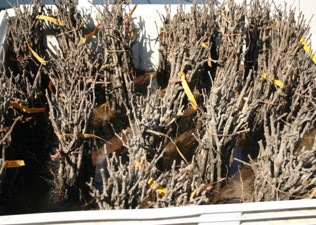
Certified “clean” plants are considered free of harmful pests, diseases, and known viruses after undergoing a state-specific inspection and certification process.
Nurseries that sell certified stock obtain their plants from a foundation plant service and use those foundation plants to develop “mother” vineyards from which they propagate stock that they sell to growers. The foundation block which serves Oregon, Washington, and Idaho is the Clean Plant Center–Northwest Grapes at WSU’s Irrigated Agriculture Research and Extension Center in Prosser, Washington. The Clean Plant Center–Northwest Grapes is dedicated to the distribution of properly identified and certified disease-free grape plant materials.
Grape Quarantines
To minimize the distribution of pests and diseases across state borders, the three PNW states have unified quarantines that regulate the movement of plants from outside of the state. Read and review the Oregon Department of Agriculture, Washington State Department of Agriculture, and Idaho State Department of Agriculture rules and regulations for an explanation of the grape quarantines for each state. A comprehensive list of frequently asked questions concerning quarantine, certification, the National Clonal Germplasm Repository, and related issues of importance are provided at the Clean Plant Center website.
The Foundation Plant Services Grape Registry is an online resource of plant materials for which import and quarantine procedures for the introduction into the United States have been completed. The website also provides information about where specific selections originated.

By Michelle Moyer, Viticulture Extension Specialist, Department of Viticulture and Enology, Washington State University IAREC, Prosser, WA; Joan Davenport, Soil Science Emeritus Faculty, Department of Crop and Soil Sciences, Washington State University IAREC, Prosser, WA; and Patty Skinkis, Viticulture Extension Specialist, Department of Horticulture, Oregon State University, Corvallis, OR; Cody Copp, Assistant Professor of Practice, Department of Horticulture, Oregon State University–Umatilla County, Milton-Freewater, OR.
All images courtesy of Michelle Moyer and Patty Skinkis.
Use pesticides with care. Apply them only to plants, animals, or sites as listed on the label. When mixing and applying pesticides, follow all label precautions to protect yourself and others around you. It is a violation of the law to disregard label directions. If pesticides are spilled on skin or clothing, remove clothing and wash skin thoroughly. Store pesticides in their original containers and keep them out of the reach of children, pets, and livestock.
Pacific Northwest Extension publications are produced cooperatively by the three Pacific Northwest land-grant universities: Washington State University, Oregon State University, and the University of Idaho. Similar crops, climate, and topography create a natural geographic unit that crosses state lines. Since 1949, the PNW program has published more than 600 titles, preventing duplication of effort, broadening the availability of faculty specialists, and substantially reducing costs for the participating states.
Pacific Northwest Extension publications contain material written and produced for public distribution. You may reprint written material, provided you do not use it to endorse a commercial product. Please reference by title and credit Pacific Northwest Extension publications.
Copyright 2024 Washington State University.
Order information
- Washington State University Extension
Fax 509-335-3006
Toll-free phone 800-723-1763
ext.pubs@wsu.edu - Oregon State University Extension Service
Fax 541-737-0817
Toll-free phone 800-561-6719
puborders@oregonstate.edu - University of Idaho Extension
Fax 208-885-4648
Phone 208-885-7982
calspubs@uidaho.edu
Published and distributed in furtherance of the Acts of Congress of May 8 and June 30, 1914, by Washington State University Extension, Oregon State University Extension Service, University of Idaho Cooperative Extension System, and the U.S. Department of Agriculture cooperating. WSU Extension programs, activities, materials, and policies comply with federal and state laws and regulations on nondiscrimination regarding race, sex, religion, age, color, creed, and national or ethnic origin; physical, mental, or sensory disability; marital status or sexual orientation; and status as a Vietnam-era or disabled veteran. Washington State University Extension, The Oregon State University Extension Service, and University of Idaho Extension are Equal Opportunity Employers. Evidence of noncompliance may be reported through your local Extension office. Trade names have been used to simplify information; no endorsement is intended. Published July 2012. Revised September 2024.