Prevalence of Listeria spp. in Commercial Cherry Packinghouses and Key Considerations for Environmental Monitoring Programs
Description
For cherry packinghouse operators and managers, this publication provides research-based guidance to strengthen environmental monitoring, identify potential Listeria harborage sites, and reduce contamination risks.Table of Contents
- Background
- Difference Between Listeria monocytogenes and Listeria Species
- Why Is Fresh Produce an Area of Concern?
- What Can Be Done to Identify the Areas of Concern?
-
Where Is Listeria spp. Typically Found in Packinghouses?
- Objectives of the Study
Background
Listeria monocytogenes is a foodborne pathogen that causes listeriosis, a severe illness associated with the consumption of contaminated food products and can lead to serious illness or death. In the United States, listeriosis is the leading cause of reported bacterial foodborne disease related deaths accounting for an estimated 172 deaths annually (CDC 2024a).
Difference Between Listeria monocytogenes and Listeria Species
Listeria is a genus of Gram-positive bacteria comprising 28 recognized species as of 2023, including L. monocytogenes, L. ivanovii, L. innocua, L. seeligeri, L. welshimeri, and L. marthii (Orsi et al. 2023). Among these species, L. monocytogenes is of primary concern for food safety, as it is a foodborne pathogen capable of causing illness in humans. L. monocytogenes is widely distributed in the environment and can be found in soil, water, and food-processing environments. L. monocytogenes can persist in food production environments, increasing the risk of contaminating food products, and is notably capable of surviving and even growing under refrigeration conditions (FDA 2025). Since L. monocytogenes is pathogenic to humans, studying Listeria species (spp.) can help provide valuable insights into the environmental conditions that support L. monocytogenes growth and survival while also avoiding the regulatory implications associated with directly testing for L. monocytogenes, which is subject to a zero-tolerance standard. This approach allows for safer and more practical assessments of risk and mitigation strategies in agricultural and processing environments.
Why Is Fresh Produce an Area of Concern?
Fresh produce contaminated with foodborne pathogens poses a significant public health concern since, unlike many processed foods, there is no kill step, such as a heat treatment (e.g., pasteurization, cooking), applied to fresh produce as it moves through the supply chain (Erickson 2012). Tree fruits in particular have emerged as a concern for L. monocytogenes contamination due to recent recalls and outbreaks. For example, in June of 2023, frozen cherries sold at six major retailers were voluntarily recalled due to possible contamination with L. monocytogenes (FDA 2023b). In 2014, a multistate caramel apple outbreak led to 35 illnesses and 7 deaths across 12 states (CDC 2024b). While the traceback investigation could not conclusively determine the cause of the outbreaks, environmental samples collected from food contact surfaces (FCS) in the apple packing facility did test positive for L. monocytogenes (CDC 2024b).
What Can Be Done to Identify the Areas of Concern?
Environmental monitoring programs (EMP), or environmental sampling, involve the systematic sampling and testing of surfaces, equipment, water, air, or other areas within a food production environment to detect the presence of microorganisms (such as Listeria spp.), indicator organisms, or contaminants (FDA 2023a). Goals of these programs include verifying that sanitation practices are effective, identifying potential harborage sites, or detecting contamination risks. EMPs are very useful as a preventive tool to identify areas within packing environments that may harbor foodborne pathogens. EMPs are not federally mandated by the US Food and Drug Administration’s (FDA) Produce Safety Rule (PSR); however, the FDA has issued a publication, Draft Guidance for Industry: Control of Listeria monocytogenes in Ready-To-Eat Foods, which includes fresh produce. The document outlines information on environmental monitoring for Listeria spp., highlights the current thinking on food safety practices, and provides recommendations for the industry (FDA 2017).
Under the FDA guidance for EMPs, the focus is to test for Listeria spp. as an indicator organism for L. monocytogenes. The detection of Listeria spp. can help identify harborage sites within a packinghouse that may support the survival, attachment, and growth of Listeria spp., including L. monocytogenes. This identification of high-risk areas or harborage sites can help in implementing targeted corrective actions, such as enhanced cleaning and sanitizing of high-risk areas; equipment modification, maintenance, or replacement; and workforce retraining.
It is essential to conduct environmental monitoring with a well-defined plan for interpreting and acting upon the results. Packinghouses that implement EMPs should have predetermined response procedures for positive findings to ensure that data generated through such monitoring is used effectively to improve the overall food safety within the facility. It is important to understand that the presence of Listeria spp. does not automatically mean that L. monocytogenes is present. However, detecting Listeria spp. in the environment can indicate conditions that support L. monocytogenes survival, such as the presence of moisture or organic matter or inadequately cleaned FCS. EMPs can help particularly in identifying harborage sites where Listeria spp. may evade routine cleaning due to poorly designed equipment, surface abrasions, or formation of biofilms. When used proactively and alongside appropriate corrective actions, EMPs can serve as a valuable preventive strategy to reduce the risk of Listeria spp. related contamination and foodborne illness.
Where Is Listeria spp. Typically Found in Packinghouses?
Previous work has monitored Listeria spp. on both FCS and nonfood contact surfaces (NFCS) in packinghouses handling apples, stone fruit, and avocados and identified areas with the highest prevalence (Aguado et al. 2004; Allen et al. 2005; Belias et al. 2024; Leong et al. 2014; Ruiz-Llacsahuanga et al. 2021; Simonetti et al. 2021). Findings in apple packinghouses indicated that wax coating operations had the highest prevalence of Listeria spp. (17.3%). FCS with a higher prevalence of Listeria spp. included polishing brushes (19.6%), dividers under fans (17.4%), dryer rollers (10.5%), and brushes under fans or blowers (9.7%) (Ruiz-Llacsahuanga et al. 2021). Work on NFCS in packinghouses shows that areas with higher amounts of water (i.e., Zone 3 NFCS), such as drains and cold storage areas, and employee movement affect the presence of Listeria spp. (Barnett-Neefs 2021; Kerr et al. 1993).
Objectives of the Study
Despite the importance and large scale of the cherry industry, there is no information on the prevalence of Listeria spp. on FCS in cherry packinghouses. The commercial cherry packinghouses use different equipment, processes, and surface types. It is important to understand the unique risks associated with each specific produce type. Therefore, the objectives of this research were to (1) understand the prevalence of Listeria spp. in cherry packinghouses in Washington State and California and (2) to identify the FCS that can harbor Listeria spp.
How Were the Samples Collected for Research?
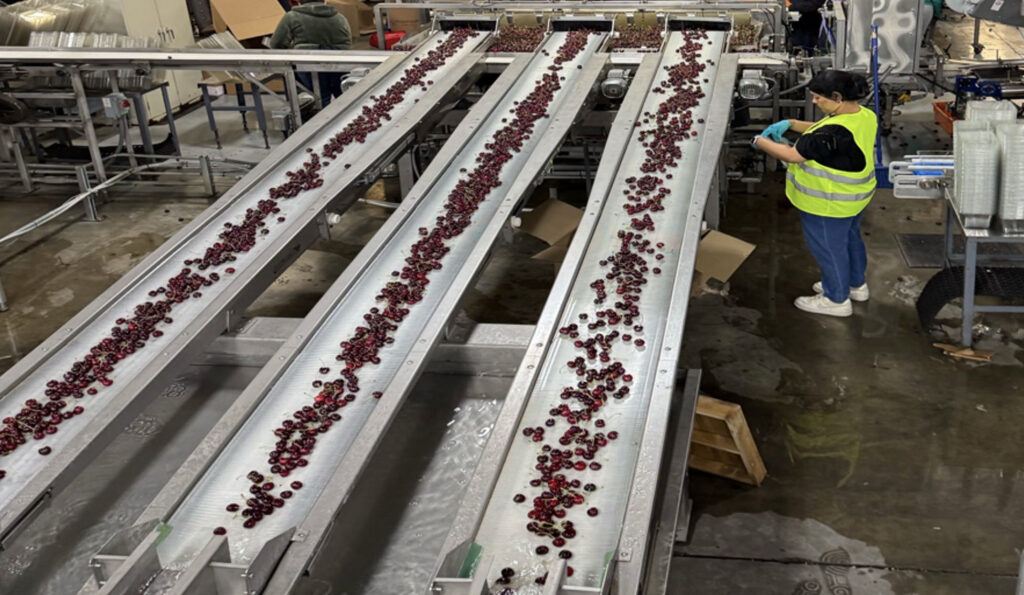
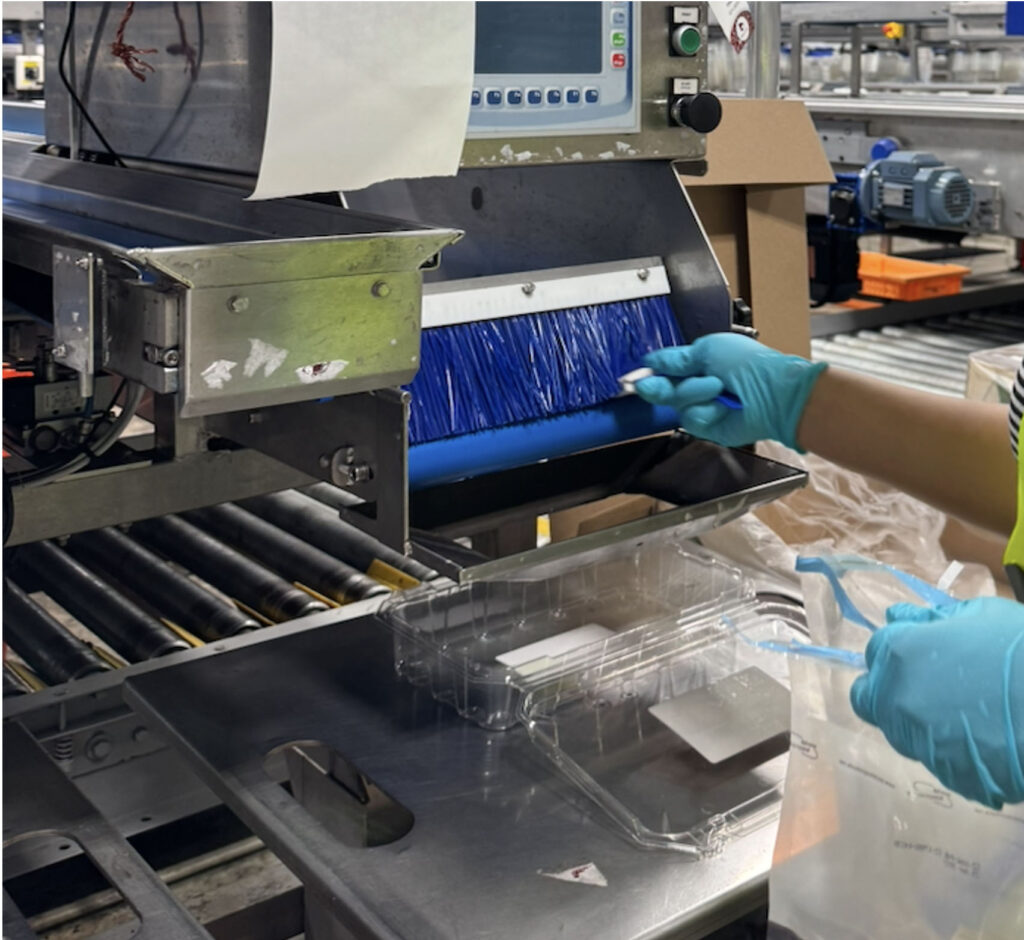
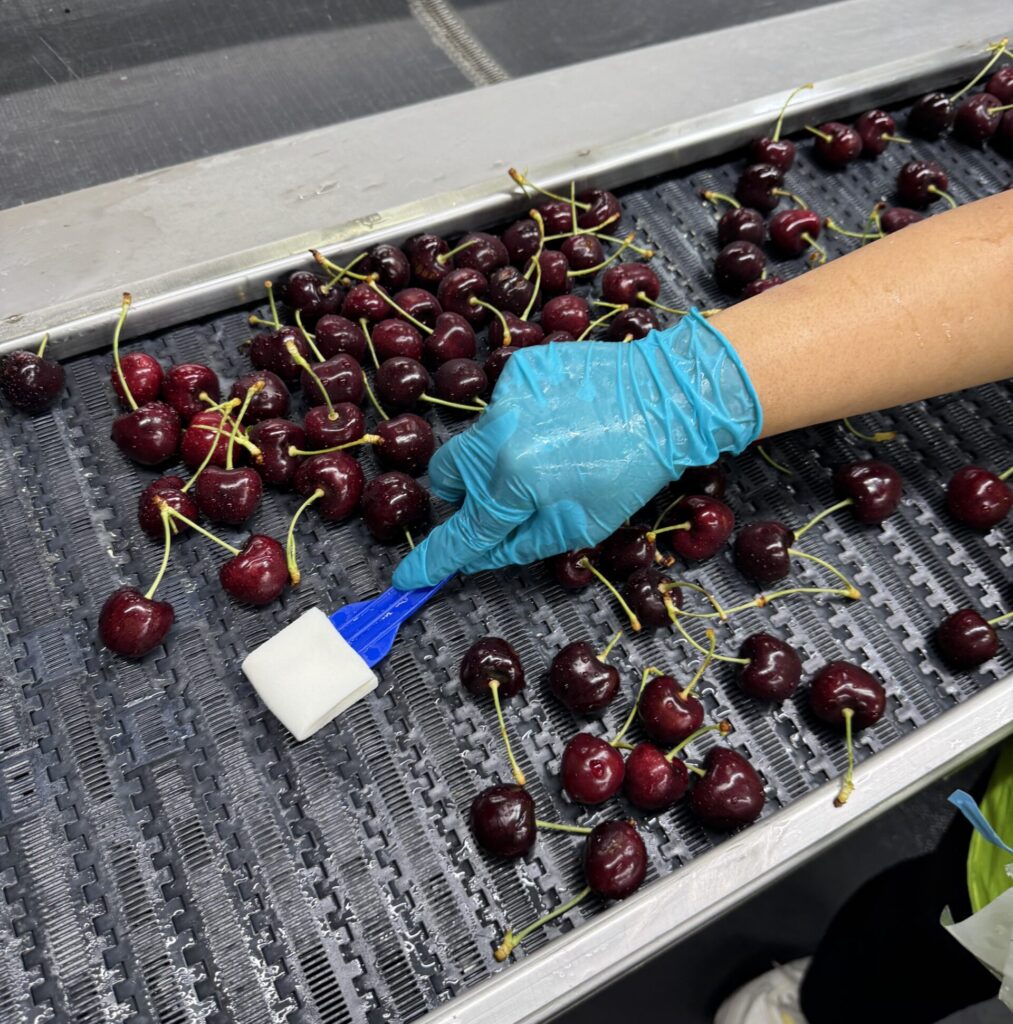
Four commercial cherry packinghouses in Washington State were sampled during two consecutive packing seasons and four commercial packinghouses in California were sampled during one packing season. FCS (Zone 1) were identified in each packinghouse and were selected from each unit operation. Forty sampling sites were identified across each packinghouse. All the sampling sites were photographed, explained in detail, and recorded to maintain consistency. Each packinghouse was visited three times during the cherry season. The visits were timed to cover the entire cherry season, with sampling conducted at the beginning, middle, and end of the season. During each visit to a packinghouse, the samples were collected (1) after cleaning and sanitizing but before the start of the packing day and (2) five hours into the packing operations (Figure 1). All samples were collected using sterile sponge sticks, covering a surface area of 0.93 m2 (30.5 cm by 30.5 cm; Figure 2). For sampling sites with surface areas smaller than 0.93 m2, the whole available surface was swabbed. The samples were then stored in an ice cooler and transported to the Washington State University Irrigated Agriculture Research and Extension Center within 24 hours where they were further processed at the food safety laboratory.
How Were the Samples Processed?
Isolation and detection of Listeria spp. were performed following the US Food and Drug Administration Bacteriological Analytical Manual (BAM) method (FDA 2024). Samples were enriched in broth, and selective growth of Listeria spp. was achieved by the addition of Listeria selective enrichment supplement. Enriched samples were plated at 24 hours and 48 hours, after which apparent positive colonies were sub-streaked and tested for confirmation as Listeria spp. by using PCR targeting the sigB gene.
Findings
A total of 1,920 samples were collected from various FCS in four Washington State cherry packinghouses across two packing seasons (Table 1). The overall prevalence rate of Listeria spp. was low at 2.0% (38/1,920). However, some individual FCS demonstrated relatively higher positive rates. The surfaces with the highest prevalence of Listeria spp. across both years in Washington State were the bristle flaps (6.3%), solid conveyor belt (4.2%), and singulators (3.8%).
Table 1. Prevalence of Listeria spp. on food contact surfaces in Washington cherry packinghouses over two packing seasons.| Food Contact Surface | Number of Total Samples | Number of Positive Samples | Prevalence |
|---|---|---|---|
| Bristle Flap | 144 | 9 | 6.3% |
| Cherry Elevator | 168 | 1 | 0.6% |
| Cluster Cutter | 84 | 1 | 1.2% |
| Interlocking Conveyor Belt | 228 | 1 | 0.4% |
| Packing Guide | 60 | 2 | 3.3% |
| Plastic Flap | 24 | 0 | 0.0% |
| Singulator | 132 | 5 | 3.8% |
| Sizing Rollers | 84 | 1 | 1.2% |
| Solid Conveyor Belt | 144 | 6 | 4.2% |
| Sorter Cups | 96 | 3 | 3.1% |
| Sorter Flap | 84 | 1 | 1.2% |
| Stainless Steel Flume | 312 | 4 | 1.3% |
| Transfer Point | 180 | 0 | 0.0% |
| Textured Conveyer Belt | 180 | 4 | 2.2% |
| Total | 1,920 | 38 | 2.0% |
A total of 636 samples were collected from four packinghouses in California during one packing season (sample amounts varied due to shorter cherry season and limited facility access). The prevalence of Listeria spp. was 2.4%, with 15 samples testing positive for Listeria spp. Prevalence was most frequently detected on solid conveyor belt (6.3%), followed by bristle flaps (4.6%), and singulators (4.5%) (Table 2).
Table 2. Prevalence of Listeria spp. on food contact surfaces in California cherry packinghouses.| Food Contact Surface | Number of Total Samples | Number of Positive Samples | Prevalence |
|---|---|---|---|
| Bristle Flap | 65 | 3 | 4.6% |
| Cherry Elevator | 50 | 0 | 0.0% |
| Cluster Cutter | 24 | 0 | 0.0% |
| Interlocking Conveyor Belt | 122 | 3 | 2.5% |
| Packing Guide | 43 | 0 | 0.0% |
| Plastic Flap | 30 | 0 | 0.0% |
| Singulator | 22 | 1 | 4.5% |
| Sizing Rollers | 32 | 1 | 3.1% |
| Solid Conveyor Belt | 48 | 3 | 6.3% |
| Sorter Cups | 32 | 0 | 0.0% |
| Sorter Flap | 56 | 1 | 1.8% |
| Stainless Steel Flume | 76 | 3 | 3.9% |
| Transfer Point | 36 | 0 | 0.0% |
| Total | 636 | 15 | 2.4% |
Overall, Listeria spp. prevalence was similar in both states, with bristle flaps and solid conveyor belts being the FCS with higher positive rates for Listeria spp. This higher prevalence of Listeria spp. on these specific FCS could be associated with moisture retention, type of material, or equipment design, a factor which may promote biofilm formation and reduce the effectiveness of routine cleaning and sanitizing.
Recommendations
- Environmental monitoring programs should be implemented and conducted regularly, using a well-planned and risk-based strategy.
- Results from the monitoring programs should be used to inform cleaning and sanitation programs to ensure the areas with higher risk of L. monocytogenes undergo targeted cleaning and sanitizing.
- Since research has identified FCS such as bristle flaps, solid conveyor belts, and singulators as potential harborage sites for Listeria spp., these locations should undergo frequent cleaning and sanitizing.
- FCS or NFCS identified as harborage sites through an EMP should be evaluated and, where feasible, repaired, modified, or replaced to address the underlying cause of harborage. If immediate corrective action is not possible, the site should receive enhanced cleaning and sanitizing and be closely monitored until permanent corrective action can be implemented.
- Employees should be trained regularly on correct cleaning and sanitizing practices.
- Implement a proactive, risk-based cleaning and sanitation program to help control microbial hazards and support the production of safe produce.
What Can Be Done to Control Listeria spp. in a Packinghouse?
Zones in a Packinghouse
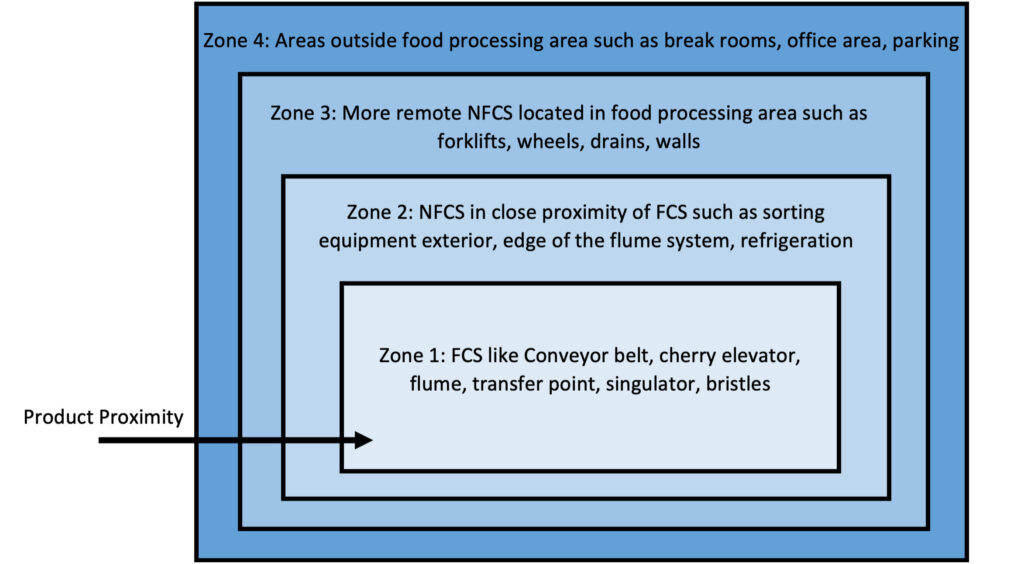
Understanding the different zones in a packinghouse helps identify the risk level and control contamination during operations. Zone 1 (FCS), those in direct contact with the product, should undergo focused risk-based monitoring (Figure 3). When conducting Listeria spp. monitoring programs for Zone 1, sampling is done for Listeria spp. rather than L. monocytogenes. This is because finding a L. monocytogenes positive would result in immediate corrective actions and often require regulatory actions, such as holding or recalling product.
NFCS in Zone 2 and beyond, such as floors, drains, walls, and equipment frames, can be tested for Listeria spp. or L. monocytogenes to help identify potential harborage sites and improve overall facility control and food safety (Figure 3). Monitoring these areas helps identify potential harborage sites and sources of contamination, improving environmental control and overall food safety within the facility.
Key Factors to Reduce the Risk of Contamination in a Packinghouse
- Proper cleaning and sanitizing methods.
- Designated holding areas for the produce.
- Proper hygiene facilities for workers.
- Limiting standing water or condensation.
- Well-developed pest management plan.
- Maintenance of general organization throughout the food operation.
- Hygienic design and regular maintenance of equipment to eliminate harborage sites.
- Reducing introduction of Listeria spp. on the incoming raw produce.
- Modifying cleaning and sanitizing strategies based on EMP findings to target high-risk zones.
- Prioritizing sanitation of wet areas and zones which have shown higher contamination.
- Ensuring equipment that is difficult to clean has improved sanitation schedules.
- Redesigning workflow to limit unnecessary movement of product and personnel between high-risk areas.
- Controlling movement of tools, containers, and transport equipment to avoid cross contamination.
There is no one-size-fits-all solution to risk-based sanitation. EMPs should be conducted regularly and be based on historical data, while cleaning and sanitizing schedules should be adjusted based on EMP results for each packinghouse (Barnett-Neefs 2021; Strawn et al. 2024).
Conclusion
Every packinghouse has a unique design, and routine environmental monitoring programs can help identify and reduce microbial risks within the facility. However, environmental monitoring should be conducted only after thorough planning and with a clear intention to use the data collected to inform corrective actions. A well-structured, zone-specific environmental monitoring program is essential for identifying high-risk surfaces where Listeria spp. harborage is most likely to occur.
Regular monitoring enables targeted sanitation efforts by focusing resources on known problem areas. By addressing these areas and following predetermined corrective action procedures (e.g., intensified cleaning and sanitation, equipment repair or replacement), packinghouses can significantly reduce the risk of cross contamination.
Acknowledgments
This work was supported by the Washington Tree Fruit Commission. The authors thank Miriam Ruiz for her assistance with the sampling process. We are grateful to the commercial packinghouses that allowed us to conduct sampling and supported this study.
Glossary
biofilm: An assemblage of microorganisms adheres to a surface and forms a protective matrix that helps shield them from external aggressors.
harborage site: A specific site or location which provides all the necessary conditions required for growth and survival of microorganisms.
kill step: A critical step during processing that eliminates harmful microorganism, preventing foodborne illnesses.
pathogen: Any microorganism that can invade a human host and cause diseases.
PCR (polymerase chain reaction): A technique that amplifies specific DNA sequences from a sample to facilitate the detection and identification of target microorganisms.
prevalence: The number of samples that tested positive for a target microorganism, expressed as a percentage of the total number of samples collected and analyzed.
References
Aguado, V., A.I. Vitas, and I. Garcı́a-Jalón. 2004. Characterization of Listeria monocytogenes and Listeria innocua from a Vegetable Processing Plant by RAPD and REA. International Journal of Food Microbiology 90(3): 341–347.
Allen, R.L., B.R. Warren, D.L. Archer, S.A. Sargent, and K.R. Schneider. 2005. Survival of Salmonella spp. on the Surfaces of Fresh Tomatoes and Selected Packing Line Materials. HortTechnology 15(4): 831–836.
Barnett-Neefs, C.W.E.C. 2021. Reducing Listeria Contamination in Produce Packinghouses Through Agent-Based Modeling (Master of Science thesis). Cornell University.
Belias, A., S. Bolten, R.H. Orsi, and M. Wiedmann. 2024. Application of Environmental Monitoring Programs and Root Cause Analysis to Identify and Implement Interventions to Reduce or Eliminate Listeria Populations in Apple Packinghouses. Journal of Food Protection 87(8): 100324.
CDC (US Centers for Disease Control and Prevention). 2024a. About Listeria Infection.
CDC (US Centers for Disease Control and Prevention). 2024b. Multistate Outbreak of Listeria Infections Linked to Commercially Produced, Prepackaged Caramel Apples Made from Bidart Bros.
FDA (US Food and Drug Administration). 2017. Draft Guidance for Industry: Control of Listeria monocytogenes in Ready‑to‑Eat Foods.
FDA (US Food and Drug Administration). 2023a. Environmental Sampling.
FDA (US Food and Drug Administration). 2023b. Voluntary Recall of Specific Frozen Fruit Products Due to Possible Contamination by Listeria monocytogenes.
FDA (US Food and Drug Administration). 2024. BAM Chapter 10: Detection of Listeria monocytogenes in Foods and Environmental Samples, and Enumeration of Listeria monocytogenes in Foods.
FDA (US Food and Drug Administration). 2025. Listeria (Listeriosis).
Kerr, K.G., D. Birkenhead, K. Seale, J. Major, and P.M. Hawkey. 1993. Prevalence of Listeria spp. on the Hands of Food Workers. Journal of Food Protection 56(6): 525–527.
Leong, D., A. Alvarez-Ordóñez, and K. Jordan. 2014. Monitoring Occurrence and Persistence of Listeria monocytogenes in Foods and Food Processing Environments in the Republic of Ireland. Frontiers in Microbiology 5.
Orsi, R.H., J. Liao, C.R. Carlin, and M. Wiedmann. 2023. Taxonomy, Ecology, and Relevance to Food Safety of the Genus Listeria with a Particular Consideration of New Listeria Species Described Between 2010 and 2022. mBio 15(2): e00938–23.
Ruiz-Llacsahuanga, B., A. Hamilton, R. Zaches, I. Hanrahan, and F. Critzer. 2021. Prevalence of Listeria Species on Food Contact Surfaces in Washington State Apple Packinghouses. Applied and Environmental Microbiology.
Simonetti, T., K. Peter, Q. Jin, Y. Chen, G. Zhang, L.F. LaBorde, and D. Macarisin. 2021. Prevalence and Distribution of Listeria monocytogenes in Three Commercial Tree Fruit Packinghouses. Front. Microbiol. 12: 652708.
Strawn, L.K., L. Truitt, T. Saunders, R.C. Williams, and R.R. Boyer. 2024. Packinghouse Best Practices to Support the FSMA Produce Safety Rule (FST‑317P). Virginia Cooperative Extension. Virginia Tech. Virginia State University.
Swapnika Medikonda, Graduate Research Assistant, School of Food Science, WSU Irrigated Agriculture Research and Extension Center
Claire M. Murphy, Assistant Professor and Extension Specialist, School of Food Science, WSU Irrigated Agriculture Research and Extension Center

FS410E

Copyright © Washington State University
WSU Extension publications contain material written and produced for public distribution. Alternative text descriptions for select complex images were generated using ChatGPT (OpenAI), then reviewed and adapted to ensure compliance with Web Content Accessibility Guidelines (WCAG) accessibility standards.
Issued by Washington State University Extension and the US Department of Agriculture in furtherance of the Acts of May 8 and June 30, 1914. Extension programs and policies are consistent with federal and state laws and regulations on nondiscrimination regarding race, sex, religion, age, color, creed, and national or ethnic origin; physical, mental, or sensory disability; marital status or sexual orientation; and status as a Vietnam-era or disabled veteran. Evidence of noncompliance may be reported through your local WSU Extension office. Trade names have been used to simplify information; no endorsement is intended.