Archived - “Meating” the Grade: Raising Market-Ready Youth Lamb Projects
Description
With great photos and descriptions of lamb industry standards, yield grades, and quality grades, this publication outlines steps to producing a market-ready lamb.
Introduction
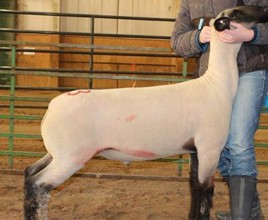
Market lambs are popular 4-H and FFA projects for many youth. While youth learn to select, feed, manage, show and sell their market animals, they also develop many important life skills. They learn how to set goals, solve problems, make good decisions, keep accurate records, and manage money. One of the outcomes of this process is that youth produce a market lamb that hopefully meets or exceeds the quality standards set forth by the American lamb industry and, ultimately, consumers of lamb. While youth lamb projects make up a small percentage of all of the lamb produced in the United States, they still contribute a significant amount of product to consumers. Market lambs and other animal projects exhibited by 4-H and FFA members provide individuals several generations removed from the farm their only exposure and contact with farm animals. This publication is a follow-up to the WSU Extension fact sheet FS048, “Meating” the Grade: Raising Market-Ready 4-H Beef Projects (Heitstuman 2011).
Table of Contents
- Introduction
- Lamb Industry Standards
- Yield Grades of Lambs
-
Quality Grades of Lambs
- How Do 4-H and FFA Market Lambs Compare to Sheep Industry Standards?
- Tips for Raising a Successful Market Lamb Project
- Despite these challenges, youth can do several things to improve their odds of raising market-ready lambs:
Lamb Industry Standards
The ultimate goal of the US sheep industry is to produce lean, heavily-muscled lamb that has a quality grade of at least Low Choice. Similar to beef cattle, lamb carcasses can be assigned both a yield grade and a quality grade under federal inspection. Premiums or deductions may be applied to individual carcasses based on how they compare to industry standards. For example, Yield Grade (YG) 2 and 3 carcasses may receive a price premium for having a desirable amount of fat cover, while Yield Grade 4 and 5 carcasses may receive a discount for having too much fat. A Yield Grade 1 lamb that is very lean and has less than 0.15 inch of back fat may also receive a discount. A minimum amount of fat cover is needed to ensure a quality carcass after the lamb is processed.
Almost all lambs grade Prime or Choice (Boggs et al. 2006), so quality grade is not considered as important of an industry standard compared to the beef industry.
It should be noted that the term lamb refers to a young lamb generally less than 12 months of age. Lamb carcasses always exhibit a characteristic “break joint” on at least one of their front shanks, and have a light red color and a fine texture to the meat (for more information, see the Meat Evaluation Handbook) (Smith et al. 2013). The term mutton is reserved for yearling and older animals. The term lamb is considered more desirable than mutton by most US consumers. Since all 4-H and FFA market lamb projects should be harvested before reaching a year of age, all should be able to meet the requirements to be graded as lamb.
Yield Grades of Lambs
Yield Grade in lamb is defined as the estimated percentage of closely trimmed cuts from the leg, loin, rack, and shoulder of a lamb carcass. The USDA (n.d.[a]) has standards for determining the Yield Grade of lambs.
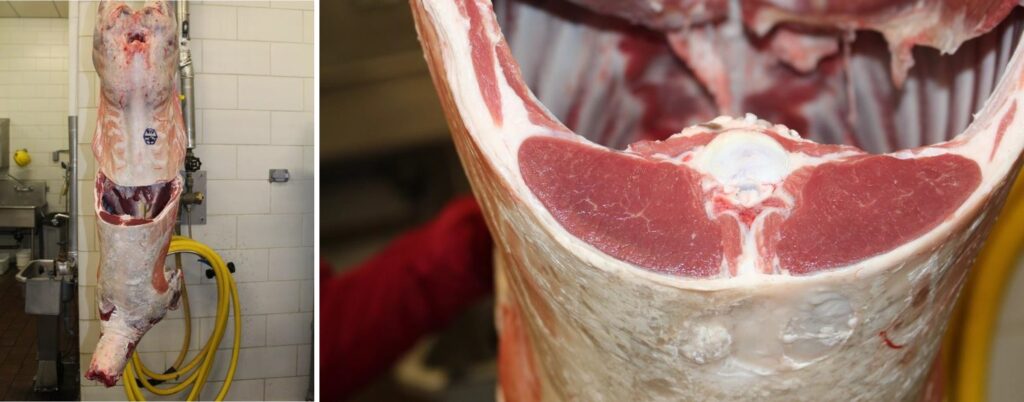
A Yield Grade 1 lamb has only a thin layer of fat over the back and loin, with the muscles plainly visible on most areas. Adjusted fat thickness for a YG 1 lamb is 0.15 inch or less measured at the 12th rib.
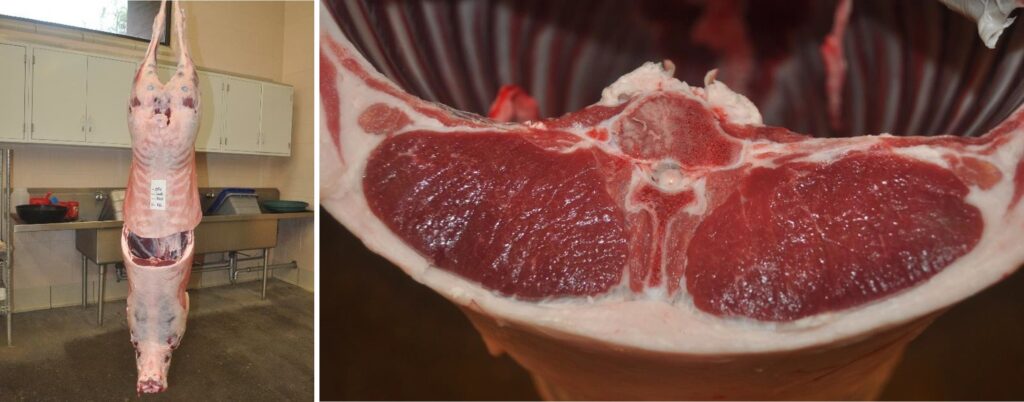
A Yield Grade 2 lamb has a slightly thin layer of fat over the back and loin and an adjusted fat measurement between 0.16 and 0.25 of an inch. Yield Grade 2 lambs are considered most desirable by the lamb industry.
Yield Grade 3 lambs have between 0.26 and 0.35 of an inch of fat at the 12th rib, and a moderately thick covering of fat over the back. While still desirable, YG 3 lambs will have a lower percentage of closely trimmed cuts (and more waste) compared to YG 1 and 2 lambs.
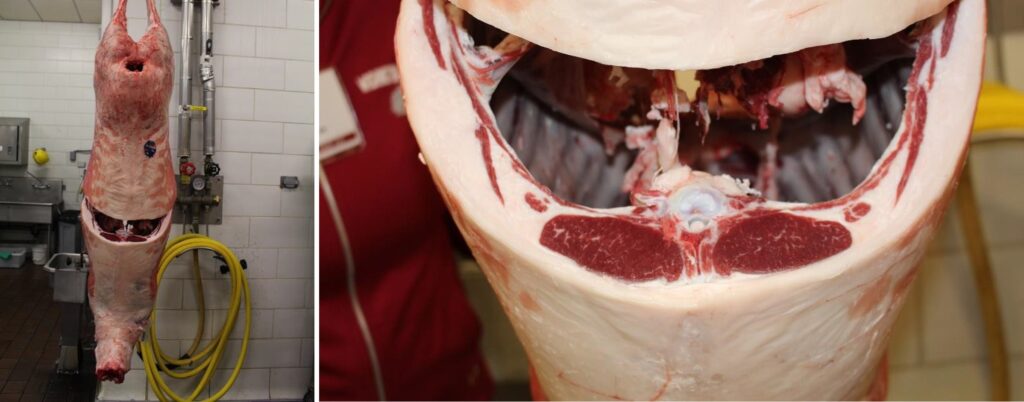
Fat, over-finished YG 4 and 5 lambs have over 0.35 inch of back fat. Since most consumers dislike the taste of lamb fat compared to other species (e.g., pork, beef), these lambs require a considerable amount of extra labor to trim off excess fat while processing.
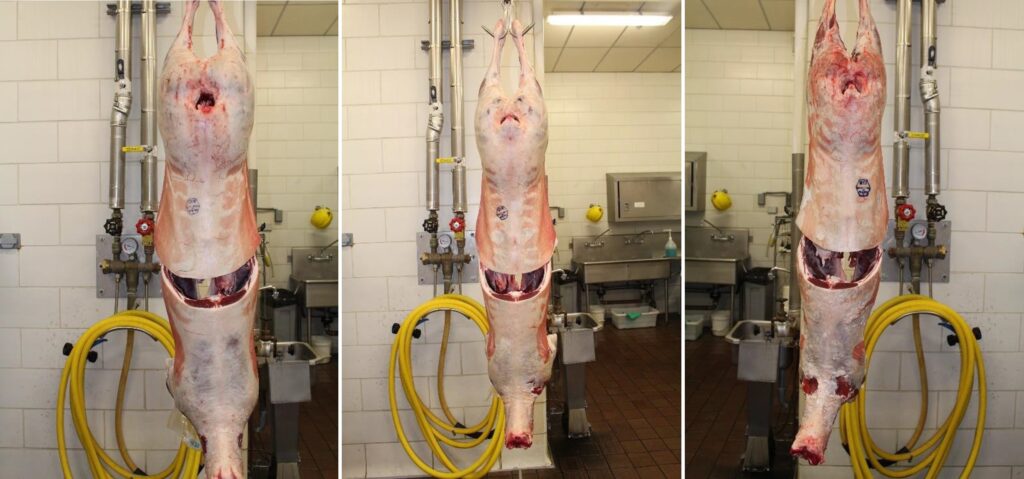
Figure 1 provides examples of Yield Grade 1, 2, and 4 lamb carcasses.
Quality Grades of Lambs
As noted, over 95% of lambs grade Prime and Choice if fed to meet their nutritional needs and harvested at an acceptable market weight. Lambs graded as Prime are thickly muscled throughout and are moderately wide and thick in relation to their length. Prime lambs have plump, full legs, have at least a small degree of fat streakings on their inner flanks (USDA, n.d.[b]), and will generally have additional overall back fat compared to Choice lambs.
Choice lambs are comparatively lighter muscled compared to Prime lambs with a less amount of flank streakings, while lambs grading Good tend to have very light weight carcasses and are lacking overall muscle.
Figure 2 identifies lamb carcass that will grade Prime, High Choice, and Low Choice.
How Do 4-H and FFA Market Lambs Compare to Sheep Industry Standards?
At a sheep show, lamb judges try to identify lean, heavily muscled market lambs that are structurally correct when awarding blue, purple, and championship ribbons (Table 1).
Livestock judges use the following criteria to evaluate market lambs:
- Lean and muscular with 0.16 to 0.30 back fat (yield grade 2.0 to 3.4).
- Structurally correct with good feet and legs, big-boned, level tops and hips, clean front ends, and with excellent rib shape.
- High performing lambs that have an average daily gain of at least 0.5 lb/day.
- Overall balance and eye appeal.
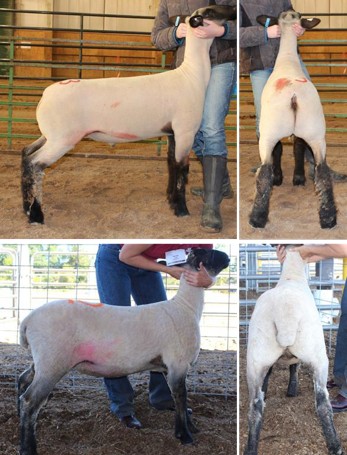
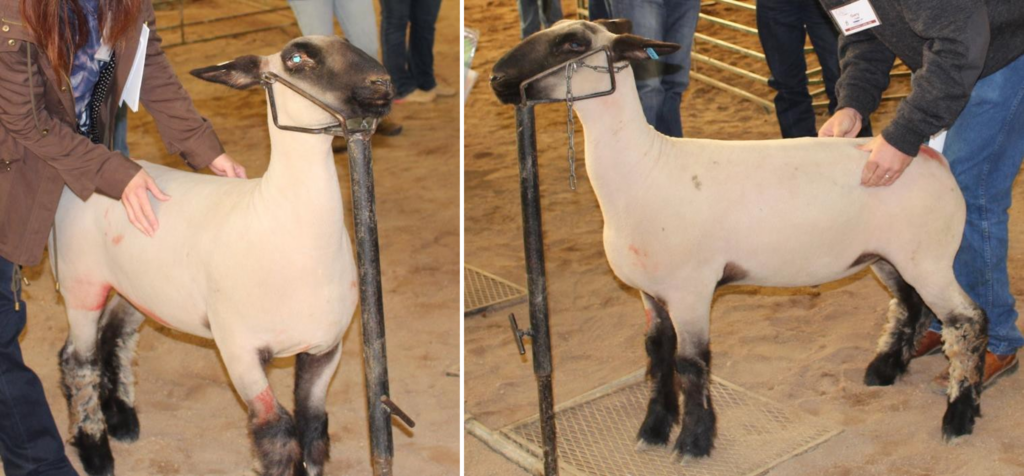
Figure 3 demonstrates the difference between a heavily muscled, structurally correct lamb and a lightly muscled, structurally incorrect lamb.
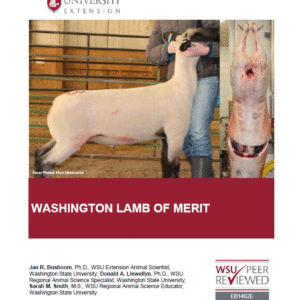
Washington State University has developed a Washington Lamb of Merit program that can be used by livestock shows to identify outstanding lamb carcasses. Additional information can be found in the publication Washington Lamb of Merit (Busboom et al. 2018).
Tips for Raising a Successful Market Lamb Project
Expectations to meet the lamb industry’s standards add to the many challenges youth face when raising a 4-H/FFA lamb project. One challenge is that there is a set date (September 1st) when the animal needs to be shown and sold at the fair. An under-finished lamb in a commercial feedlot or on pasture would simply be kept on feed another 30 additional days until it was ready to be harvested. However, a 4-H or FFA member with an under-finished lamb must still show and sell their animal at the September 1st fair, even if it is not quite market ready. Other challenges youth producers may encounter include:
- Lack of experience in raising market animals.
- Lack of proper handling and feeding facilities.
- High cost of buying a quality lamb, along with buying feed and supplies in small quantities.
- Lack of availability of project lambs, particularly for early spring shows.
| Criteria | Industry Ideal | 4-H/FFA Projects | Comments |
|---|---|---|---|
| Slaughter Weight | 120–170 lb; with variability based on local market demand | 110–160 lb | 4-H/FFA market lambs tend to have wide range of weights. Many fairs and shows have a minimum weight that is lower than what is considered ideal by the lamb industry. |
| Average Daily Gain | 0.4 to 0.5 lb/day while on feed | 0.4 to 1.0 lb/day | 4-H/FFA lambs are fed primarily a grain-based diet at least 60–100 days before the fair. Rate-of-gain usually meets or exceeds industry standards. |
| Age at Slaughter | 5 to 12 months | 6 to 9 months | 4-H/FFA lambs are usually slaughtered at a young age and meet or exceed industry standards. |
| Fat Cover at the 12th Rib | 0.16 to 0.35 of an inch | 0.10 to 0.25 of an inch | Since 4-H/FFA lambs are usually selected for their leanness and muscularity, extremely fat lambs are not common. Many lambs lack enough fat cover to meet industry standards and need to be fed at least 30 additional days after the fair before being harvested. |
| Muscle (Ribeye Area) | 2.3 sq. in. whiteface, 2.5 sq. in. blackface | 2.5 to 4.0 square inches | 4-H/FFA lambs generally meet or exceed industry standards for muscling, with greater variability between lambs compared to industry standards. |
Note: Market lamb industry ideals and 4-H/FFA market lamb ideals can vary depending on market demand, time of the year, lamb genetics, and input costs. Table 1 was developed using the following resources: Lamb Carcass Evaluation (O’Rourke et al. 2005); Feeding the Lamb Crop (Neary [1998] out of print); and Washington Lamb of Merit (Busboom et al. 2018).
Despite these challenges, youth can do several things to improve their odds of raising market-ready lambs:
Start by selecting lambs that are the proper age, weight, and frame size.
Youth need to select young lambs that are the proper age and weight. Medium-framed lambs that will be between the 120- and 150-pound target weight by fair day are a good choice for most fairs and shows. When purchasing a lamb, consider that the lamb should be between six and eight months of age at the time of the fair—old enough to easily reach the target weight. Lambs younger than 5 months of age may have difficulty gaining enough weight to be market ready, even if properly cared for. With a little practice and experience, it is relatively easy to manage the daily gain of market lambs compared to other 4-H and FFA livestock projects.
Develop an effective feeding program that meets the nutritional requirements of the lamb.
There are many excellent sources for totally mixed feeds, which are available from feed dealers. Another option for feeding is to work with an animal nutritionist to develop rations that meet the nutritional requirements of a project animal. A healthy lamb should average at least 0.50 pounds of daily weight gain in the last 60–80 days that they are on feed. Many lambs will exceed this gain. A good rule of thumb is that a lamb will need to eat 3.0% to 4.0% of its body weight in grain and hay to gain 0.50 to 0.80 pounds per day. For example, a 120-pound lamb on full feed could easily be eating 4.8 pounds of feed per day. More information on feeding show lambs can be found in the following two excellent resources Monitoring Your Lamb’s Progress (Animal Agriculture, n.d.) and Basic Show Lamb Feeding and Care (pdf) (Rothlisberger 2010).
Develop an effective health care program to keep your lamb healthy.
Project animals should be up-to-date on vaccinations for respiratory diseases, parasites, and Overeaters disease (also known as Enterotoxemia and caused by the bacteria Clostridium perfringens) when first placed on feed. Youth should keep a vaccination history as part of their quality assurance program. They should also develop a strong client relationship with a local veterinarian who is familiar with the health needs of small ruminants in your area. 4-H/FFA youth also need to have a strong Biosecurity Program in place, particularly if showing their animals at multiple shows and jackpot events.
Learn what a market-ready lamb looks like and how they handle.
Lamb exhibitors need to recognize the physical characteristics that indicate market readiness in lambs. These characteristics include a smooth covering of fat over the top of the shoulder, over the rack (ribs), and the edge of the loin. A market-ready lamb will also have some fat deposits in the front and rear flanks and around the tail head (the area where the tail was removed). An under-finished lamb with less than 0.10 of an inch of back fat will have very prominent feeling ribs and loin edge when handled; while an over-finished lamb with over 0.35 inch fat will require a lot of pressure to feel the ribs and the fat will roll as you handle the overfat lamb. Figure 4 shows how to estimate fat cover and muscling on a market ready lamb.
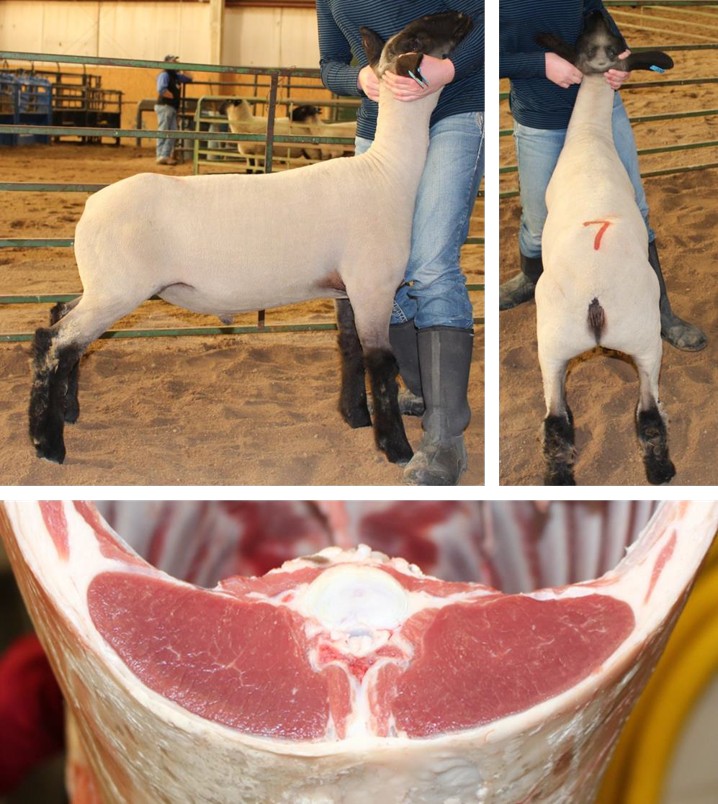
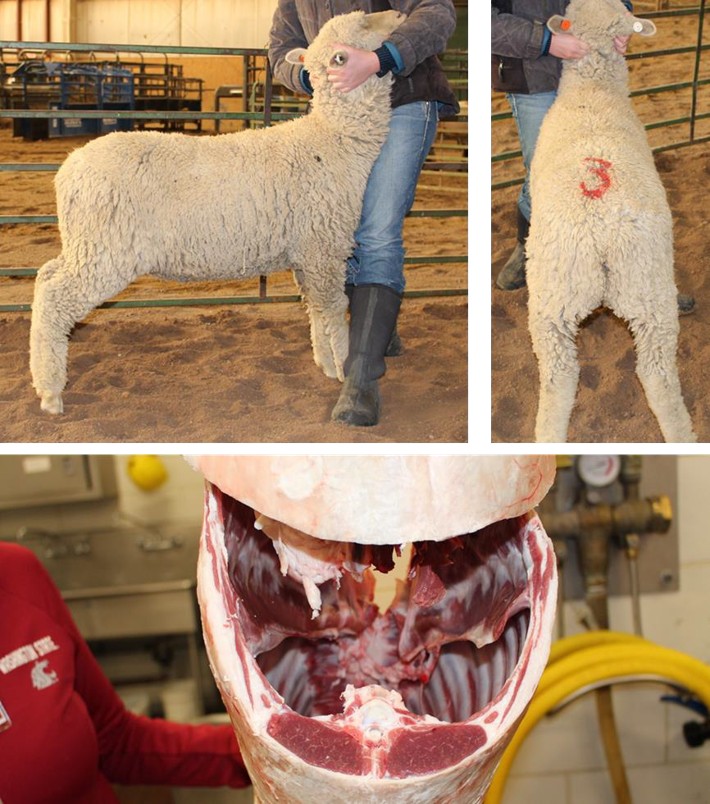
Figure 5 is an example of a heavily muscled, structurally correct lamb that exceeds industry standards and is market ready. As noted in Table 2, the 128-pound lamb yielded a 68-pound carcass (53% dressing percentage) with a ribeye area of 3.25 square inches and a final Yield Grade of 2.0.
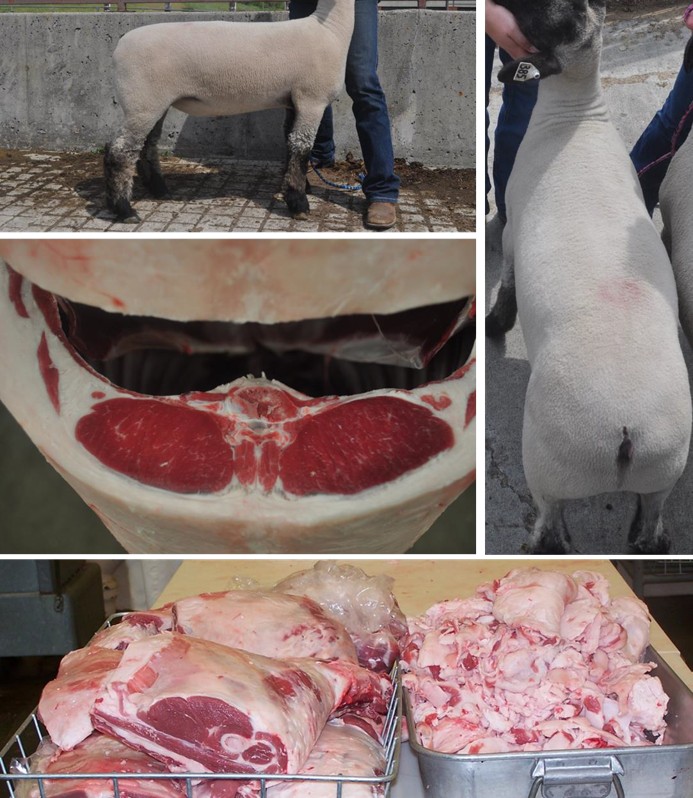
Figure 6 is an example of a 115-pound, large framed, lightly muscled, under-finished lamb. As noted in Table 3, this lamb needed additional pounds to be market ready and had a dressing percentage of only 46%.
Figure 7 is an example of an over-finished lamb that will require extensive trimming of fat from its carcass. As noted in Table 4, the 143-pound lamb yielded an 87-pound carcass (61% dressing percentage) with a ribeye area of 4.00 square inches and a final Yield Grade of 4.0.
Summary
Only one person will raise the champion market lamb at your local county fair or junior show each year. However, almost every 4-H or FFA member can complete a successful livestock project. Selecting an animal that has good genetics and the potential to grow into a quality market lamb is a good place to start. Every successful project requires a lot of hard work, an effective feeding and health care program, and a bit of luck. If you have questions or need some guidance, use the resources available to you: parents and other successful show people, 4-H leaders, FFA advisors, county Extension educators, and others knowledgeable about lamb projects.
| Live Wt. | Carcass Wt. | Dressing % | Back Fat | Ribeye Area | Leg Score | Yield Grade | Quality Grade |
|---|---|---|---|---|---|---|---|
| 128 lb | 68 lb | 53% | 0.16 inch | 3.25 sq. in. | Prime- | 2.0 | Choice+ |
| Live Wt. | Carcass Wt. | Dressing % | Back Fat | Ribeye Area | Leg Score | Yield Grade | Quality Grade |
|---|---|---|---|---|---|---|---|
| 115 lb | 52 lb | 46% | 0.10 inch | 2.00 sq. in. | Good+ | 1.4 | Choice- |
| Live Wt. | Carcass Wt. | Dressing % | Back Fat | Ribeye Area | Leg Score | Yield Grade | Quality Grade |
|---|---|---|---|---|---|---|---|
| 143 lb | 87 lb | 61% | 0.36 inch | 4.00 sq. in. | Prime | 4.0 | Prime |
Further Reading
- Smith, S., and J. Busboom. 2016. WSU Livestock Carcass Grade & Cutability Calculator app. Google Play.
References
- Animal Agriculture. n.d. Monitoring Your Lamb’s Progress. Washington State University Extension.
- Boggs, D.L., M.E. Doumit, K. Bruns, and R.A. Merkel. 2006. Livestock and Carcasses: An Integrated Approach to Evaluation, Grading, and Selection, 6th ed. Kendall/Hunt Publishing Company. Dubuque, IA.
- Busboom, J., D. Llewellyn, and S. Smith. 2018. Washington Lamb of Merit. Washington State University Extension Publication EB1462. Washington State University.
- Heitstuman, M.D. 2011. “Meating” the Grade: Raising Market-Ready 4-H Beef Projects. Washington State University Extension Publication FS048E. Washington State University.
- Neary, M. (1998) out of print. Feeding the Lamb Crop.
- O’Rourke, B., R. Russell, and D. Buege. 2005. Lamb Carcass Evaluation.
- Rothlisberger, D. 2010. Basic Show Lamb Feeding and Care.
- Smith, G., D. Griffin, and K. Johnson. 2013. Meat Evaluation Handbook, 2nd ed. American Meat Association. Des Moines, IA.
- USDA. n.d.(a). Sheep and Lamb.
- USDA. n.d.(b). Slaughter Lambs, Yearlings, and Sheep Grades and Standards.
By Mark Heitstuman, County Director and Community and Economic Development Faculty, Washington State University Extension.
All photos used in this publication are the work of the author.
Copyright © Washington State University.
WSU Extension publications contain material written and produced for public distribution. Alternate formats of our educational materials are available upon request for persons with disabilities. Please contact Washington State University Extension for more information.
Issued by Washington State University Extension and the US Department of Agriculture in furtherance of the Acts of May 8 and June 30, 1914. Extension programs and policies are consistent with federal and state laws and regulations on nondiscrimination regarding race, sex, religion, age, color, creed, and national or ethnic origin; physical, mental, or sensory disability; marital status or sexual orientation; and status as a Vietnam-era or disabled veteran. Evidence of noncompliance may be reported through your local WSU Extension office. Trade names have been used to simplify information; no endorsement is intended. Published September 2020.