Archived - Drought Tolerant Landscaping for Washington State (Home Garden Series)
Table of Contents
By Charles A. Brun, Regional Horticulture Specialist, College of Agricultural, Human, and Natural Resource Sciences.
Published: June 2015
Abstract
This publication is meant to assist homeowners with the selection and management of appropriate plants, sites, soils, and hardscapes to create a drought-tolerant landscape. It provides a lists and photographs of trees, shrubs, groundcovers, and vines that are drought tolerant and suitable for landscapes throughout Washington State.
Part 1: Planning Drought-Tolerant Landscaping
Introduction
Stretching from the Pacific Ocean across the Cascade Mountains to the arid portions of eastern Washington, the climate varies considerably across the state. Western Washington is classified as having a Mediterranean-type climate consisting of wet mild winters and dry summers. It is not uncommon to find very little rainfall from mid-June all the way through the end of September. In the Puget Sound area, 40 inches of rain is received each year, although there may be less than 1 inch of rain per month during the summer. In eastern Washington, the cities of Pullman and Spokane receive 20 inches of rain each year with less than 1 inch during the summer months of June, July, and August. In the arid central portions of southern Washington, annual rainfall amounts to only 9 inches on average per year, with scant rainfall (less than 1/2 inch per month) during the summer (Washington State Climatologist 2015).
Unless landscape plants are fully established, which commonly takes 1 or 2 years, they can suffer from summer drought on hot days. Supplemental irrigation is used to counter the effect of drought. It is not uncommon to find that 80% of all the water used around the home is used outside during the summer months (Fresenburg 2010). Increased irrigation puts pressure on municipalities to expand water supplies and homeowners will also see a significant increase in their water utility bills if they use many gallons of water for their thirsty landscapes.
This publication contains lists and photographs of trees, shrubs, groundcovers, and vines that are drought tolerant and suitable for landscapes throughout Washington State (Part 2, Table 1). This list is based on peer-reviewed Extension publications and websites from land grant universities in Washington and Oregon (Breen 2015; Brun 2015; Detweiler, Griffiths, and Olson 2005; Lohr and Pearson-Mims 2015). To be included, each of these plants had to appear at least twice in seven independent scientific or professional reports of plant drought tolerance. Plants were only selected from universities in the northern temperate zone.
Benefits of Landscaping
A well-maintained landscape can add 5% to15% to a home’s value (Niemiera 2009). The presence of street trees can add up to nearly $9,000 to a home’s value (based on 3% of median sales price) and reduce the time on the market by 1.7 days, according to one Portland, Oregon, study (Donovan and Butry 2010).
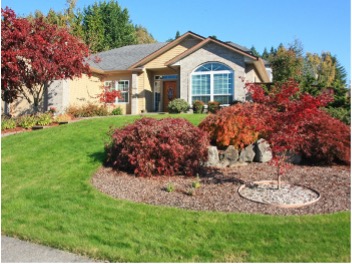
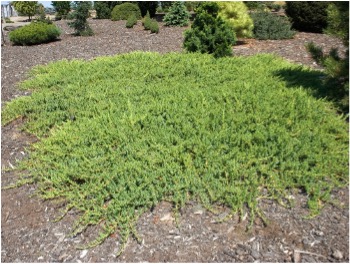
A beautiful front yard with a diversity of trees, shrubs (Figure 1), and groundcovers, with some lawn, can increase curb appeal. A well-designed backyard can serve as a place to relax, entertain friends, and cultivate a garden.
Landscaping can help reduce soil erosion and stormwater runoff, provide habitat for wildlife, help reduce excess carbon dioxide levels, and help keep homes cooler in the summer and warmer in the winter. As much as homeowners enjoy keeping the insides of their homes neat and tidy, many conscientious gardeners take great pride in making their landscaping reflect their personality, lifestyle, and psychological well-being.
Choosing Plants
Home gardeners have a multitude of plants to choose from when they shop for drought-tolerant plants at garden centers or work with a landscape contractor. When it comes to selecting a group of plants for a drought-tolerant landscape, one should first consider some of the physiological aspects of these plants.
Drought Tolerance
Horticulturists define drought-tolerant plants as those that can withstand a moderate period of limited moisture. While they may not prefer periods of hot, dry weather, they can withstand them (Fair 2009). Woody plants can store water in both their roots and their trunks, thus surviving dry periods. Drought-tolerant species have thick, waxy, or hairy leaves that minimize water loss (Fair 2009). Examples of these species would include Gilt Edge Serviceberry, Oregon grape, and Delavay Osmanthus (Table 1)
Plants with small, fine, or deeply divided foliage are considered drought tolerant (Mickelbart and Jenks 2012).
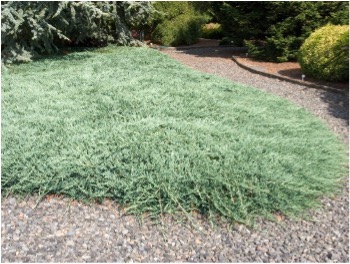
Conifers have both small leaves and waxy cuticles, thus limiting the amount of water loss due to normal
leaf transpiration (Figure 2). Refer to Table 1 for a list of drought-tolerant conifers ranging in height from 15 feet at maturity up to 100 feet.

Deciduous trees whose leaves have deep sinuses (indentation between the lobes) reduce water loss as they have less surface area (Mickelbart 2012). Red maple, for instance, is a very popular shade tree for Washington State as it very drought tolerant (Tirmenstein 1991). There are a number of different cultivars, ranging in width from 15 feet (cultivars Bowhall, Armstrong Gold, and Red Rocket) up to 35 feet (cultivars Red Sunset, October Glory, Northwood).
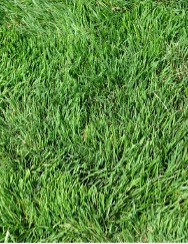
Turf grass, such as perennial ryegrass (Lolium perenne), is classified as a drought avoider as it will go into summer dormancy where the blades of grass turn brown and dry out when not irrigated. However, the plant will come back almost entirely in the fall when the rains return. Herbaceous perennials vary tremendously in their ability to withstand drought as they do not have the reserve capacity of woody plants. Once again the perennials that lack thick leaves or lignified (woody) stems are the first to grow, flower, and then go into seasonal dormancy as summer heat progresses. By filling a yard with a greater preponderance of plants with low and medium water requirements, homeowners can reduce the need to water their lawns, thus masking the appearance of light-colored grass foliage.
Hydrozones
A proven technique for reducing overall water use in a landscape is the establishment of hydrozones. A hydrozone is defined as a portion of the landscape area where plants with similar water needs are grouped (Detwieler, Griffiths, and Olson 2005; Kesseler 2008; Kopp, Cerny, and Heflebower 2002). By using a hydrozone-based design, a landscape manager encourages intelligent grouping of compatible plants—factoring in water needs, soil characteristics, and microclimate—to provide optimal conditions for their successful establishment and long-term vigor (United States Environmental Protection Agency 2013). Also by planning for different hydrozones, homeowners can determine the type of irrigation supplies that will be needed.
When choosing a drought-tolerant landscape design, group as many of the plants as possible in a low-water-use hydrozone (Figure 3). Landscape trees, screening hedges, and evergreen groundcovers all fall into the low-water hydrozone. Low-water hydrozones are often located on the perimeter of the yard. The trees, shrubs, and groundcovers listed in Table 1 are all classified as being appropriate for the low-water hydrozone. The medium-water hydrozone consists of plants that only need watering occasionally during the dry summer months. The medium-water hydrozone is typically located closer to the home. Look for signs of leaf wilting and off-green coloration (depending upon the base color), which indicate that water should be applied. Herbaceous perennials, best known for their seasonal flowering periods, can be used in the medium-water hydrozone. Plants in the high-water hydrozone will need frequent irrigation in order to thrive during the summer. Included in this category are annuals, vegetable gardens, and lawns. Most native plants would be placed in the low-water-use hydrozone (Detwieler, Griffiths, and Olson 2005).
Plant Invasiveness
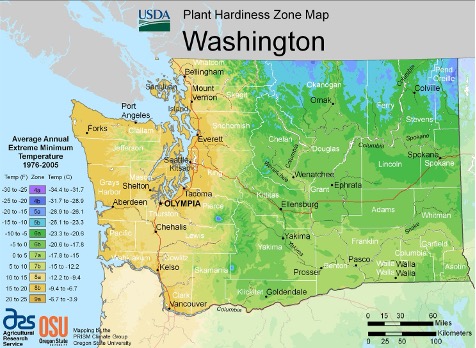
None of the plants in this guide are classified as invasive for Washington State, according to the Center for Invasive Species and Ecosystem Health (Invasive 2015), and/or the USDA Natural Resources Conservation PLANTS database (USDA PLANTS 2015). Before selecting a particular plant, check the plant’s hardiness zone rating to ensure that it will survive the minimum winter temperatures found at the planting site. Gardeners can
use zip codes to look up United States Department of Agriculture hardiness zones (USDA Hardiness Zone Map 2014) (Figure 4).
Soil and Site Management
A drought-tolerant landscape consists of healthy soil, such as native soils, with good soil structure that allows the soil to be infiltrated and to hold water. Native soils absorb high rates of water during the winter, thus minimizing surface-water runoff and erosion. These soils trap sediments and excess nutrients, all the while supporting a host of different fungi, bacteria, and earthworms that fight pests and diseases. Native topsoil has a healthy surface layer called the “A horizon” (Koenig and Isaman 1997) that makes the soil friable, permeable, and moisture retentive. The depth of the A horizon can vary from 2 inches to 10 inches. Undeveloped sites help protect aquatic areas from stormwater runoff. In urban areas where home construction occurs, soil structure can easily be damaged by compaction, excess tillage, or cultivation when the soil is too wet (Cogger 2014). Soil macropores consisting of plant root channels, earthworm tunneling, and insect burrowing will all be compressed, resulting in loss of water penetration and root extension.
Soils and Home Construction
In the past contractors were not required to protect or improve the native soil either during the building process or following completion of the structure. All too often sites were left with too little topsoil, resulting in a landscape built on compacted layers of soil or exposed subsoils. The compromised lawns and landscapes that resulted required additional irrigation during the summer months.
The Washington State Department of Ecology (WDOE) recognized the problems of degraded landscape sites and their contributions to stormwater runoff (WDOE 2014). In western Washington, builders are now required to stockpile existing topsoil during grading and replace it prior to landscape planting (WDOE BMP T5.13 2012). If the topsoil has a minimum organic matter content of 10% dry weight for planting beds and 5% for turf areas, and is a least 8 inches deep, it does not require the addition of supplemental soil amendments prior to planting. However, if the site lacks suitable topsoil or new topsoil is not brought in, it will not meet the standards that have been developed to regulate post-construction soil quality and depth.
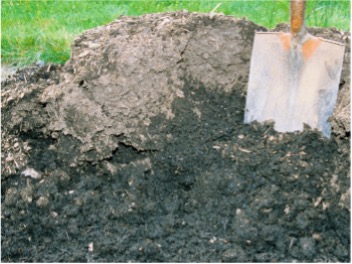
For planting beds, the WDOE states that builders must spread 3 inches of compost and rototill it to a depth of 5 inches (a total amended depth of 9.5 inches; settled depth of 8 inches) (Figure 5). For turf areas, builders
are required to add 1.75 inches of compost and rototill it to a depth of 6.25 inches (a total amended depth of 9.5 inches; settled depth of 8 inches). WDOE’s BMP T.5.13 policies do not pertain to eastern Washington municipalities.
Compost is the most commonly utilized soil amendment. It is made from yard debris, woody debris, animal manure, and potentially wastewater biosolids (Cogger and Stahnke 2013). When establishing a landscape site amend the entire area and not just the planting holes (Cogger 2005). Research at the WSU Puyallup Research and Extension Center found that additions of compost, followed by incorporation to a depth of 8”, improved soil health longer than 5 years (Cogger et al. 2008).
Mulches
Using mulch is an excellent best management practice to ensure a drought-tolerant landscape (Chalker-Scott 2015). Mulches are defined as any material that is spread over the soil surface in order to prevent soil drying, as well as potentially improving plant growth (Bell, Sullivan, and Cook 2009). Common organic mulch materials include bark products, yard waste compost, wood chips (sometimes referred to as arborist mulch), deciduous tree leaves, and mint hay. When applied at the appropriate levels, these amendments will reduce evaporative moisture loss from the soil by as much as 75%, as well as reduce water runoff and help moderate soil temperature. The best time to apply mulches is in mid- to late winter before annual weeds have started to germinate, and while the soil is still moist from the winter rains.
Bark products are a by-product of sawmills where logs are milled into building products. Bark comes in different grades—fine grade, medium grade, nuggets (less than 2 in. diameter), and rocks (1.5 to 3 inches or larger). The larger sizes generally last for a longer period of time, but they are more expensive. The fine- and medium-sized bark should be applied 1–2 inches thick in order to prevent annual weed-seed germination and to preserve soil moisture.
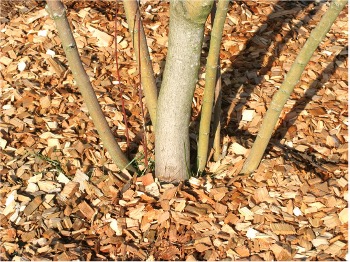
Wood chips are often used in drought-tolerant landscapes as they are often available at no cost from area landscapers (Figure 6). With a 2-inch application rate, they will last nearly as long as bark products and provide a more natural look. A 3-inch layer of arborist mulch can smother existing weeds. Wood chips are slower to break down compared to the more commonly used medium-sized bark chips. Larger wood chips will not tie up soil nitrogen as much as sawdust does. Deciduous tree leaves can serve as excellent mulch as well, especially if they are from trees on the existing landscape. Simply rake into established beds of woody ornamentals in the fall and allow them to break down naturally over the winter.
Hardscape
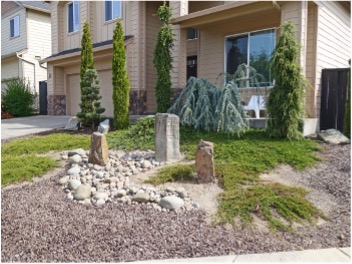
Often a landscape designed to withstand periods of low precipitation will incorporate “hardscape” features, such as stone pathways, rock walls, statues, and water features (Figure 7), to create interest as spring and summer flowers fade (Love et al. 2009). Other types of hardscape include decks, arbors, shade structures, fire pits, pavers, flagstones, and stone and gravel beds. Hardscape can personalize and beautify the
landscape, while supporting a system that uses less water.
Slopes
Slopes tend to shed water quickly and thus are drier. It is often very difficult to safely mow grass on slopes, as both the lawnmower and operator can slip, especially during the spring when the lawn might be wet. Dense groundcovers (Figure 8) are excellent slope stabilizers and generally do not require supplemental water once established.
Shade
There are a host of different plants (from landscape trees to groundcovers) that can take varying amounts of shade. Plants that can tolerate dry, full shade to semi-shaded sites are listed in Table 1. Large landscape deciduous and coniferous trees often have extensive root systems that use soil moisture stored during the winter months. Low-water-use deciduous and evergreen shrubs that tolerate shade can be used underneath landscape trees. These selections are also suitable as turf replacements since the principal Northwest turf species do best under full sun conditions.
Limiting the Use of Turf
The U.S. Environmental Protection Agency (EPA) has found that 30% of a homeowner’s daily water use goes to outdoor irrigation. If irrigation water runs off the property, it can carry lawn fertilizers and pesticides along with it, which can negatively affect nearby watersheds. For example, the use of phosphorus in lawn fertilizer is now being questioned because it has been implicated in the growth of algae blooms in nearby watersheds (Stahnke 2012).
The WDOE requires municipalities in western Washington to incorporate compost into future turf (lawn) areas (WDOE BMP T5.13, 2012) to help preserve soil moisture, thus reducing the need for supplemental irrigation. Applying heavy layers of compost to an established lawn is not appropriate however, because thicker layers may create a barrier that restricts water movement (Cogger 2013).
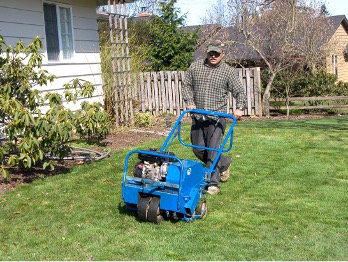
A lawn is best suited to sunny, relatively flat areas that are well drained. Assess winter drainage during the winter months. Soggy spots are prone to thatch buildup and the growth of moss. Landscapers can install plastic drain tile at a depth of 18 inches to help improve drainage. Lawns should be aerated in the spring with a power core aerator. By removing numerous plugs of soil, the lawn grass will extend its roots deeper into the soil profile (Figure 9).
Western Washington Grasses
Perennial ryegrass, Lolium perenne, (Figure 10a) is the most commonly used grass species in western Washington (Stahnke et al. 2005). If grown in the shade, a ryegrass lawn will not perform well, becoming thin and prone to moss accumulation over time. Ryegrass only needs 1 inch of supplemental irrigation per week during the hot months of summer in order to stay green. A lawn will still keep growing at ½ inch per week, requiring minimal mowing. Be sure to raise the mowing height during the summer to 2 inches because this will lead to a greater rooting depth.
All too often homes with automatic irrigation systems apply too much water. The system should be set to come on in the early morning hours (4 a.m. is ideal) to reduce evaporation rates that occur during the day.
One can decide to allow a ryegrass lawn to go dormant during the summer. Once the fall rains begin in October, the lawn will green up and start to grow well again. If ryegrass lawns are allowed to dry out during the summer, they will develop patches of bentgrass, tall fescue, and fine fescues (Voderberg and Kowalewski 2014).
Ryegrass requires overseeding in the spring or fall if it has been used in areas with heavy foot traffic. Apply six pounds of perennial ryegrass per 1,000 square feet after thoroughly core aerating the lawn (Stahnke et al. 2010). Lawns that develop an extensive growth of weeds will need renovation (Cook 2004).
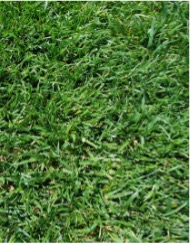
Figure 10. Perennial ryegrass (on the left) has lighter color and finer texture than the tall fescue on the right.
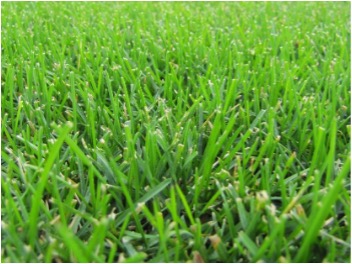
Turf-type tall fescues, Festuca arundinacea, (Figure 10b) can be used as an alternative to ryegrass in western Washington. Fescues have wider leaf blades and a slightly coarser texture compared to perennial ryegrass, but they have better drought tolerance and maintain a better color (dark green) during the summer months, even if they are not irrigated, because they can extract water from deeper soil depths (Stahnke et al. 2005). They can tolerate clay sites and a range of soil pH levels.
Eastern Washington Grasses
Under sunny conditions the most traditional grass species combination used is 75% Kentucky bluegrass (Figure 11) and 25% fine fescue or perennial ryegrass (Charlton, Golembiewski, and Cook 2010). This combination can withstand heavy foot traffic, and fills in after being damaged. However, this combination requires weekly irrigation. For lawns that will only receive irrigation once every 10 days, the turf-type tall fescues can be used. This type of grass will grow in the shade and will tolerate heat better than ryegrass or Kentucky bluegrass. The turf-type tall fescue will tolerate the alkaline soil conditions of south-central Washington. Kentucky bluegrass is not recommended for western Washington.
Efficient Irrigation
A drought-resistant landscape requires a minimal amount of supplemental irrigation (Wade et al. 2007) once it has become fully established. Trees, shrubs, groundcovers, and herbaceous perennials are often planted in the fall in order to capitalize on the readily available soil moisture levels. Also air temperatures are lower, putting less stress on plants. While plants may not put on top growth, the root system will continue to grow all winter as roots do not go into winter dormancy. By the following spring, the fall transplants should have a healthy start for the spring and summer. It may take 2 to 3 years for a new tree to become fully established (Ophardt and Hummel 2011).
It is difficult to gauge a plant’s water needs by simply observing the soil surface. It is best to dig down into the soil profile to determine the wetting pattern. Apply water no faster than the rate at which it can be absorbed. A sandy loam soil can absorb up to 3 inches of water per hour, while clay loams can absorb as little as ½ inch per hour.
Check newly established plants periodically during the first year for signs of leaf wilting. When trees, shrubs, and groundcovers start to put on an extensive amount of new seasonal growth without wilting, they are well on their way to becoming fully established. All of the plants listed in Table 1 should survive well without supplemental summer irrigation as soon as they are fully established.
Irrigation during Establishment
There are different water-saving irrigation tools for use during the plant establishment period (Peters 2011), but most of them wet only a small surface area of soil near the target plant. “Micro-irrigation” is the universal term used for drip, trickle, or micro-spray irrigation systems. Micro-irrigation systems apply water at a low pressure directly to the plant roots, which is where it can best be absorbed. Less water is lost through evaporation, misplacement (watering sidewalks), runoff, and leaching. Overall weed-seed germination is reduced for the entire planting. Foliar disease problems can be reduced for plants whose foliage should stay dry.
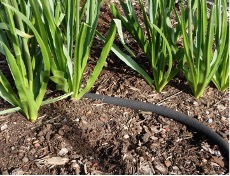
Figure 12. Soaker hose.
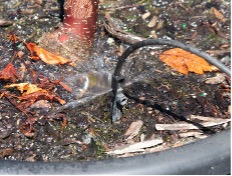
Figure 13. Micro-spray stake.
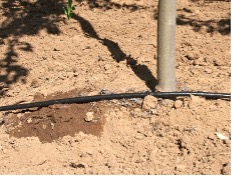
Figure 14. In-line emitter tubing.
Soaker hoses (Figure 12) can be used for micro-irrigation. These hoses are made of a flexible, porous material that distributes water along its entire length. These hoses can be laid throughout the irrigation site and covered with mulch to hide its presence. Check a soaker hose periodically to ensure it has not become plugged with calcium deposits or clogged with sand. If it is laid on top of the soil surface, the wetting pattern will be wider than if it is covered.
Micro-spray stakes (Figure 13) work well for individual shrubs. They can be inserted into thin plastic tubing, which can be laid throughout the irrigation site. Finally, hard hose in-line emitter tubing (Figure 14) can be used where the trees or shrubs are planted in rows. This product is generally more durable than other types of micro-irrigation equipment.
In-line emitter tubing comes as both orifice emitters and turbulent-flow emitters (Peters 2011). The former
is simply tubing with a series of spaced holes from which water flows, although these holes can become plugged over time. The more expensive turbulent-flow tubing sends water on a tortuous path before it is released. This type of tubing is less prone to plugging. In-line emitter tubing is generally laid on top of the soil surface.
Lawn Irrigation
In western Washington, high-maintenance perennial ryegrass lawns often need 1 inch of supplemental irrigation per week in order to stay green all summer (Voderburg and Kowalewski 2014). Low-maintenance lawns that do not receive supplemental summer irrigation will become straw brown during their summer dormancy, but will regrow and turn green again with the onset of fall rains. Thin patches of lawn
will need to be overseeded before the middle of October.
A lawn filled with perennial weeds such as dandelion, false dandelion, and plantain, all of which are deep rooted, will place more stress on the ryegrass lawn. Weeds should be removed no later than May 1 to keep them from using too much of the limited soil moisture (Goss, Miltner, and Stahnke 2006). In eastern Washington, Kentucky bluegrass lawns could require up to 1 inch of supplemental irrigation per week in order to stay green all summer. While this type of lawn can be allowed to go dormant during the summer, heavy foot traffic can harm it to the extent that it may not come back the following year (Stahnke 2012).
Irrigation Systems
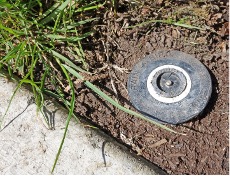
Irrigation systems for turf range from aboveground rotating sprinklers attached to a hose to underground systems with popup heads (Figure 15) and remote timers. No matter what system is used, the key to saving water in turf irrigation is timing water application correctly—taking into account for both the soil type as well as prevailing weather conditions.
There is no reason to treat lawns as high-water hydrozones in western Washington. The majority of soils in this region are heavier and thus hold more water than the lighter soils east of the Cascades. Other than for the two hottest summer months, the evaporative demand in areas west of the Cascades is simply not as high as drier regions.
Deep but less frequent irrigation (as opposed to shallow and frequent irrigation) is preferable because it encourages the roots of the grass plants to extend deeper into the soil profile (Charlton, Golembiewski, and Cook 2010). To measure the output from lawn sprinklers to ensure adequate irrigation, set out small,
flat-bottomed cans of equal size at approximately 5 foot intervals on lines radiating out from the sprinkler heads. On heavy clay sites with low water infiltration rates, it is preferable to apply less than ½ inch of water per hour to avoid slope runoff or ponding in low spots.

Programmable irrigation controllers (Figure 16) are an important component in permanent sprinkler systems as they allow the operator to treat the different zones in lawn appropriately. Controllers can be mounted either inside or outside the home or garage, and they can be programed much like a thermostat in the home. A “smart” controller is one that is tied to either a soil moisture sensor that measures the amount of water in the soil, or a rainfall sensor that turns off the controller when it begins to rain. Automatic lawn-watering systems should only be run in the early morning hours (4–6 a.m.) to reduce evaporation during the
day. Landscape contractors should be consulted for installation of most inground watering systems.
Part 2: Drought-Tolerant Plants
Table 1. Listing of drought-tolerant plants
Deciduous Trees
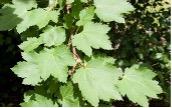
Figure 17. Acer glabrum
Rocky Mountain maple Height: 30 ft Width: 30 ft Multi-stemmed; moist to dry sites; yellow fall foliage. Zone 4 Native
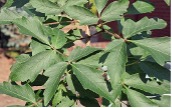
Figure 18. Acer griseum
Paperbark maple
Height: 25 ft Width: 25 ft Oval form; green leaves;
copper, peeling bark. Zone 4
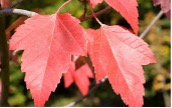
Figure 19. Acer rubrum ‘Red Sunset’
Red Sunset® red maple
Height: 45 ft Width: 35 ft Oval to rounded crown;
3-lobed leaves; red fall foliage. Zone 5
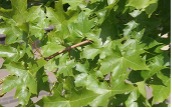
Figure 20. Acer truncatum ‘Warrenred’
Pacific Sunset maple
Height: 30 ft Width: 25 ft Round crown; bright red in fall. Zone 4
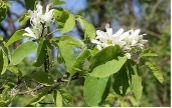
Figure 21. Amelanchier grandiflora
Autumn Brilliance Serviceberry
Height: 20 ft Width: 15 ft Spreading habit; white flowers; red fall foliage, blue fruit. Zone 8
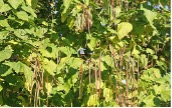
Figure 22. Catalpa speciosa
Northern catalpa
Height: 60 ft Width: 40 ft Irregular crown; 1-in.-wide leaves; white flowers; pods. Zone 7
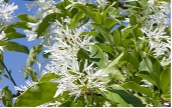
Figure 23. Chionanthus retusus
Chinese Fringe tree
Height: 20 ft Width: 20 ft
Multi-stem; glossy leaves; white flowers; blue fruit. Zone 5
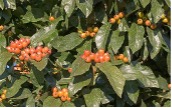
Figure 24. Crataegus lavallei
Lavalle hawthorn
Height: 30 ft Width: 20 ft
2-in. to 4-in.-long dark green leaves; white flowers; ¾-in. red fruit. Zone 4
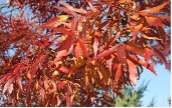
Figure 25. Fraxinus oxycarpa
Raywood ash
Height: 45 ft Width: 30 ft Oval form; narrow leaves; green in summer; red in fall. Zone 5
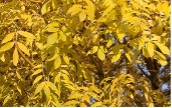
Figure 26. Fraxinus pennsylvanica ‘Summit’
Summit ash
Height: 45 ft Width: 25 ft
Oval canopy; green in summer; golden fall foliage. Zone 3
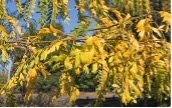
Figure 27. Gleditisia triacanthos ‘Sunburst’
Sunburst honeylocust
Height: 40 ft Width: 30 ft Bright yellow foliage; irregular shape; horizontal branches.
Zone 4
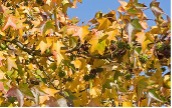
Figure 28. Liquidamber styraciflua ‘Rotundiloba’
Roundleaf sweetgum
Height: 45 ft Width: 25 ft Pyramidal; green star-shaped leaves; fruitless; orange to purple in fall. Zone 5
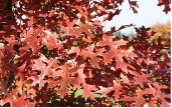
Figure 29. Quercus coccinea
Scarlet oak
Height: 70 ft Width: 45 ft Pyramidal form; C-shaped leaf lobes; scarlet fall foliage. Zone 4
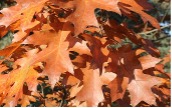
Figure 30. Quercus rubra
Red oak
Height: 50 ft Width: 40 ft Rounded form; massive branches; red fall foliage. Zone 4
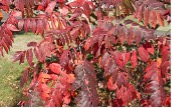
Figure 31. Rhus typhina
Staghorn sumac
Height: 23 ft Width: 23 ft Spreading habit; serrated
leaves; red fall foliage. Zone 4
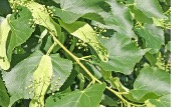
Figure 32. Tilia americana L.
American basswood
Height: 45 ft Width: 30 ft
6-in.-long leaves; dark green in summer; 4-in.-long floral bracts. Zone 3
Coniferous Trees
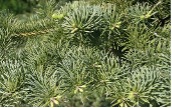
Figure 33. Abies concolor
White fir
Height: 3 ft–50 ft Width: 30ft Upper branches point up;
4- to 6-in.-long needles; full sun. Zone 3 Shade
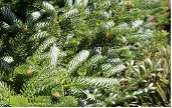
Figure 34. Abies koreana
Horstmann’s Korean fir Height: 15 ft Width: 5 ft Narrow pyramidal shape; green and white needles.
Zone 4
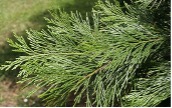
Figure 35. Calocedrus decurrens
Incense cedar
Height: 40 ft Width: 15 ft Tall columnar form; green needles; sun or part shade. Zone 4 Shade Native
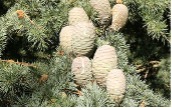
Figure 36. Cedrus libani
Cedar of Lebanon
Height: 100 ft Width: 80 ft Large stately tree; needles 1-in. long with green and blue stripes. Zone 5
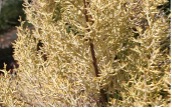
Figure 37. Cupressus glabra ‘Sulphuera’
Arizona cypress
Height: 10 ft Width: 4 ft
Conical shape; scale-like needles, sulfur-yellow foliage. Zone 5
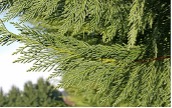
Figure 38. Cupressocyparis leylandii
Leyland cypress
Height: 50 ft Width: 20 ft Pyramidal shape; needles in flattened sprays; soft texture. Zone 6 Shade
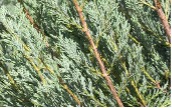
Figure 39. Juniperus scopulorum ‘Sky Rocket’
Sky Rocket juniper Height: 14 ft Width: 2 ft Narrow upright spire; blue-green needle-like foliage; hedge plant. Zone 4
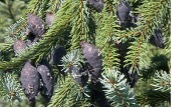
Figure 40. Picea omorika
Serbian spruce
Height: 30 ft Width: 8 ft Spire-like form; sharp green-white 1-in. needles; purple cones. Zone 4
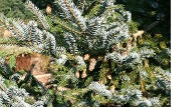
Figure 41. Picea pungens ‘Hoopsii’
Hoopsii Colorado blue spruce
Height: 50 ft Width: 20 ft Pyramidal form; sharp, stiff silvery-blue needles; full sun.
Zone 3
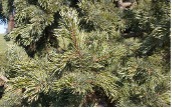
Figure 42. Pinus aristata
Bristlecone pine
Height: 25 ft Width: 15 ft Pyramidal form; 1- to 2-in. needles in bundles of 5; pitch droplets. Zone 4
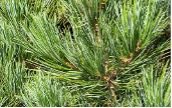
Figure 43. Pinus cembra
Columnar Swiss Stone pine
Height: 35 ft Width: 15 ft Narrow form; 5-needle bundles; bluish-white foliage; full sun. Zone 4
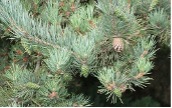
Figure 44. Pinus contorta ‘Contorta’
Shore pine
Height: 45 ft Width: 30 ft Sprawling habit; needles in bundles of two, appear twisted. Zone 3 Native
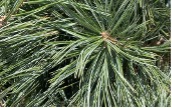
Figure 45. Pinus flexilis
Limber pine
Height: 60 ft Width: 35 ft Uneven form; flexible branches; needles in bundles of 5 that are
3.5 in. long. Zone 3
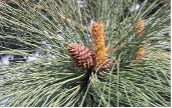
Figure 46. Pinus ponderosa
Ponderosa pine
Height: 80 ft Width: 30 ft
Narrow crown; needles 6 to 12 in. long in bundles of 3; with
8-in.-long cones. Zone 3 Native
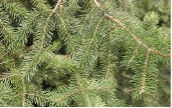
Figure 47. Pseudotsuga menziesii
Douglas fir
Height: 80 ft Width: 30 ft Tall spire; flat needles radially arranged; cones with 3 prongs. Zone 5 Native
Figure 48. Thuja occidentalis ‘Smargaard’
Emerald Green arborvitae
Height: 20 ft Width: 5 ft
Soft foliage in vertical fan-like sprays; often used for hedges. Zone 4
Deciduous Shrubs
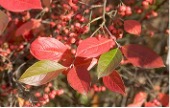
Figure 49. Aronia arbutifolia ‘Brilliantissima’
Brilliant Red Chokeberry
Height: 8 ft Width: 8 ft
Green summer foliage; bright red in fall; glossy red berries. Zone 5
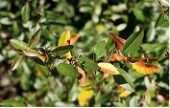
Figure 50. Berberis mentorensis
Mentor barberry
Height: 5 ft Width: 7 ft Small 1-in. leaves; 3-part spines; green in summer; yellow in fall. Zone 5
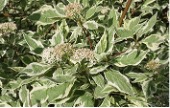
Figure 51. Cornus alba ‘Elegantissima’
Tatarian dogwood
Height: 10 ft Width: 10 ft Green leaves with cream margins. Zone 2
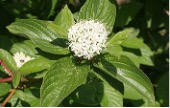
Figure 52. Cornus sericea
Red Twig dogwood
Height: 10 ft Width: 12 ft Opposite leaves 2–5 in. long; red fall color; white flowers. Zone 2 Native
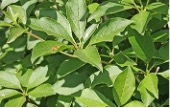
Figure 53. Enkianthus campanulatus
Redvein Enkianthus
Height: 8 ft Width: 6 ft Layered form; red fall foliage. Zone 4
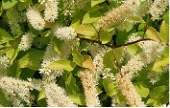
Figure 54. Itea virginica
Virginia Sweetspire Height: 5 ft Width: 7ft Arching habit; fragrant 2- to 4-in.-long white flowers; red in fall. Zone 5 Shade
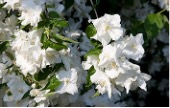
Figure 55. Philadelphus virginalis ‘Natchez’
Natchez Mockorange
Height: 10 ft Width: 10 ft Fast growth; arching habit; 2-in.-wide white fragrant flowers. Zone 4
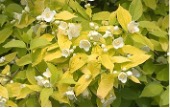
Figure 56. Philadelphus lewisii
Wild Mockorange
Height: 8 ft Width: 8 ft Broad habit; arching stems; white fragrant flowers. Zone 4 Native
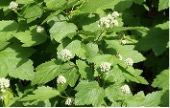
Figure 57. Physocarpus capitatus
Pacific ninebark
Height: 15 ft Width: 15 ft Green 3-lobed leaves; profusion of white ball-shaped flowers.
Zone 4 Native, Shade
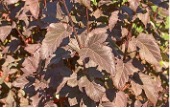
Figure 58. Physocarpus opulifolius
Diabolo ninebark
Height: 10 ft Width: 10 ft
3-lobed leaves; profuse white spring flowers; purple foliage. Zone 2
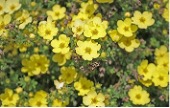
Figure 59. Potentilla fruticosa
Shrubby Cinquefoil Height: 4 ft Width: 4 ft Dense habit; small leaflets; 5-petal yellow flowers. Zone 3 Native
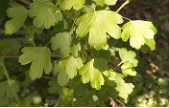
Figure 60. Ribes aureum
Golden currant
Height: 8 ft Width: 6 ft Thicket forming; 2-in.-wide, 3-lobed leaves; red fall color. Zone 3
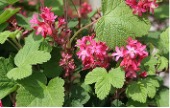
Figure 61. Ribes sanguineum
Red Flowering currant
Height: 10 ft Width: 5 ft Arching habit; 3–5 leaf lobes; red flower clusters in spring. Zone 5 Native
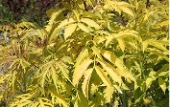
Figure 62. Sambucus racemosa
Sutherland Gold red elderberry
Height: 10 ft Width: 10 ft Robust habit; deeply serrated yellow leaves; June flowers. Zone 3
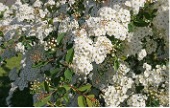
Figure 63. Spiraea nipponica
Snowmound spirea
Height: 5 ft Width: 4 ft
Green-blue leaves; white spring flowers smother the plant.
Zone 3
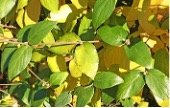
Figure 64. Viburnum burkwoodii
Burkwood viburnum
Height: 10 ft Width: 5 ft Semi-evergreen; fragrant flowers; shiny leaves. Zone 4 Shade
Evergreen Shrubs
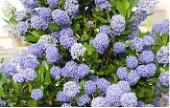
Figure 65. Ceanothus thyrsiflorus
Blue Blossom
Height: 12 ft Width: 12 ft Stiff upright habit; glossy leaves; flowers attract bees. Zone 8
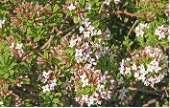
Figure 66. Daphne burkwoodii
Carol Mackie daphne
Height: 4 ft Width: 3 ft Rounded form; 2-in. variegated leaves; white blossoms. Zone 4 Shade
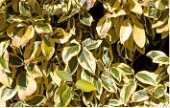
Figure 67. Elaeagnus ebbingei
Gift Edge Silverberry
Height: 6 ft Width: 6 ft
Dense hedge plant; yellow
margins to green leaves. Zone 7
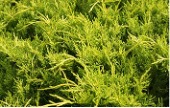
Figure 68. Juniperus chinensis
Gold Coast juniper
Height: 3 ft Width: 5 ft Spreading groundcover; yellow foliage; full sun. Zone 4
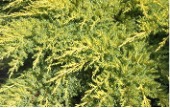
Figure 69. Juniperus media ‘Daub’s Frosted’
Daub’s Frosted juniper
Height: 3 ft Width: 6 ft Horizontal spreader; sharp, pointed green-yellow foliage. Zone 4
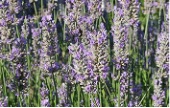
Figure 70. Lavandula intermedia
Grosso English lavender
Height: 3 ft Width: 3 ft Mounding habit; silver-green leaves; purple aromatic bloom. Zone 5
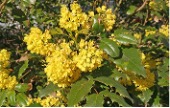
Figure 71. Mahonia aquifolium
Oregon grape
Height: 10 ft Width: 5 ft Coarse structure; shiny leaves; yellow flowers; grape-like fruit. Zone 5 Native, Shade
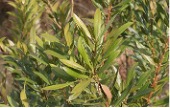
Figure 72. Myrica californica
California Wax Myrtle
Height: 12 ft Width: 12 ft Multiple stems; 4-in. long narrow leaves; small black berries. Zone 7
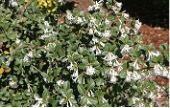
Figure 73. Osmanthus delavayi
Delavay Osmanthus
Height: 6 ft Width: 8 ft Very dense growth; glossy paired leaves; white flowers. Zone 7 Shade
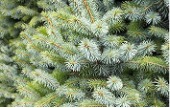
Figure 74. Picea sitchensis ‘Papoose’
Papoose sitka spruce
Height: 6 ft Width: 6 ft Globe shape; blue-green
needles tipped with silver. Zone 7
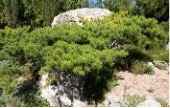
Figure 75. Pinus banksiana
Schoodic Dwarf jack pine
Height: 2 ft Width: 4 ft Ground-hugging habit; emerald green foliage; rock garden plant. Zone 2
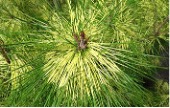
Figure 76. Pinus desiflora
Golden Ghost red pine
Height: 10 ft Width: 5 ft Variegated needles are bright yellow with green.
Zone 3
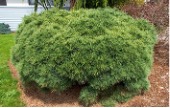
Figure 77. Pinus strobus ‘Blue Shag’
Blue Shag eastern white pine
Height: 4 ft Width: 4 ft Mounding habit; soft green-silver needles; best in full sun. Zone 3
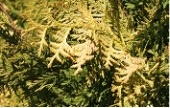
Figure 78. Thuja occidentalis ‘Yellow Ribbon’
Yellow Ribbon arborvitae
Height: 10 ft Width: 3 ft Narrow habit; golden yellow fronds all year; hedge plant. Zone 3
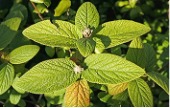
Figure 79. Viburnum rhytidophyllum
Leatherleaf viburnum
Height: 15 ft Width: 10 ft 2.5-in.-long wrinkled leaves. Zone 5 Shade
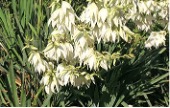
Figure 80. Yucca aloifolia
Spanish Bayonet
Height: 4 ft Width: 4 ft
Clump form; sword-like leaves, white flower stalks. Zone 4
Groundcovers
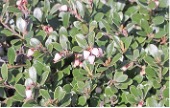
Figure 81. Arctostaphylos uvaursi
Kinnikinnick
Height: 1 ft Width: 12 ft
1-in.-long oblong leaves; pink urn-shaped flowers; full sun. Zone 2 Native, Shade
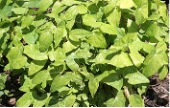
Figure 82. Epimedium versicolor
Bishop’s Hat
Height: 1 ft Width: 2 ft Herbaceous; heart-shaped leaves; yellow flowers.
Zone 5 Shade
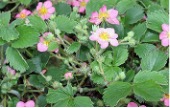
Figure 83. Fragaria chiloensis
Beach strawberry
Height: 6 in. Width: 3 ft Herbaceous; trifoliate leaves; pink spring flowers; 1-in. berries. Zone 5 Native
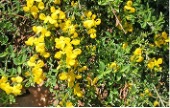
Figure 84. Genista pilosa
Vancouver Gold Woadwaxen
Height: 9 in. Width: 3 ft Spreader with small, narrow, oval leaves; yellow pea-like flowers. Zone 5
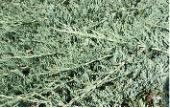
Figure 85. Juniperus horizontalis
Bar Harbor juniper
Height: 3 in. Width: 6 ft Very dense evergreen cover; blue-grey foliage; fleshy cones. Zone 3
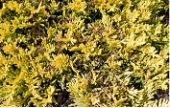
Figure 86. Juniperus horizontalis
Mother Lode juniper
Height: 6 in. Width: 6 ft Multi-stemmed creeper with gold foliage; soft texture. Zone 3
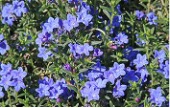
Figure 87. Lithodora diffusa
Grace Ward Lithodora
Height: 4 in. Width: 4 ft
Low spreader; narrow leaves; blue, funnel-shaped flowers. Zone 6
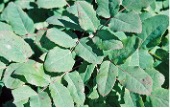
Figure 88. Mahonia repens
Creeping Mahonia
Height: 2 ft Width: 3 ft
Bluish-green, spiny leaves 1–2 in. long ; yellow spring flowers; blue fruit. Zone 5 Native, Shade
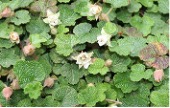
Figure 89. Rubus calycinoides
Crinkle-leaf Creeper
Height: 6 in. Width: 5 ft
Mat-forming habit; evergreen; 3–5 lobed leaves; white flowers. Zone 6 Shade
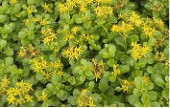
Figure 90. Sedum kamtschaticum
Russian Stonecrop
Height: 6 in. Width: 2 ft Creeper with small scalloped leaves; bright yellow flowers. Zone 3
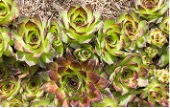
Figure 91. Sempervivum tectorum
Common Houseleek
Height: 3 in. Width: 2 ft
Mat-forming succulent; pointed rosette-shaped leaves. Zone 3
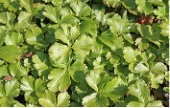
Figure 92. Waldsteinia fragariodes
Barren strawberry
Height: 6 in. Width: 4 ft Deciduous; strawberry-like foliage; yellow foliage; no fruit. Zone 3
Vines
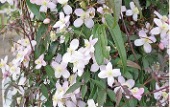
Figure 93. Clematis armandii
Armand Clematis
Height: 20 ft Width: 10 ft Evergreen; leaves up to 6 in. long; arranged opposite; fragrant white or pink spring flowers. Zone 6
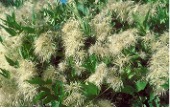
Figure 94. Clematis ligusticifolia
Western White Clematis
Height: 50 ft Width: 20 ft
Very vigorous climber; 3-lobed leaves; white flowers. Zone 5
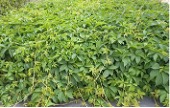
Figure 95. Parthenocissus quinquefolia
Virginia Creeper
Height: 30 ft Width: 30 ft Deciduous; compound leaves with 5 petals; red fall foliage. Zone 3 Shade
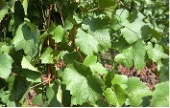
Figure 96. Vitus vinifera
Wine Grape
Height: 20 ft Width: 20 ft Vigorous deciduous vine; lobed leaves; tendrils; edible fruit. Zone 7
Sources: Breen 2015; Brun 2015; Detweiler, Griffiths, and Olson 2005; Lohr and Pearson-Mims 2015; Love et al. 2009; Mickelbart and Jenks 2012; Shelton and Hamilton 1992. Native: WA State Native Plants 2015. Shade: tolerates shade.
- Bell, N., D. Sullivan, and T. Cook. 2009. Mulching Woody Ornamentals with Organic Materials. Oregon State University Extension Service Publication EC1629-E. http://ir.library. oregonstate.edu/xmlui/bitstream/handle/1957/19900/ec1629-e.pdf.
- Breen, P. 2015. Landscape Plants. Oregon State University. http://oregonstate.edu/dept/ldplants/.
- Brun, C. 2015. Pacific Northwest Plants. Washington State University. http://pnwplants.wsu.edu.
- Center for Invasive Species and Ecosystem Health. Invasive and Exotic Species of North America. http://www.invasive.org/index.cfm.
- Chalker-Scott, L. 2015. Using Arborist Wood Chips as Landscape Mulch. Washington State University Extension Publication FS160E. http://cru.cahe.wsu.edu/CEPublications/FS160E/ FS160E.pdf.
- Charlton, B., R. Golembiewski, and T. Cook. 2010. Efficient Lawn Irrigation in the Intermountain West. Oregon State University Extension Publication EC 1638. http://ir.library.oregonstate.edu/jspui/bitstream/1957/18838/1/ec1638.pdf.
- Cogger, C. 2005. Potential Compost Benefits for Restoration of Soils Disturbed by Urban Development. Compost Science and Utilization 13 (4): 243–251. http://www.tandfonline.com/doi/abs/10.1080/1065657X.2005.10702248#. VKCYWcCAGA.
- Cogger, C. 2014. A Home Gardener’s Guide to Soils and Fertilizers. Washington State University Extension Publication EM063E. http://cru.cahe.wsu.edu/CEPublications/EM063E/EM063E.pdf.
- Cogger, C., R. Hummel, J. Hart, and A. Bary. 2008. Soil and Redosier Dogwood Response to Incorporated and Surface-Applied Compost. HortScience 43(7): 2143–2150. http://hortsci.ashspublications.org/content/43/7/2143.abstract.
- Cogger, C., and G. Stahnke. 2013. Organic Soil Amendments in Yards and Gardens: How Much is Enough? Washington State University Extension Publication FS123E. https://pubs.wsu.edu/ListItems.aspx?Keyword=FS123E.
- Cook, T. 2004. Practical Lawn Establishment and Renovation. Oregon State University Extension EC 1550. https://catalog.extension.oregonstate.edu/ec1550.
- Detweiler, A., P. Griffiths, and R. Olson. 2005 An Introduction to Xeriscaping in the High Desert. Oregon State University Extension Service. http://extension. oregonstate.edu/yamhill/sites/default/files/an_introduction_to_ xeriscaping.pdf.
- Donovan, G., and D. Butry. 2010. Trees in the City: Valuing Street Trees in Portland, Oregon. Journal of Landscape and Urban Planning Volume 94: 77–83. http://www.fs.fed.us/pnw/research/gcra/pdfs/pnw_2010_donovan001.pdf.
- Fair, B. 2009. Coping with Drought: A Guide to Understanding Plant Response to Drought. North Carolina State University Cooperative Extension Publication AG-713W. http://www.slideshare.net/Kama158x/s2c293.
- Fresenburg, B. 2010. Home Lawn Watering Guide. University of Missouri Extension Publication G6720. http://extension.missouri.edu/p/g6720.
- Goss, R., E.D. Miltner, and G. Stahn-ke. 2006. Lawns and Other Turf. Washington State University Extension Publication EB0684E. https://pubs.wsu.edu/ItemDetail.aspxProductID=13339&SeriesCode=&Category-ID=255&Keyword=.
- Invasive and Exotic Species of North America. 2015. Center for Invasive Species and Ecosystem Health, University of Georgia. http://www.invasive.org/index.cfm.
- Kessler, R. 2008. Drought-Tolerant Landscapes for Alabama. Alabama Cooperative Extension Publication ANR-1336. http://www.aces.edu/pubs/docs/A/ANR-1336/ANR-1336.pdf.
- Koenig, R., and V. Isaman. 1997. Topsoil Quality Guidelines for Landscaping. Utah State University Publication AG/SO-02. http://forestry.usu.edu/files/uploads/AGSO02.pdf.
- Kopp, K., T. Cerny, and R. Heflebower. Water-Wise Landscaping. Utah State University Cooperative Extension Publication HG-520. https://extension.usu.edu/files/publications/publication/HG-520.pdf.
- Lohr, V., C. Pearson-Mims. 2015. Hardy Plants for Waterwise Landscapes. Washington State University Department of Horticulture. http://public.wsu.edu/~lohr/wcl/.
- Love, S., K. Noble, J. Robbins, B. Wilson, and T. McCammon. 2009. Landscaping with Native Plants. University of Idaho Extension Bulletin 862. http://www.cals.uidaho.edu/edComm/pdf/BUL/BUL0862.pdf.
- Mickelbart, M., and M. Jenks. 2012. Drought Tolerant Plants. Purdue University Extension Publication HO-252-W. http://www.extension.purdue.edu/extmedia/Ho/Ho-252-W.pdf.
- Nieniera, A. 2009. The Effect of Landscape Plants on Perceived Home Value. Virginia Cooperative Extension Publication 426-087. http://pubs.ext.vt.edu/426/426-087/426-087_pdf. pdf.
- Ophardt, M., and R. Hummel. 2011. Planting Trees and Shrubs in the Landscape. Washington State University Extension Publication FS047E. https://pubs.wsu.edu/ItemDetail.aspx?ProductID=15451&SeriesCode=&CategoryID=388&Key-word=.
- Peters, T. 2011. Drip Irrigation for the Yard and Garden. Washington State University Extension Publication FS030E. https://pubs.wsu.edu/ItemDetail.aspxProductID=15412&SeriesCode=&CategoryID=144&Key-word=.
- Shelton, T., and B. Hamilton. Landscaping for Water Conservation. Rutgers NJAES Cooperative Extension Publication E080. https://njaes.rutgers.edu/pubs/publication.asp?pid=e080.
- Stahnke, G., S. Brauen, R. Byther, A. Antonelli, and G. Chastagner. 2005. Home Lawns. Washington State University Extension Publication EB0482. http://4h.wsu.edu/em2778cd/pdf/eb0482.pdf.
- Stahnke, G., E. Miltner, C. Cogger, S. Collman, J. Glass, M. Ophardt, and P. Tillery. 2012. Phosphorus and Home Lawns: Quick Facts and Recommendations. Washington State University Extension Publication FS058E. http://cru.cahe.wsu.edu/CEPublications/FS058E/FS058E.pdf.
- Stahnke, G.K., E.D. Miltner, R.C. Golembiewski, T.A. Salaiz, and W.J. Johnston. 2010. Turfgrass Seeding Recommendations for the Pacific Northwest. Pacific Northwest Extension Publication PNW299. http://cru.cahe.wsu.edu/CEPublications/PNW299/PNW299.pdf.
- Stahnke, G., M. Ophardt, and W. Johnston. 2012. Kentucky Bluegrass for Home Lawns in Washington State. Washington State University Extension Publication FS098E. https://pubs.wsu.edu/ItemDetail.aspx?ProductID=15550&Seri-esCode=&CategoryID=218&Key-word=.
- Tirmenstein, D.A. 1991. Acer rubrum. In Fire Effects Information System. U.S. Department of Agriculture, Forest Service, Rocky Mountain Research Station. http://www.fs.fed.us/database/feis/plants/tree/acerub/all.html.
- United States Department of Agriculture. 2014. Plant Hardiness Zone Map. Agricultural Research Service. http://planthardiness.ars.usda.gov/PHZMWeb/.
- United States Department of Agriculture. 2015. PLANTS Database. Natural Resources Conservation Service. http://plants.usda.gov/java/.
- United States Environmental Protection Agency. 2013. Water-smart landscapes start with WaterSense®. http://www.epa.gov/watersense/docs/water-efficient_ landscaping_508.pdf.
- Voderberg, D., A. Kowalewski. 2014. Practical Lawn Care for Western Oregon. Oregon State University Extension Publication EC1521. https://catalog.extension.oregonstate.edu/ec1521.
- Wade, G., J. Midcap, K. Coder, G. Landry, A. Tyson, and N. Weatherly. 2007. Xeriscape: A Guide to Developing a Water-Wise Landscape. University of Georgia College of Agricultural and Environmental Sciences Bulletin 1073. http://www.caes.uga.edu/extension/whitfield/anr/documents/Xeriscapewaterwise.pdf.
- Washington State Climatologist. 2015. Graphical Washington Climate Normals. Office of the Washington State Climatologist. http://www.atmos.washington.edu/marka/normals/wa.normals.2010.html.
- Washington State Department of Ecology. 2012. Post Construction Soil Quality and Depth BMP T5.13. In WDOE Stormwater Management Manual for Western Washington. http://www.buildingsoil.org/tools/Soil_BMP_text.pdf.
- Washington State Department of Ecology. 2014. Municipal Stormwater General Permit Information. http://www.ecy.wa.gov/PROgrams/wq/stormwater/municipal/index.html.
Copyright 2015 Washington State University
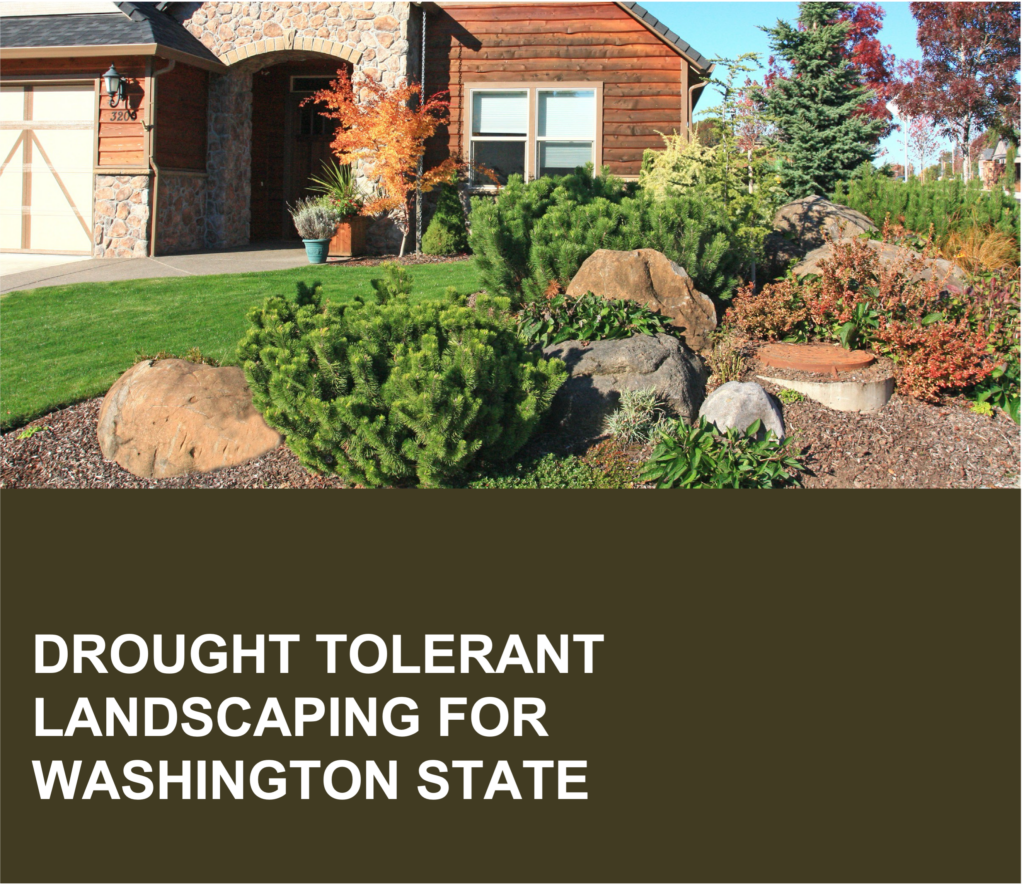
Cover image includes examples of drought-tolerant conifers, photo by Charles Brun. All photos by Charles Brun unless otherwise indicated.
WSU Extension bulletins contain material written and produced for public distribution. Alternate formats of our educational materials are avail-able upon request for persons with disabilities. Please contact Washington State University Extension for more information.
Issued by Washington State University Extension and the U.S. Department of Agriculture in furtherance of the Acts of May 8 and June 30, 1914. Extension programs and policies are consistent with federal and state laws and regulations on nondiscrimination regarding race, sex, religion, age, color, creed, and national or ethnic origin; physical, mental, or sensory disability; marital status or sexual orientation; and status as a Vietnam-era or disabled veteran. Evidence of noncompliance may be reported through your local WSU Extension office. Trade names have been used to simplify information; no endorsement is intended. Published June 2015.
EM087E