Integrated Management of Feral Rye in Winter Wheat
Description
This publication discusses identification and management of feral rye.
Biology
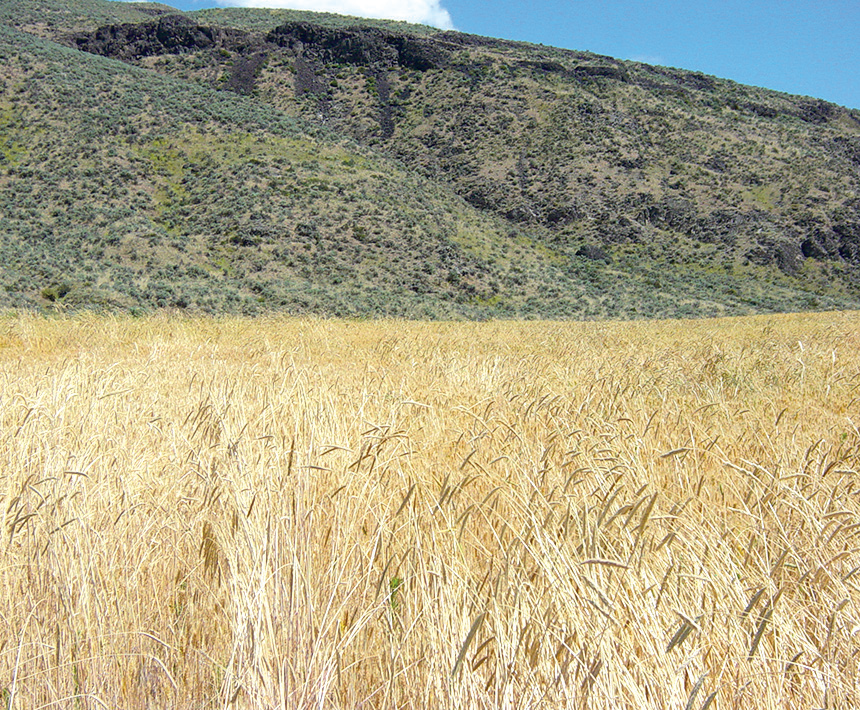
Photo: Dale Whaley.
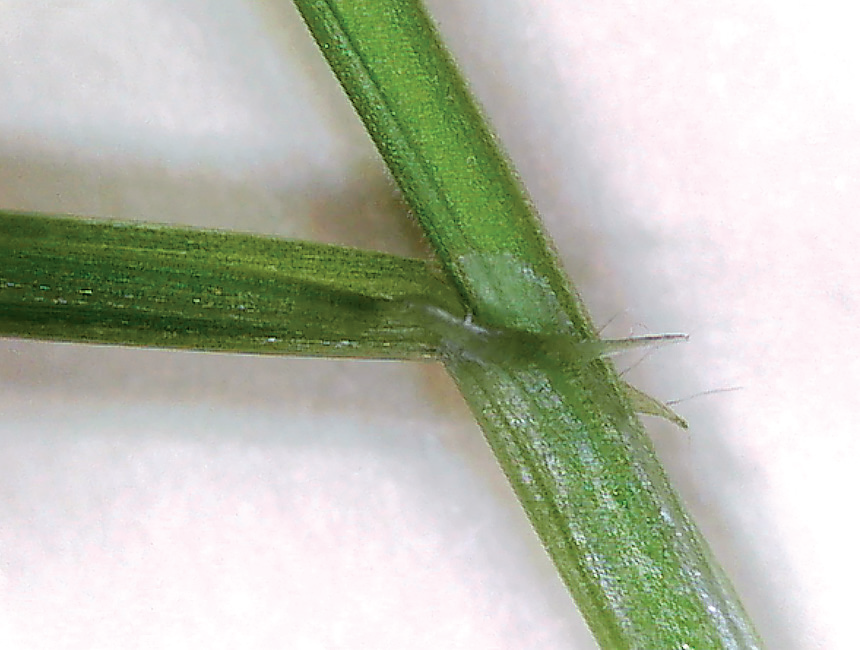
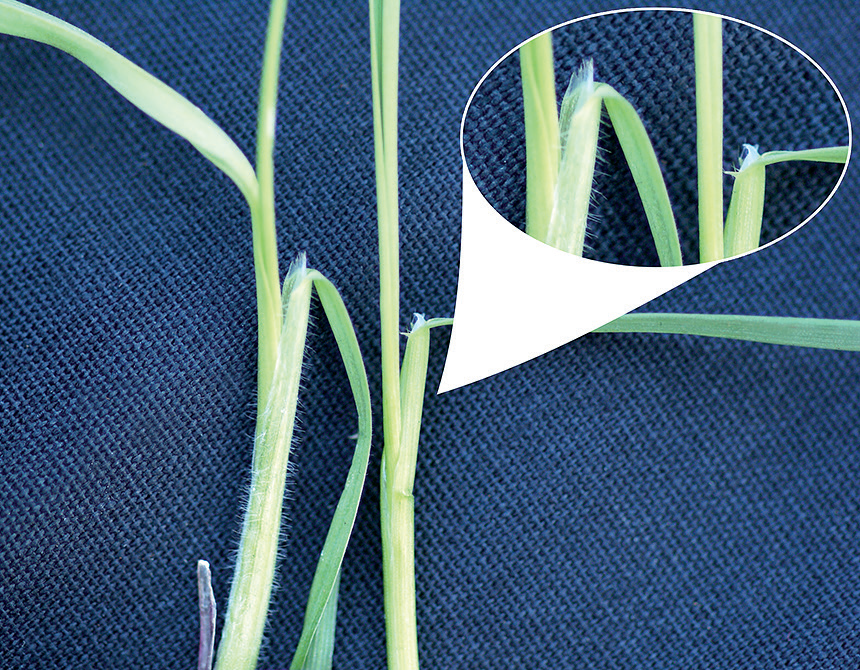
Feral rye and winter wheat are both winter annual grasses that reproduce by seed. Feral rye may germinate as late as mid-April and still have sufficient environmental conditions to vernalize (that is, promote flower development through exposure of young plants to cold temperatures) and produce seed. Feral rye resembles winter wheat in habit but may be differentiated from wheat by several characteristics (Table 1; Figures 2–6).
Feral rye plants, collected from seven winter wheat fields in Oregon in 2016 through 2018, produced an average of 360 seeds per plant with a range from 111 to 935 seeds per plant (San Martin et al. 2021).
| Plant Part | Wheat | Feral Rye |
|---|---|---|
| Stem | Erect and freely branching at base, 24–40 inches tall | Larger and longer than wheat |
| Leaf | Blade 0.4–0.8 inches wide, usually dark green | Coarser and more bluish than wheat |
| Ligule* | Membranous and fringed with minute hairs | Membranous |
| Auricle** | Purple changing to white, sharply curved, and always present | White, narrow, wand withers early |
| Seed Head | From 2–5 inches long, oblong or elliptical in shape | Slender, longer than wheat, and somewhat noddin |
| Seed | Roughly egg-shaped and light brown to darker brown to darker shades of red | Narrower than wheat and usually brownish-olive to yellow |
*An outgrowth from the top of the leaf sheath.
**A small ear-like projection from the base of the leaf.
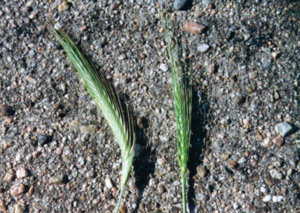
This level of seed production allows a small infestation of feral rye to dramatically increase in density in a short time if management is not implemented.
Research on the longevity of feral rye seed in soil found less than 20 percent of feral rye seed was still viable one year after deposition into the soil, and less than 5 percent was viable after two years (Stump and Westra 2000). However, farmer experience suggests that feral rye seed may lay dormant for 5–10 years or more. It is likely that 1–2 percent of feral rye seed exhibits extended dormancy. Feral rye seed dormancy and longevity is greater than downy brome, but less than jointed goatgrass.
Feral rye can be introduced into wheat rotations by planting contaminated winter wheat seed or failing to clean the combine between infested and clean fields. The seed is also readily moved by water and animals. Weed scientists and growers believe that intense rainstorms (“gully washers”) move feral rye seed out of roadside ditches and field margins of infested fields into previously uninfested fields located downstream
Seeding Identification
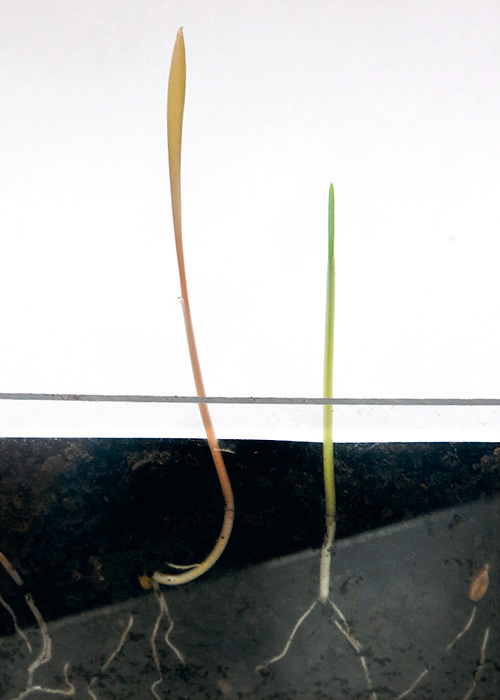
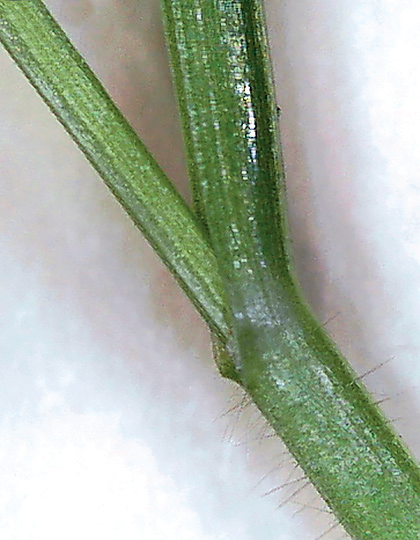
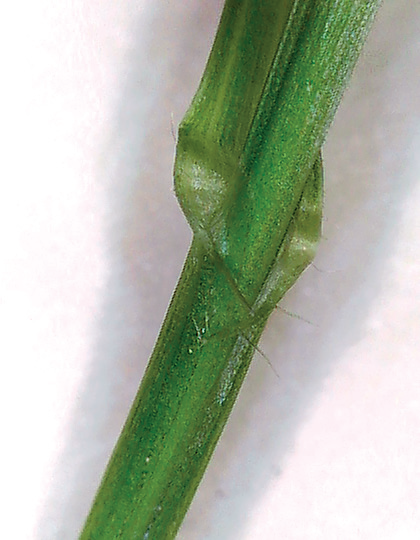
It can often be difficult to distinguish feral rye seedlings from wheat seedlings. When both seedlings emerge at the same time, feral rye is often slightly larger than wheat (Figure 3). Feral rye seedlings also tend to be somewhat reddish in color compared to the light green of wheat seedlings. The stems of feral rye typically have many fine hairs, while wheat stems have few hairs (Figure 4). A close look at the leaf collar (where the leaf and stem meet) can help differentiate the two: wheat seedlings (Figure 5) always have sharply-curved auricles (small ear-like projections from the base of the leaf) that is fringed with minute hairs, while rye may have them early on, but they often wither and are difficult to see. Feral rye seedlings have a membranous ligule (an outgrowth from the top of the leaf sheath), while in wheat the ligule is fringed with minute hairs but is not membranous (Figure 6).
Management
Preventive methods are a critical part of an integrated weed management system for feral rye. Eliminating potential seed sources for feral rye establishment in a field needs to be a top priority. Using the following guidelines will help ensure growers of management
success.
- Plant clean seed. Feral rye seed is often found in other small grain seed, especially winter wheat, as well as forage grass seed mixtures. Because it is very difficult to separate feral rye seed from winter wheat seed, the most effective control strategy is to be knowledgeable about your winter wheat seed source or buy only certified seed.
- Destroy any feral rye before it produces seed in cultivated fields or summer fallow. Rogueing should be done before or during flowering. After this point, the seed heads should be removed from the field and destroyed.
- Thoroughly clean harvest, tillage, and mowing equipment before moving between fields known to have feral rye populations.
- Make sure that all feral rye is managed in roadside ditches, field margins, and other areas that may contaminate production fields.
Crop Diversity
Feral rye is best controlled in rainfed winter wheat rotations that include broadleaf crops such as dry pea, chickpea, lentil, or canola, where Group 1 herbicides (ACCase inhibitors) such as Poast (sethoxydim), Select (clethodim), or Assure II (quizalofop-p-ethyl) can be used to target feral rye seedlings. These same herbicides can be used in many irrigated broadleaf crops grown in rotation with winter wheat.
Spring-planted cereals, such as spring wheat, oat, or barley, may also be used in rotation with winter wheat to control feral rye; however, when planted early to maximize grain yield, these crops may still provide opportunities for feral rye to germinate, vernalize, and produce seed. Planting these crops later in the spring can improve feral rye control if additional glyphosate burndown applications or tillage is done prior to planting, but grain yield potential will be diminished. Later-germinating feral rye also is less likely to
produce seed.
In crop rotations using spring cereals, it is very important to kill feral rye with herbicides or tillage before planting the spring-seeded crop because selective herbicides to manage feral rye are limited (for spring wheat) or non-existent (for barley and oats). In the US Great Plains, where summer rainfall is prevalent, the use of late spring-planted crops such as corn or sunflower in the rotation with winter wheat has been very effective for managing feral rye and other winter annual grass weeds in winter wheat (Daugovish et al. 1999). In the PNW, where summer rainfall is often scarce, these crops are more difficult to successfully incorporate into rainfed crop rotations. The advantages of adding a spring crop to the winter wheat rotation for feral rye control are lost if feral rye is allowed to produce seed in the non-winter wheat phases of the rotation.
The key aspect of crop rotation for the control of feral rye is to prevent any new seed production for at least two years between winter wheat crops. This is true for both rainfed and irrigated crop rotations. In rainfed cropping systems, for example, a three-year rotation of winter wheat–spring barley–fallow, where no feral rye is allowed to produce seed during the spring barley or fallow years, would limit the potential for feral rye growth. In low rainfall zones, where winter wheat–fallow is traditionally practiced, adding a spring-planted crop following winter wheat may have a high risk of failure. In this situation, some growers have found that a four-year rotation of winter wheat–fallow–winter canola–fallow has been very effective for controlling feral rye (Sowers et al. 2012). With recent genetic improvements for cold tolerance and food quality, fall-sown pea is another broadleaf crop option for use in the traditional winter wheat–fallow region. Researchers expect that spring wheat or spring barley could be substituted for winter canola in this four-year rotation with nearly similar results for feral rye control. In irrigated cropping systems, the insertion of two or three spring-seeded broadleaf crops between winter wheat crops can be very effective for controlling feral rye.
Fallow Management
For some PNW winter wheat growers, diversifying crop rotations is not a feasible option. Therefore, feral rye management during the fallow period must be improved. When selecting a fallow treatment, it is important to consider soil erosion from wind and water, equipment availability, and federal conservation program requirements.
Unless implementing harvest weed seed control systems (discussed below), the germination and subsequent control of rye seedlings are key to good fallow management of feral rye. After trying to eliminate all possible seed sources, the next step to controlling feral rye is to provide even distribution of the wheat crop residues during crop harvest. For tillage or herbicides to effectively control feral rye, crop residues (both long straw and fines, or chaff) must be distributed evenly rather than concentrated in narrow bands behind the combine. Feral rye seed will be spread with the fines, allowing for good seed-to-soil contact to encourage germination. Straw choppers on combines with straw walkers help spread the straw and make it easier to get good seed-to-soil contact later. Since rotary combines break up the straw, choppers are not usually needed.
After the crop residues have been adequately distributed, several other cultural practices may help control feral rye during the fallow period in a winter wheat–fallow rotation:
- Consider tillage, light disking, or harrowing immediately after harvest to “plant” feral rye seed for optimum germination during the fallow period.
- Use shallow, light tillage, or a glyphosate application in the fall following feral rye emergence to control seedlings. Herbicides are more effective than tillage when soil is moist and plants are actively growing. Unlike tillage, herbicides do not destroy additional crop residues. For tillage to work well, the soil must be dry and the air temperature must be warm enough (above 80°F) to desiccate plants within about 30 minutes.
- Apply glyphosate early in the summer fallow period when temperatures are low and the soil is wet, and delay tillage until temperatures are high and the soil is dry.
- Sweep or rodweed during the summer, using tillage as needed to control weeds and prepare the seedbed.
- Delay winter wheat planting by a week or ten days to increase the likelihood of catching a timely rain to help germinate feral rye seed, which can then be eliminated with herbicides or tillage before the winter wheat is planted.
Burning
Burning frequently results in soil erosion. Unless using narrow-windrow burning as part of a harvest weed seed control system (HWSC, discussed below in the section titled Harvest Weed Seed Control), fire is usually not hot enough at the soil surface to kill a high percentage of feral rye seed. Seed even partially covered by soil will not be killed by burning. Local no-burning statutes, health concerns with smoke, fickle weather conditions (for example, wind speed, wind direction, temperature, and humidity), and the destruction of crop residues limit the utility of fire as a weed control method.
Plowing
Moldboard plowing at least 6 inches deep will bury most feral rye seed from crop residues and control as much as 90 percent of the associated growth. Plowing is probably not as effective for managing feral rye as it is for downy brome because feral rye emerges better than downy brome when buried 2–6 inches deep.
In addition, the longevity of feral rye seed viability increases as burial depth increases. To prevent bringing previously buried seed back to the soil surface where it will germinate, plowing should not be done every fallow period. This will also avoid the soil erosion from wind and water that plowing can cause.
Herbicides
There are no currently labeled herbicides that will selectively control feral rye in standard wheat cultivars. However, there are two commercial production systems, the Clearfield and CoAXium production systems that incorporate non-GMO- derived herbicide resistance genes in wheat cultivars that each allow the use of a specific herbicide that provides suppression or control of feral rye.
The Clearfield production system was introduced in the fall of 2002. This program combines the use of Beyond herbicide (imazamox), an ALS-inhibiting herbicide (Group 2), with wheat cultivars, designated as CL+, containing two genes that confer tolerance to this herbicide. Winter wheat cultivars that do not contain the tolerance gene(s) are seriously injured or killed when treated with Beyond herbicide.
In field studies conducted throughout the western United States winter wheat belt for many years, the Clearfield production system provided excellent control of jointed goatgrass and good control of downy brome when these grass weeds were treated with 4 ounces of product per acre in the fall or early spring (White et al. 2006). Postemergence applications of Beyond requires adding an adjuvant and nitrogen fertilizer solution. Good control of feral rye required an early fall application with 5 ounces of product per acre. Optimum control of feral rye was achieved when the application was made before feral rye plants had produced a tiller. To prevent injury, Beyond herbicide should not be applied to winter wheat until the two- leaf stage (Clearfield cultivars) or after tiller initiation.
No previous technology has provided this level of selective control of feral rye in winter wheat. However, grower experience with Beyond for feral rye control has been inconsistent. As a result of this inconsistent control, the Beyond label now claims only suppression of feral rye.
Some growers have adopted split applications of Beyond herbicide to improve the level and consistency of feral rye control. Beyond is applied in the fall at 3 or 4 ounces per acre and again in the spring at 4 or 5 ounces per acre. A maximum of 8 ounces per acre of Beyond may be applied to Clearfield winter wheat in a single growing season, and no more than 6 ounces per acre may be applied in a single application. While split applications do improve feral rye control, the additional application and amount of herbicide increases cost and the selection pressure for herbicide resistance compared to a single application.
In a field study conducted in eastern Washington, delaying spring applications of Beyond from late April to late May, either as part of a split application or with just a single application, improved feral rye control but reduced winter wheat yield (Table 2). Allowing feral rye to compete with wheat for up to an additional month further improved feral rye control, but also further reduced winter wheat yields. Similar results have been observed in field studies conducted in eastern Oregon (Daniel Ball, unpublished data).
Research conducted in western Nebraska and Wyoming demonstrated improved control of feral rye with Beyond herbicide when MCPA-ester was tank-mixed with Beyond (Kniss et al. 2011). MCPA- ester increased the uptake of Beyond and frequently increased control by an average of about 10 percent over Beyond treatments without MCPA-ester. Liquid fertilizer and surfactants are still required when adding MCPA to Beyond.
| Application Dates(s) | Rate (oz/acre) | Feral Rye Control (%) | Wheat Yield (bu/acre) |
|---|---|---|---|
| Oct. 16 + May 1 | 3 + 3 | 70 | 32 |
| Nov. 7 + May 11 | 3 + 3 | 90 | 32 |
| Apr. 19 + May 24 | 3 + 3 | 92 | 33 |
| November 7 | 5 | 14 | 27 |
| April 19 | 5 | 75 | 33 |
| May 1 | 5 | 79 | 27 |
| May 11 | 5 | 98 | 25 |
| Untreated check | 0 | 0 | 11 |
Source: I. Burke, unpublished data.
As with most technology, there are some concerns with exclusively using the Clearfield system to manage feral rye. One concern is the development of herbicide-resistant weeds. Other Group 2 herbicides, such as Glean (chlorsulfuron), Affinity Broadspec (thifensulfuron + tribenuron methyl), and Pursuit (imazethapyr; not registered for use in wheat), have a history of selecting for Group 2-resistant weeds within five years. Examples include Group 2-resistant Russian thistle, kochia, prickly lettuce, and pigweed species. Without adequate safeguards, it is likely that resistance to Beyond will occur in some feral rye populations. In fact, there are some indications that resistant biotypes already exist in the region (Barroso, unpublished data).
To avoid the herbicide resistance associated with Group 2 herbicides, growers should not use the Clearfield system more than twice every six years. This allows the system to be used every time that winter wheat is grown in a three-year rotation containing a spring-seeded crop and summer fallow. Growers in a winter wheat–fallow rotation are advised not to use the Clearfield system in more than two consecutive wheat crops, or rapid development of herbicide resistance in weeds may occur. Growers should also be aware of the plant-back intervals on the Beyond label. These intervals can be as long as 26 months for crops such as canola and sugar beet.
The CoAXium wheat production system was introduced in 2018. This system combines the use of Aggressor AX herbicide (quizalofop), an ACCase-inhibiting herbicide (Group 1), with wheat cultivars containing a gene, commercialized as the AXigen trait, that confers tolerance to this herbicide. A number of soft white winter wheat cultivars suited to the CoAXium system have been released in recent years. These lines are adapted to the growing conditions of the PNW, and have good end-use quality. As CoAXium lines are new in the PNW, the full spectrum of disease resistance is being built into these cultivars.
The CoAXium wheat production system has provided excellent control of feral rye in research studies conducted in eastern Washington, Idaho, and Oregon (Figure 7). Aggressor AX herbicide should be applied at a rate of 10 to 12 ounces per acre in the fall or spring to feral rye plants that are 2 to 6 inches in height. A split application of Aggressor AX herbicide applied at a rate of 8 ounces per acre in the fall followed by 8 ounces per acre in the spring has been very effective and may be desired for heavy feral rye infestations. Adding MSO or COC at 1% v/v improves the control of feral rye with Aggressor AX herbicide. However, a NIS is recommended for fall applications of Aggressor AX due to the increased risk for crop injury with MSO or COC adjuvants used in the fall. Coverage is critical for effective control, so apply Aggressor AX in at least 10 gallons of carrier per acre, and preferably in 20 gallons per acre.
The development of herbicide resistance is of great concern with Group 1 herbicides. In fact, a downy brome biotype resistant to quizalafop, the active ingredient in Aggressor AX herbicide, was identified in northeast Oregon in 2005 (Ball et al. 2007). In 2023, Riberio et al. (2023) reported nine more cases in Oregon. Careful stewardship of the CoAXium wheat production system is critical if this technology is to last more than just a few years. Consider crop rotations where winter wheat is grown only once every three or four years. The active ingredient in Aggressor AX is the same active ingredient found in Assure II herbicide, which is labeled for use in dry pea (including winter pea), chickpea, lentil, and canola. Growers should avoid using Aggressor AX and Assure II herbicides in their crop rotations. Growers should consider rotating the use of the CoAXium wheat production system with the Clearfield wheat production system. Always rogue and remove feral rye plants that survive herbicide treatments.
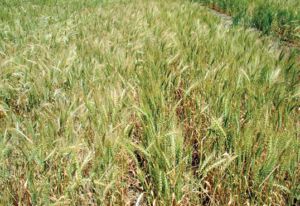
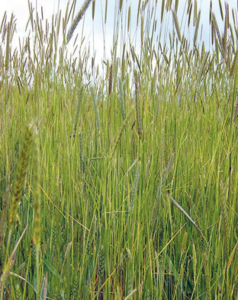
Another option for controlling feral rye in winter wheat is to apply glyphosate with a rope-wick applicator. The feral rye should be 10–12 inches taller than the wheat for best results (Figure 8). In heavy stands of feral rye, the applicator should travel in both directions. Any contact between the rope wick and winter wheat or drip of herbicide on the crop will cause injury. The glyphosate should be mixed at a 33 percent concentration, which is 1 gallon of herbicide with 2 gallons of water. Surfactants may be needed for some glyphosate formulations.
Harvest Weed Seed Control
Harvest weed seed control (HWSC) is an innovative, non-chemical approach developed in Australia to assist with the management of herbicide-resistant weeds (Lyon et al. 2019). The system focuses on the management of chaff material in which most weed seed resides. Research conducted in northeast Oregon and southeast Washington found that, on average, 60% of feral rye seed was retained in the head at harvest time (San Martin et al. 2021). Seed retention ranged from a low of 49% at the driest site near Echo, OR to 70% at the wettest site near Dixie, WA. This level of seed retention at harvest makes feral rye a good candidate species for using HWSC as part of an integrated weed management program. To learn more about HWSC and its application in the PNW, see PNW 730, Harvest Weed Seed Control: Applications for PNW Wheat Production Systems (Lyon et al. 2019).
Summary
Feral rye is a troublesome winter annual grass weed in PNW winter wheat production systems, particularly those that incorporate fallow periods. Crop rotation involving at least two years out of winter wheat have proven useful in the management of feral rye in winter wheat. When managed properly, the use of the Clearfield and CoAXium wheat technologies can be effective tools in an integrated management strategy. Harvest weed seed control may also play a useful role in managing feral rye.
Acknowledgements
This is a revision of the original 2014 version of PNW660. The authors acknowledge the contributions made by Dr. Don Morishita, University of Idaho, and Dr. Andrew Hulting, Oregon State University, to the original publication.
This publication was adapted, with permission, from a University of Nebraska-Lincoln Extension guide titled Rye Control in Winter Wheat authored by Drew J. Lyon and Robert N. Klein (G1483, 2007).
The authors acknowledge the contributions made by Dr. Ian C. Burke, Washington State University, and Dr. Frank L. Young, USDA-ARS, to this publication.
References
Ball, D.A. n.d. Oregon State University.
Ball, D.A., S.M. Frost, and L.H. Bennett. 2007. ACCase- Inhibitor Herbicide Resistance in Downy Brome (Bromus tectorum) in Oregon. Weed Science 55: 91–94.
Barroso, J. n.d. Oregon State University.
Daugovish, O., D.J. Lyon, and D.D. Baltensperger. 1999. Cropping Systems to Control Winter Annual Grasses in Winter Wheat (Triticum aestivum). Weed Technology 13(1): 120–126.
Kniss, A.R., D.J. Lyon, J.D. Vassios, and S.J. Nissen. 2011. MCPA Synergizes Imazamox Control of Feral Rye (Secale cereale). Weed Technology 25(3): 303–309. http:// www.bioone.org /doi/full/10.1614/WT-D-10-00146.1.
Lyon, D.J., M.J. Walsh, J. Barroso, J.M. Campbell, and A.G. Hulting. 2019. Harvest Weed Seed Control: Applications for PNW Wheat Production Systems. Washington State University Extension Publication PNW730. Washington State University.
Ribeiro V.H.V., Brunharo C.A.C.G., Mallory-Smith C.A., Walenta D.L., and Barroso J. 2023. First report of target-site resistance to ACCase-inhibiting herbicides in Bromus tectorum L. Pest Management Science 79(10), 4025-4033. DOI:10.1002/ps.7607.
Rydrych, D.J. 1977. Cereal Rye Control in Winter Wheat. Special Report, Oregon Agricultural Experiment Station 485: 27–29.
San Martin, C., M.E. Thorne, J.A. Gourlie, D.J. Lyon, and J. Barroso. 2021. Seed retention of grass weeds at wheat harvest in the Pacific Northwest. Weed Sci. 69: 238-246.
Sowers, K., D. Roe, and B. Pan. 2012. Oilseed Production Case Studies in the Eastern Washington Low-to-Intermediate Rainfall Zone. Washington State University Extension Publication EM048E, 23–26.
Washington State University. https://pubs.extension. wsu.edu/oilseed-production-case-studies-in-the-eastern- washington-lowtointermediate-rainfall-zone.
Stump, W.L., and P. Westra. 2000. The Seedbank Dynamics of Feral Rye Secale cereale. Weed Technology 14(1): 7–14. http://www.bioone.org/doi/full/10.1614/ 0890037X%282000%29014%5B0007%3ATSDOFR%5 D2.0.CO%3B2.
White, A.D., D.J. Lyon, C. Mallory-Smith, C.R. Medlin, and J.P. Yenish. 2006. Feral Rye (Secale cereale) in Agricultural Production Systems. Weed Technology 20(3): 815–823. http://www.bioone.org/doi/full/ 10.1614/WT-05-129R1.1.
Published and distributed in furtherance of the Acts of Congress of May 8 and June 30, 1914, by Washington State University Extension, Oregon State University Extension Service, University of Idaho Extension, and the U.S. Department of Agriculture cooperating. WSU Extension programs, activities, materials, and policies comply with federal and state laws and regulations on nondiscrimination regarding race, sex, religion, age, color, creed, and national or ethnic origin; physical, mental, or sensory disability; marital status or sexual orientation; and status as a Vietnam-era or disabled veteran. Washington State University Extension, Oregon State University Extension Service, and University of Idaho Extension are Equal Opportunity Employers. Evidence of noncompliance may be reported through your local Extension office. Trade names have been used to simplify information; no endorsement is intended.
Pacific Northwest Extension publications contain material written and produced for public distribution. You may reprint written material, provided you do not use it to endorse a commercial product. Please reference by title and credit Pacific Northwest Extension publications.
Order Information:
WSU Extension
Fax: 509-335-3006
Toll-free phone: 800-723-1763
Email: ext.pubs@wsu.edu
OSU Extension
Fax: 541-737-0817
Toll-free phone: 800-561-6719
Email: puborders@oregonstate.edu
UI Extension
Fax: 208-885-4648
Phone: 208-885-7982
Email: calspubs@uidaho.edu
Copyright © Washington State University
Pacific Northwest Extension publications are produced cooperatively by the three Pacific Northwest land-grant universities: Washington State University, Oregon State University, and the University of Idaho. Similar crops, climate, and topography create a natural geographic unit that crosses state lines. Since 1949, the PNW program has published more than 650 titles, preventing duplication of effort, broadening the availability of faculty specialists, and substantially reducing costs for the participating states.