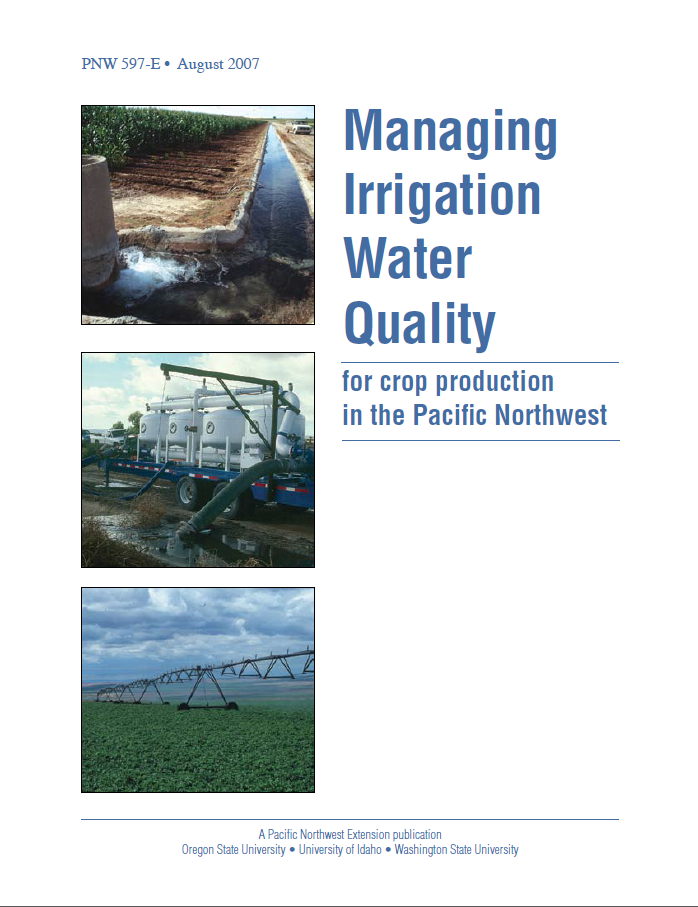
Managing Irrigation Water Quality for Crop Production in the Pacific Northwest
Water management can be a practical and financial challenge in any situation. This publication focuses on analyses used for typical agricultural irrigation water sources.
Published: August 2007
Reviewed: January 2018
Hurry! Only left in stock.
Related publications
-

Fire-Resistant Plants for Home Landscapes
As homeowners continue to build in the wild and urban interface, they must take special precautions to protect their homes. One way to do this is to create a defensible space around the home.
- Pages:
- 56
- Revised:
- October 2023
- SKU:
- PNW590
Authors: -
Pacific Northwest (PNW) Weed Management Handbook
A comprehensive guide to weed management in the Pacific Northwest.
-
Growing Roses in Washington - Rose Care Calendar (Home Garden Series)
Growing roses in Washington State gardens is easy, but regular care and maintenance is needed to keep them healthy and attractive. This calendar is a quick guide to the year-round tasks required to grow beautiful…
- Published:
- November 2015
- SKU:
- FS164E
Authors: -
Fertilizing with Biosolids
Focuses on how biosolids can be used to supply nutrients to crops. Describes the nutrient content and fertilizer replacement value of biosolids and the relationship between biosolids nutrient input ...
- Revised:
- April 2022
- Reviewed:
- January 2023
- SKU:
- PNW508
Authors: