Idling Vineyards in the Pacific Northwest
Description
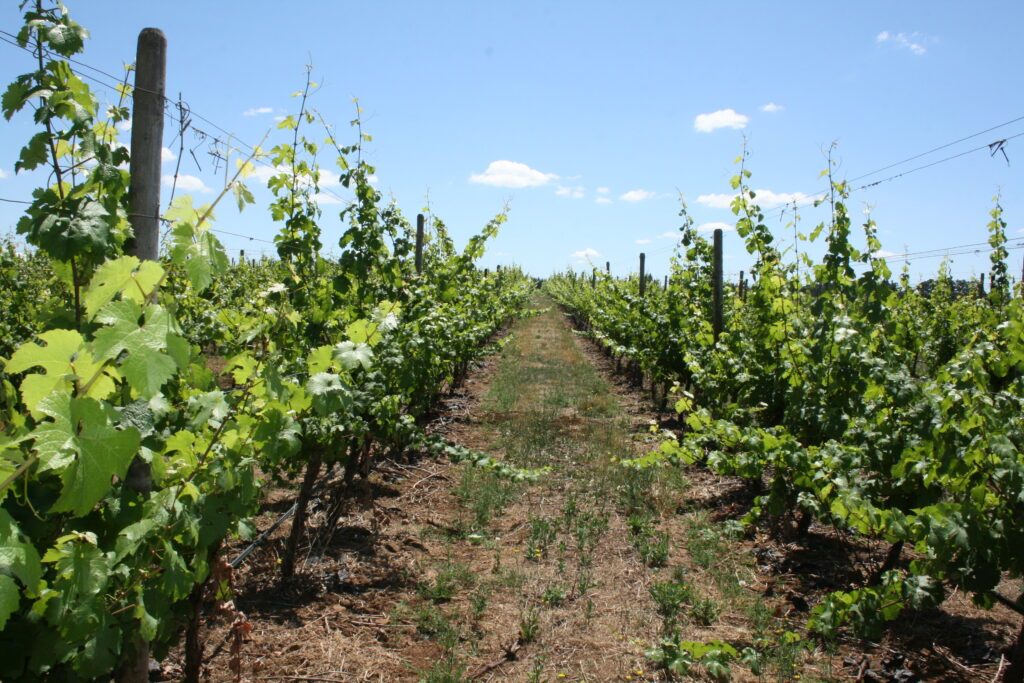
Idling a vineyard is not a choice most growers would like to make, but it can be a necessity for long-term business survival. From pruning and irrigation to pest management, there are several ways to reduce vineyard inputs while still maintaining vine health and vineyard viability for the future.
Management Practices
The need to idle a vineyard may not always come with clear or advance warning. This makes decision-making difficult and nonlinear with respect to the production cycle. In this publication, practices are organized from late summer to the following summer, but practices may be adopted and modified at any point in the season once the decision to idle a vineyard is made. The earlier idling decisions are made in the crop production cycle, the greater the ability to reduce input costs.
Fruit Management
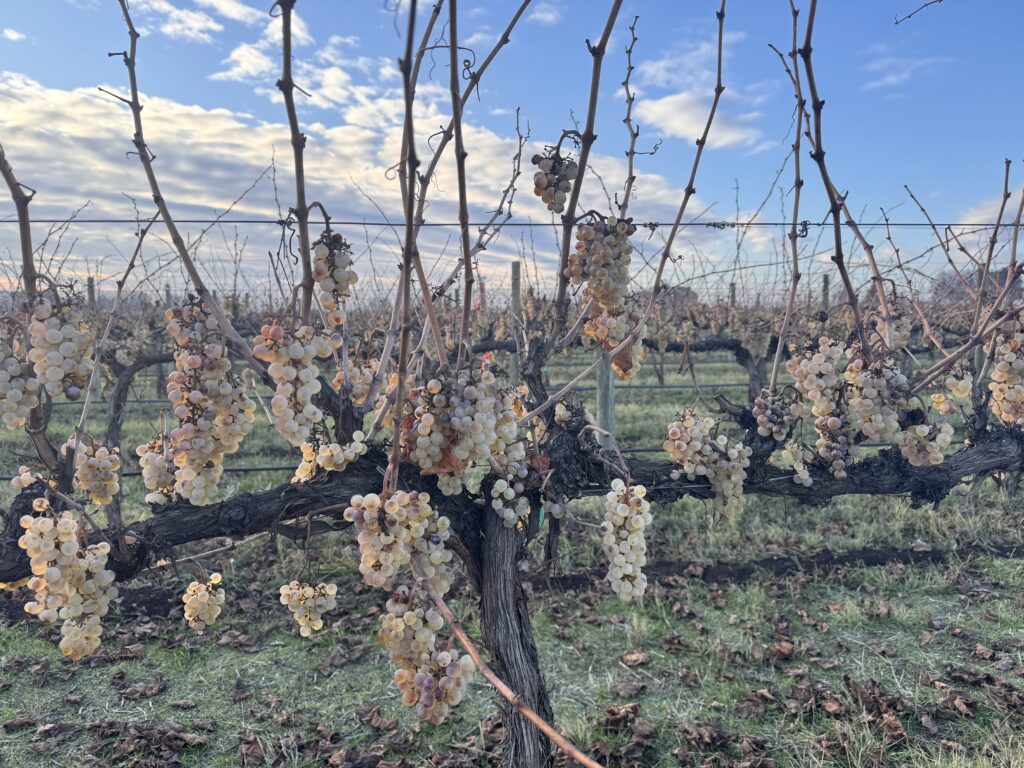
When grapes are not going to be harvested, there is usually no need to remove them from the vine (Figure 1). Maintaining fruit will not impede vine cold acclimation processes or result in longer-term vine health decline (Hamman et al. 1996; Keller et al. 2014; Wample and Bary 1992). However, fruit should be removed from vineyards in the following scenarios:
- Young (three years or younger) or weak vineyards: These vines benefit from removing clusters to maintain plant health. Clusters should be removed by manual labor crews early in the season (at or before fruit-set) to get the most benefit.
- Over-cropped vines: Vines are considered overcropped if they are a heavy-bearing cultivar or in vineyards where crop thinning is typically required to balance canopy size to fruit weight so that fruit reaches ripeness in normal management years. If crop thinning has been required historically due to overcropping, you may still need to conduct cluster thinning when the vineyard is idled. It is not necessary to remove 100% of the fruit. Cluster removal should occur pre-véraison or earlier to get maximum vine health benefit and can be done by hand or mechanically (Kurtural and Fidelibus 2021). Mechanical crop removal may be done at bloom or fruit-set using a mechanical leaf-remover (e.g., roller head set close to the cluster zone to cut inflorescences if using a suction-cut leafer or higher pressure setting if using a compressed air leafer) or later in the season (pea-sized to bunch closure) using a machine harvester. Site-specific adjustments to machine settings are required to ensure fruit is removed without damaging the vines (Petrie and Clingeleffer 2006).
Dormant Pruning
There are two basic approaches to winter pruning when idling vineyards:
- Severe prune vines to reduce fruit production. This practice might have a higher up-front cost during pruning for some vineyards and carries risk for vine damage or trunk disease if large pruning wounds are made (Henderson et al. 2021), but it can reduce in-season management expenses and following-season cleanup pruning.
- Light prune vines to save input costs during the dormant season. This practice minimizes pruning costs but will result in additional in-season expenses or challenges when returning the vineyard to production in the future.
The decision is based on vineyard cash flow and timeline to when the vineyard might be returned to production (i.e., the next season, or in three or more years).
Severe Pruning
How: In spur-pruned vineyards, this involves pruning vines down to short spurs (approximately one-bud spurs). It is not advised to prune back to the cordon due to the risk of opening wounds which could allow entry of trunk disease pathogens. In cane-pruned vineyards, vines may be manually pruned back to the trunk head, leaving only one or two renewal spurs (Figure 2). In both cases, mechanical or machinal-assisted pre-pruning may be used.
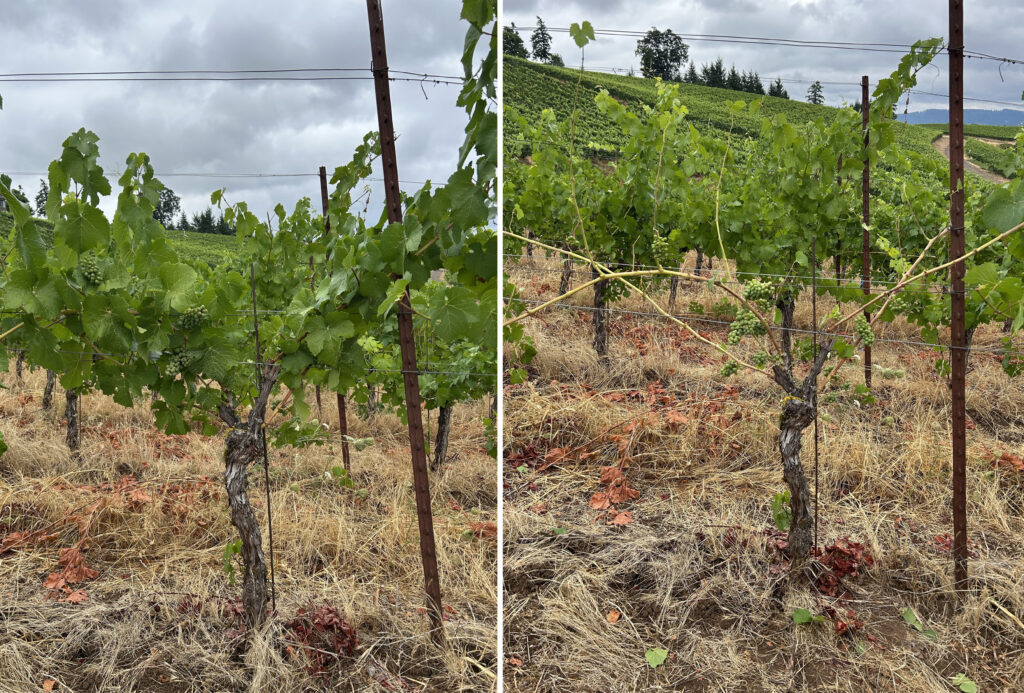
Benefit: There will be fewer shoots (and clusters) per vine, which will minimize in-season canopy management, irrigation, and vine nutrient needs. It can also indirectly reduce disease pressure and irrigation water needs. Severe pruning can result in more latent buds pushing and may require in-season management, especially if water and nutrients are not restricted in the following spring (in arid regions), or in high vigor rain-fed vineyards. To help reduce non-count shoot growth in spring, conduct pruning as late in winter as possible (close to bud break). Pruning can occur as late as post-bud break when new shoots from the most distal buds have three to four unfolded leaves (Poni et al. 2022).
Caution: Vines should not be cut back to the trunk or have large pruning wounds on cordons. Large pruning wounds along the cordon can result in “zones of death” extending into the cordon. In addition, large pruning wounds can increase the probability of infection by trunk-disease pathogens (Henderson et al. 2021). Increased risk of infection occurs if pruning is within half an inch of the cordon, or on cane-pruned vines, if pruning wounds at the head of the trunk are larger than approximately two inches in diameter.
Light Pruning
Light pruning (sometimes locally referred to as minimal pruning) is a pruning method that some production vineyards use regularly in eastern Washington, though in those locations pruning is often done closer to the cordon than what may be reasonable in an idled vineyard. In those locations and production situations, however, in-season vineyard practices are also adjusted to manage the higher number of shoots and clusters that result. If you use light pruning, caution should be taken to avoid weakening the vines. Because there are more buds left at pruning, the yield will be higher than in normally pruned vines, but the clusters will be smaller and more dispersed over the canopy, and the shoots will be less vigorous (Keller and Mills 2007; Keller et al. 2015; Kliewer and Dokoozlian 2005).
How: In spur and cane-pruned vineyards, cut back the canes to spurs of variable length (up to six buds) by using a pre-pruning machine (barrel pruner). This may also be done with a field pruning crew using loppers or mechanical-assisted pruning devices. Field crews can move quickly through the vineyard and use imprecise pruning practices, relative to their normal pruning methods, when doing light pruning.
Benefit: This method minimizes the dormant-season pruning costs by reducing or eliminating the amount of hand labor needed. It may also reduce individual shoot growth in high vigor, rainfed vineyards thereby reducing some canopy management passes.
Caution: Light pruning is done to minimize input costs, but the intent must be that the vineyard is brought to production within the following two years (i.e., only one to two seasons of idling. Light pruning can result in excessive shoot and fruit production, which can increase in-season management costs (e.g., for shoot thinning, hedging, fruit removal) and will also increase pruning costs in the year that the vineyard is brought back into production. Additional weight of the vine on the trellis may result in wire sagging or trellis damage and the need for repair, in some situations. If choosing to use light pruning, follow the additional recommendations described in the Irrigation and Vineyard Nutrition sections to help reduce subsequent vegetative and reproductive growth when possible.
Not pruning an idled vineyard can cause future management problems. It may slow the speed at which the vineyard can be transitioned back into production, including future management and pruning as well as the challenge of many shoots that may develop (Poni et al. 2016). In addition, not pruning a grapevine may result in excessive fruit production (Reynolds and Wardle 2001), which will have implications relative to vine capacity and overcropping as described in the Fruit Management section. The weight of additional canopy and fruit growth may also result in damage to the trellis infrastructure (e.g., sagging wires, leaning or broken posts) requiring repair or replacement.
Irrigation
For arid or semiarid regions, significant savings on vineyard inputs can be achieved by modifying in-season watering strategies to reduce canopy growth and fruit yield in idled vineyards. While both management costs and water can be saved in the spring and summer to modify seasonal growth, it is important to consider the value of fall and winter soil moisture for long-term vine survival, particularly in arid regions of the Pacific Northwest, where spring soil moisture often reflects winter precipitation (Davenport et al. 2008). Note: The information below is based on irrigation research where water stress and vine responses are measured over a span of approximately three years. Long-term, severe water stress will negatively impact vine health and, potentially, lifespan (Keller 2023).
Growing Season Irrigation
Idled vineyards do not need full canopies or high yields. They require only enough canopy to keep the vine alive and healthy through that growing season and into the next.
How: After refilling the rooting zone at the beginning of the irrigation season, water can be withheld from vines until the desired reduction in shoot growth is achieved. This typically means little to no irrigation water until after fruit-set. After fruit-set, maintenance irrigation, at a level just enough to keep the leaves from wilting, will likely be enough. This translates to around 20% of crop evapotranspiration (ETc), or 10% of reference evapotranspiration (ETo), over the course of the entire season (Keller et al. 2008). This level of deficit is only appropriate for one to two seasons, as it will severely limit canopy growth, and there will be carryover effects into the next growing season. By year three, water supply should be returned to a moderate level (typically 20% ETo) to promote the return of a healthy canopy, which may take a season or two to fully return in arid regions. For information on methods for determining ETc or where to access evapotranspiration data, please see Irrigation Basics for Eastern Washington Vineyards (Moyer et al. 2013).
As the vineyard approaches the end of the irrigation season, follow the guidelines in the section Preparing Vines for Winter.
Benefit: Lower water inputs will reduce irrigation cost and produce smaller canopies and small, loose clusters, which can help with other canopy and pest management activities and conserve irrigation water throughout the season.
Caution: In arid areas of the Pacific Northwest, it is important to maintain some level of vineyard irrigation. Do not completely withhold water during idling. While vines could potentially survive a year or two (in various states of decline), it could introduce significant variability in the vineyard that might be difficult to recover from once the vineyard goes back into production.
Preparing Vines for Winter
In arid regions, it is important to refill the vine’s root-soil profile prior to the termination of the irrigation water source. Adequate soil moisture is critical for reducing the risk of cold damage to roots and ensuring enough moisture the following spring for budbreak and potential aboveground cold damage recovery (Gale and Moyer 2017; Moyer et al. 2019).
How: Irrigate the vineyard at a level greater than 100% ETc just before the irrigation water is shut off for the season to replenish the soil moisture down to a depth of approximately three feet.
Benefit: Sufficient winter soil moisture enhances vine survival in cold climates, especially when those climates are associated with soils with low water holding capacity and limited winter precipitation. Soils with higher sand content typically have lower water holding capacity.
Caution: If a vineyard was water stressed, excessive watering too early (i.e., late July to mid-August) may trigger shoot growth, which can result in a loss of buds available to grow the next year. While rewatering is critical in eastern Washington, delaying it until just before the seasonal water source shutoff time, or at least until the buds have become dormant (i.e., after mid-September), minimizes potential canopy regrowth.
Vineyard Nutrition
Fruit removal at harvest usually constitutes the major nutrient export from production vineyards. Vines with limited canopy growth, reduced fruit production, and remaining fruit that is not harvested or removed from the vineyard have lower nutrient needs than those in full production at vineyards. As such, nutrition programs can be restricted, tissue testing regimes may be suspended, and any nutrient inputs can be focused through soil-based applications (for longer-term nutrient remediation) rather than foliar-applied (for short-term modification of nutrient status). With a reduction in irrigation, additional nutrient additions may not be helpful, as their uptake will be limited (Keller 2005). As a perennial crop, grapevines have the capacity to buffer through a few years of nutrient and water deficits before vine performance begins to decline. When grapes are not harvested in eastern Washington, emphasis should be placed on maintaining a baseline nitrogen fertilization rate (e.g., 10–30 lb N/acre). Nitrogen fertilization in western Oregon is likely not necessary if fruit is not harvested, but care should be taken to evaluate the vine response over time and adjust accordingly.
How: Depending on location and soil type, apply zero to 30 lb N/acre in spring between the six-leaf stage and bloom, either as a single broadcast application or by fertigation split into two doses. Other nutrients do not need to be applied annually.
Benefit: Significant savings on fertilizer inputs can be achieved in vineyards that have not had nutrient stress in the past. Without a need to produce a crop and no removal of fruit from the vineyard at harvest, longer-term focus on soil-based nutrient remediation can also be considered (e.g., composts, cover crop management, or other slower-to-release fertilizers).
Caution: Vineyards with a history of nutrient stress and weak growth may continue to decline if nutrient deficiencies are not corrected. In these situations, an idled vineyard may need a more active nutrient management program, with additional emphasis on irrigation strategies that facilitate nutrient uptake. However, these vineyards are also typically of lower vigor and may benefit from severe pruning combined with judicious water and nutrient inputs.
Canopy Management
Canopy management serves the purpose of improving the canopy microclimate and fine-tuning the crop load to enhance fruit quality and bud fruitfulness for the following year. When a vineyard is idled, fruit quality is not a factor that drives farming decisions, though overcropping and foliar disease epidemics should be avoided. Because of this, in-season canopy management, such as shoot thinning, shoot positioning, hedging, or leaf removal is not needed in idled vineyards. Questions related to cluster thinning are discussed above in the Fruit Management section.
How: In arid regions, heavy pruning and minimal irrigation will reduce the size and density of the idled vineyard canopy during the growing season, making canopy management unnecessary. In rainfed vineyards with high vine vigor potential, canopy management may be reduced to only mechanical methods, such as hedging or leaf removal, to open the canopy and reduce disease.
Benefit: Significant reductions in canopy management can reduce overall input costs when paired with the proper pruning and water and nutrient management.
Caution: There are no major concerns for canopy management changes that may occur during the idling of a vineyard block, provided prior pruning and irrigation strategies for idled blocks were considered.
Pest Management
Pest management in idled vineyards needs to focus on maintaining long-term vine health while accepting some level of in-season foliar and fruit damage. The degree of acceptable damage will depend on the pest, economic constraints, and farm management certifications or philosophies. However, excessive foliar damage should be avoided, as insufficiently productive vine leaf area could interfere with the vines’ cold acclimation process, nutrient reserves, and return to production in the future. Key aspects to idle-vineyard pest management are highlighted below.
Pests
Virus Vectors: Mealybugs and Scale Insects
Because mealybugs and scale insects can vector grapevine leafroll-associated viruses, care should be taken to ensure populations do not build while the vineyard is idle. This means a close-to-normal monitoring and management program is needed if leafroll disease has been a problem in the vineyard or if the vineyard is surrounded by vineyards with the virus-vector combination.
Other Foliar Pests: Leafhoppers, Mites, Cutworms
A one- to two-season lapse in management of these foliar pests will likely not result in a catastrophic buildup of pest populations. In fact, with reduced chemical inputs in an idled block, there may be a resurgence of beneficial insect predators that are able to keep populations in check or at least at a tolerable level.
Diseases
Fruit and Foliar Diseases
If a portion of a vineyard is being idled while the rest is producing, more care must be taken to avoid spread of powdery mildew from one area to another. If the vineyard is idled but neighboring vineyards are producing, similar care must be taken to avoid becoming a source of disease inoculum for those neighboring sites.
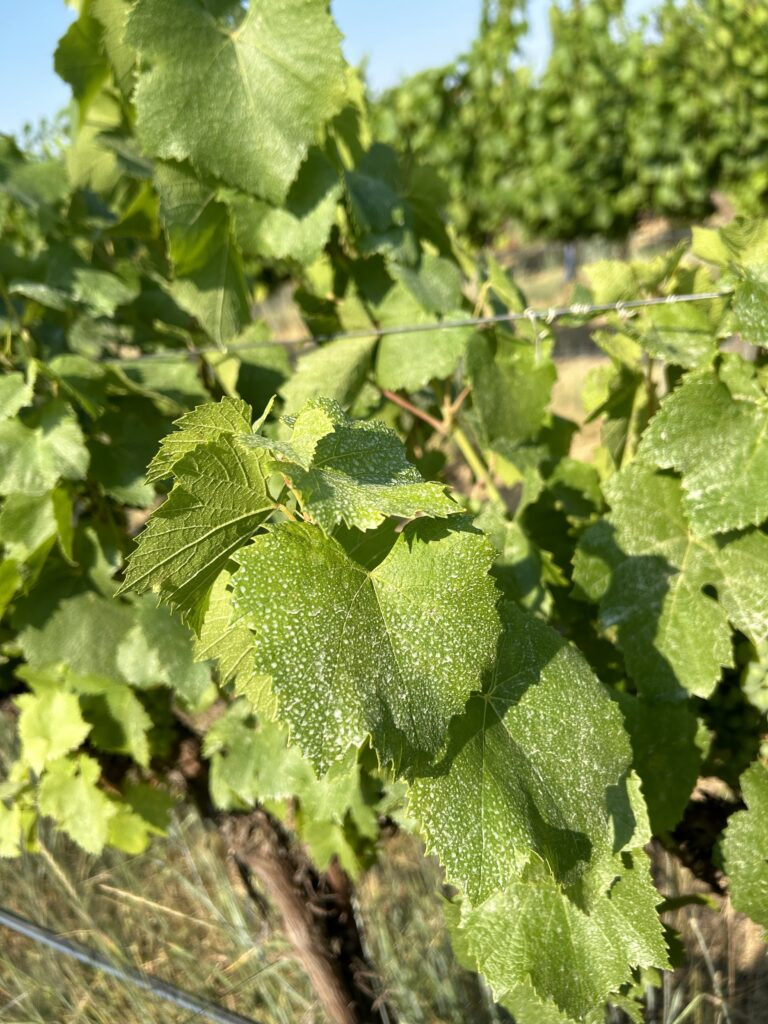
How: A minimal sulfur program (Figure 3), which includes sulfur applied once every two weeks from bloom to véraison can keep foliar disease to a minimal level. If there is high canopy vigor in rainfed vineyards or concerns about foliar powdery mildew in irrigated vineyards, then this schedule of biweekly treatments can be continued until closer to the typical harvest period. The goal with this program is to prevent leaf and shoot scarring to maintain an actively functioning canopy that produces carbohydrates that can go into reserves for future growth. See the Pest Management Guide for Grapes in Washington (https://cpg.wine.wsu.edu/) or the Pest Management Guide for Wine Grapes in Oregon (https://extension.oregonstate.edu/catalog/em-8413-pest-management-guide-wine-grapes-oregon) for more details on sulfur products.
For fruit diseases such as botrytis bunch rot and sour rot, no management is needed in idled vineyards.
Benefit: Significant reductions in spray applications may be possible.
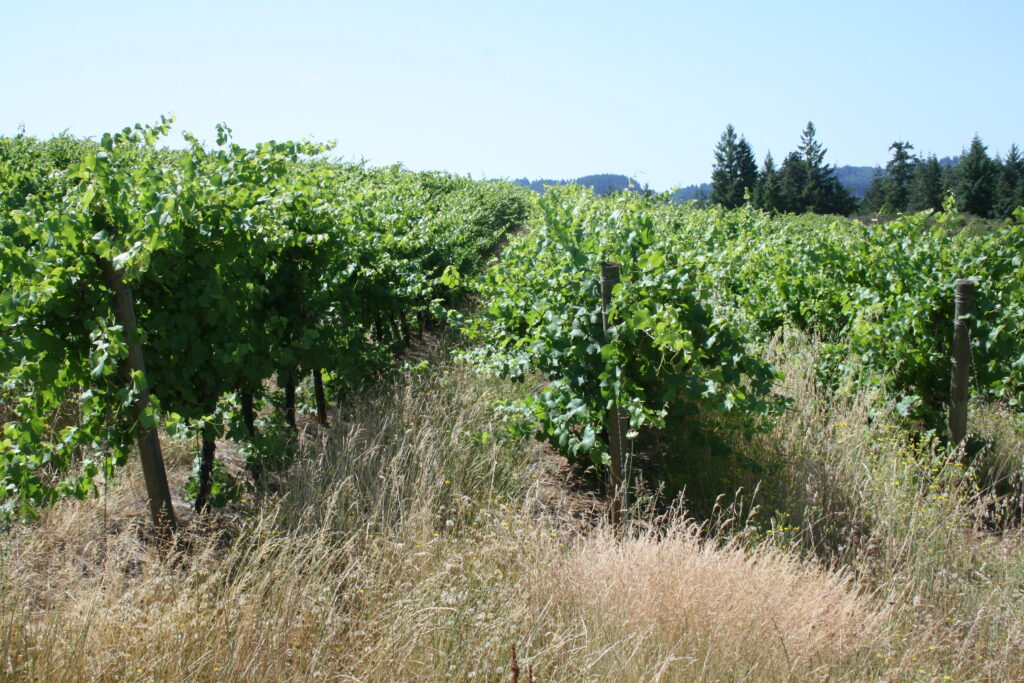
Caution: Lightly pruned or high vigor vineyards in rainfed regions might have denser canopies than expected (Figure 4). This may mean that more disease can build up than desired and will require additional fungicide treatments and canopy management than outlined above.
If idled vineyards are managed with severe pruning and limited water and nutrients, they will have more open and smaller canopies and fewer, if any, clusters. This means less tissue for foliar and fruit pathogens to infect.
Trunk Diseases and Viruses
Trunk diseases and viral infections in vines affect long-term vineyard health (Figure 5). Given there are no spray programs for their control, the primary focus through the idling period should be on pruning strategies to prevent internal spread of fungal pathogens and rogueing to replace virus-infected vines.
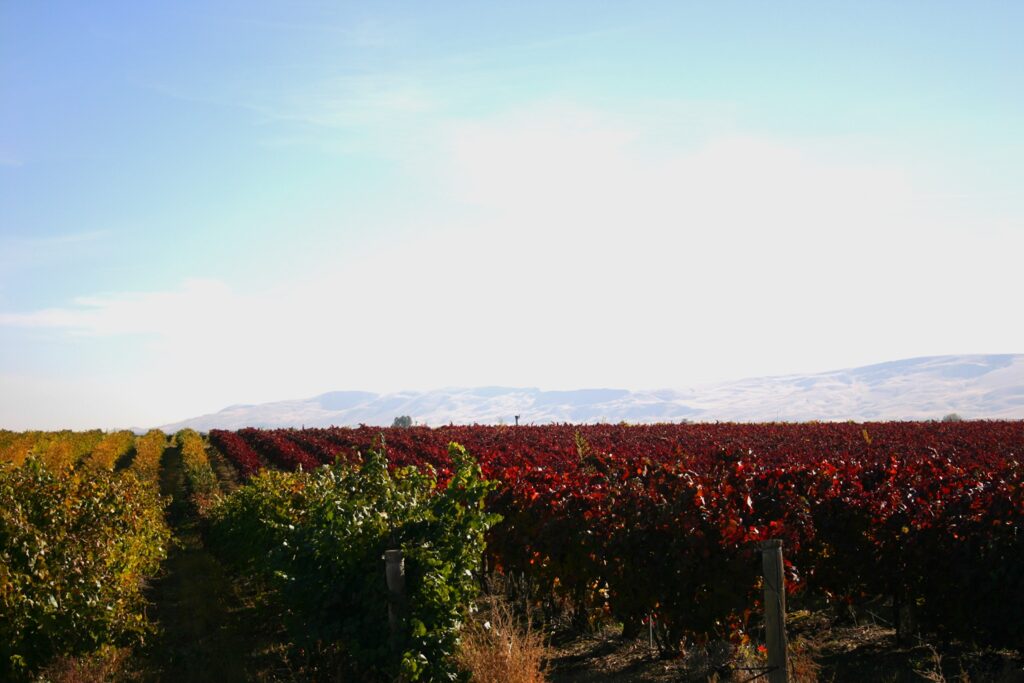
How: Focus on rogueing or whole vineyard removal for individual vines or blocks affected by viral diseases (i.e., grapevine leafroll disease or red blotch disease) or trunk diseases (e.g., esca, Eutypa, Botryosphaeria or Cytospora cankers). In addition, an idled vineyard might be an ideal time to perform “trunk surgery” to remove infected trunk and cordon tissue (Gramaje et al. 2018), given the available time to retrain those vines prior to returning to full production.
Benefit: Removing vines reduces inoculum for these diseases in future years and may improve vineyard productivity once the block returns to production. Light pruning may decrease infection by trunk-disease pathogens because it reduces the size of pruning wounds (Travadon et al. 2016).
Caution: If not done well, heavy mechanical pruning may cut deeper into spur positions, opening large pruning wounds along the cordon. Pruning back to the trunk head in cane-pruned vineyards can also create large pruning wounds. This may increase risk of infection by trunk-disease pathogens.
Weeds and Vegetation
Other than eliminating noxious weeds, weed management inputs can be minimized. Mowing for aesthetics can be eliminated and should be conducted only if there is high biomass growth (rainfed vineyards) or when equipment and people need to move through the vineyard. Given that weeds grow where water is, and most weed root systems are significantly shallower than grapevine roots, reduced irrigation in the vineyard will also reduce overall weed pressure in arid regions.
Under-Vine Weed Management
For those who have historically used chemical approaches for under-vine management, a program for an idled vineyard may include a single winter application of preemergent herbicide, and one early summer postemergence herbicide (if desired). Of course, as with traditional weed management approaches, applications of herbicides in idled vineyards should occur when weeds are at their susceptible stages. For most preemergent herbicides, this means application before weeds emerge and when there is sufficient rainfall to water in the herbicide. Postemergence herbicides should be applied when target weed species are young.
For those who can tolerate continuous under-vine vegetation, weed management in arid regions may be reduced to a single mow or under-vine cultivation pass. These activities should occur when most of the target weeds are at the pre-flowering stage. Mowing will force the weeds to restart the reproductive process, and with reduced water input, the weeds may not be able to complete an additional flowering and seed-set process before the end of the season. This will help reduce the weed seed load in the vineyard.
In rainfed vineyards, several passes of mowing or cultivation may be required. These mowing or cultivation passes, however, should only be done at a minimal frequency to prevent competition between the vines and weeds. Excessive weed growth in rainfed environments can reduce vine nutrient and water uptake. Excessive weed growth also increases likelihood of borrowing rodents, such as voles, taking up residence and causing damage to vine trunks.
Alleyway Vegetation Management
Alleyway vegetation management should be significantly reduced to either nothing or a single mowing pass when most weeds are just at or immediately past flowering. Chemical weed control or cultivation of the alleyway is not recommended in any vineyard, including those that are idle. Mowing alleyways and headlands for aesthetics can be eliminated and should be conducted only if there is high biomass growth (rainfed vineyards) or when equipment and people need to move through the vineyard.
Vine Sucker Management
Vine sucker management in an idled vineyard is a site-specific choice. If water and fertilization is reduced during the idle period, the development of suckers will likely be minimized. Sucker development is more likely on own-rooted vines, if the graft union is low and the scion is the majority of the trunk, or on grafted vines if the rootstocks were not disbudded prior to grafting.
If suckers do develop, there are two potential management choices:
- Proceed with routine in-season sucker management, which will have the immediate associated labor or chemical expenses; or
- Hold off on sucker removal until the vineyard is coming out of idle. This will result in dormant pruning taking more time and labor due to the additional vegetation, and following in-season sucker management may be more intensive due to the retention of buds at the base of those prior suckers.
Summary
Idling a vineyard is not a choice most growers wish to make, but it can be a necessity for long-term business survival. From pruning to irrigation to pest management, there are several changes that can be made during the idling process to reduce vineyard inputs while still maintaining vine health and vineyard viability for the future. These approaches will assist in the speed at which a vineyard can be returned to normal production and the costs incurred in that process. Regional work is being conducted by Extension specialists in the Pacific Northwest to validate best practices during difficult years to help growers make informed management decisions.
Acknowledgements
A portion of this work was previously published in: Moyer, M.M., and M. Keller. Fall 2025. Vineyard Idling—Part 1—Winter Activities. WSU Viticulture and Enology Extension News. Online at https://wine.wsu.edu/extension/viticulture-enology-news-veen/fall-2025.
References
Davenport, J.R., R.G. Stevens, and K.M. Whitley. 2008. Spatial and Temporal Distribution of Soil Moisture in Drip-Irrigated Vineyards. HortScience 43: 229–235. DOI: 10.21273/HORTSCI.43.1.229.
Gale, E., and M.M. Moyer. 2017. Cold Hardiness of Vitis vinifera Roots. American Journal of Enology and Viticulture 68: 468–477. DOI: 10.5344/ajev.2017.16109.
Gramaje, D., J. Ramón Úrbez-Torres, and M.R. Sosnowski. 2018. Managing Grapevine Trunk Diseases with Respect to Etiology and Epidemiology: Current Strategies and Future Prospects. Plant Disease 102: 12–39. DOI: 10.1094/PDIS-04-17-0512-FE.
Hamman, R.A., I.-E. Dami, T.M. Walsh, and C. Stushnoff. 1996. Seasonal Carbohydrate Changes and Cold Hardiness of Chardonnay and Riesling Grapevines. American Journal of Enology and Viticulture 47: 31–36. DOI: 10.5344/ajev.1996.47.1.31.
Henderson, B., M.R. Sosnowski, M.G. McCarthy, and E.S. Scott. 2021. Incidence and Severity of Eutypa Dieback in Grapevines Are Related to Total Surface Area of Pruning Wounds. Australian Journal of Grape and Wine Research 27: 87‒93. DOI: 10.1111/ajgw.12465.
Keller, M. 2005. Deficit Irrigation and Vine Mineral Nutrition. American Journal of Enology and Viticulture 56: 267–283. DOI: 10.5344/ajev.2005.56.3.267.
Keller, M. 2023. Climate Change Impacts on Vineyards in Warm and Dry Areas: Challenges and Opportunities. American Journal of Enology and Viticulture 74: 0740033. DOI: 10.5344/ajev.2023.23024.
Keller, M., L.S. Deyermond, and B.R. Bondada. 2015. Plant Hydraulic Conductance Adapts to Shoot Number but Limits Shoot Vigour in Grapevines. Functional Plant Biology 42: 366–375. DOI: 10.1071/FP14206.
Keller, M., and L.J. Mills. 2007. Effect of Pruning on Recovery and Productivity of Cold-Injured Merlot Grapevines. American Journal of Enology and Viticulture 58: 351–357. DOI: 10.5344/ajev.2007.58.3.351.
Keller, M., L.J. Mills, and M.A. Olmstead. 2014. Fruit Ripening Has Little Influence on Grapevine Cold Acclimation. American Journal of Enology and Viticulture 65: 417–423. DOI: 10.5344/ajev.2014.14042.
Keller, M., R.P. Smithyman, and L.J. Mills. 2008. Interactive Effects of Deficit Irrigation and Crop Load on Cabernet Sauvignon in an Arid Climate. American Journal of Enology and Viticulture 59: 221–234. DOI: 10.5344/ajev.2008.59.3.221.
Kliewer, W.M., and N.K. Dokoozlian. 2005. Leaf Area/Crop Weight Ratios of Grapevines: Influence on Fruit Composition and Wine Quality. American Journal of Enology and Viticulture 56(2): 170. DOI: 10.5344/ajev.2005.56.2.170.
Kurtural, S.K., and M.W. Fidelibus. 2021. Mechanization of Pruning, Canopy Management, and Harvest in Winegrape Vineyards. Catalyst: Discovery into Practice 5: 29–44. DOI: 10.5344/catalyst.2021.20011.
Moyer, M., L. Mills, G. Hoheisel, and M. Keller. 2019. Assessing and Managing Cold Damage in Washington Vineyards. Washington State University Extension Publication EM042E. https://pubs.extension.wsu.edu/product/assessing-and-managing-cold-damage-in-washington-vineyards.
Moyer, M., R.T. Peters, and R. Hamman. 2013. Irrigation Basics for Eastern Washington Vineyards. Washington State University Extension Publication EM016E. https://pubs.extension.wsu.edu/product/irrigation-basics-and-strategies-for-eastern-washington-grape-production/.
Petrie, P.R., and P.R. Clingeleffer. 2006. Crop Thinning (Hand Versus Mechanical), Grape Maturity and Anthocyanin Concentration: Outcomes from Irrigated Cabernet Sauvignon (Vitis vinifera L.) in a Warm Climate. Australian Journal of Grape and Wine Research 12: 21–29. DOI: 10.1111/j.1755-0238.2006.tb00040.x.
Poni, S., S. Tombesi, A. Palliotti, V. Ughini, and M. Gatti. 2016. Mechanical Winter Pruning of Grapevine: Physiological Bases and Applications. Scientia Horitculturae 204: 88–98. DOI: 10.1016/j.scienta.2016.03.046.
Poni, S., P. Sabbatini, and A. Palliotti. 2022. Facing Spring Frost Damage in Grapevine: Recent Developments and the Role of Delayed Winter Pruning—A Review. American Journal of Enology and Viticulture 73: 210–225. DOI: 10.5344/ajev.2022.22011.
Reynolds, A.G., and D.A. Wardle. 2001. Evaluation of Minimal Pruning upon Vine Performance and Berry Composition of Chancellor. American Journal of Enology and Viticulture 52: 45–48. DOI: 10.5344/ajev.2001.52.1.45.
Travadon, R., P. Lecomte, B. Diarra, et al. 2016. Grapevine Pruning Systems and Cultivars Influence the Diversity of Wood-Colonizing Fungi. Fungal Ecology 24: 82–93. DOI: 10.1016/j.funeco.2016.09.003.
Wample, R.L., and A. Bary. 1992. Harvest Date as a Factor in Carbohydrate Storage and Cold Hardiness of Cabernet Sauvignon Grapevines. Journal of the American Society for Horticultural Science 117: 32–36. DOI: 10.21273/JASHS.117.1.32.
By,
Michelle M. Moyer, Professor / Viticulture Extension Specialist, Washington State University
Markus Keller, Professor, Washington State University
Patricia A. Skinkis, Professor / Viticulture Extension Specialist, Oregon State University

FS407E

Copyright © Washington State University
WSU Extension publications contain material written and produced for public distribution. Alternative text descriptions for select complex images were generated using ChatGPT (OpenAI), then reviewed and adapted to ensure compliance with Web Content Accessibility Guidelines (WCAG) accessibility standards.
Issued by Washington State University Extension and the US Department of Agriculture in furtherance of the Acts of May 8 and June 30, 1914. Extension programs and policies are consistent with federal and state laws and regulations on nondiscrimination regarding race, sex, religion, age, color, creed, and national or ethnic origin; physical, mental, or sensory disability; marital status or sexual orientation; and status as a Vietnam-era or disabled veteran. Evidence of noncompliance may be reported through your local WSU Extension office. Trade names have been used to simplify information; no endorsement is intended.