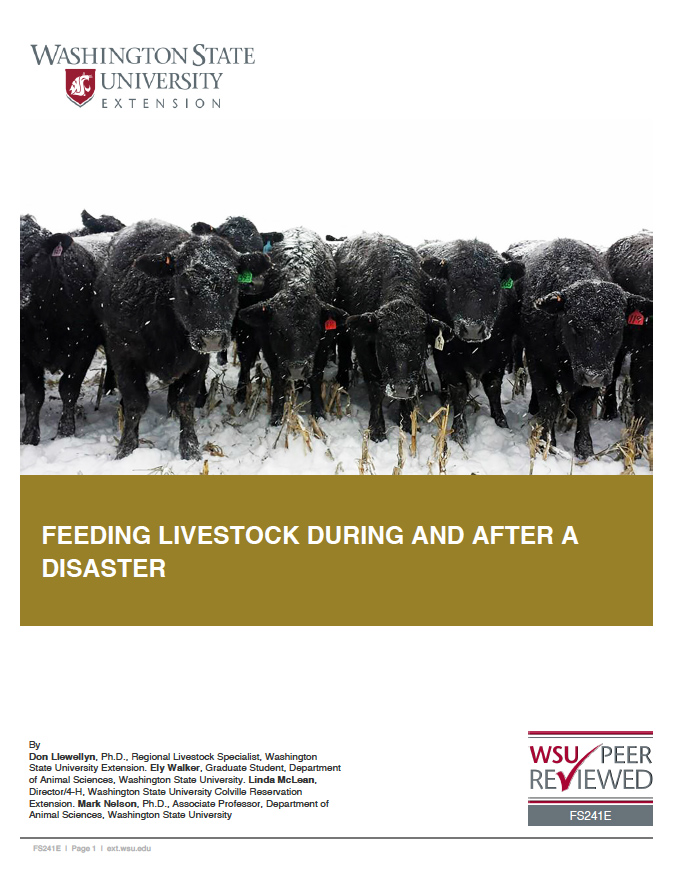
Archived - Feeding livestock during and after a disaster
Notice: The following publication has been archived and may not meet WCAG 2.1 accessibility standards. If you need an accessible copy, please contact us.
Disaster strikes, and you’re left without the feed you normally give your livestock. While unfamiliar feed in an emergency may be necessary, quickly changing animals’ diets can cause them added stress.
Published: September 2016
Hurry! Only left in stock.
Related publications
-
2022 Cost Estimates of Establishing, Producing and Packing Organic Gala Apples in Washington
Using these inputs, costs, and yields considered typical of a well-managed orchard, learn if producing Gala apple is feasible within your operation.
- Pages:
- 10
- Published:
- June 2016
- Revised:
- May 2023
- SKU:
- TB19E
Authors: -
A Community-based Response to Flooding, Jay Gordon (Farmer-to-Farmer Case Study Series)
Active consensus-building, high-quality research partnerships, and the capacity to support these efforts: learn more about dairy farmer Jay Gordon here. ...
- Published:
- August 2018
- SKU:
- PNW700
Authors: -
Aging in Place: A Policy Approach for Aging Well in Washington State
As in the rest of our nation, the population of Washington is aging. By 2030, nearly 20% of Washington residents will be age 65 and older; in rural communities, this will jump to nearly 30%.…
- Published:
- September 2015
- SKU:
- FS185E
-
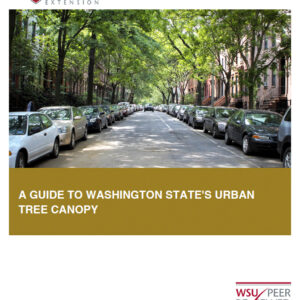
A Guide to Washington State's Urban Tree Canopy
More than 80% of the nation’s population lives in urban areas. The urban tree canopy (UTC) is an essential part of an urban areas’ infrastructure—an ecosystem characterized by trees and other vegetati ...
- Published:
- December 2016
- SKU:
- EM107E
Authors: