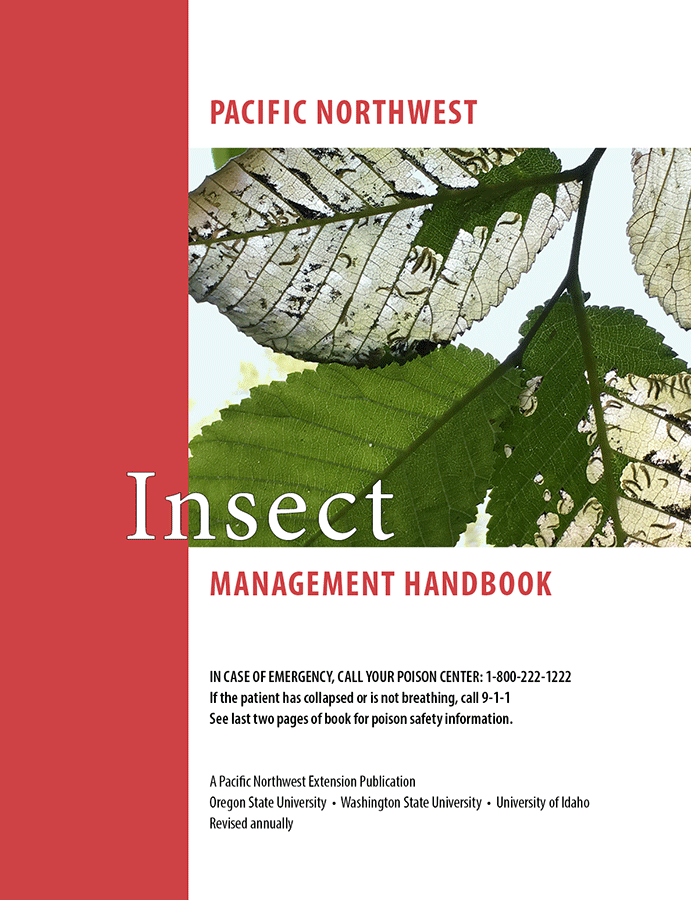
Pacific Northwest (PNW) Insect Management Handbook
A comprehensive guide to insect management in commercial crops and environments and in home landscapes and gardens in the Pacific Northwest.
Covers pesticide safety and toxicity, protecting bees, adjuvants, mixing tables, calibration, and biological control. Other sections cover a wide variety of agricultural and nonagricultural products such as commercial vegetables, small fruit, turf and ornamentals, hay and pasture, grains, seeds, home gardens, greenhouses, livestock, poultry, household, and public health. Each section describes pests, the damage they do, and recommended management.
Hurry! Only left in stock.
Related publications
-
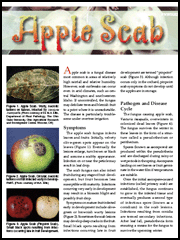
Apple Scab
Apple scab is a fungal disease that is most common in areas of high rainfall and relative humidity. Spots and lesions develop on leaves and fruit. Illustrations identify symptoms and describe the fung ...
- Published:
- December 2005
- SKU:
- PNW582
Authors: -
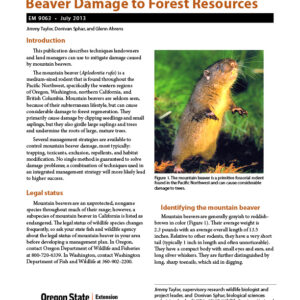
Identifying and Managing Mountain Beaver Damage to Forest Resources
The mountain beaver is a medium-sized rodent of the western Pacific Northwest. Mountain beavers cause damage to forest regeneration by clipping or girdling seedlings or saplings or both, and undermini ...
- Published:
- July 2013
- Reprinted:
- January 2021
- SKU:
- EM9063
Authors: -
Seed Treatment: A Study Guide for Seed Treaters
Authors explain reasons for treating seeds and describe appropriate uses against pathogens and soil insects (the major seed pests). Topics include seed pest management: cultural, physical, biological, ...
Authors:Price: $13.20 -
Potato Psyllid Vector of Zebra Chip Disease in the Pacific Northwest: Biology, Ecology, and Management
Zebra chip is a destructive disease of potatoes first recorded in the Pacific Northwest in 2011. The region's experts provide information on the bacterium, vector biology, damage from both vector and ...
- Published:
- May 2017
- Revised:
- April 2017
- Reviewed:
- January 2023
- SKU:
- PNW633