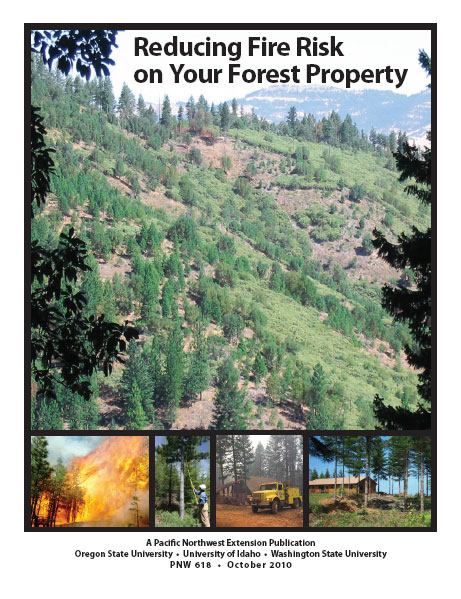
Reducing Fire Risk on Your Forest Property
$12.00
The degree of wildfire risk depends on both the probability of an ignition and the potential for loss of trees, homes, and even lives. Whether you own a few acres or thousands, this publication will help you make your property more resistant to wildfire damage as well as improve overall forest health and wildlife habitat. By following the guidelines in this publication, fires that do occur will be less severe.
Published: October 2010
Reviewed: October 2018
30 in stock
Related publications
-
Pacific Poison- oak and Poison-ivy: Identification and Management
How to identify and control Pacific poison-oak and western poison-ivy, and how to prevent exposure to the plants’ oily substance, Urushiol, which can cause and allergic contact dermatitis. ...
- Revised:
- November 2022
- SKU:
- PNW108
-
Wildlife Ecology and Forest Habitat
Discusses how to manage habitat for deer, elk, bear, birds, cougar, lynx, bobcat, wolf, coyote, fox, and small mammals.
Authors:Price: $2.20 -
A Primer for Timber Harvesting
Timber sales are complicated. The choices a forest landowner makes will influence financial return, future site productivity, soil erosion, and other factors. Here is a basic book for those who want t ...
Price: $4.95 -
Planning and Implementing Cross-boundary, Landscape-scale Restoration and Wildfire Risk Reduction Projects
This guide describes the process the Klamath-Lake Forest Partnership (KLFHP) has used to plan and implement cross-boundary restoration projects.
- Published:
- October 2018
- Reviewed:
- January 2023
- SKU:
- PNW707
Authors: