Mediterranean Oak Borer: A Potential Threat to Oak Trees in the Pacific Northwest
Description
The Mediterranean oak borer poses a growing threat to oak trees in the Pacific Northwest. Learn how to identify the beetle, recognize the signs and symptoms of infestation, and help monitor its spread in Washington.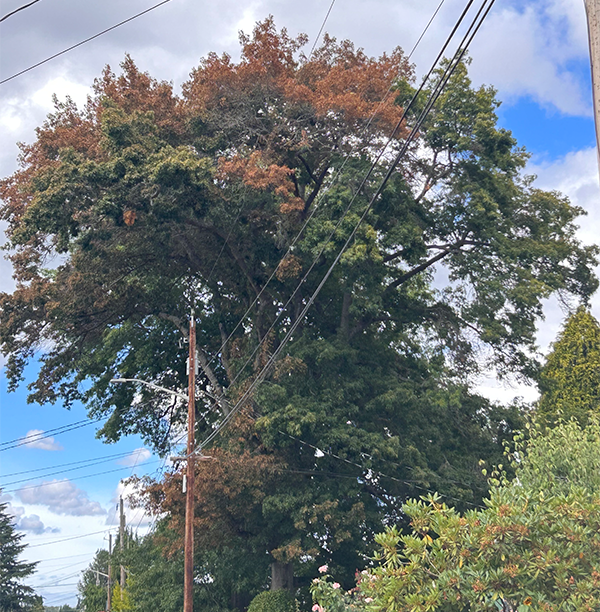
Introduction
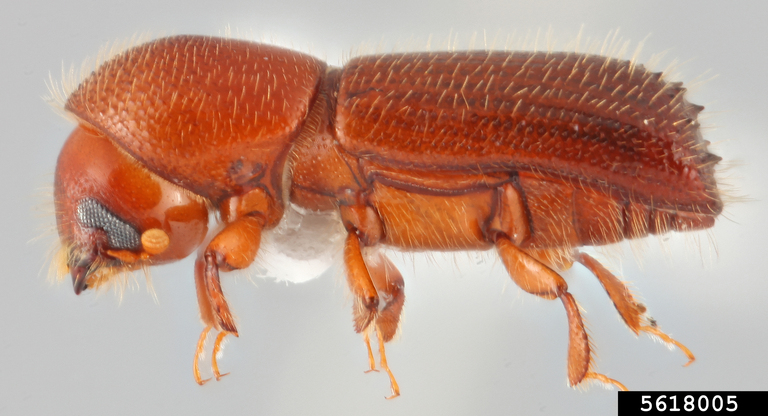
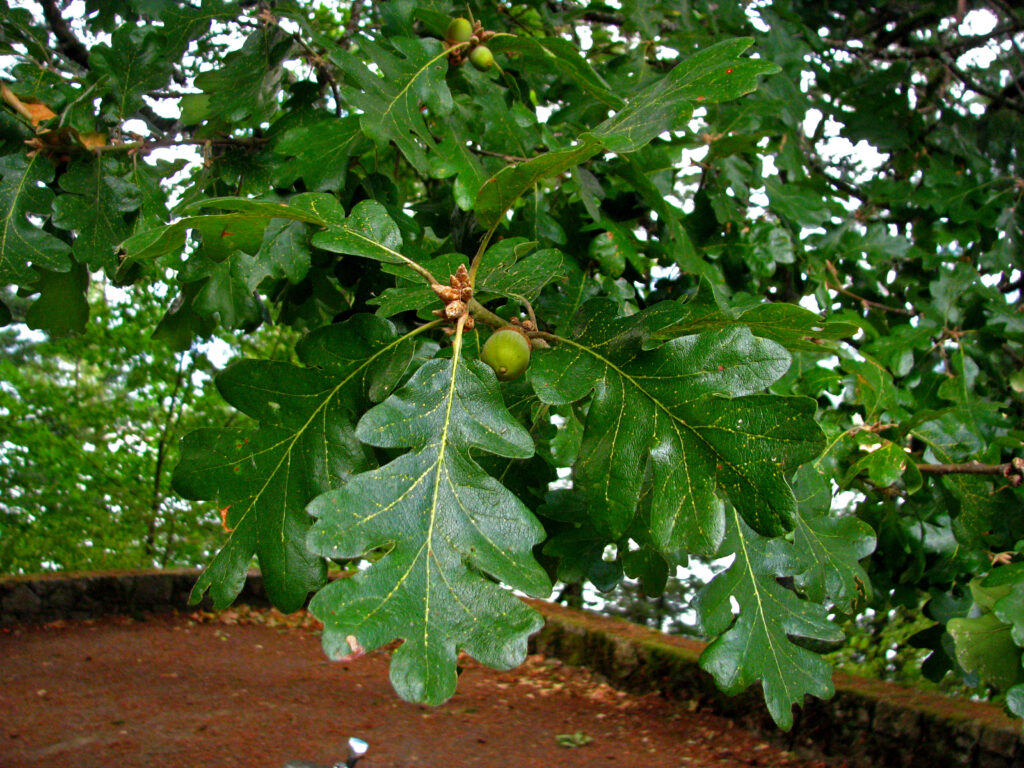
The Mediterranean oak borer (MOB), Xyleborus monographus, is a nonnative ambrosia beetle that could threaten the health of oak species in the Pacific Northwest (PNW) (Figure 1). MOB is native to Europe, western Asia, and northern Africa. The first known MOB establishment in the US was in Napa County, California, where specimens were collected in 2017 and 2019 (Rabaglia et al. 2020). It was subsequently found near Portland, Oregon, in 2018 (Oregon Department of Agriculture 2025). Preliminary analyses indicated that the MOB introduction in Oregon may be separate from the California introduction, suggesting that MOB is still finding entry points into western North America (Monroe et al. 2026). The introduction to western North America may be via infested oak casks and barrels imported from Europe for winemaking (Monroe et al. 2026). The Oregon Department of Forestry and Oregon Department of Agriculture recovered MOB in Troutdale (Multnomah County) and Wilsonville (Clackamas County) from Oregon white oaks (Quercus garryana) (Figure 2) in 2022, highlighting MOB as a particular concern to the Pacific Northwest (Oregon Department of Forestry 2023).
Oregon white oak, also commonly known as Garry oak, is a key component of the oak prairie woodlands of western North America. Its native range spans from Vancouver Island in British Columbia to central California, following the Interstate-5 corridor, and extends east into Yakima and Kittitas Counties in central Washington, along the Columbia River Gorge in Oregon and Washington, and south into the Central Valley in California (Ellenwood 2015). Much of the natural oak prairies that historically existed in this region have been lost, and this endangered ecosystem type is a target for restoration activities (Dunwiddie and Bakker 2011).
MOB and Tree Disease
In terms of tree damage, the MOB itself is not the primary concern per se. Rather, the concern is that it could spread damaging fungal diseases that cause decline and mortality in PNW oak trees. MOB is a wood boring ambrosia beetle, and these types of beetles have symbiotic relationships with various fungi. Adult females have specialized structures in their exoskeleton known as mycangia for carrying fungal spores to inoculate and purposefully grow the fungi in their host tree as a source of food for their larvae (Rabaglia et al. 2020). The fungal growth can block water flow inside susceptible trees, causing the tree to wilt (Oregon Department of Forestry 2023).
The fungal associates of ambrosia beetles are typically weak pathogens to their host trees in their native ranges. However, when beetles like MOB are introduced outside their native range, the fungi they carry can infect novel host species with no coevolved defenses, causing significant tree decline and mortality. In California and Oregon, the MOB is known to carry and inoculate galleries with fungi, such as Dryadomyces montetyi (previously Raffaelea montetyi, revised in de Beer et al. 2022) and Fusarium solani, associated with lethal wilting diseases in oaks, especially in weakened or susceptible hosts. MOB may also begin picking up and spreading new damaging pathogens.
It is not yet clear how vulnerable Oregon white oak is to pathogens carried by MOB. Research is underway to better understand MOB fungal relationships and the possible threats of these fungi to PNW native species like Oregon white oak (Rabaglia et al. 2020; Ewing et al. 2020). MOB is a known vector of oak wilt (Dryadomyces montetyi), which Oregon white oak is susceptible to (Oregon Department of Agriculture 2025).
Symptoms and Signs
Symptoms
Due to the cryptic nature of ambrosia beetles, which carry out much of their life cycle within the tree, symptoms of damaged trees are likely to be found before the pest itself. MOB infestation can include the following symptoms:
- Wilting or stunted leaves.
- Branch dieback, typically all the way down to a lower branch junction.
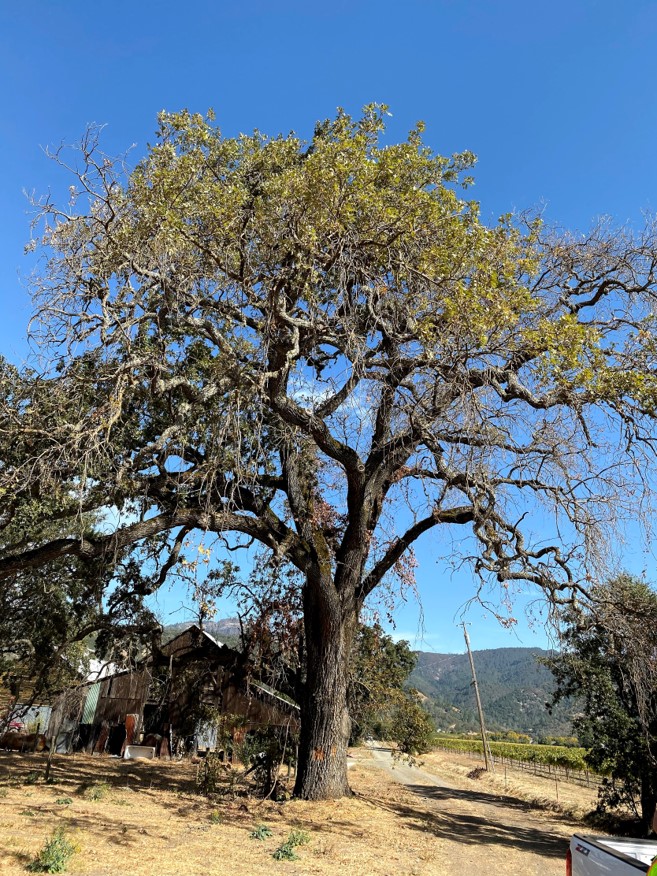
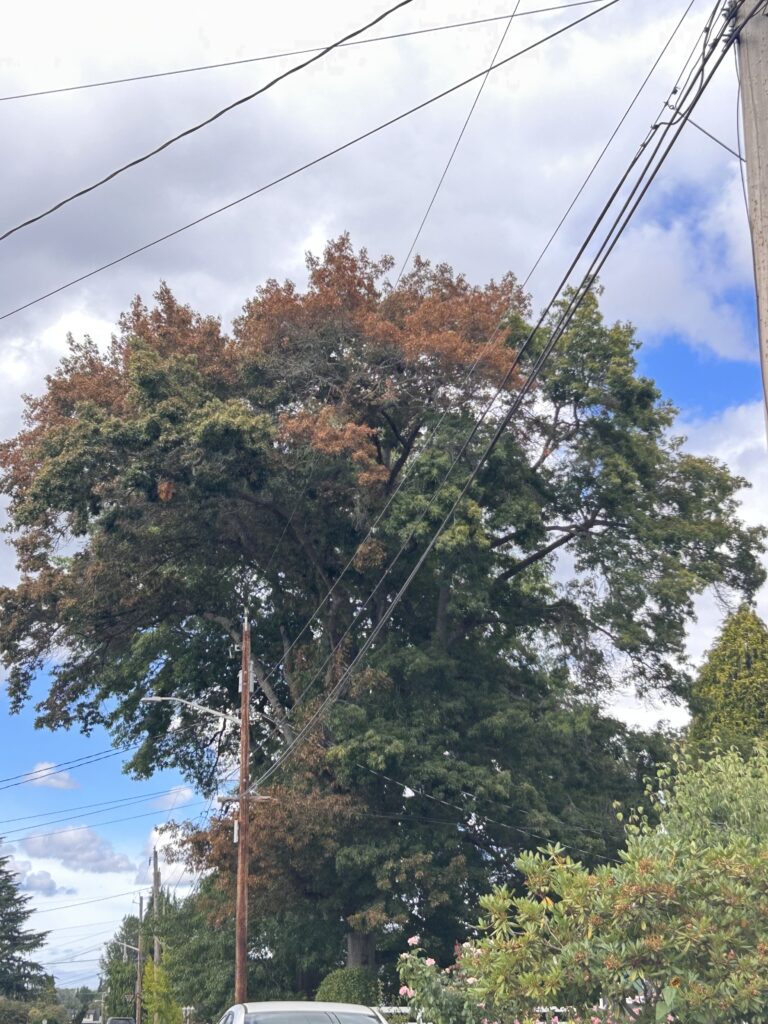
- Defoliation or flagging (browning or absent leaves on individual branches) on the top third of tree (Figures 3 and 4).
- Dead or broken branches, sometimes dying close to the trunk first.
- Crown thinning or canopy dieback.
Signs
MOB infestation can include the following signs:
- Pale-colored, powdery boring dust (frass) is the earliest visual indicator (Oregon Department of Forestry 2023).
- Round 1.2–1.5 mm entrance and exit holes on the bark of infested branches.
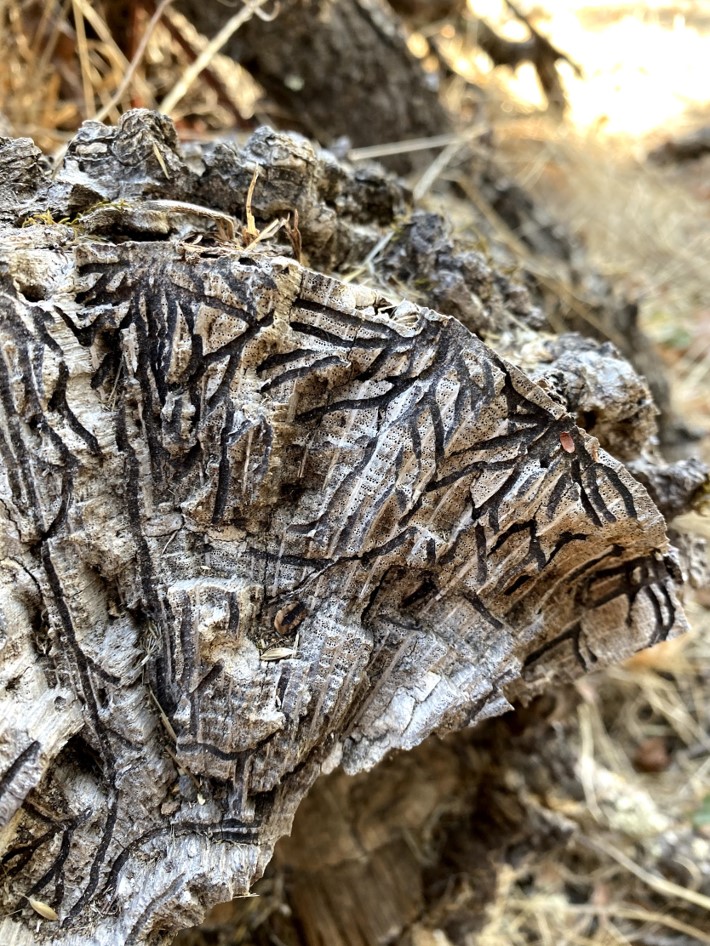
- Black-stained, branching galleries, 1.2–1.5 mm in diameter, penetrating horizontally through the sapwood, but typically not entering heartwood, and fanning out over a single plane (Figure 5).
Look-Alike Signs and Symptoms
Similar crown damage may be seen on Oregon white oaks from stressors like drought, disease, animal damage, and other insect pests, such as defoliators, leaf miners, oak pit scales, and gall forming wasps. There are other bark beetles and wood-boring insects capable of infesting Oregon white oak and creating galleries, but they typically prefer dead or weakened trees and do not cause the crown dieback that MOB does (Oregon Department of Forestry 2023). Distinguishing the signs and symptoms between native and nonnative insects may be difficult, but black-stained galleries, crown dieback, and pale boring dust on oak trees are used as indicators for MOB. Reporting trees with these characteristics are encouraged, even though native borers may have similar signs and symptoms.
Understanding MOB
Identification
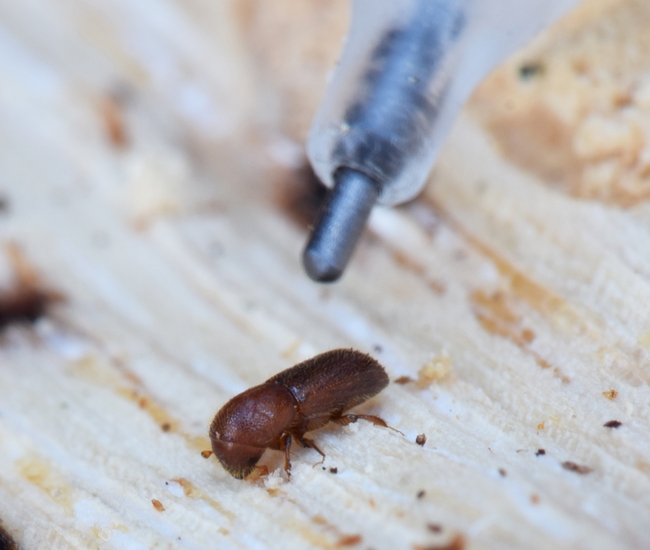
Adult MOB are reddish brown, cylindrical beetles that are 2.3–3.2 mm long and three times as long as they are wide (Figure 6) (Rabaglia et al. 2020). Adult females are larger and can fly, while males are smaller (2.3 mm) and are unlikely to be found outside of beetle galleries in trees (University of California, n.d.; Schedl 1964).
Life Cycle
Mated adult females tunnel into trees at thin points or cracks in the bark. The round gallery entrance holes are small, approximately 1.2–1.5 mm in diameter. The beetles bore into the outer wood (sapwood layer), creating galleries inoculated with the symbiotic fungal spores and microbes they carry (Figure 4) (University of California, n.d.; Oregon Department of Agriculture 2025). The females lay eggs in the galleries, and the larvae and adults feed on the growing fungi. Once reproductively mature, MOB siblings will mate with each other, and females will emerge in late winter or early spring already mated and ready for egg laying in new host trees within five to eight weeks (Oregon Department of Agriculture 2025). In California, mated females overwinter in the host tree galleries and emerge when temperatures start to approach 80°F (Ewing et al. 2020). In Oregon, it is predicted that if temperatures are mild, adults can start to emerge in March and emergence can continue through October (Oregon Department of Agriculture 2025). Females are capable of laying both fertilized and unfertilized eggs; fertilized eggs develop into females, while unfertilized eggs become males that can serve as potential mates, helping to initiate new infestations (Campbell 2022). MOB are quite prolific and can produce two or more generations per year (Ewing et al. 2020).
Hosts
MOB can attack many different tree species, but its predominant hosts are oak (Quercus) species. In MOB’s natural range, they are known to attack a range of trees within the oak and beech family (University of California, n.d.). Maple, elm, and walnut trees can also be infested, but the complete range of susceptible plants in North America is not entirely known. It has been confirmed that MOB poses at least some threat to Oregon white oaks in the Pacific Northwest (Oregon Department of Forestry 2023).
Response
Prevention and Containment
The Oregon Department of Agriculture (2024) and the Oregon Department of Forestry (2026) recommend the following management practices to limit the spread and impact of MOB:
- Do not move firewood or other potentially infested plant material.
- Inspect symptomatic trees for signs of infestation.
- Collect suspected MOB specimens for reporting if possible.
- Sterilize pruning tools and saws after use on infested oaks. Sterilize equipment using 70% ethanol, 5% bleach, hydrogen peroxide, or Lysol.
- Help oaks become better equipped to defend against pests by reducing stress and improving overall tree health. Healthy trees are more likely to resist or tolerate MOB infestations. Factors that increase tree stress, such as under or over irrigation, soil compaction, improper pruning practices, and the presence of other pests or diseases, can make oaks more vulnerable to MOB infestations.
- Avoid activities that may injure oaks or cause soil compaction in the root zone, such as construction, foot traffic, or lawn maintenance equipment.
- Remove and dispose of infested trees, including the stump. Disposal options include incinerating on-site, if possible, or chipping infested or potentially infested wood to one-inch diameter chips and leaving on-site. Do not distribute the chips. It is not yet known if the fungi can spread via chipped material. If burying material, it should be buried at least five inches deep. If infested material must be transported, the material should be covered and transported during the winter.
The use of pesticides has so far not been shown to be an effective control method, and research on this is ongoing (Oregon Department of Forestry 2026).
Early Detection—Report Sightings
Be vigilant and report any symptoms or signs of possible MOB infestation. Your report is valuable for guarding the biodiversity of Washington and tracking the spread of invasive species. If possible, collect insect specimens. Experts from responding agencies may need to examine a physical specimen to confirm identification. Specimens can be kept in a vial in the freezer until the report is verified. MOB are capable of chewing through thin plastic; it is recommended to use thick plastic or glass containers to securely contain them.
Report potential MOB sightings or activity via the Washington Invasive Species Council website or the WA Invasives mobile app. You can also contact your local WSU Extension office to make a report.
References
Campbell, F. 2022. Mediterranean Oak Borer (Xyleborus monographus). Don’t Move Firewood.
de Beer, Z.W., M. Procter, M.J. Wingfield, S. Marincowitz, and T.A. Duong. 2022. Generic Boundaries in the Ophiostomatales Reconsidered and Revised. Studies in Mycology 101(1):57–120.
Dunwiddie, P.W., and J.D. Bakker. 2011. The Future of Restoration and Management of Prairie-Oak Ecosystems in the Pacific Northwest. Northwest Science 85(2):83–92.
Ellenwood, J.R., F.J. Krist Jr., and S.A. Romero. 2015. National Individual Tree Species Atlas. Technical Bulletin FHTET-15-01. USDA Forest Service, Forest Health Technology Enterprise Team.
Ewing, C., M. Dimson, B. Nobua-Behrmann, R. Oliver, and J. Kabashima. 2020. Pest Alert: Mediterranean Oak Borer. CAL Fire.
Monroe, A.F., D. Rassati, and J.J. Riggins. 2026. Xyleborus monographus (Coleoptera: Curculionidae: Scolytinae) as an Emerging Forest Pest in North America: A Review. Environmental Entomology 55(4):nvag063.
Oregon Department of Agriculture. 2025. Pest Alert: Mediterranean Oak Borer. Oregon Department of Agriculture.
Oregon Department of Agriculture. 2024. Best Management Practices: Mediterranean Oak Borer. Oregon Department of Agriculture.
Oregon Department of Forestry. 2023. Frequently Asked Questions: Mediterranean Oak Borer. Oregon Department of Forestry.
Oregon Department of Forestry. 2026. Mediterranean Oak Borer. Oregon Department of Forestry.
Rabaglia, R.J., S.L. Smith, P. Rugman-Jones, M.F. Digirolomo, C. Ewing, and A. Eakalen. 2020. Establishment of a Non-Native Xyleborine Ambrosia Beetle, Xyleborus monographus (Fabricius) (Coleoptera: Curculionidae: Scolytinae), New to North America in California. Zootaxa 4786(2).
Schedl, W. 1964. Biologie des Gehöckerten Eichenholzbohrers, Xyleborus monographus Fab. (Scolytidae, Coleoptera). Zeitschrift für Angewandte Entomologie 53:411–42.
Faith Dewitz, Scientific Assistant, Department of Plant Pathology, Washington State University
Kevin W. Zobrist, Professor, Washington State University
Curtis Ewing, Senior Environmental Scientist, CAL FIRE
Molly Darr, Extension Forest Health Specialist, Washington State University
Sarah Smith, Curator and Collection Manager, Holistic Insect Systematics Laboratory, Department of Entomology, Michigan State University
Joseph M. Hulbert, Research Assistant Professor, Department of Plant Pathology, Washington State University

FS404E

Copyright © Washington State University
WSU Extension publications contain material written and produced for public distribution. Alternative text descriptions for select complex images were generated using ChatGPT (OpenAI), then reviewed and adapted to ensure compliance with Web Content Accessibility Guidelines (WCAG) accessibility standards.
Issued by Washington State University Extension and the US Department of Agriculture in furtherance of the Acts of May 8 and June 30, 1914. Extension programs and policies are consistent with federal and state laws and regulations on nondiscrimination regarding race, sex, religion, age, color, creed, and national or ethnic origin; physical, mental, or sensory disability; marital status or sexual orientation; and status as a Vietnam-era or disabled veteran. Evidence of noncompliance may be reported through your local WSU Extension office. Trade names have been used to simplify information; no endorsement is intended.