Ensuring Personal and Produce Safety for Packinghouse Visitors
Description
For the health and safety of all personnel and to maintain the high quality of the produce being processed, it’s especially important that packhouse visitors follow safety measures to ensure a successful packinghouse visit. Learn about the best practices for your next packinghouse visit in this publication.
Why Is Packinghouse Safety Important for a Visitor?
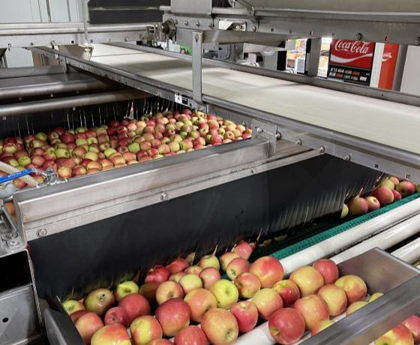
A packinghouse can be a bustling and chaotic environment, making it challenging to comprehend everything at first glance. It is important for visitors to know and practice safety when visiting a packinghouse in order to keep themselves, employees, and consumers safe from harm. With the many activities that occur in a packinghouse, numerous safety measures must be observed by visitors. These measures help ensure the overall safety of everyone involved and maintain the quality and safety of the produce being processed.
Clothing
When preparing to visit a packinghouse, there are important considerations to keep in mind regarding attire:
- Wear closed-toed shoes that fully enclose the foot, such as sneakers or boots, to protect against hazards.
- Remove earrings, watches, and other personal accessories to prevent jewelry from getting caught in equipment or falling into the production line, which would contaminate produce.
- Keep hair tied up and covered with a hat or hairnet to prevent loose hair from falling onto the production line or getting caught in machinery. Cover facial hair with a beard or facial hairnet to ensure that it is properly contained and does not pose a contamination risk.
- Consider wearing a safety vest to enhance visibility.
Visitor Health
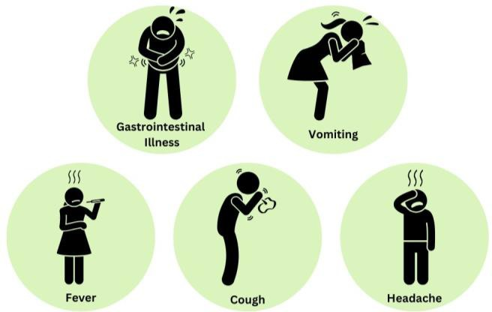
If you are feeling unwell, you should postpone your visit to another day. Individuals with symptoms like gastrointestinal illness, vomiting, fever, cough, or headache should not enter a packinghouse (Figure 1). Ill individuals may carry microorganisms that pose a risk of contaminating produce with organisms capable of causing foodborne illness. This precaution is crucial to maintaining a hygienic environment and ensuring the integrity of the food supply chain. Additionally, individuals with any cuts, sores, or open wounds should make sure they are properly covered with a clean, waterproof bandage to prevent potential contamination.
Handwashing
Handwashing is a critical step in ensuring both personal and produce safety in packinghouse environments. All visitors should wash hands thoroughly with soap and water before entering the facility. It is also necessary to wash hands after using the restroom and after eating or smoking. By following proper handwashing procedures, which include scrubbing hands for at least 20 seconds with running water and soap, rinsing thoroughly, and drying with a clean, disposable paper towel, visitors can help minimize the risk of introducing harmful pathogens to the produce or into the environment.
Forklift Traffic
In a fast-paced packinghouse, there can be a lot of forklift traffic. One of the most important things to remember when visiting a packinghouse is to be aware of forklift activity around you. The operators are focused on their tasks; therefore, as a visitor, it is your responsibility to stay clear of their path. Always look both ways before crossing main pathways to guarantee your safety while walking through the facility.
Hazard and Risk Identification
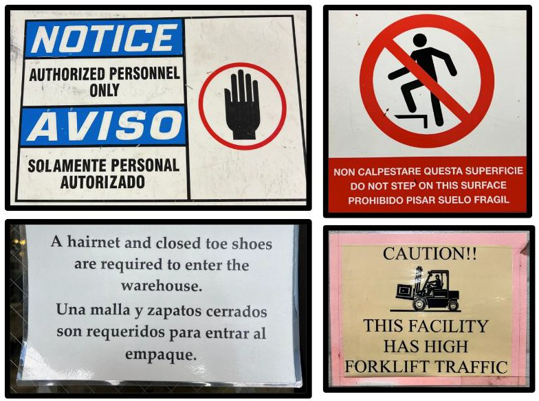
Visitors to a packinghouse may not possess the same level of hazard awareness as daily workers. Understanding the distinction between a hazard, which is something that has the potential to cause harm, and a risk, which is the likelihood of that hazard causing harm, is crucial. In many packinghouses, water is used to facilitate the movement of fruit along the production line, resulting in wet floors that pose a hazard. While this hazard typically presents a low risk, the wet surfaces can be slippery, thereby increasing the risk of injury from slips and falls. It is important to stick to designated walkways and avoid stepping on or near unfamiliar equipment or obstacles like fruit, produce bins, and machinery. Reading and adhering to posted signs regarding safety guidelines and equipment operation is also essential for visitor safety in such environments (Figure 2).
Communication
Always communicate with the packinghouse to confirm a visiting schedule. Follow all instructions provided and show respect toward employees and equipment. Do not hesitate to ask questions about equipment functionality, the packing process, or any other questions.


By Sierra Olsen, Undergraduate Student, Washington State University and Claire Murphy, Assistant Professor and Extension Specialist, School of Food Science, Washington State University Irrigated Agriculture Research and Extension Center
Copyright © Washington State University
WSU Extension publications contain material written and produced for public distribution. Alternate formats of our educational materials are available upon request for persons with disabilities. Please contact Washington State University Extension for more information.
Issued by Washington State University Extension and the US Department of Agriculture in furtherance of the Acts of May 8 and June 30, 1914. Extension programs and policies are consistent with federal and state laws and regulations on nondiscrimination regarding race, sex, religion, age, color, creed, and national or ethnic origin; physical, mental, or sensory disability; marital status or sexual orientation; and status as a Vietnam-era or disabled veteran. Evidence of noncompliance may be reported through your local WSU Extension office. Trade names have been used to simplify information; no endorsement is intended. Published February 2025.