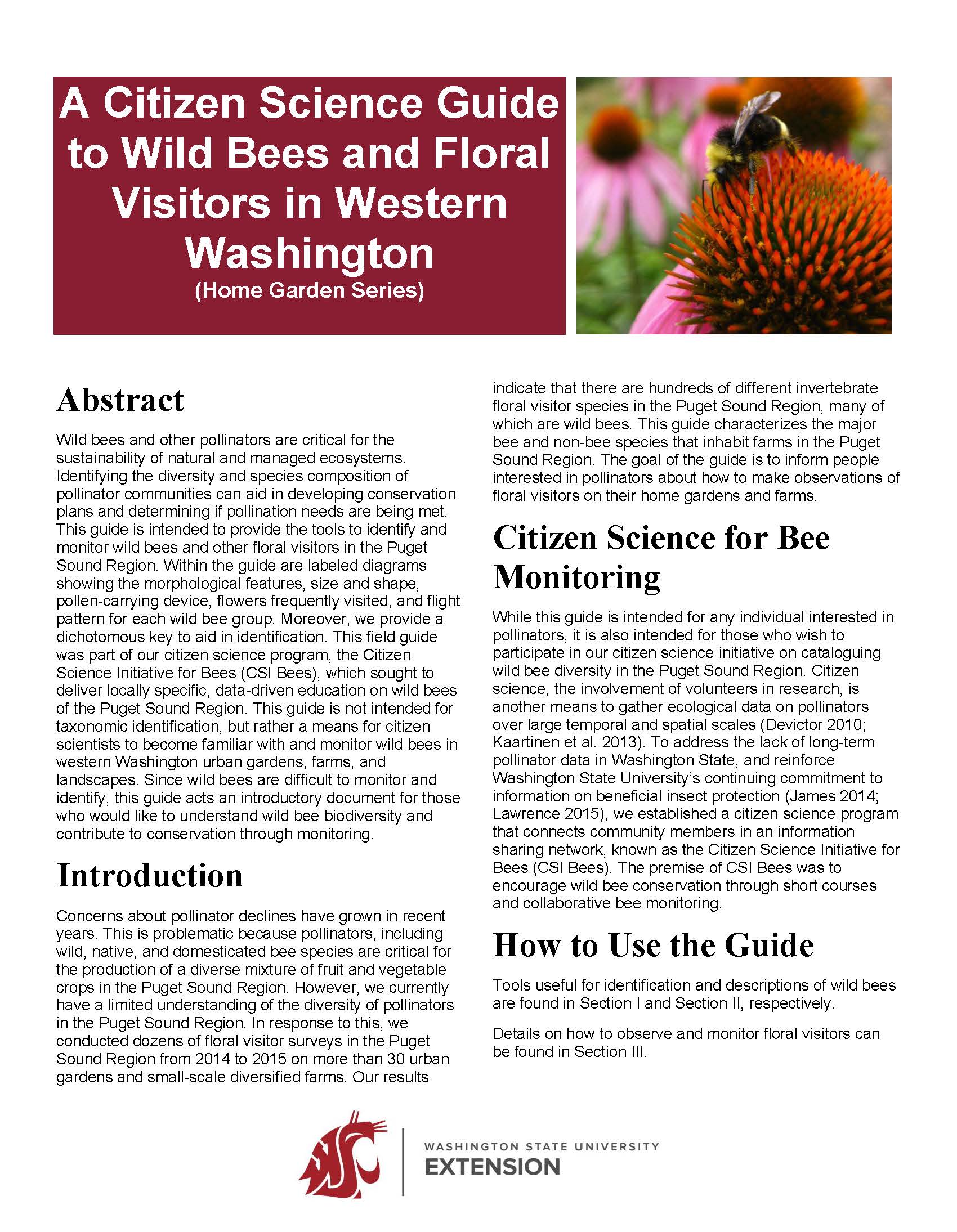
A Citizen Science Guide to Wild Bees and Floral Visitors in Western Washington (Home Garden Series)
This easy-to-use field guide provides helpful tools to identify and monitor wild bees and pollinators in western Washington. Great for gardeners, farmers, conservationists, or anyone curious about floral visitors.
Page Count: 11
Published: April 2017
Revised: September 2025
Hurry! Only left in stock.
Related publications
-
Cornmeal and corn gluten meal applications in gardens and landscapes (Home Garden Series)
Do cornmeal and corn gluten meal (CGM) have a legal and practical use in home gardens and landscapes? A review of research and current recommendations here.
- Published:
- March 2019
- SKU:
- FS326E
Authors: -
Recovering Nutrients from Manure - New Tools for Maintaining Air and Water Quality
View this video here! This video provides an easy-to-access initial view of nutrient recovery technologies, and is part of the Anaerobic Digestion Series.
- Published:
- October 2017
- SKU:
- PRV03
Authors: -
Tree Characteristics and Management Recommendations for WA 64
Resulting from a cross between Honeycrisp and Cripps Pink, WA 64 is a new apple cultivar from WSU that will be available to Washington growers in 2026. With excellent storability, its taste and texture were…
- Pages:
- 12
- Published:
- May 2025
- SKU:
- EM130E
-

DVD Set-Sprayer Prep & Calibration
Watch this free video here! Sprayer Prep with John & Daryl Discusses sprayer set up, label requirements, principles of nozzling, and pressure.
Authors: