Archived - Feeding livestock during and after a disaster
Notice: The following publication has been archived and may not meet WCAG 2.1 accessibility standards. If you need an accessible copy, please contact us.
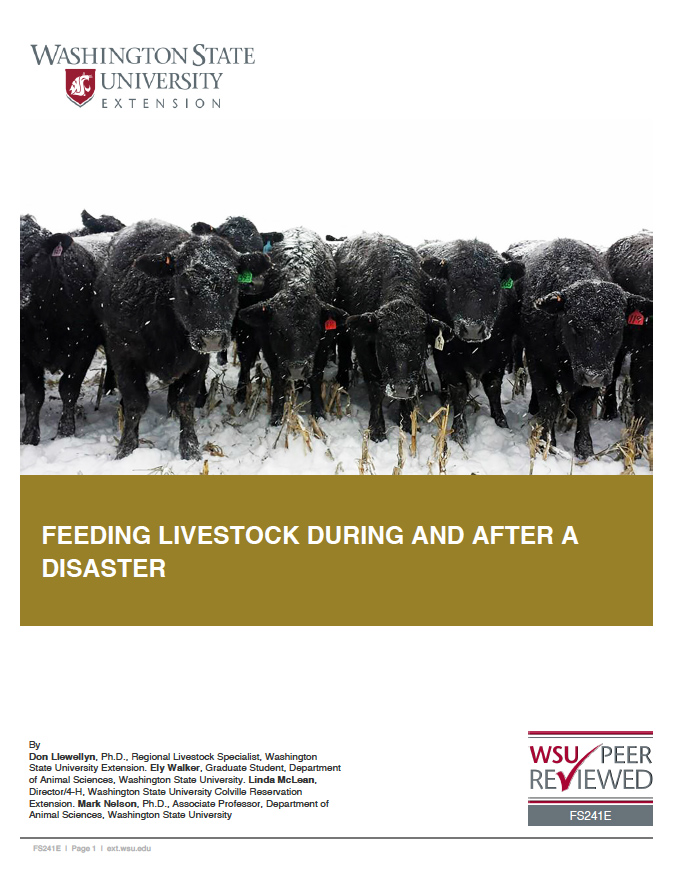
Disaster strikes, and you’re left without the feed you normally give your livestock. While unfamiliar feed in an emergency may be necessary, quickly changing animals’ diets can cause them added stress.
Published: September 2016
Hurry! Only left in stock.
Related publications
-
-
A Guide to Washington State's Urban Tree Canopy
More than 80% of the nation’s population lives in urban areas. The urban tree canopy (UTC) is an essential part of an urban areas’ infrastructure—an ecosystem characterized by trees and other vegetati ...
- Published:
- December 2016
- SKU:
- EM107E
Authors: -
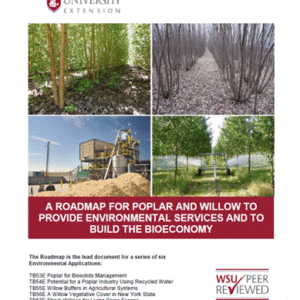
A Roadmap for Poplar and Willow to Provide Environmental Services and to Build the Bioeconomy
This is the lead publication for the poplar/willow Environmental Applications series: innovation in bioenergy, remediation, and wastewater treatment. ...
- Published:
- December 2018
- SKU:
- EM115E
Authors: -
Aging in Place: A Policy Approach for Aging Well in Washington State
As in the rest of our nation, the population of Washington is aging. By 2030, nearly 20% of Washington residents will be age 65 and older; in rural communities, this will jump to nearly 30%.…
- Published:
- September 2015
- SKU:
- FS185E