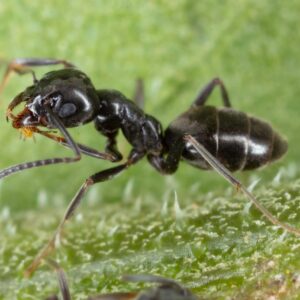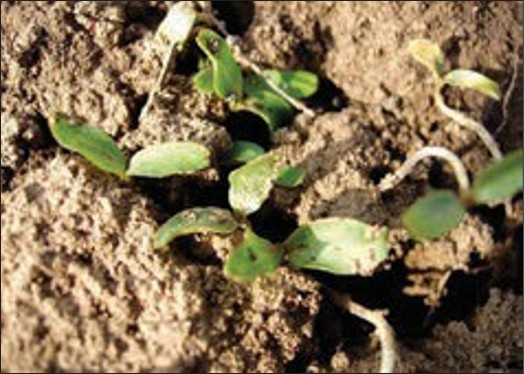
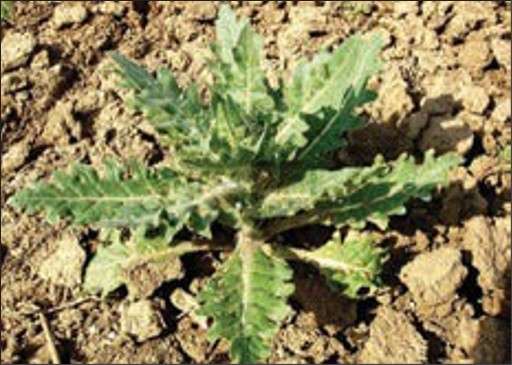
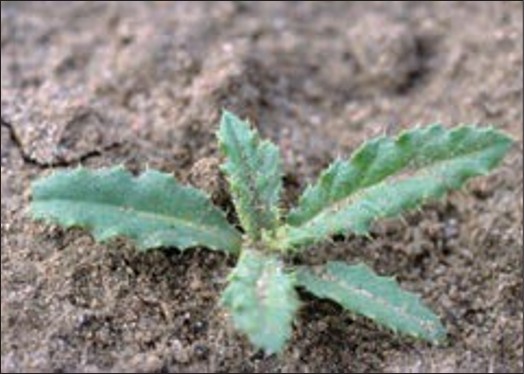
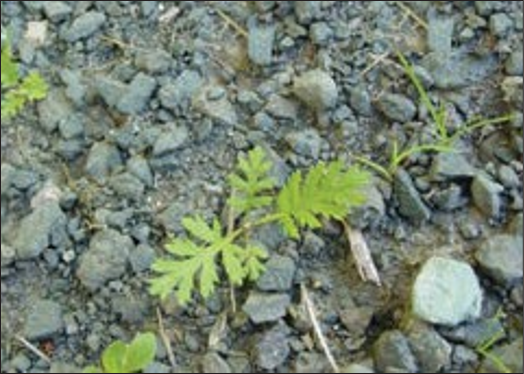
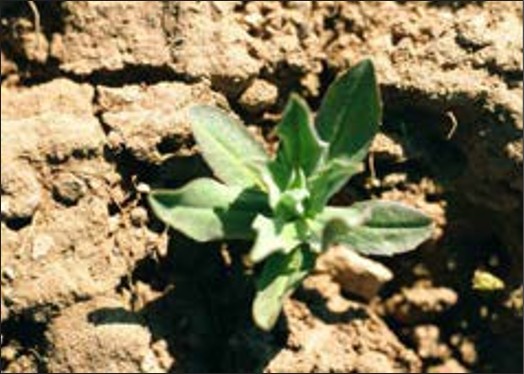
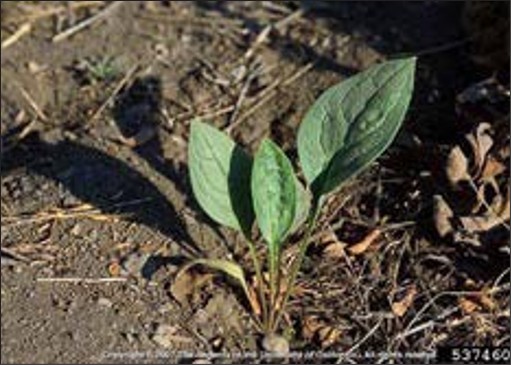
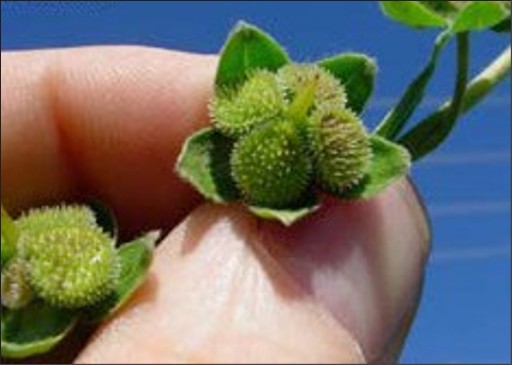
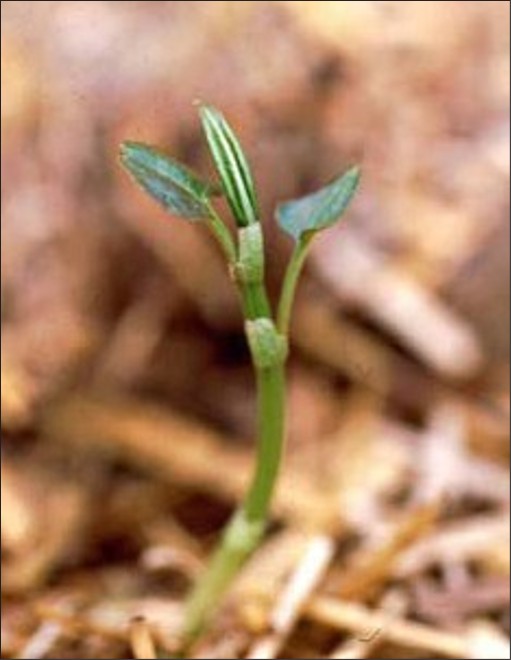
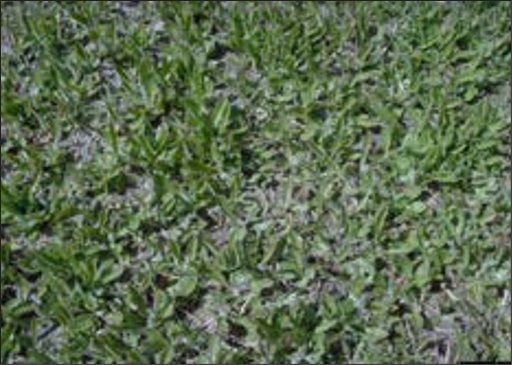
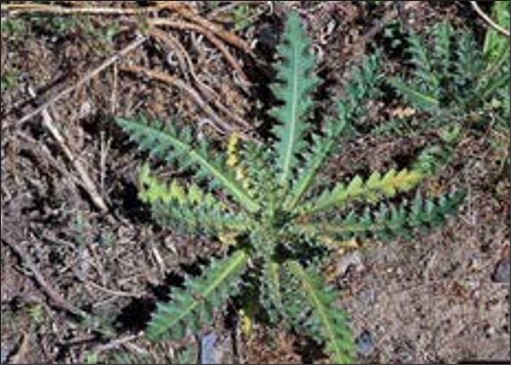
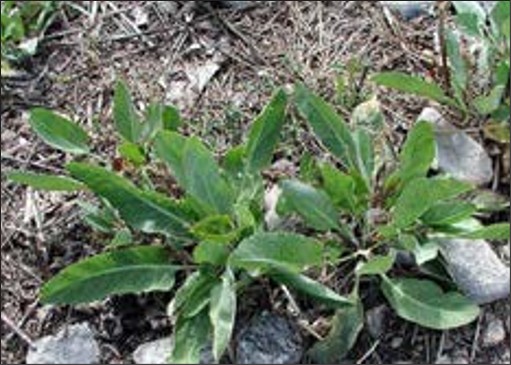
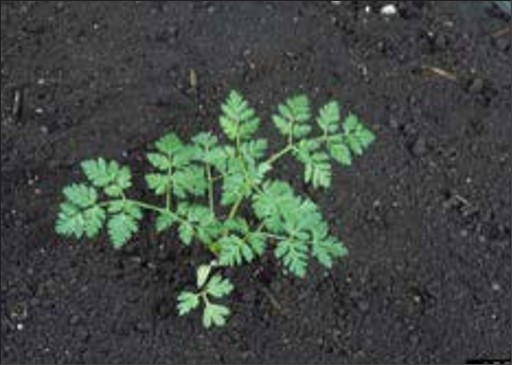
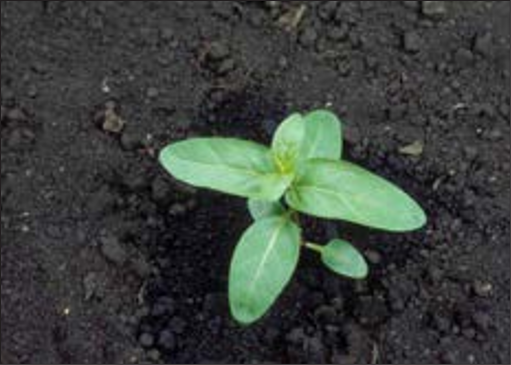
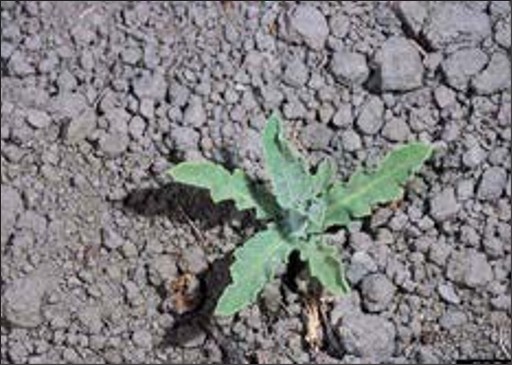
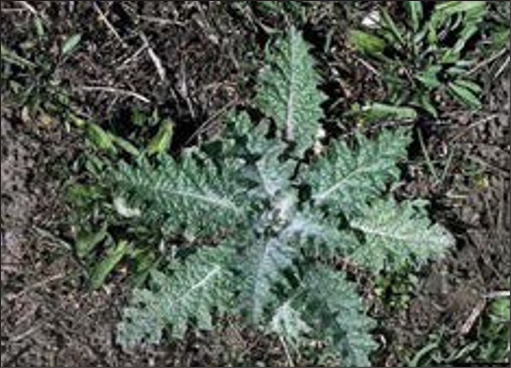
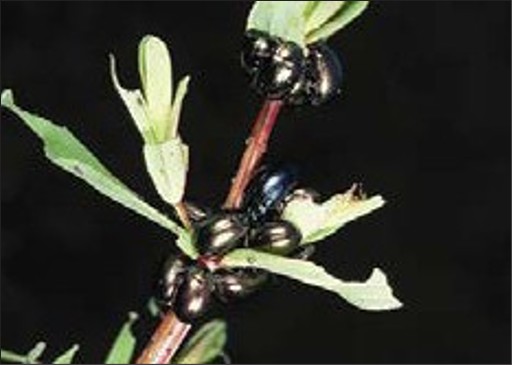
Seedlings. Jan Samanek, State Phytosanitary Administration, Bugwood.org
Online only The control of any weed begins with early detection. The objective of this guide is to aid in the identification and control of invasive weeds found in eastern Washington.
The rapid spread of invasive plants threatens natural resources across the United States, and the Pacific Northwest is no exception. Invasive species displace natural plant communities and have the following impacts:
Prevention is by far the most effective approach in dealing with invasive plants. For best results, incorporate as many preventive practices as feasible into your land management strategy:
The control of any weed begins with early detection. The objective of this guide is to aid in the identification and control of invasive weeds found in eastern Washington. For further information about noxious weed identification, control options, and control requirements under state law, please contact your county’s noxious weed coordinator or a Washington State University Extension educator.
Always wear protective clothing, including gloves, when pulling weeds. Many weed species contain toxins that may cause mild to severe dermatitis. If using herbicides, it is important to take additional precautions.
Washington State University and its employees are in no way responsible for the misuse of any products or damages caused by any products mentioned in this publication to control the specified weeds.
| Common Name | Scientific Name |
|---|---|
| Diffuse knapweed | Centaurea diffusa Lam. |
| Hoary cress | Cardaria draba (L.) Desv.; Lepidium draba L. |
| Japanese knotweed; giant knotweed; Bohemian knotweed | Polygonum cuspidatum Siebold & Zucc.; Fallopia sachalinensis (F. Schmidt ex Maxim.) Ronse Decr.; Polygonum x bohemicum (J. Chrtek & Chrtkovß) Zika & Jacobson |
| Oxeye daisy | Leucanthemum vulgare Lam. |
| Perennial pepperweed | Lepidium latifolium L. |
| Poison hemlock | Conium maculatum L. |
| Common Name | Scientific Name |
|---|---|
| Orange hawkweed | Hieracium aurantiacum L. |
| Common Name | Scientific Name |
|---|---|
| Canada thistle | Cirsium arvense (L.) Scop. |
| Houndstongue | Cynoglossum officinale L. |
| Purple loosetrife | Lythrum salicaria L. |
| Scotch thistle | Onopordum acanthium L. |
| Common Name | Scientific Name |
|---|---|
| Common bugloss | Anchusa officinalis L. |
| Viper’s bugloss | Echium vulgare L. |
| Common Name | Scientific Name |
|---|---|
| Kochia | Kochia scoparia (L.) Schrad |
| Russian thistle | Salsola tragus L.; Salsola kali L.; Salsola iberica Sennen & Pau |
| Common Name | Scientific Name |
|---|---|
| Black henbane | Hyoscyamus niger L. |
| Common groundsel | Senecio vulgaris L. |
| Common tansy | Tanecetum vulgare L. |
| Dalmatian toadflax | Linaria dalmatica (L.) Mill. |
| Leafy spurge | Euphorbia esula L. |
| Meadow hawkweed | Hieracium caespitosum Dumort |
| Puncturevine | Tribulus terrestris L. |
| Rush skeletonweed | Chondrilla juncea L. |
| Scotch broom | Cytisus scoparius (L.) Link |
| St. Johnswort | Hypericum perforatum L. |
| Sulfur cinquefoil | Potentilla recta L. |
| White bryony | Bryonia alba L. |
| Yellow starthistle | Centaurea solstitialis L. |
| Yellow toadflax | Linaria vulgaris P. Miller |
| Common Name | Scientific Name |
|---|---|
| Musk thistle | Carduus nutans L. |
| Plumeless thistle | Carduus acanthoides L. |
| Russian knapweed | Acroptilon repens (L.) DC.; Centaurea repens L. |
| Saltcedar/tamarisk | Tamarix ramosissima Ledeb. |
| Spotted knapweed | Centaurea bierbersteinii DC.; Centaurea maculosa Lam.; Centaurea stoebe L. ssp. micranthos (Gugler) Hayek |
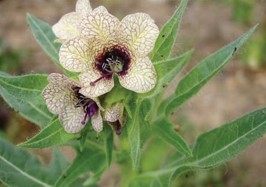
Hyoscyamus Niger L.
Solanaceae
Nightshade
Common Names: insane root, stinking nightshade, fetid nightshade, hog’s beam, hogbean, hogbane, poison tobacco
Origin: Europe
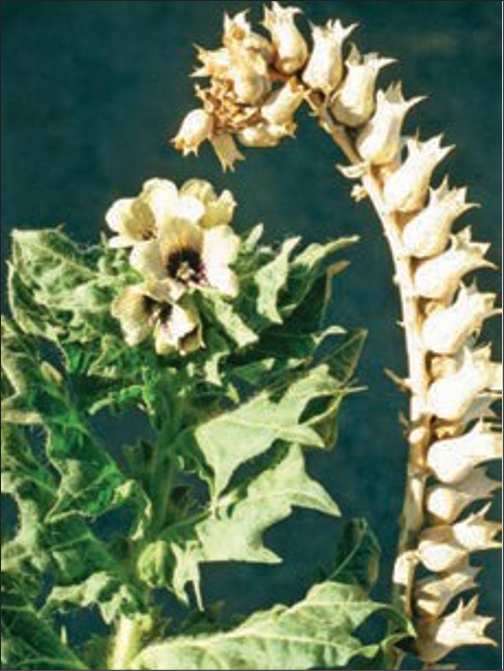
Historically, black henbane has been used medicinally and as an ornamental. It is an annual or biennial plant that reproduces solely by seed. The plant forms large rosettes with alternate, serrated leaves, and develops a fleshy taproot. Mature plants grow up to 3 feet tall. The stems of a mature plant are erect, thick, coarse to tough, and widely branched. Black henbane has abundant, foul-smelling foliage that is covered with fine, sticky hairs. The leaves are alternate, oblong to ovate, and coarsely toothed to shallowly lobed. Flowers can be seen from spring to early fall. The flowers are funnel-shaped, 5-lobed, yellowish with deep purple veins and throats, and arranged in spike-like clusters. The fruit is pineapple-shaped, approximately 1 inch long, with capsules that contain hundreds of tiny, dark seeds. A single plant can produce up to a half million seeds that are highly germinable and remain viable in the soil for several years. Black henbane is commonly found in rangeland, pastures, roadsides, and waste areas. The plant contains alkaloids that can cause livestock poisoning, although it is unpalatable and therefore seldom grazed. It is largely considered poisonous to humans, but some people still value it for medicinal properties.
Efforts to control black henbane should be timed to precede seed production. Small infestations of black henbane plants can be pulled, cut, or dug. Moist soil helps to remove the entire tap root system. Any seedpods should be bagged and removed from the site to avoid further seed dispersal. Mechanical methods, such as mowing, can be difficult if the plant is mature because of its thick, coarse stem. Herbicides can provide excellent control and should be applied at the rosette to bolt stage, but before flowering. No biological insect agents are currently available for control of black henbane.
Cirsium arvense (L.) Scop.
Asteraceae
Sunflower
Common Names: Canadian thistle, creeping thistle, field thistle, small-flower thistle
Origin: Europe and Asia
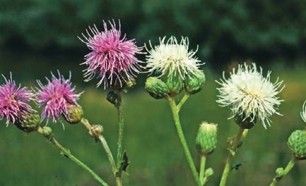
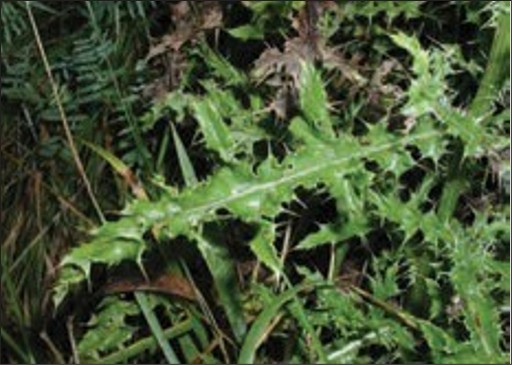
Canada thistle is a dioecious herbaceous perennial that spreads primarily by an extensive, rhizomatous root system that gives rise to numerous aerial shoots. Mature plants can grow up to 5 feet tall. The stems are slender, ridged, branched, and somewhat hairy at maturity. The leaves are alternate, lance-shaped, and irregularly lobed with spiny, toothed margins. Purple to white flowers surrounded by spineless bracts appear between June and October and occur in clusters at branch ends. The small, slightly tapered fruit (achene) has a feathery pappus that enables wind dispersal. The seeds are abundant and can remain viable in the soil for 20 years. Canada thistle is an aggressive invader of a variety of open habitats and can form dense stands that shade out and displace desirable vegetation. Canada thistle can result in reduced forage, as its spiny leaves render it unpalatable to most livestock.
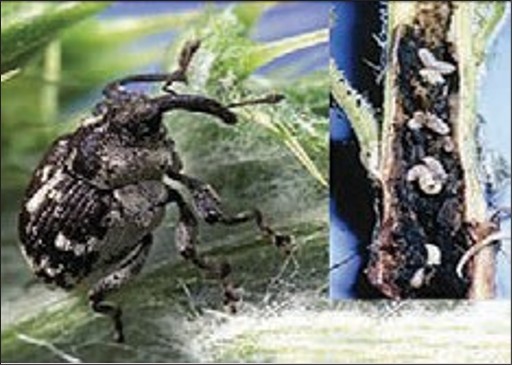
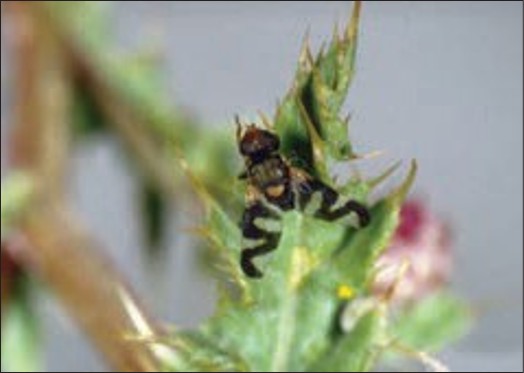
Because many thistle species exist in North America, Canada thistle should be accurately identified before control is attempted. In managing the plant, control practices are most effective when combined. Regular tillage and planting of competitive crops can keep Canada thistle in check, although tillage also produces root fragments, giving rise to new plants. Repetitive mowing before seed set—preferably at early bud stage when food reserves are at their lowest—will weaken the plants and prevent seed production. Several herbicides are available for either targeted or broad application, depending on the presence of desirable vegetation. Repeated applications are often necessary. Biological control agents include the stem-boring weevil Ceutorhynchus litura and the thistle stem gall fly Urophora cardui. Though neither insect will kill plants outright, both can reduce Canada thistle populations over time, particularly in conjunction with good plant competition. Sheep, goats, and some cattle have been known to graze Canada thistle and provide some control; however, other control measures should also be used.
Anchusa officinalis L.
Boraginaceae
Borage
Common Names: common anchusa, alkanet, blue bugloss
Origin: Europe
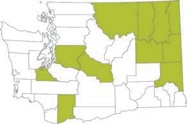
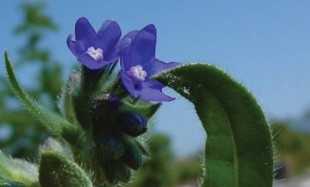
Common bugloss is a deep-rooted perennial that spreads by seed. A rosette appears the first year, followed by a flowering stalk the second year. Mature plants can have multiple flower stalks. The stems are robust, hairy, and grow to 2 feet tall at maturity. Leaves are lance-shaped, fleshy, and covered with stiff hairs. Basal leaves have a leaf stalk (petiole) that becomes progressively smaller up the stem to a point where the upper leaves are sessile (no petiole). The flower stems start out coiled like a fiddleneck, but unfold and straighten out as each flower bud opens. Purplish-blue, 5-lobed flowers appear from straight tubes rather than the curved tubes of annual bugloss. The fruit is a 4-chambered nutlet, with 1 seed per nutlet. A mature plant can produce up to 1,000 seeds in a single season. Common bugloss invades alfalfa fields, pastures, rangeland, and disturbed areas. Its succulent leaves and stalks can cause mold in baled hay.
Cultural control will not eliminate common bugloss populations. To gain control of common bugloss, seed production must be prevented, so pulling, digging, or cultivating should take place before flowering. Removing most of the taproot improves the effectiveness of these methods. Herbicides can be used and are most effective when applied early, particularly before bud stage, and should include a surfactant to help penetrate the hairy leaf surface. Biological control agents are not available for common bugloss.
Senecio vulgaris L.
Asteraceae
Sunflower
Common Names: old-man-in-the-spring, ragwort, grimsel
Origin: Europe
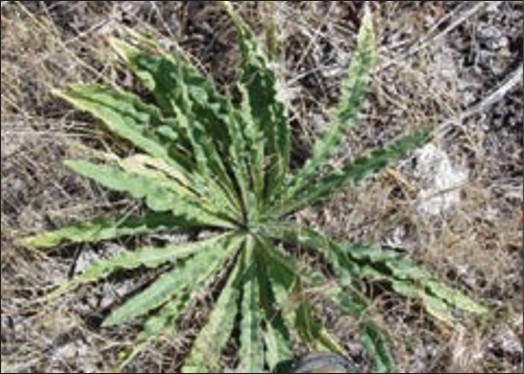
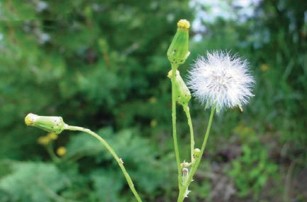
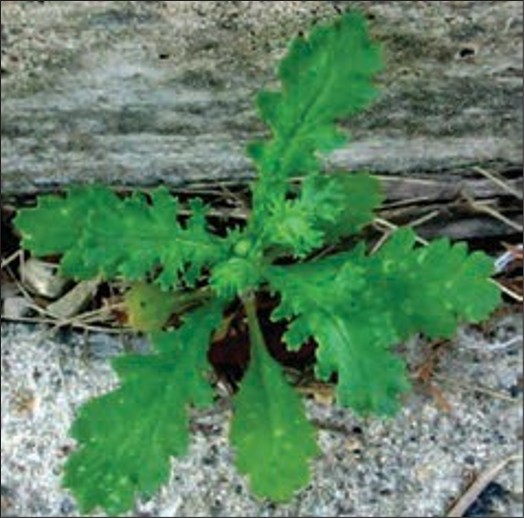
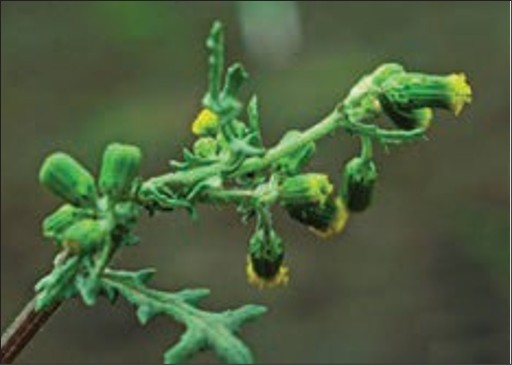
Common groundsel is usually a winter annual, but can also be biennial and grow in all seasons depending on climate. The plant has a taproot with a fibrous root system, and grows upright, branched, and up to 18 inches tall. Basal leaves are usually purplish on the underside, somewhat fleshy, and attach to the stem with a short stalk. The stem leaves clasp at the base and are alternate, mostly hairless, and pinnately divided or irregularly toothed. Flower heads composed of small yellow disk flowers but no ray flowers (petals) occur in clusters at stem ends and have distinct black-tipped bracts around the base. The seeds are abundant, long, slender, ridged, and when mature, are tipped with a tuft of silky white hairs (pappus) that aid wind dispersal. The plant contains 4 pyrrolizidine alkaloids, which can cause irreversible liver damage in livestock if consumed in sufficient quantity. Common groundsel is found in disturbed sites along roadsides, waste areas, cultivated fields, and gardens.
Good management practices that promote competitive plant growth can reduce groundsel. Because of the plant’s prolific seed production, common groundsel is best controlled by eliminating it before it has a chance to flower. Monitoring for seedlings should begin in early fall. Shallow tilling or hoeing of young plants will control the plant if done before seed set. While herbicides are not very effective for common groundsel infestations in alfalfa and other legumes, they can be effectively used in other crops. Despite the plant’s toxicity, sheep and goats are sometimes used to graze it since they have rumen bacteria that detoxify the alkaloids. Larvae of the cinnabar moth Tyria jacobaeae will eat groundsel, but are not around long enough to provide control. The rust fungus Puccinia lagenophorae is showing promise as a biological control agent, and is being further researched.
Tanecetum vulgare L.
Asteraceae
Sunflower
Common Names: garden tansy, golden buttons
Origin: Eurasia
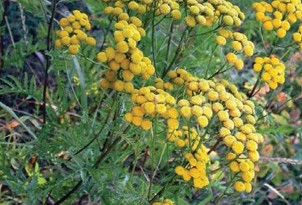
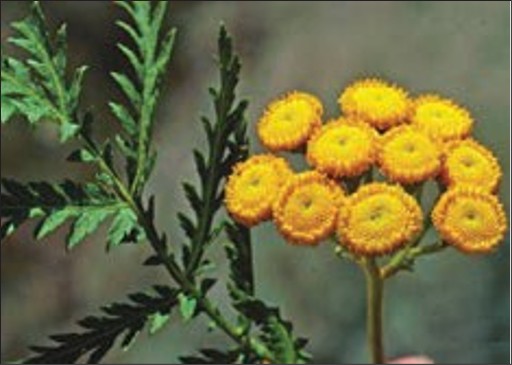
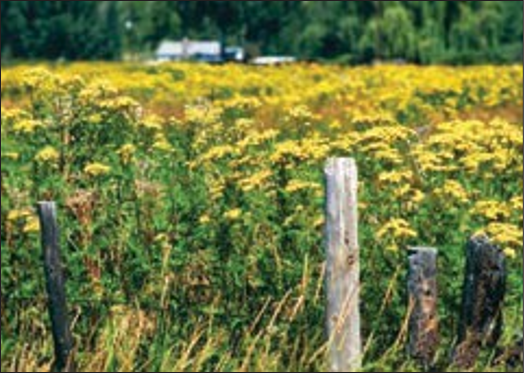
Common tansy, a pungent-smelling perennial herb, was brought to the United States for horticultural and medicinal purposes. The plant reproduces both by seed and creeping roots. Stems are erect, brown or purplish-red, and dotted with glands. Mature plants grow from 2–6 feet tall. Fern-like leaves are alternate and deeply divided into numerous, individual leaflets with toothed margins. Flowering occurs from July to the fall, varying by location. The yellow and button-like flowers without ray florets appear in dense, flat-topped clusters at the top of the plant. The seeds are yellowish-brown, 5-angled achenes, with no pappus. Common tansy is distinguishable from tansy ragwort (Senecio jacobaea), which is non-aromatic and has ray florets and seeds with pappus. Common tansy plants invade disturbed areas, pastures, ditch banks, and riparian areas. This prolific plant contains alkaloids and is potentially toxic to humans and most animals. Cattle and horses seldom graze the pungent plant, allowing common tansy to outcompete desirable pasture plants.
As with other rhizomatous perennials, a combination of control measures is most effective in managing common tansy. Small infestations of common tansy can be hand-dug, but the entire root system must be removed since plants can resprout from severed roots. Gloves and other protective clothing should be worn to prevent absorption of toxins through the skin. Although tillage can produce root pieces that result in new plants, common tansy does not persist in regularly cultivated lands. Repetitive mowing before the flowering stage can prevent seed production, but other measures (such as chemicals) should also be used to achieve control. Numerous herbicides are available to manage common tansy. Applications made between the bud and bloom stages tend to provide the best results. No insect biological control agents are currently available, although research is ongoing. Sheep and goats can be used to graze common tansy.
Linaria dalmatica (L.) Mill.
Scrophulariaceae
Figwort
Common Names: broadleaf toadflax, wild snapdragon, butter and eggs
Origin: Mediterranean regions of Europe to Central Asia
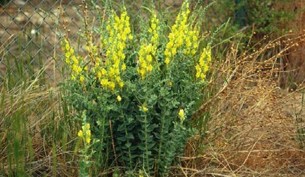
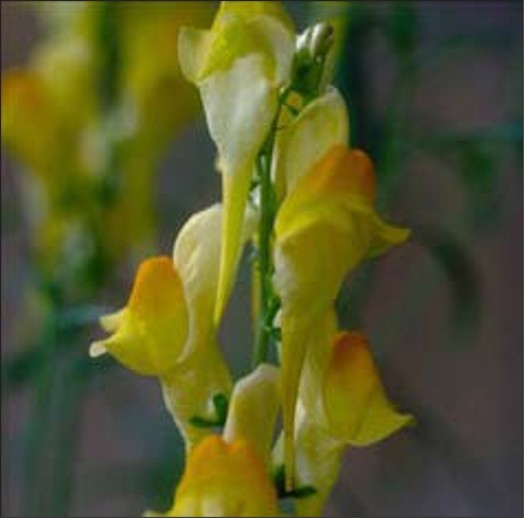
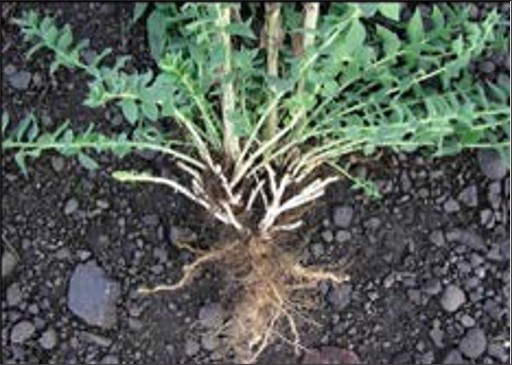
Dalmatian toadflax is an attractive herbaceous plant that was likely introduced to North America as an ornamental. It is a short-lived perennial that reproduces both by seed and rootstocks. Dalmatian toadflax has taproots and a creeping root system, reaching depths up to 10 feet and extending laterally up to 10 feet from the parent plant. New plants can form vegetatively from adventitious buds on the horizontal roots, as well as from root fragments as small as ½ inch. The plant grows 1–3 feet tall. The stems are woody at the base, but become smooth, waxy, and often branching toward the top. Waxy, light green to bluish-green leaves are broad, ovate to heart-shaped, and clasp the stem. Dalmatian toadflax flowers, resembling those of a snapdragon, are bright yellow and 2-lipped, with an orange-bearded throat and long spur. The flowers occur individually in a long, dense, terminal cluster and mature from the lower part of the stem upwards. During a single season, a plant can produce half a million seeds that can remain viable for 10 years. The seeds, produced in a 2-celled capsule, are irregularly-shaped, sharply angular, slightly winged, and dark-colored. Dalmatian toadflax contains a poisonous glucoside, but reports of livestock poisoning are rare because the plant is unpalatable. Dalmatian toadflax is an aggressive colonizer that invades disturbed sites, including roadsides, clear cuts, rangelands, and croplands. It can outcompete desirable species and significantly reduce forage.
Control strategies should be aimed at preventing seed production, depleting root reserves, and eliminating seedlings before they can propagate vegetatively. Cultural control, including seeding of desirable competitive species, should be integrated into a management strategy. Physical and mechanical control measures can be used to effectively prevent seed production and exhaust root reserves if done repeatedly and/or combined with other control methods. Hand-pulling small infestations of Dalmatian toadflax can be effective if all root fragments are bagged and removed from the site. Another control technique sometimes used is intensive cultivation, which extends over a 2-year period beginning in early June and is repeated so that there are never more than 10 days of green growth. To prevent the spread of root fragments, tillage equipment should be cleaned on site. Although herbicide efficacy can vary, herbicides are often the most successful control method available for toadflax. In general, herbicide labels recommend that toadflax plants be sprayed at the flowering stage, although treatments may have to be repeated. Herbicides should be rotated annually to prevent resistance. Several insect biological controls are available, including the defoliating moth Calophasia lunula, flower-feeding beetle Brachypterolus pulicarius, and seed capsule-feeding weevils Gymnetron antirrhini and G. netum. While these agents may be beneficial, the stem-mining weevil Mecinus janthinus is the recommended first choice because it has demonstrated excellent control of toadflax across Washington and throughout the western region according to WSU integrated weed management expert Jennifer Andreas. Sheep grazing may also help suppress stands of Dalmatian toadflax and limit seed production.
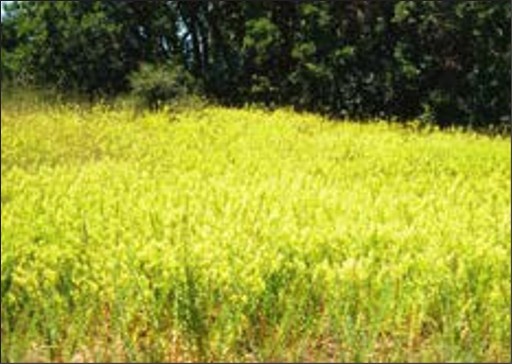
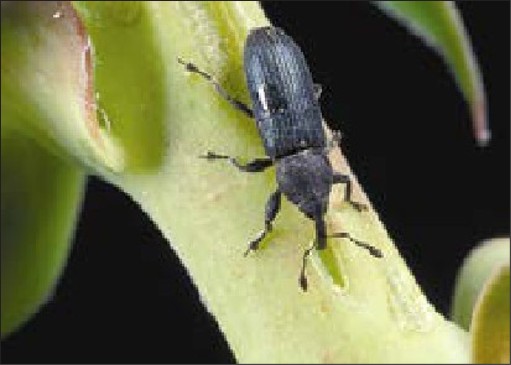
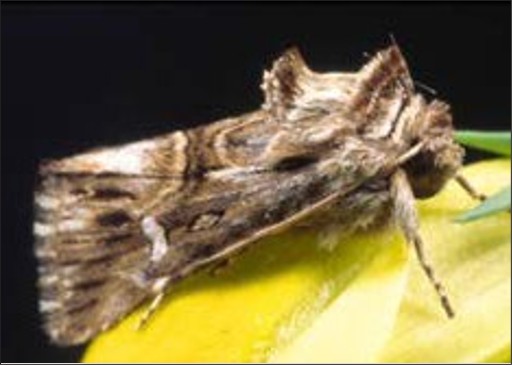
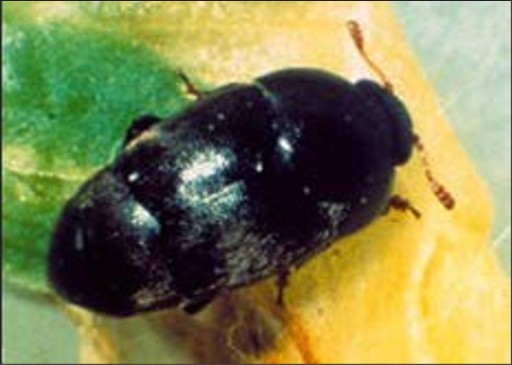
Centaurea diffusa Lam.
Asteraceae
Sunflower
Common Names: spreading knapweed, tumble knapweed, white knapweed
Origin: Eastern Mediterranean and Western Asia
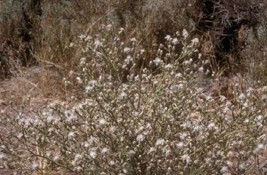
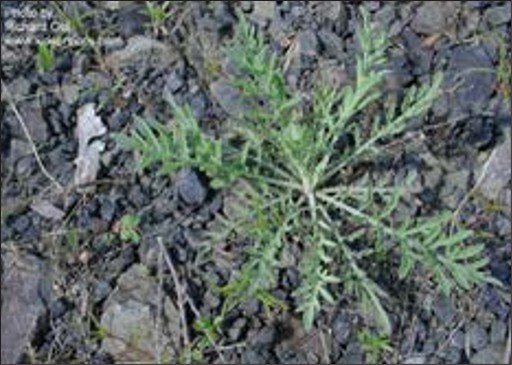
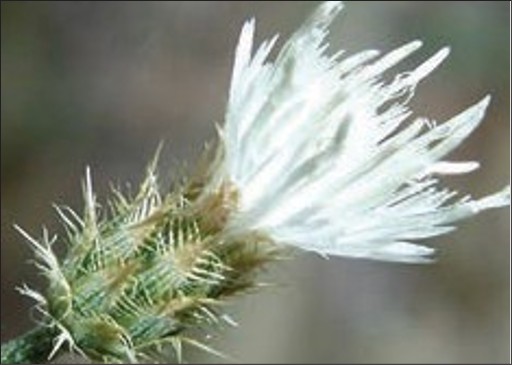
Diffuse knapweed is normally a biennial, but may live for several years as a rosette before flowering. The low-lying rosette is made up of deeply lobed basal leaves more finely divided than those of spotted knapweed and similar to carrot leaves. When diffuse knapweed bolts, it puts up a single upright stem, typically 1–3 feet tall with numerous upward-spreading branches, giving the plant a bushy appearance. Stem leaves are alternate, stalkless, and progressively smaller and less divided up the stem. Flowers are generally white, occasionally pink-purple, urn-shaped, and appear alone or in small clusters at the ends of branches. Bracts on flower heads are stiff, spiny, and crab-like. Seeds are oblong, dark brown to gray, and remain viable for up to 10 years; they are spread when mature plants become windborne and tumble. Diffuse knapweed is a highly competitive and aggressive plant that grows under a wide range of conditions, but prefers arid and semiarid conditions, and can quickly infest large areas.
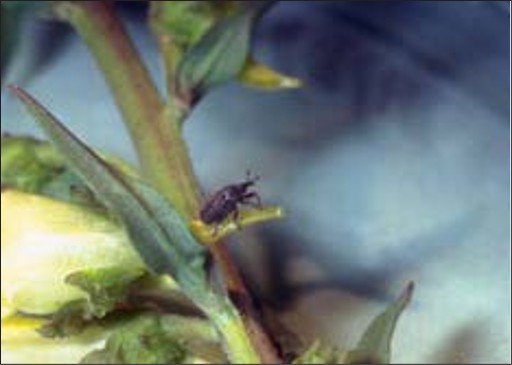
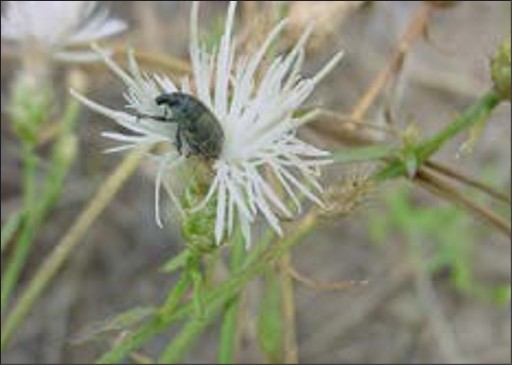
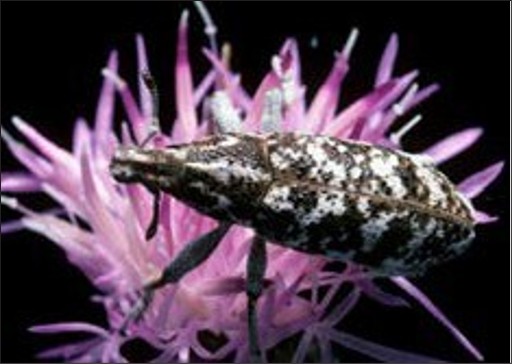
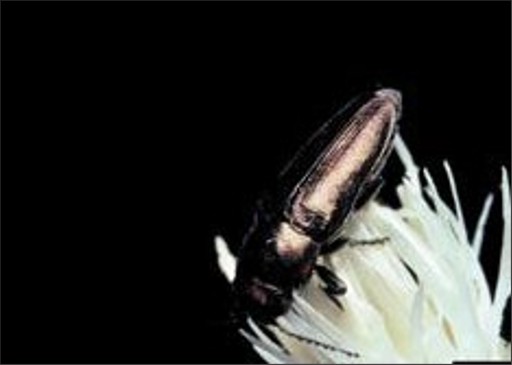
Whichever control method is used, a revegetation plan must be implemented to prevent reinvasion of diffuse knapweed. Small infestations of diffuse knapweed can be hand-pulled (using gloves), but efficacy depends on removal of the entire crown before seed production. Removing the rosette and cutting 2–4 inches of the taproot is also effective. While mowing reportedly reduces seed production, it may merely delay it, so mowing should be followed with herbicide treatments. Deep cultivation can reduce knapweed. Accounts of livestock grazing knapweed vary; nevertheless, grazing alone does not provide control. More than a dozen biological control agents have been released in North America. The seed-feeding weevil Larinus minutus has caused widespread reductions of diffuse knapweed in Washington, Montana, and Oregon, particularly in conjunction with drought conditions. The root-mining beetles Cyphocleonus achates and Sphenoptera jugoslavica compoundthis impact. Some success has also been found with 2 ubiquitous seed-head flies, Urphora affinis and U. quadrifasciata, and the seed-head weevil Bangasternus fausti.
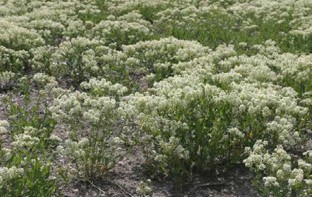
Cardaria draba (L.) Desv., Lepidium draba L. or Cardaria Pubescens (C.A. Mey.) Jarmolenko
Brassicaceae
Mustard
Common Names: whitetop, globed-podded hoarycress, heart-podded hoarycress, pepperwort, peppergrass, whiteweed, pepperweed
Origin: Central Europe and Western Asia
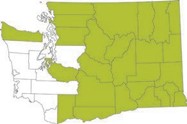
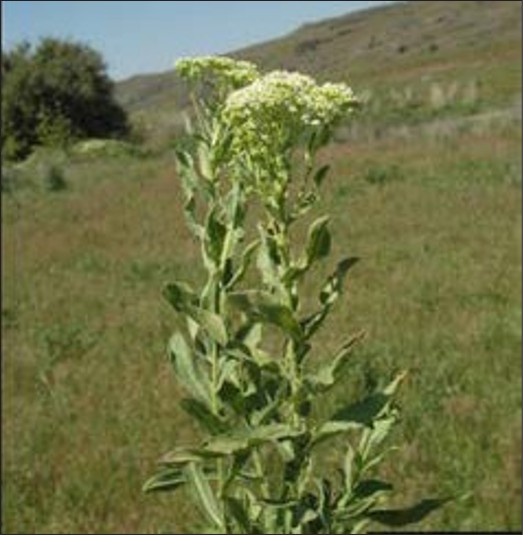
Hoary cress is a single-stemmed, deep-rooted perennial forb that grows up to 2 feet tall. The stems are generally erect, but can bend or lodge with age. Stems and leaves are grayish-green. The leaves are alternate, lance-shaped, and slightly irregular; lower leaves are stalked, while upper leaves clasp the stem with 2 ear-like lobes. Numerous flower branches and compact clusters of small, white, 4-petaled flowers give the plant a white, flat-topped appearance. The fruits are pods that are shaped somewhat like an inverted heart, which helps distinguish this species from other Cardaria species. Each fruit-pod usually contains 2 dark reddish-brown seeds that are rounded at one end and narrowed to a blunt point at the other. Hoary cress reproduces by seed but primarily spreads vegetatively by root segments. Even very small root fragments are capable of growth. The plant’s extensive root system consists of vertical and lateral roots, both of which produce adventitious buds that develop into rhizomes and new shoots. Within a 3-month period, roots can extend a foot from the stem and add nearly 50 new shoots and over 80 buds. Depending upon fall precipitation, plants may emerge in mid to late fall, but generally wait until early spring. Flowering occurs in late spring and seeds are set by mid-summer. Hoary cress is common in disturbed ground; disturbances such as cultivation and irrigation promote the plant’s spread and density. It prefers alkaline soils, but can grow in a variety of soil conditions.
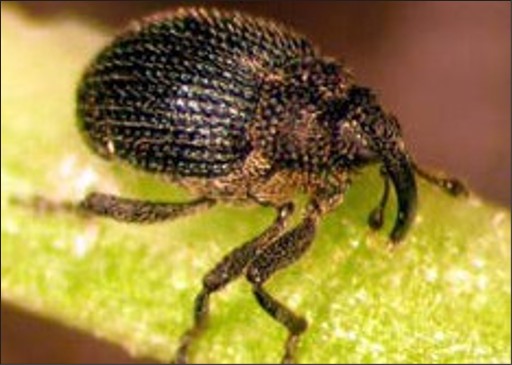
Preventative measures involve keeping machinery, hay, and crop seed free of contaminants (seeds and plant fragments). Because livestock can spread the plant, grazing should not occur during flowering and seed set. Mechanical control is effective only if the plant’s entire root system is removed. Because cultivation is a common cause of the plant’s spread, its effectiveness as a control measure depends on timing and persistence. Cultivation should start when the plant is at the bud or flowering stage and be repeated frequently throughout the growing season for several years to destroy the root system and deplete the seedbank. Mowing offers limited results. If mowing occurs before hoary cress sets seed, it can reduce plant biomass and seed production and slow the plant’s spread, but it does not provide long-term control and should be combined with other control methods (herbicides) to increase efficacy. Hoary cress can be effectively controlled with herbicides, often recommended to be applied at bud or bloom stage. Repeat treatments are often necessary. No biological control agents are currently available, although the stem gall-mining weevil Ceutorhynchus cardaria has demonstrated excellent host specificity at screenings and may be available within several years. Several other insects are also being investigated. Sheep and goats will readily graze hoary cress, but several years of grazing—each prior to seed set—may be needed for control.
Cynoglossum officinale L.
Boraginaceae
Borage
Common Names: hound’s tongue, dog bur, gypsy flower
Origin: Eurasia
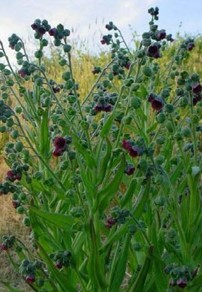
Houndstongue is a biennial that has a thick, black woody taproot that enables it to overwinter. The plant forms a rosette the first year and sends up a flowering stalk the second season. The stem is erect, stout, 1–4 feet high, and unbranched below the inflorescence. Leaves are alternate, hairy, oblong to lance-shaped, lacking teeth or lobes, and rough, resembling a hound’s tongue. Red to purple flowers occur in clusters, and each flower produces 3–4 prickly nutlets. Houndstongue can spread great distances because the barbed nutlets attach to clothing, machinery, and animals. The plant reproduces solely by seed. Houndstongue contains pyrrolizidine alkaloids—most heavily concentrated in the rosette leaves of mature plants—which stop liver cells from reproducing in animals, notably cattle and horses. Green houndstongue plants have a distinctive odor and are unpalatable to grazing livestock, but dry houndstongue plants can be unintentionally mixed in with hay and fed to animals.
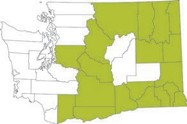
Maintaining native perennials can help prevent houndstongue from establishing and spreading. Hand-pulling houndstongue before seed set is effective if the entire root crown is removed. Where terrain allows, tillage of rosettes during autumn or early spring will reduce infestations. Mowing the stems of houndstongue plants close to the ground before seed set will reduce seed production. Infestations can be managed using herbicides, which are especially effective in controlling first-year plants. Several biological control agents have been screened. The root-mining weevil Mogulones cruciger is released for control of houndstongue in Canada, but will not be approved in the United States because the weevil feeds on native plant species. Any redistribution in the United States is strongly discouraged. The seed-feeding weevil M. borraginis shows great potential for control but still requires additional testing. Host specificity tests have rejected several other insect species as biological control agents after evidence the insects also attack indigenous North American plant species.
Japanese: Polygonum cuspidatum Siebold & Zucc. syn. Fallopia japonica (Houtt.) Ronse Decr.
Giant: Polygonum sachalinense F. Schmidt ex Maxim.; Fallopia sachalinensis (F. Schmidt ex Maxim.) Ronse Decr.
Bohemian: Polygonum x bohemicum (J. Chrtek & Chrtkovß) Zika & Jacobson [cuspidatum x sachalinense]
Common Names: Japanese bamboo, fleeceflower, Mexican bamboo, huzhang
Origin: Japan
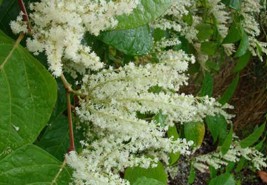
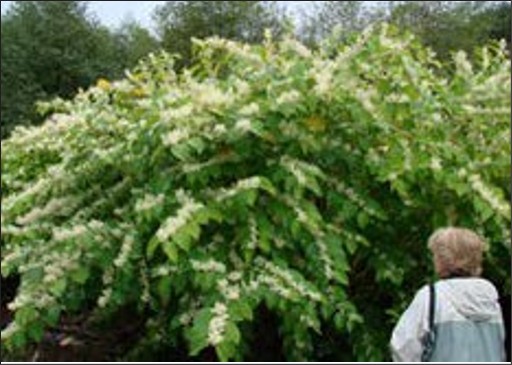
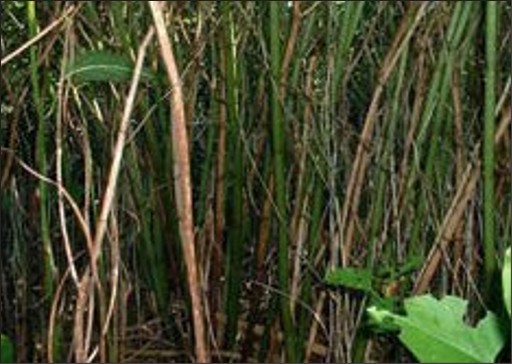
The knotweed complex (Japanese, giant, and Bohemian) consists of shrub-like, herbaceous, dioecious perennials that reproduce primarily by rhizomes and occasionally by seed. The rhizomes are stout and long, spreading up to 30 feet in length, enabling the plants to emerge earlier than other forbs, grow tall quickly, and block out other vegetative species. Japanese knotweed range in height from 5 to 8 feet, Bohemian from 6 to 10 feet, and giant from 6 to 16 feet tall. The stems of knotweed are stout, hollow, and jointed, resembling asparagus in spring and bamboo in summer. In spring and summer the stems are green and turn a reddish-brown when they die back in winter, A thin, membranous sheath encircles the stem at each joint. Leaves are petioled and alternate. Japanese knotweed leaves are 2–6 inches long and either broadly ovate with an abrupt point or spade-shaped. Giant knotweed leaves are often double the size of Japanese, at times exceeding a foot in length, with a leaf base that is heart-shaped rather than spade-shaped. Bohemian knotweed, a hybrid of Japanese and giant, have leaves that vary between heart- and spade-shaped. In the spring and early summer, the 3 knotweed varieties can be distinguished using the hairs on the underside of the leaves. Japanese knotweed has almost no hair with barely noticeable bumps; Bohemian hairs are short and triangular-shaped; and giant has sparse long, wavy hairs. In late summer, plants produce branched sprays of tiny greenish-white to cream flowers. Although still under investigation, it appears that giant does not produce seeds, Bohemian occasionally produce seeds (though their viability is questionable), and Japanese produce small, winged fruits that are 3-sided, black, and shiny. Japanese knotweed resembles giant knotweed, but can be distinguished by overall larger leaf size and shape. Variability in the above characteristics often indicates that the plant is the hybrid, Bohemian. Knotweeds are often found near homesteads where they were planted as an ornamental, near water sources, in low-lying areas, and in waste areas. Knotweeds pose a significant threat to riparian areas, where they can survive floods and rapidly colonize. Once established, plant populations are extremely persistent and often very difficult and expensive to eradicate. All 3 knotweed varieties reduce biodiversity and wildlife habitat.
Knotweed control can be a difficult, multi-year endeavor. A site-specific management plan should be developed in conjunction with a county weed control coordinator or Extension expert. Very small infestations of knotweed can be dug or hand-pulled. Any portion of the root system not removed can resprout, so all plant parts must be bagged and removed from the site. New sprouts must also be removed, requiring careful monitoring of the site. Cutting or mowing may be effective if repeated often throughout the growing season. In areas of the Pacific Northwest, populations of knotweed are mowed as low as possible at least every 2–3 weeks from April through August. All equipment should be properly cleaned after treatments. Another approach is to cut plants to the ground and cover the severed stalks with thick, black plastic. Herbicides are currently the best method for controlling knotweed infestations—depending on conditions—and are generally most effective when applied in the late summer and fall. Two chemical control methods have proven effective:
At present, no biological control agents are available; however, several different insects and pathogens are undergoing testing and the sap-sucking psyllid Aphalara itadori is looking particularly promising. Goats may be used to control infestations to some extent.
Kochia scoparia (L.) Schrad
Chenopodiaceae
Goosefoot
Common Names: Mexican fireweed, burning bush, summer cypress, mock cypress
Origin: Eurasia
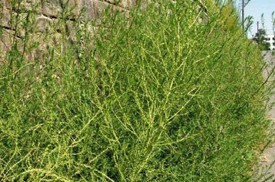
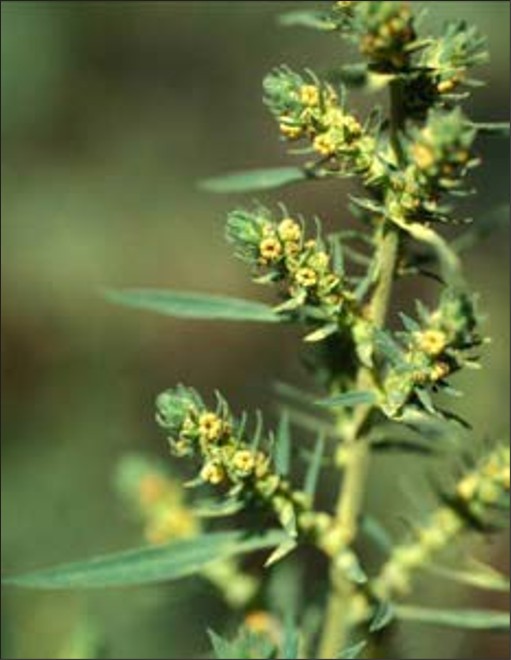
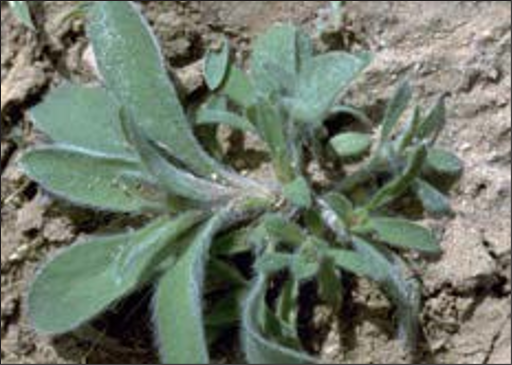
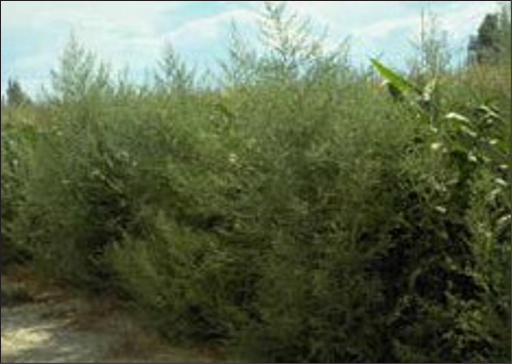
Kochia is an annual plant that reproduces from seeds. It has a deep taproot and network of fibrous roots. Mature plants typically range from 1–4 feet tall, but can grow several feet taller. Kochia is bushy with multiple branches of finely textured, linear foliage that turns red in the fall. The leaves are alternate, simple, stalkless, 1–2 inches long, and fringed with hair. Small, green, inconspicuous flowers occur in clusters in the axils of the upper leaves and in short, dense spikes. Brown, flattened seeds are about 1/16 inch long and grooved on each side. A single plant averages nearly 15,000 seeds, which can be dispersed when the mature plant breaks off and becomes a tumbleweed. The plant is drought-tolerant, enhancing its ability to spread.
Because most kochia seeds do not live more than a year, preventing seed production for a single year will significantly reduce the following year’s infestation. Since germination occurs early in the season, control methods are most effective in early spring. As long as plants have not yet set seed, mowing, cultivation, and herbicides can effectively control kochia. Herbicide resistance in kochia is becoming a problem, but can be deferred by rotating herbicides with different modes of action. No biological control agents are currently available for kochia control. Kochia is readily grazed by livestock; however, it can contain high nitrate levels and be toxic if consumed in large quantities. This level of consumption usually only occurs if kochia is included in hay.
Euphorbia esula L.
Euphorbiaceae
Spurge
Common Names: wolf’s milk
Origin: Eurasia
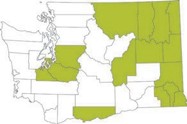
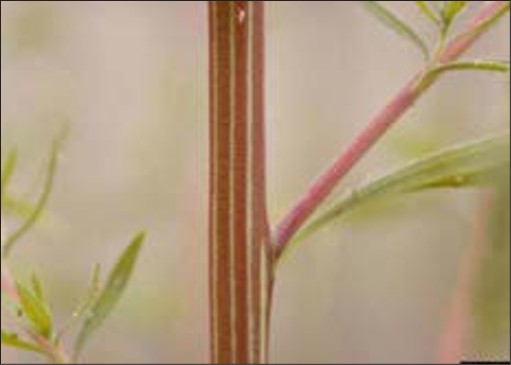
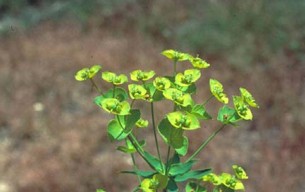
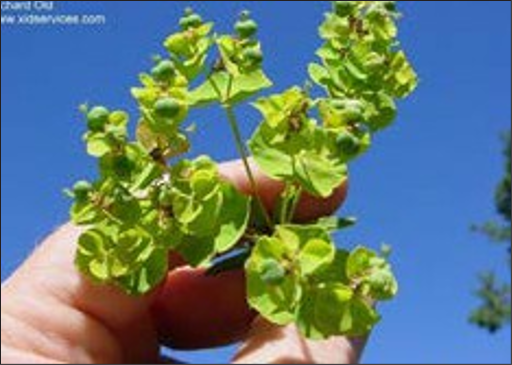
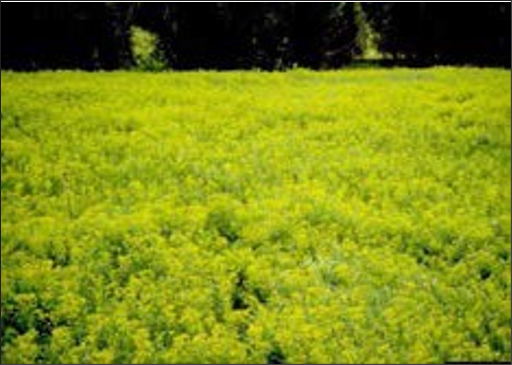
Leafy spurge is a perennial that reproduces both by seed and vegetatively. It has extensive, deep, invasive rootstocks that bear pink stem buds capable of producing new shoots. Erect stems often grow in clusters and can reach 3 feet tall. The leaves are mostly alternate, linear, and bluish-green with smooth margins. Inconspicuous umbel flowers are surrounded by showy yellow-green bracts that are often mistaken for flowers. Clusters of the showy bracts open in late May or early June, while the flowers do not develop until about 2 weeks later. The seeds of leafy spurge are round to oblong, gray or mottled brown, and can explode from ripe seed pods, landing up to 20 feet from the parent plant. Seeds remain viable in the soil for at least 7 years. All parts of the plant contain a toxic, milky latex that can irritate the skin and eyes of humans and the mouths and digestive tracts of cattle and reportedly kill horses. Leafy spurge is an aggressive invader, and heavy infestations of the plant can reduce grazing land productivity, plant diversity, wildlife habitat, and land values.
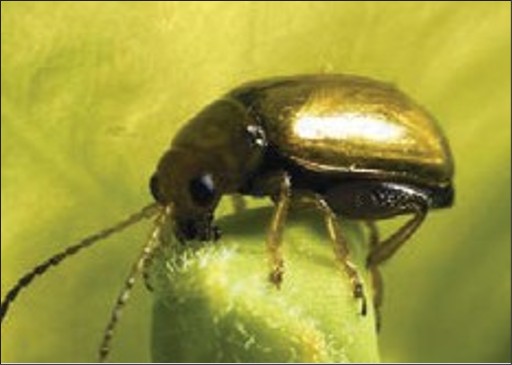
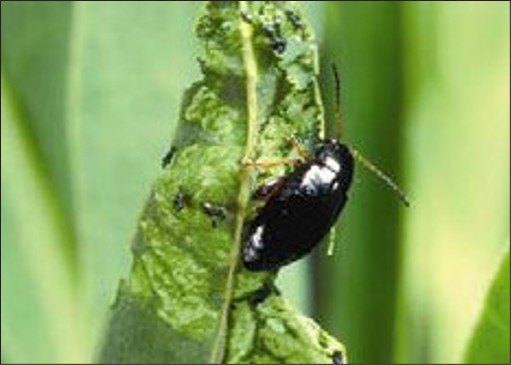
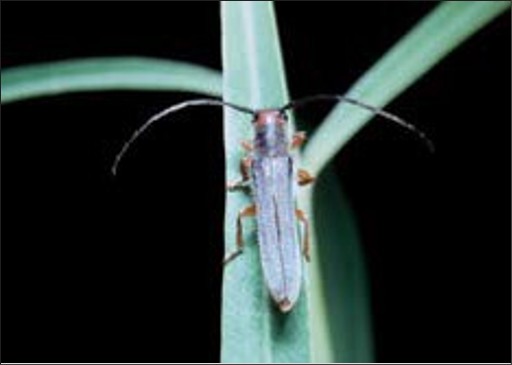
To be effective, mechanical control methods must completely eradicate the extensive root system of leafy spurge. If root parts are left in the soil after hand-pulling, digging, or tilling, more plants will likely result. Repetitive mowing of leafy spurge can reduce seed production, but will not provide control. Integrated control efforts often work best. For instance, intensive cultivation coupled with planting of competitive crops can control leafy spurge in cultivated fields, while rangeland infestations can be grazed by sheep or goats and chemically or biologically treated. Herbicides alone can be effective, but applications usually have to be repeated over several years and treatment can become expensive. Spraying should be done when leafy spurge is between the early bud and first bloom stage and again usually in the fall when the plants are moving nutrients downward into the roots. Biological control using insects is a promising management tool for leafy spurge. The flea beetles of the genus Aphthona show the most promise due to their specificity to the plant and feeding on the root tissue. Other potential bioagents include the stem and root-boring beetle Oberea erythrocephala and shoot-tip gall midge Spurgia esulae.
Hieracium caespitosum Dumort
Asteraceae
Sunflower
Common Names: yellow hawkweed, field hawkweed, yellow kingdevil
Origin: Europe
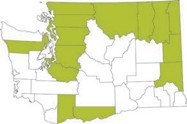
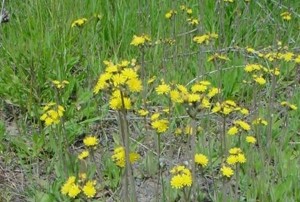
Meadow hawkweed is an herbaceous perennial. Stems of the plant are erect and solitary, have short, stiff hairs, and contain a milky latex. The stems can grow to 3 feet high and are usually leafless, although 1–3 small, clasping leaves may appear near mid-stem. Leaves, almost exclusively basal, are hairy, spatula-shaped, and about 6 inches long. The stems are each capable of bearing up to 30 yellow, dandelion-like flower heads, each ½–¾ inch in diameter, arranged in a flat-topped cluster and appearing during summer to fall. A single flower head can produce between 12 and 50 black, tiny seeds that have a tuft of hair (pappus) on the flattened end. Hawkweed reproduces by seeds and vegetatively by rhizomes, stolons, and adventitious root buds. The plant has shallow underground rhizomes and extensive stolons that create a dense mat of hawkweed plants. Meadow hawkweed prefers soils that are well-drained, coarse-textured, and moderately low in organic matter. It commonly invades meadows, rangelands, pastures, roadsides, and disturbed sites.
Hand-pulling and digging can be used on small infestations of meadow hawkweed if the entire root system is removed; otherwise, these methods can actually stimulate new plant growth. Mowing can reduce or prevent seed production, but at the same time can promote flowering and vegetative reproduction. Tillage may also facilitate the spread of the plant by redistributing fragmented roots, stolons, and rhizomes. Hawkweeds do not persist in annual cropping systems because of continued cultivation, herbicides, and crop competition. Treatment with selective herbicides is most effective, but hawkweed will reinvade if open space left after treatment is not revegetated with desirable plant species. Herbicides should be applied early in the growing season when plants are in the rosette stage to prevent flowering and seed production. Treated sites should be monitored for several years for plants growing from root fragments and seed banks. No biological control agents are currently available for meadow hawkweed, but research is ongoing. Hawkweed may be grazed if animals find it palatable, but under intensive grazing, the invader has been found to displace nearly all other vegetation.
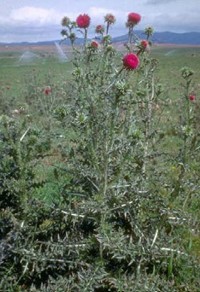
Carduus nutans L.
Asteraceae
Sunflower
Common Names: nodding thistle, plumeless thistle
Origin: Eurasia
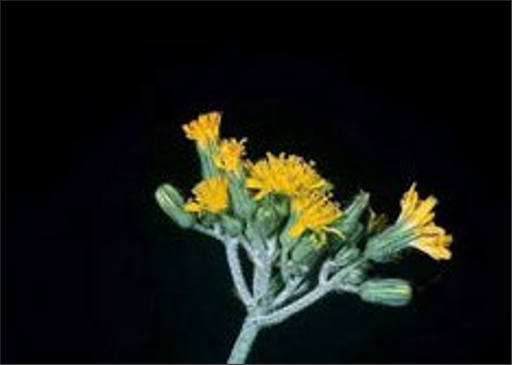
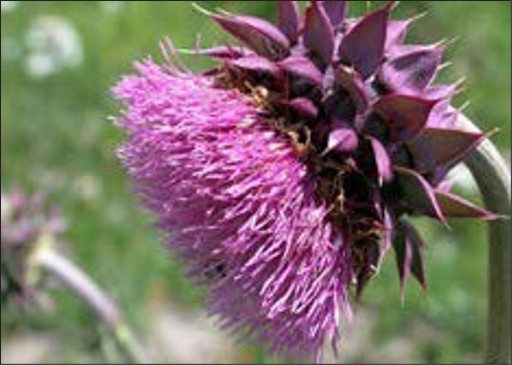
Musk thistle is an herbaceous, taprooted biennial that reproduces solely by seed. Mature plants can grow to 7 feet tall. The stems are upright, freely branched, winged, and spiny. The leaves are dark green with a light green midrib, alternately arranged, hairless on both sides, and deeply lobed with spiny margins. Large, flat basal rosettes form in the first year, and a flowering stem develops during the second year of growth. Flower heads are large, disk-shaped, mostly solitary, and can be found nodding at branch ends when mature. The flowers are rose, purple, or occasionally white and embraced by distinctive purplish, spine-tipped bracts. Seed production is variable but prolific, with 1/3 of the seeds viable for at least 10 years. The seeds are straw-colored and have a plume of white, hair-like fibers. Musk thistle is an aggressive invader that can form very dense stands, crowding out desirable vegetation and reducing forage.
Maintaining healthy native vegetative communities deters musk thistle seedlings. For established populations of musk thistle, preventing seed production is critical to control efforts. Hand-pulling or mechanical methods such as digging, hoeing, or tillage can control musk thistle that has not yet flowered if the plants are severed a couple of inches below the soil surface. Repetitive close mowing of musk thistle throughout the growing season can effectively prevent seed production. Numerous herbicides are available for musk thistle control and should be applied in late fall or early spring when thistles are in the seedling to rosette stage. Biological control agents include the thistlehead-feeding weevil Rhinocyllus conicus and rosette weevil Trichosirocalus horridus. These weevils have successfully controlled musk thistle in some western states, although R. conicus attacks many native thistle species, raising concern about its use. It is now illegal to transport R. conicus across state lines and its use might be restricted in areas with sensitive, threatened, or endangered thistle species. Livestock generally will not graze musk thistle because of its long, sharp spines.
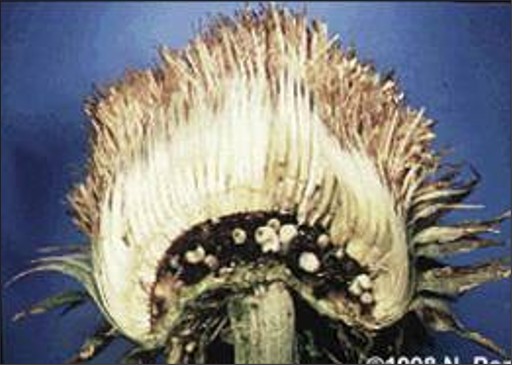
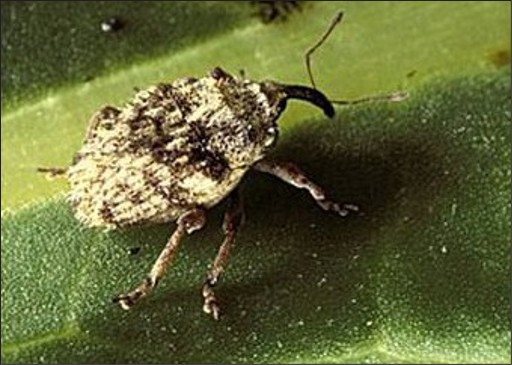
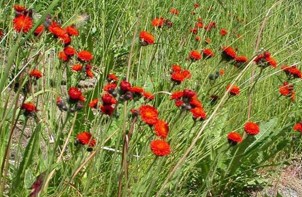
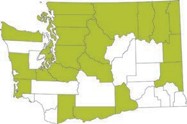
Hieracium aurantiacum L.
Asteraceae
Sunflower
Common Names: king devil, devil’s paintbrush, fox and cubs
Origin: Europe
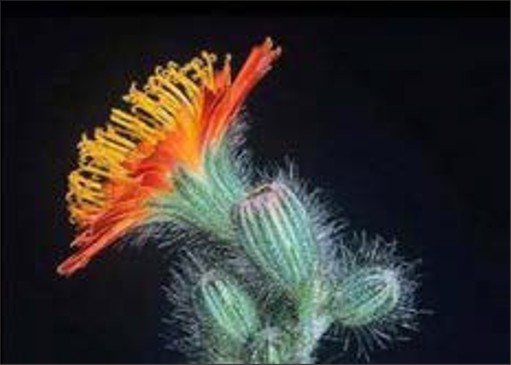
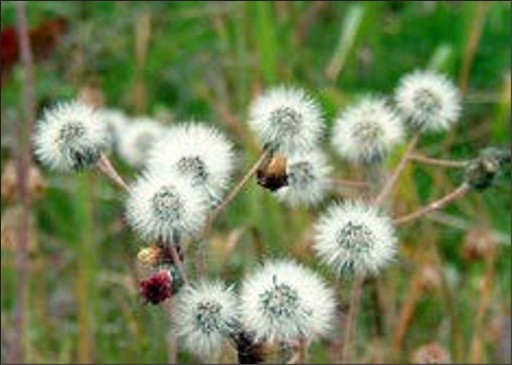
Orange hawkweed is a perennial plant. The plant stem extends 10–20 inches from a basal rosette of hairy, lance-shaped leaves that are 4–6 inches long. The stem is usually leafless; however, a leaf occasionally appears mid-stem. Stiff, glandular hairs cover each erect, slender stem. The plant leaves and stem exude a milky latex when broken. Atop the stem is a cluster of bright orange-red, dandelion-like flowers that typically appear in late May or June and flower into early fall. Each flower measures ½–¾ inch in diameter and has notch-tipped, square-edged petals. The flowers tend to close up when the plant is shaded. Each flower bears 12–30 tiny, plumed seeds that are generally dispersed by wind and water and remain viable up to 7 years. Hawkweed seeds can also be transported in contaminated soil and are sometimes found in wildflower seed mixes. The plant spreads vegetatively via rhizomes, stolons, and root buds. Its extensive stolons can create dense mats, displacing desirable vegetation and reducing forage for livestock and wildlife. Orange hawkweed generally inhabits moist grasslands, shady areas, and disturbed soils. Hawkweeds do not persist in cultivation.
Orange hawkweed should never be used as a garden ornamental, and wildflower mixes should be avoided to prevent accidental introduction of invasive species. Because orange hawkweed can resprout from root fragments left in the soil, mechanical control is limited. Small infestations of hawkweed can be hand-dug, but all vegetative parts of the plant must be removed. While mowing can prevent seed set, it also promotes flowering and the spread of stolons. Several herbicides offer effective control of orange hawkweed and are generally recommended to be applied at the rosette stage. A surfactant should be added to the mix to ensure adherence of the herbicide to the hairy leaves of hawkweed. Re-treatment may be necessary. No biological control agents are currently available for orange hawkweed.
Leucanthemum vulgare Lam.
Asteraceae
Sunflower
Common Names: white daisy, marguerite, field daisy, poorland flower, moonpenny
Origin: Eurasia
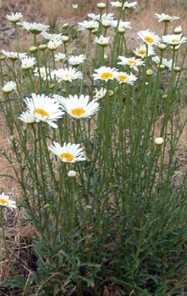
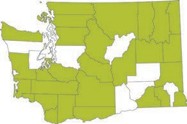
Oxeye daisy is an erect perennial that grows 1–3 feet tall. A single plant can produce up to 40 flowering stems, which are smooth and usually unbranched. Stalked basal leaves are spatula-shaped and narrowly lobed to blunt-toothed. Stem leaves become progressively smaller up the stem. Upper stem leaves are alternate, stalkless, and narrowly oblong with toothed margins. Flowering occurs during summer, with solitary flower heads growing at branch ends. The flowers are showy and daisy-like, with white petals surrounding yellow centers measuring about 1–2 inches in diameter. Each flower head can produce up to 200 seeds. Seeds are cylindrical, brown to black, with a ribbed coat and no pappus. The plant has a shallow, fibrous, rhizomatous root system. Oxeye daisy spreads mainly by seeds, but can also spread by the rhizomes. The entire plant has a disagreeable odor that is pungent when crushed. Oxeye daisy can carry several plant diseases. It thrives in a wide variety of soil types and is found in grasslands, overgrazed pastures, roadsides, and waste areas.
Oxeye daisy can be deterred by maintaining competitive vegetation. Because of its shallow root system, small populations of oxeye daisy can be hand-pulled. The plant is also readily controlled by cultivation. While mowing at the onset of flowering can prevent seed production, it can also stimulate shoot production. Several broadleaf herbicides registered for use in pasture are effective against oxeye daisy, beginning when leaves are visible in the spring until flowering. Application of nitrogen fertilizer is nearly as effective as herbicides at reducing canopy cover, perhaps because pastureland infested with oxeye daisy is often nitrogen-deficient. The plant is not poisonous to animals, and sheep and goats will eat oxeye daisy, although it can alter the taste of their milk. Grazing can suppress plant populations, but does not by itself provide effective control.
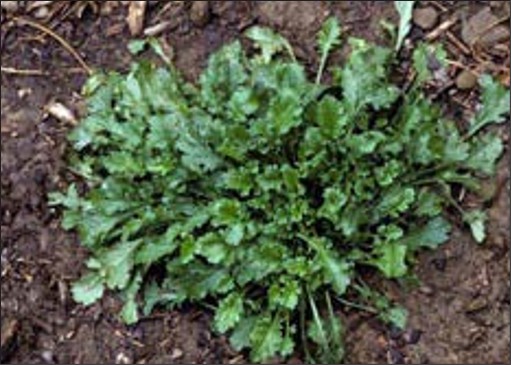
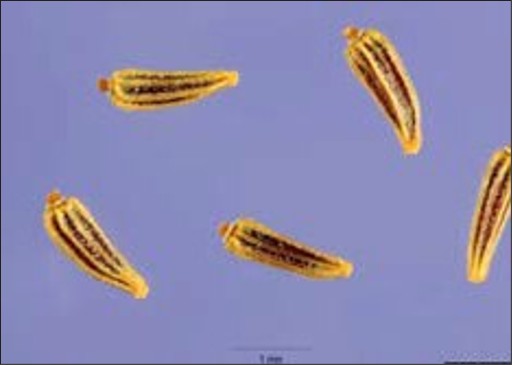
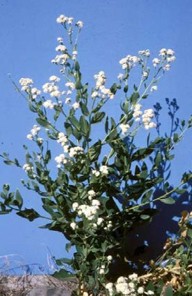
Lepidium latifolium L.
Brassicaceae
Mustard
Common Names: broadleaved peppergrass, tall whitetop, broadleaved pepperweed, ironweed
Origin: Eurasia
Perennial pepperweed is a creeping-rooted perennial that invades a wide range of habitats, including riparian areas. The crowns of established plants become enlarged and very woody near the soil surface. The plant, with its semi-woody stems, typically grows about 1–4 feet tall, but can grow much taller. Leaves are alternate, lance-shaped, waxy, and have smooth or toothed margins and a prominent, whitish midvein. Basal leaves have long stalks (petioles) and grow to 1 foot long, while stem leaves with petioles are smaller. Abundant small, white, 4-petaled flowers are borne in dense clusters at branch tips. The fruits are small, 2-chambered pods, each containing 2 seeds. Despite its prolific seed production, perennial pepperweed more commonly spreads by a creeping root system, which has buds capable of regenerating new shoots. The plant is able to quickly form large, dense stands that displace desirable vegetation.
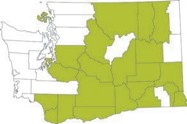
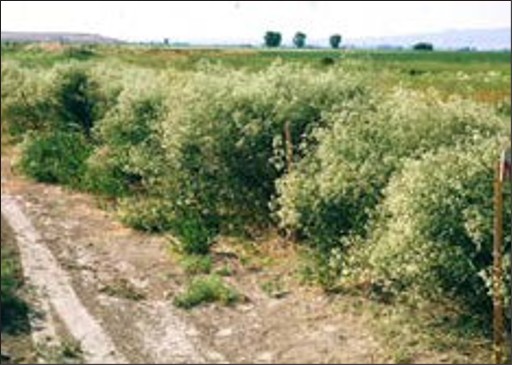
Perennial pepperweed is difficult to control because of its deep-seated rootstocks and waxy leaves, and any non-chemical control method by itself will probably not suffice. Leaving even small pieces of rootstock can cause problems because perennial pepperweed quickly regenerates from pieces as small as 1 inch. Although alone ineffective, mowing may be necessary to remove accumulations of woody stems before grazing or applying herbicides. Spring grazing or mowing followed by herbicides applied at the flower bud stage are effective strategies. After flowering, an alternative strategy is to mow and then apply herbicides to resprouting shoots. Treatment of infestations near open water must comply with all guidelines and regulations. Although no biological control agents are currently available, 5 insects are under study. All potential biocontrol agents require extensive host-specificity testing because perennial pepperweed is closely related to several valuable crop species (e.g., mustard, canola, and cabbage) and native Lepidium species. Native pathogens such as white leaf rust may prove to be viable biocontrols.
Carduus acanthoides L.
Asteraceae
Sunflower
Common Names: spiny plumeless thistle
Origin: Eurasia
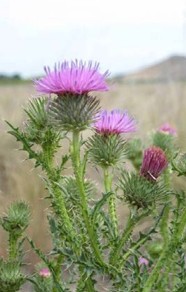
Plumeless thistle is a winter annual or biennial herbaceous plant with a stout, fleshy taproot. It reproduces solely from seed and has prolific seed production; it can also hybridize with musk thistle. Plumeless thistle plants tend to be smaller than other invasive thistles, generally growing from 1–4 feet tall. Plumeless thistle produces a rosette the first year and bolts early in the second growing season, developing an erect, flowering stem that branches freely and has spiny wings extending to the flower heads. The leaves are alternate, with hair underneath and spiny margins, and are narrower and more deeply lobed than those of musk thistle. Flowering generally occurs from May to August. The purplish flowers are single or in clusters, about a third the size of those on musk thistle, and erect on the stem rather than drooping or nodding. Bracts beneath the flowers are narrow, resembling spines. The seeds are small, gray to light brown, and slightly curved, with a viability of 10 years. Plumeless thistle invades open, disturbed areas, forming dense stands that crowd out more desirable vegetation and thus reduces forage.
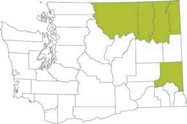
As with musk thistle, eliminating seed production is paramount to control plumeless thistle. The plant is more easily controlled in its early growth stages (i.e., before bolting) by digging, pulling, treating with herbicides, or a combination of methods. Although several herbicides are available, plumeless thistle has more tolerance and requires a higher rate of application than musk thistle. Rhinocyllus conicus and Trichosirocalus horridus have been effective in reducing plumeless thistle infestations, although R. conicus attacks many native thistle species. It is now illegal to transport R. conicus across state lines and its use might be restricted in areas with sensitive, threatened, or endangered thistle species.
Conium maculatum L.
Apiaceae
Parsley
Common Names: deadly hemlock, poison parsley, carrot fern, spotted hemlock, poison stinkweed
Origin: Europe, North Africa, Asia
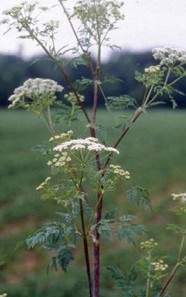
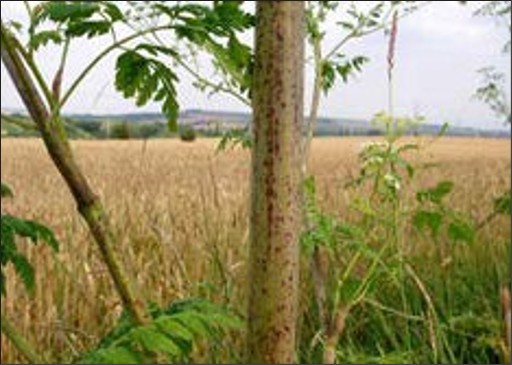
Poison hemlock is a biennial with a long, white, fleshy taproot. The plant generally grows 4–6 feet tall, but can grow as tall as 10 feet. The plant produces a basal rosette of leaves during its first year, and erect, flowering stems the second year. The stems are smooth, with no hairs, ridged, hollow except at the nodes, mottled with distinct purplish streaks or splotches, and extensively branched. The leaves are shiny green, fern-like, and finely, pinnately divided (each with 3 or 4 segmented leaflets). The lower leaves have long clasps on the stalk of the stem, decreasing in size up the stem. Flowering occurs from May to August. Small, white flowers grow in umbrella-shaped clusters, each supported by a stalk extending from a common branch terminal. The foliage has a strong musty odor, which becomes rank when crushed. The seeds are paired, light brown, ribbed, and concave. Poison hemlock reproduces exclusively by seeds, which have a long dispersal period. All parts of poison hemlock are extremely poisonous, causing fatalities in animals and humans. Cattle, goats, and horses are the most susceptible domesticated animals. Symptoms include vomiting, convulsions, muscular weakness, dilation of pupils, weak and slow heartbeat, coma, and eventual death from respiratory failure. Skin contact with the sap can cause irritation and blistering in sensitive individuals. In livestock, symptoms appear immediately after ingestion, and death can occur within 2–3 hours. The recommended treatment is tannic acid followed by a purgative. Poison hemlock can be distinguished from similar plants by its smooth, hairless, and blotchy purple stem. It is commonly found along roadsides and in pastures and disturbed areas.
To control poison hemlock, hand-pulling and digging before seed set are effective methods. Care should be taken when handling and disposing of the plants to prevent accidental poisoning. Some individuals have reported skin sensitivity to poison hemlock. Mowing or cutting is a management option, but plant regrowth can occur so repeated efforts are often necessary. Poison hemlock can be controlled with selective herbicides, usually best applied in late spring (between rosette and bloom stages) with a surfactant. The hemlock moth (Agonopterix alstroemeriana) is an accidentally introduced insect often used to control poison hemlock; however, its effectiveness varies on a site-by-site basis and redistribution is not recommended
Tribulus terrestris L.
Zygophyllaceae
Caltrop
Common Names: goathead, bullhead, Mexican sandbur, Texas sandbur, caltrop, devil’s thorn
Origin: Mediterranean
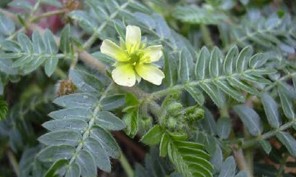
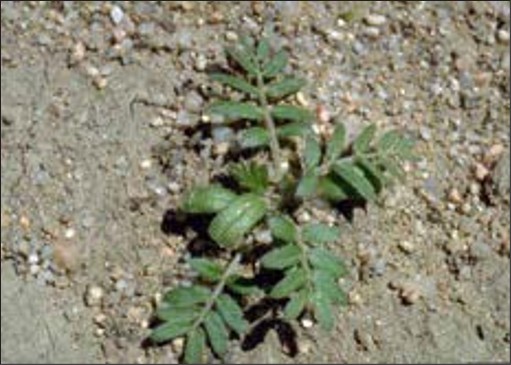
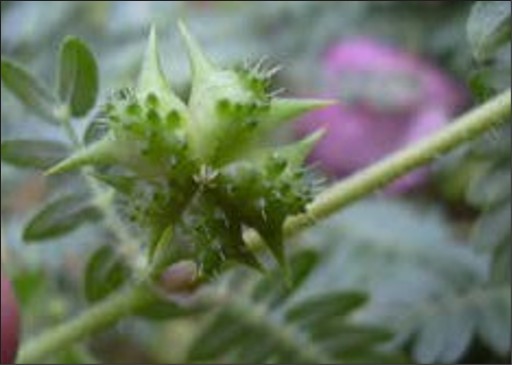
Puncturevine is a low-growing annual that rises from a deep, woody taproot. The plant has numerous stems that grow up to 5 feet long. The stems are multi-branched and radiate from the crown to form a dense mat. The leaves are opposite, hairy, and divided into 4–8 pairs of leaflets. Flowering occurs from mid-summer to frost, when puncturevine exhibits bright yellow, 5-petaled flowers borne singly in the leaf axils. After a flower is pollinated, a seedpod forms that is a cluster of 5 nutlets, each of which has 2 large, divergent spines. These tack-like burs (resembling a goat- or bullhead) contain up to 5 seeds. Puncturevine reproduces solely by seed, which remain viable for up to 5 years. The burs are dispersed when they adhere to people, animals, and vehicle tires. Puncturevine is a problematic weed commonly found along roadsides and in pastures and cultivated fields. The invader reduces plant diversity by crowding out desirable species. The quality and value of hay and wool are substantially reduced if contaminated with puncturevine burs.
Puncturevine is difficult to control because the seeds germinate from mid-June through September. To prevent flower production, puncturevine sites need to be treated every 2 weeks. Reducing seeds in the soil is important to control puncturevine, so efforts to physically remove the plant should occur before seed production (i.e., before or at flowering). Small infestations can be hand-pulled, dug, or hoed so that the plant is severed into its taproot. Shallow cultivation (about 1 inch deep) is effective if done before flowering and repeated as necessary. Mowing is ineffective because puncturevine grows low to the ground. For large infestations, chemical control may be appropriate. Herbicides are best applied during the seedling stage. Two insect species, the puncturevine seed weevil Microlarinus lareynii and puncturevine stem weevil M. lypriformis, have been relatively good at providing biological control of puncturevine in warm areas of the country, although it can take several years to deplete the seed bank in the soil. In Washington, however, these cold-sensitive weevils have not established since they cannot survive the winter. Grazing livestock in puncturevine-infested areas is not recommended. If grazed upon, the spiny burs of puncturevine can injure the mouths and digestive tracts of livestock. The plant also contains a photosensitizing agent that is particularly toxic to sheep.
Lythrum salicaria L.
Lythraceae
Loosestrife
Common Names: spiked loosestrife, salicaire, rainbow weed, purple lythrum
Origin: Eurasia
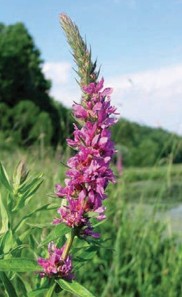
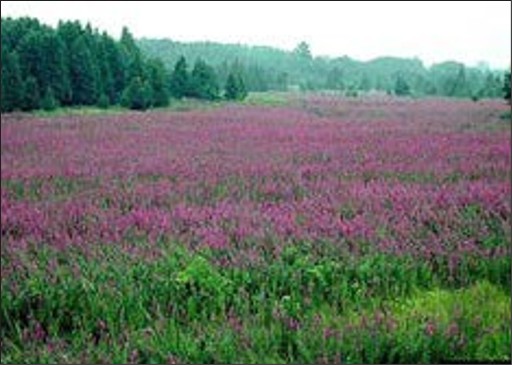
Purple loosestrife is a perennial that thrives in aquatic habitats. The plant has a woody taproot and fibrous rhizomes that form a dense mat. Mature plants can have from 30 to 50 stems arising from a single rootstock. The erect stems are square and woody and average 5 feet in height, but can grow up to 10 feet tall. The leaves are simple, entire, lance-shaped, and opposite or whorled. The magenta or purple flowers are arranged in showy spikes, generally blooming from June to October. Each flower has 5–7 petals surrounding a small yellow center. The seeds are highly viable and abundant. A mature plant can produce well over 2 million minute seeds in a single season. Besides reproducing by seed, purple loosestrife can spread vegetatively by resprouting from cut stems and regenerating from root fragments and stem pieces. A highly invasive plant, purple loosestrife is able to form dense, homogeneous stands that impact water flow and displace native vegetation, reducing wildlife food sources and habitat.
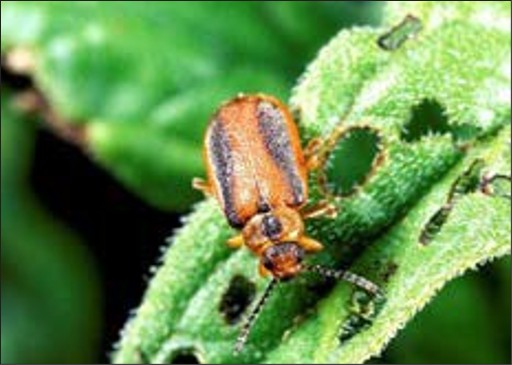
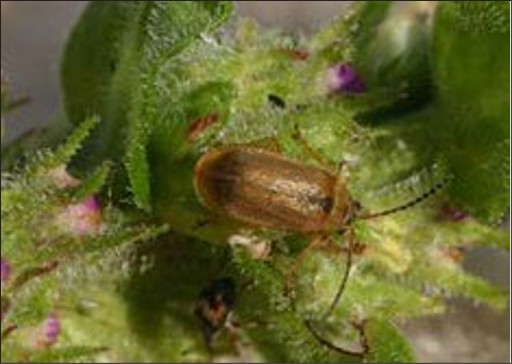
Size, age, and location of purple loosestrife infestations should be considered when selecting control methods. Small infestations can be removed by hand, preferably before plants flower. To prevent new growth, it is important to remove and properly dispose of all plant materials, including root fragments. While younger plants can be pulled, older plants can be dug or treated with appropriate herbicides. A cut-stem method can be used, where one person cuts the plant and coats the stump surface with herbicide while another person bags the severed plant top. Several herbicides are registered for purple loosestrife control. Because the plant tends to populate riparian areas, care should be taken when selecting and applying chemicals. The site should be monitored for several years so that any regrowth can also be treated. Mowing and burning are not recommended. Biological control agents should be considered for larger infestations, as they have been highly successful at reducing infestations. The foliage-feeding beetles Galerucella pusilla and G. calmariensis are excellent biological control agents, with impacts often noticeable within 4–5 years of release. The flower-bud-feeding weevil Nanophyes marmoratus and root-mining weevil Hylobius transversovittatus may also be released for additional impacts. Grazing is not effective in controlling purple loosestrife.
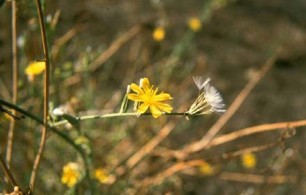
Chondrilla juncea L.
Asteraceae
Sunflower
Common Names: skeletonweed, gum succory, devil’s grass
Origin: regions of Europe, Asia, Africa
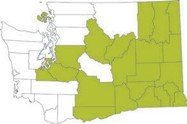
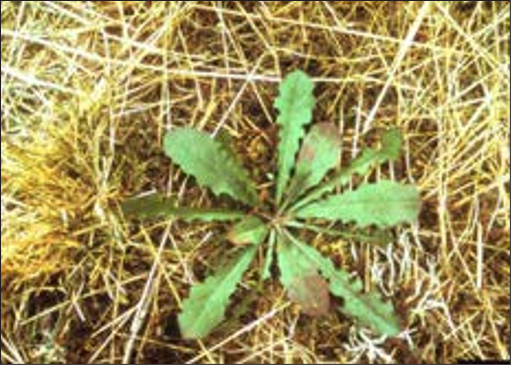
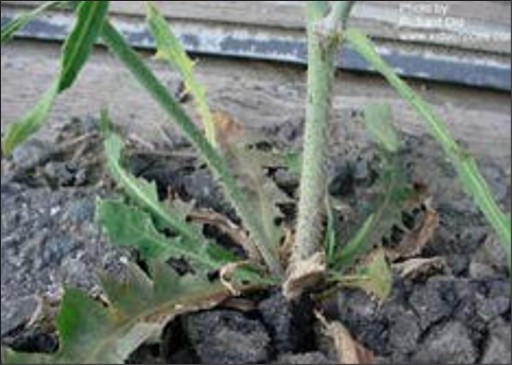
Rush skeletonweed is a perennial with a taproot that can extend 7 or more feet deep. Mature plants grow up to 4 feet tall. Deeply-lobed basal leaves form a dandelion-like rosette that withers as the plant matures. The lower portion of the stem is covered with coarse, brown/red, downward-directed hairs, while the upper stem is smooth. The multi-branched stems of rush skeletonweed have narrow and linear leaves that are sparse and inconspicuous, giving the plant a skeletal appearance. The leaves, stem, and roots of rush skeletonweed produce a milky latex when broken. Small, yellow flowers, ¾ inch in diameter, are scattered among the branches and found individually or in clusters of 2–5. Each plant can produce up to 20,000 seeds annually. The seeds are ribbed and have a pappus of white bristles that aid in wind dispersal. Rush skeletonweed spreads primarily by seed, but can also propagate vegetatively from root buds and root fragments left after mechanical injury. The plant invades rangelands, grain fields, and pastures, displacing native species, reducing forage for livestock and wildlife, and lowering crop yields.
Because of its deep, extensive root system and regenerative capabilities, rush skeletonweed is difficult to control. Skeletonweed should never be hand-pulled since this stimulates budding from horizontal roots. Mowing and cultivating are also poor options, as they usually result in new plant growth from severed roots. For established populations of rush skeletonweed, it is usually necessary to combine control methods such as plant competition, biological control, grazing, crop-pasture rotations, and herbicides. Herbicides can offer initial control, but rarely provide a complete or long-term solution and should be combined with revegetation of competitive plant species or indirectly with biological control agents. Biological control agents include the gall midge Cystiphora schmidti, gall mite Eriophyes chondrillae, and rust fungus Puccinia chondrillina, which vary in effectiveness based on site characteristics and rush skeletonweed biotype.
Acroptilon repens (L.) DC.
Centaurea repens L.
Asteraceae
Sunflower
Common Names: hardheads, Turkestan thistle, creeping knapweed, mountain bluet, Russian cornflower
Origin: Eurasia
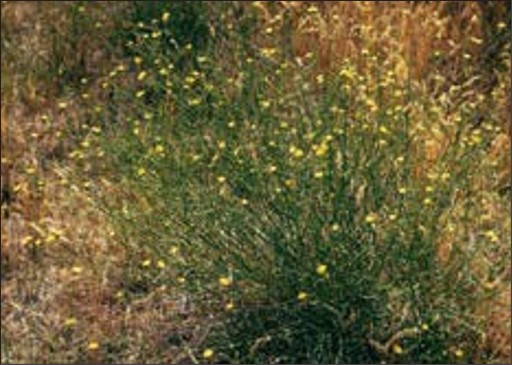
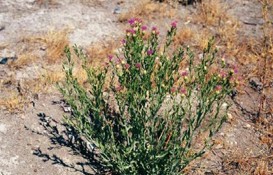
Russian knapweed is a long-lived perennial plant that spreads primarily by its extensive root system. The horizontal roots are scaly, dark brown to black, deep, and branching, with spreading rhizomes. The roots form adventitious buds, which develop shoots that emerge as independent plants. Russian knapweed stems are erect, openly branched, and generally 1–3 feet tall when mature. The lower leaves are 2–4 inches long and deeply lobed, while upper leaves have smoother margins and can be slightly lobed, but become smaller and less lobed toward the top. The flowers, varying from pink to lavender, grow in solitary urn-shaped heads at the ends of leafy branches. Russian knapweed bracts are tipped with transparent, papery margins. The seeds are flattened, ivory to light brown, and tipped by plumes that fall off at maturity. Russian knapweed is toxic to horses, causing chewing disease when sufficient quantities are consumed.
Once Russian knapweed is established, no single control strategy will eradicate this persistent invader. To combat infestations, land managers should integrate control methods (cultural, mechanical, chemical, biological) and then routinely monitor the site for new plants and
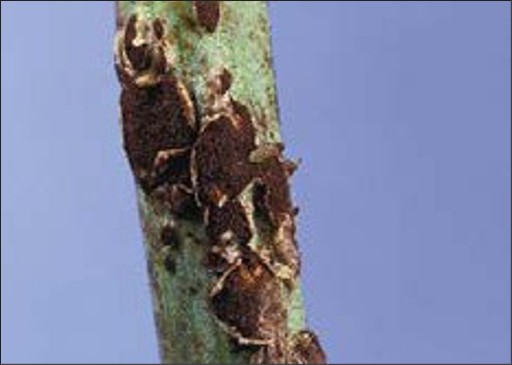
re-treat the area as necessary. A management plan should provide for seeding of competitive plant species after Russian knapweed is stressed by other control measures, such as use of herbicides or mechanical methods that cut into the root without leaving root fragments that can regenerate. Mowing is not recommended. Selective, prolonged residual herbicides are often part of a cost-effective plan. The biological control agent Subanguina picridis, a gall-forming nematode, can cause plant stress, but has had limited impact at most sites. Two additional agents may become available in several years, including the stem-galling wasp Aulacidea acroptilonica and shoot-stunting gall midge Jaapiella ivannikovi.
Salsola tragus L.
Salsola kali L.; Salsola iberica Sennen & Pau
Chenopodiaceae
Goosefoot
Common Names: prickly Russian thistle, tumbleweed, witchweed
Origin: Russia
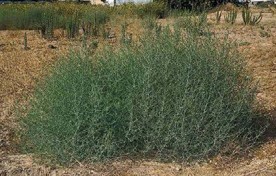
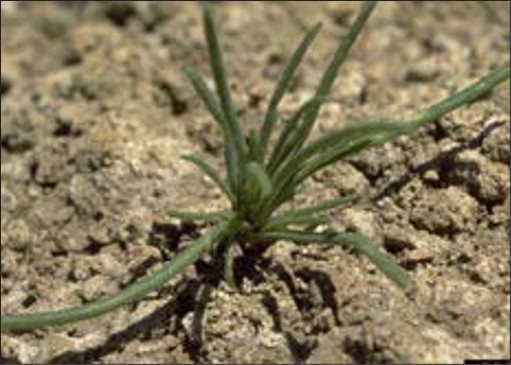
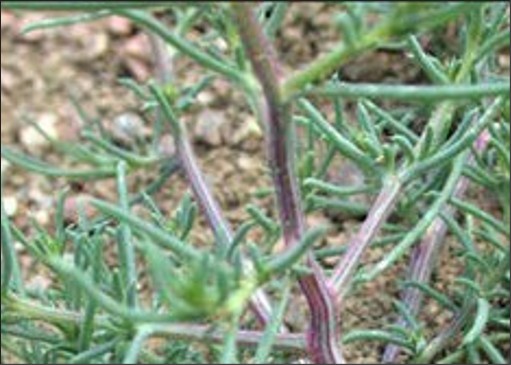
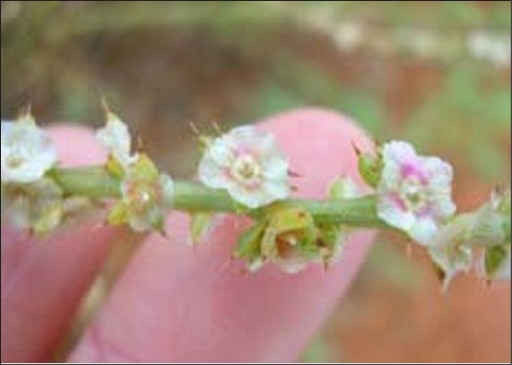
Russian thistle is a summer annual that reproduces by seed. Seedlings have long, thread-like leaves that resemble pine tree seedlings. The plant is rounded, bushy, multi-branched, and can grow up to 4 feet tall and nearly as wide. The stems and branches often have reddish or purplish stripes. The numerous branches are slender and succulent when young, but woody at maturity. The leaves are alternate and linear; early leaves are dark green and fleshy, but eventually become short, stiff, and spiny. Flowering occurs from mid-summer to fall, when small, inconspicuous, pink to greenish flowers develop and are borne, usually singly, in leaf axils above small, leaf-like, spine-tipped bracts. Russian thistle plants break off at the base after maturity and tumble with the wind, scattering seeds over great distances. A single plant can produce 250,000 seeds, which typically remain viable for a year. Seeds are round, snail-shaped, and white to pinkish. Russian thistle is commonly found in dryland fields, along roadsides, and in disturbed areas. It can reduce the yield and quality of crops. Despite the many downsides of Russian thistle, young plants can be used as livestock forage. Russian thistle actually provided a lifeline to beef cattle during the Dust Bowl era, when animals were starving due to a feed shortage.
Mechanical strategies can be used to manage Russian thistle. Small infestations of young plants can be pulled or dug. Little can be done with mature plants, not only because of their large size and spiny nature, but because disturbance facilitates seed spread. Mowing is not effective unless repeated often for several years because plants tend to recover by sprouting new branches below the cutting level. Ongoing intensive tillage that prevents seed production can control Russian thistle, particularly when competitive vegetation is integrated. Herbicides are available and best applied at the seedling growth stage. Herbicide efficacy may be reduced by resistance (especially in the sulfonylurea and triazine families) or if applications are poorly incorporated or timed. The leaf-mining moth Coleophora klimeschiella and stem-mining moth Coleophora parthenica have been the primary biological control agents available, although they are relatively ineffective because native insects and rodents heavily feed on them. The blister mite Aceria salsolae and moth Gymnacela camella have garnered interest and are under investigation. Cattle and sheep will graze young Russian thistle plants, but grazing alone does not provide control.
Tamarix ramosissima Ledeb.
Tamaricaceae
Tamarix
Common Names: salt cedar, tamarisk, tamarix, tammies, pink cascade
Origin: Eurasia
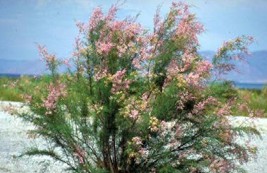
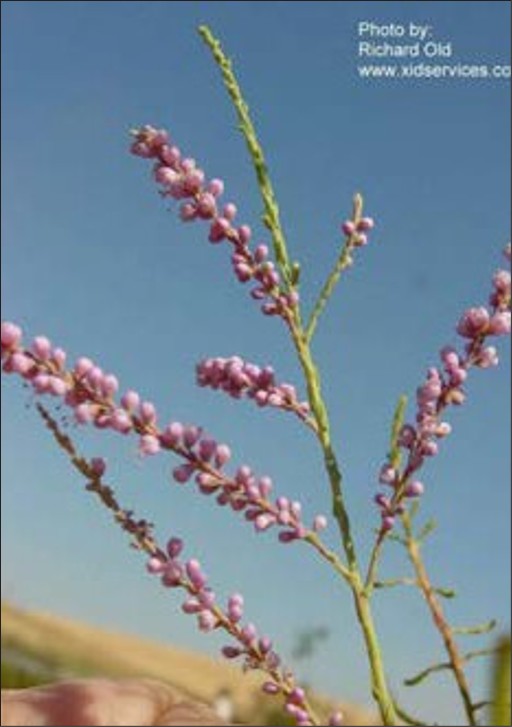
Saltcedar is a loosely-branched shrub or small tree that grows 5–20 feet tall or taller and is commonly found in riparian areas. The tree trunks are slender, upright or branched, and covered with smooth, reddish-brown bark that turns brown and furrowed with age. Saltcedar leaves are small, flat, alternate, and scale-like, resembling cedar. It has large sprays of small, pale white to pinkish flowers clustered in spike-like racemes. A mature saltcedar plant can produce 500,000 minute seeds that remain viable for only a short time, but can germinate within 24 hours of contact with water. Besides spreading by seed, saltcedar can propagate from buried or submerged stems. The plant’s primary root descends 10 feet or more until it reaches water, and then spreads laterally. Saltcedar is a facultative phreatophyte, meaning that while it can draw a great deal of groundwater with its roots, it can also obtain water from other sources. A single large plant can transpire over 200 gallons of water a day. This can reduce water flow and groundwater levels for native vegetation. The plant can also inhibit the growth of native plant species by increasing the salinity of surrounding soil through fallen salt-laden leaves.
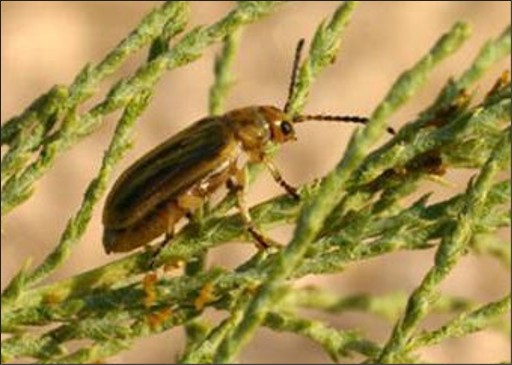
In controlling saltcedar, it is important to remove the entire root system to prevent regeneration. After control measures are taken, the site must be monitored and re-treated to eliminate regrowth. Revegetation is also important in preventing reinvasion. Small infestations can be hand-pulled. Mechanical control methods include digging, root cutting, root plowing, mowing, chaining or ripping, disking, and bulldozing. Herbicides are most effective on saltcedar when applied to new growth. Herbicides can also be applied to the cut surface of the plant immediately after chopping it close to the ground (cut-stump method). The cut-stump method is recommended in the fall when plants are translocating materials to their roots. Because saltcedar generally grows in wet areas, caution should be used when applying herbicides. The biological control agent Diorhabda carinulata, a foliage-feeding leaf beetle, has been used in many western states with excellent results. However, releases in Washington are relatively new and thus its establishment and impacts here are still unknown. Livestock may graze young saltcedar plants, although the plant has little nutritional value.
Cytisus scoparius (L.) Link
Fabaceae
Bean
Common Names: English broom, scotchbroom, broomtops, common broom
Origin: Europe and North Africa
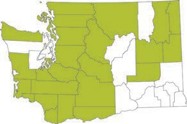
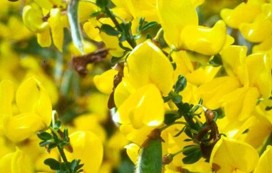
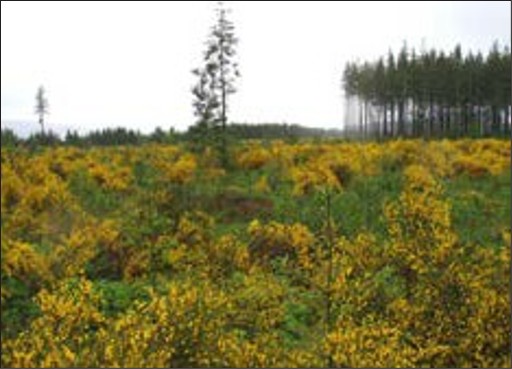
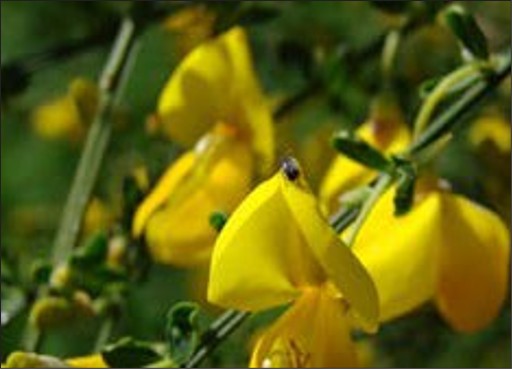
Scotch broom is a perennial, evergreen shrub that was first introduced to the United States as a garden ornamental and later used to control erosion. It averages 3–10 feet tall, but can grow several feet taller. It has slender, nearly erect, angled branches that are green and ridged when young. The stems become smooth, woody, and grayish-brown as the plant matures. The leaves are small, alternately arranged, and often few in number. Upper leaves are simple and undivided, while lower leaves are compound with 3 leaflets (trifoliolate). The leaflets are oblong to obovate and pointed at both ends. Showy, usually bright yellow flowers that resemble sweet peas appear in abundance during the spring, occurring singly or paired in leaf axils. The seed pods are flat and hairy along the margins; when mature and dry, they twist and burst open, ejecting their seeds (3–12 per pod). The seeds are shiny, oval to round, have a hard coat, and can remain viable in the soil for 60 years. A mature shrub can produce over 12,000 seeds in a single year. Scotch broom reproduces primarily by seed, but can also resprout at the root crown when cut or injured above. The root system consists of a deep taproot and large, shallow lateral roots. The plant is slightly toxic, but the foliage is unpalatable to most livestock except goats. Scotch broom can fix nitrogen, enabling it to thrive in nutrient-poor soils. It tolerates a wide range of conditions and commonly inhabits open forests, grasslands, pastures, and disturbed areas. This aggressive plant can crowd out native plant species and form dense, impenetrable stands that degrade rangeland, prevent reforestation, destroy wildlife habitat, and create fire hazards.
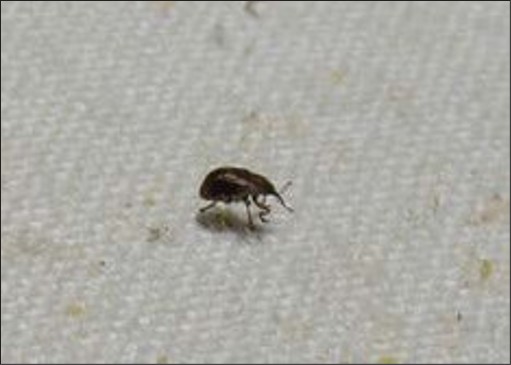
Small Scotch broom plants can be removed in their entirety by hand-pulling, hoeing, or digging, especially when the soil is moist. Tools or machines can be used to remove larger plants, preferably during dry summer months to reduce the likelihood of regrowth. Resprouting can be prevented by completely removing the stump or spot-spraying the stump with herbicides within minutes of cutting the shrub to ground level. Because the disturbance caused by plant removal creates an open invitation to Scotch broom seedlings, the site should be immediately revegetated with competitive native plants and regularly maintained. Herbicides can be effective in controlling Scotch broom, and several broad-spectrum herbicides are available. When using broadcast herbicides, attempts should be made to minimize injury to nearby desirable vegetation. Well-planned prescribed burns can reduce Scotch broom infestations and deplete seedbanks, particularly if integrated with other control methods. Biological control agents reportedly have limited impacts. The seed-feeding beetles Exapion fuscirostre and Bruchidius villosus can reduce the number of Scotch broom seeds that enter a seedbank, but will not impact current stands of Scotch broom.
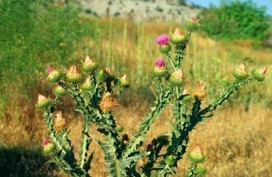
Onopordum acanthium L.
Asteraceae
Sunflower
Common Names: Scotch cottonthistle, heraldic thistle, winged thistle, woolly thistle, cotton thistle
Origin: Eurasia
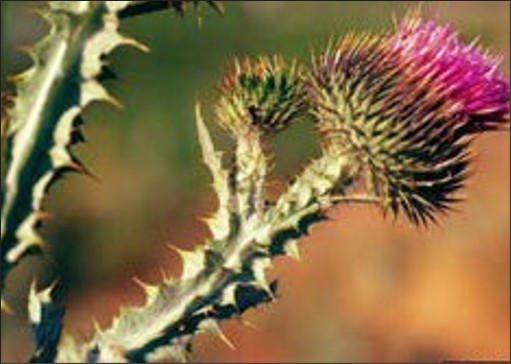
Scotch thistle is a biennial herb that reproduces by seed and can grow 8 feet or more in height and 6 feet in width. In the first year, the plant forms a large, spiny rosette with leaves that grow up to 2 feet long and a foot wide. In the second growing season, the plant develops a stem up to 4 inches wide at the base that is woody, branched, and has prominent, vertical, spiny wings. The upper stem leaves are smaller, lance-shaped, and have irregularly toothed margins. The entire plant is covered with white, dense hairs, giving it a silvery gray-green appearance. Flower heads appear in mid-summer in small clusters on branch tips; they are purple, globe-shaped, 1–2 inches in diameter, with long, stiff, needle-like bracts at the base. The seeds are flattened, wrinkled, and tipped with a pappus of bristles. Scotch thistle occurs along roadsides, in fields, pastures, rangelands, waste areas, and other disturbed sites. The plant spreads rapidly, and its large size and dense stands impede animals from accessing forage and water.
Maintaining healthy, competitive vegetative cover can inhibit Scotch thistle populations. Because Scotch thistle reproduces solely by seed, preventing seed production is fundamental to its control. Control is most easily accomplished during the rosette stage. Small areas can be managed by physically or mechanically severing the plant 2 inches below the soil surface. Mowing can limit seed production if done during the small timeframe just before or during early flowering. Herbicides are most effective when applied to rosettes, but can also be applied in the spring before Scotch thistle bolts. Although cattle and sheep avoid Scotch thistle, goats graze it in the early rosette stage. No biological control agents are currently available in the United States.
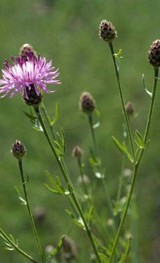
Centaurea stoebe ssp. micranthos
Centaurea bierbersteinii DC.; Centaurea maculosa Lam.
Asteraceae
Sunflower
Common Names: blue bottle, born flower, hard head, star thistle
Origin: Eastern Europe
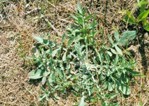
Accidentally introduced into the United States, possibly as a contaminant in alfalfa seed or in the ballast of ships, spotted knapweed is a biennial or short-lived perennial that generally lives 3–7 years, but can live longer. The plant rises from a stout, fleshy taproot and grows 1–4 feet tall. First-year plants produce a rosette of blue-gray basal leaves that are deeply divided into lobes on both sides of the center vein. In subsequent years, plants send up erect, branching stems. The stem leaves are alternate and have few lobes or are linear and become smaller toward the apex. Oblong or oval-shaped flower heads appear at stem ends, either singly or in clusters of 2 or 3. The flower heads are pinkish-purple (occasionally white) and surrounded by stiff bracts with black margins at the tips that give a spotted appearance. Spotted knapweed reproduces by seeds, about 1,000 annually. Seeds are oval, brownish, tipped with a pappus of bristles, and can remain viable in the soil more than 5 years. Spotted knapweed prefers dry, disturbed sites. Infestations cause soil erosion, decreased biodiversity, and reduced forage for wildlife and livestock.
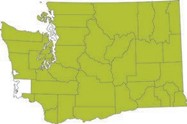
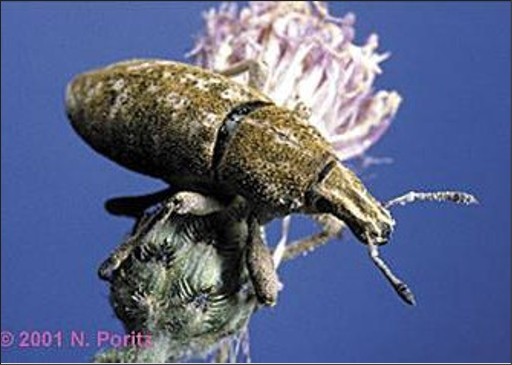
Controlling significant knapweed populations requires use of more than one control method, followed by monitoring for and managing subsequent knapweed plants, and revegetating the site with desirable plant species. If infestations are small, control can be achieved by removing the entire plant before seed set through persistent hand-pulling or digging. Gloves should be worn to avoid skin irritation. The effectiveness of mowing and cultivation depends on site accessibility, timing, continuity, and competitive species. Numerous herbicides are available for control of spotted knapweed. Re-treatments may be necessary. Over a dozen biological control agents have been released to control spotted knapweed, with varying success. The most successful agents appear to be a combination of the seed-feeding weevils Larinus minutus or L. obtusus and the root-mining weevil Cyphocleonus achates or root-mining moth Agapeta zoegana. The ubiquitous seed-head gall flies Urophora affinis and U. quadrifasciata and seed-head moth Metzneria paucipunctella may also contribute to control. Sheep and goats will eat spotted knapweed, but grazing alone does not eliminate knapweed populations.
Hypericum perforatum L.
Clusiaceae
St. Johnswort
Common Names: Klamath weed, St. John’s wort, common St. Johnswort, goatweed, tipton weed
Origin: Europe
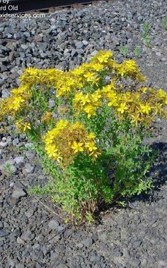
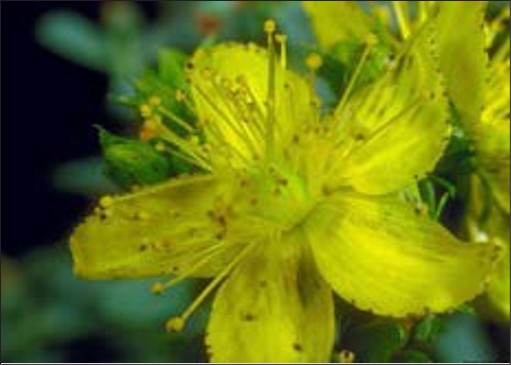
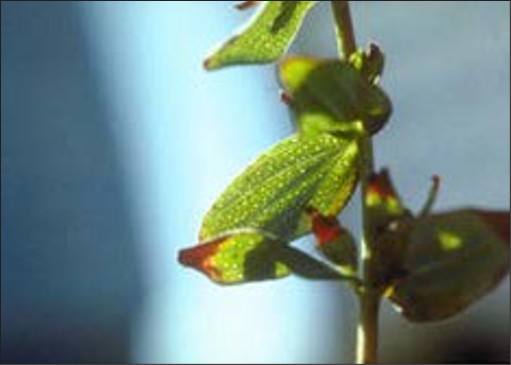
St. Johnswort is a perennial plant that reproduces by seeds and vegetatively by creeping stems. It grows 1–4 feet tall and typically has numerous upright stems. The main stems are reddish or rust-colored, somewhat 2-ridged, woody at the base, and multi-branching. The leaves are opposite, elliptic to oblong, stalkless (no petioles), and have distinctive small, translucent glands that make them appear pierced or perforated when held up to the light—thus the name “perforatum.” The flowers, appearing from June to September, are numerous and found in flat clusters at branch ends. Each flower has 5 bright yellow petals, many stamens, and occasional black dots along the margins. The fruits are 3-cell capsules containing shiny, dark brown cylindrical seeds. The seeds have a gelatinous coating that when wet causes them to adhere to moving objects, dropping off into the soil when dry. Annual seed production ranges from 15,000 to 30,000, although can be as high as 100,000, with a viability of 6–10 years. St. Johnswort contains hypericin, a phototoxin that travels to the skin after ingestion. The tolerance of an animal to the poison appears to be directly related to the amount of skin surface protection it has. Animals that are light-skinned, soft-skinned, or have white markings are most affected. Livestock that ingest the weed can develop a sensitivity to sunlight. Once sensitivity develops, it is cumulative. While livestock generally avoid St. Johnswort, animals that ingest the weed can develop blisters and scabs on the mouth, eyes, ears, nose, and feet, especially when exposed to sunlight. Horses are more sensitive to hypericin than cattle and sheep, with goats the least sensitive.
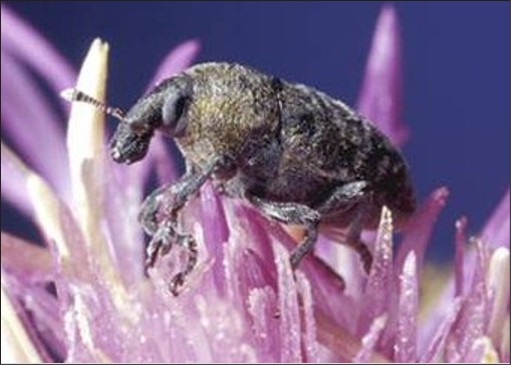
St. Johnswort is difficult to eradicate because of its extensive root system and long-lived seeds. An integrated management plan is recommended and should include revegetation of a beneficial plant species. Fire is not advisable as a means of control since burning can actually increase the weed’s density and encourage its spread. Because St. Johnswort is able to vegetatively reproduce, physical/mechanical control efforts can actually stimulate plant production. For small infestations, plants can be effectively hand-pulled if all roots are removed and bagged. Mowing before seed set can reduce seed production, although vegetative spread can occur. Repeated cultivation effectively eradicates St. Johnswort, so the plant is not a serious threat in cultivated fields. St. Johnswort can be difficult to kill with herbicides because of its extensive root system and waxy leaves, but it is possible depending on the infestation size. Biological control has been widely successful, particularly with the use of the foliage-feeding beetles Chrysolina quadrigemina and C. hyperici. Climate and elevation may impact the effectiveness of biological control agents.
Potentilla recta L.
Rosaceae
Rose
Common Names: rough-fruited cinquefoil, yellow cinquefoil
Origin: Eurasia
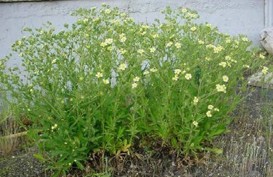
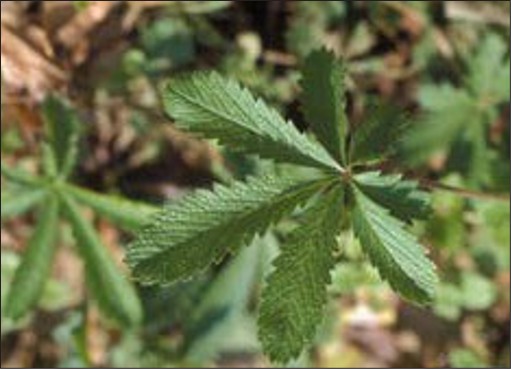
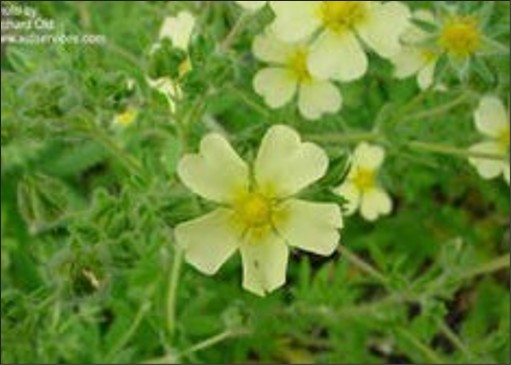
Sulfur cinquefoil is a perennial plant that is loosely related to strawberries. It has a long lifespan, and 20-year-old plants are not uncommon. The plant has a single taproot, with several shallow, spreading branch roots. Old roots die back to the taproot after a freeze, and new shoots emerge in the spring from the edge of a woody root mass. Stems growing from the crown are upright, covered with long, perpendicular hairs, and are generally unbranched, although they may branch above the point of flowering. Mature plants grow 1–3 feet tall. The leaves are alternate, hairy, and palmately compound with 5–7 coarsely-toothed leaflets (resembling marijuana leaves). Flowering occurs from May to July. Clustered at the top of plant stems, flowers each consist of 5 heart-shaped, light yellow petals that surround a darker yellow center. Sulfur cinquefoil reproduces by seed, which are tiny, dark brown, slightly flat, and have a prominent net-patterned seed coat. Sulfur cinquefoil can be distinguished from other cinquefoil species by:
Also, its leaves appear green on the underside, not silvery as is the case with certain native cinquefoils. Because of its high tannin content, most livestock and wildlife won’t feed on sulfur cinquefoil, so its presence reduces desirable forage.
Sulfur cinquefoil is known to invade healthy plant communities, so simply maintaining competitive vegetation will probably not control an invasion, although it will make cinquefoil’s survival and spread more difficult. Mechanical control can be used for small infestations. Shovels, cultivators, and tillers that reach below the root crown will destroy the plant, especially after it has died back in the winter. Tilling sulfur cinquefoil is effective when done before the plant goes to seed and repeated until no plants return. Mowing is not recommended because it results in the plant developing a larger rootstalk and new, shorter flower stalks. Chemical control is one of the most effective control strategies. No biological control agent is currently available, although several organisms are being tested. Since sulfur cinquefoil is related to strawberries, biocontrol agents that attack non-target plants are not viable. Because livestock avoid sulfur cinquefoil, grazing is not an effective control option, although goats will eat it.
Echium vulgare L.
Boraginaceae
Borage
Common Names: blueweed, blue devil
Origin: Eurasia
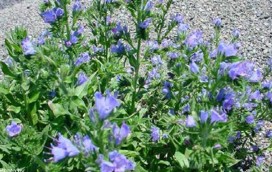
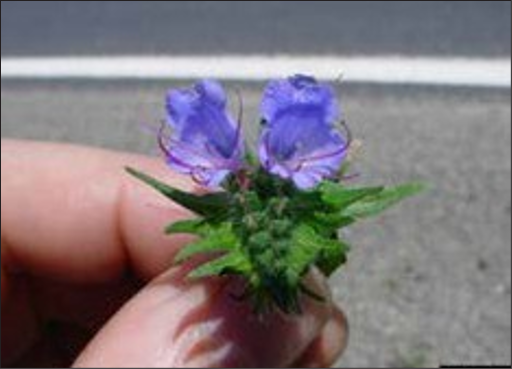
Viper’s bugloss is a biennial that reproduces by seed. This invasive plant develops a stout taproot that can exceed 2 feet in length. During the first year it forms a rosette; the second year it bolts and produces erect, branching, flowering stems that reach about 2½ feet in height. The entire plant is hairy. The stems are covered with stout, spreading hairs with a pustulate base marked by a conspicuous dark fleck, and an underlayer of smaller, fine hairs. The stem leaves are alternate, oblong to linear-lanceolate, and progressively smaller up the stem; white speckles give them a dimpled appearance. The bright blue to purple flowers are funnel-shaped, 5-petalled, and appear in tapering, spike-like heads. Flowering occurs from late spring to early fall. It is best not to touch viper’s bugloss, as skin irritation can result from the plant’s bristles. The plant also contains pyrrolizidine alkaloids that are potentially toxic to livestock, although livestock avoid grazing it in favor of other forage, giving viper’s bugloss a competitive advantage. Viper’s bugloss is commonly found along roadsides and in disturbed and waste areas; in pastures and rangelands it can displace desirable grazing plants.
Viper’s bugloss can be hand-pulled if the soil allows for removal of the taproot, but long sleeves and gloves should be worn to guard against skin irritation. Repeated defoliation by mowing can deplete root reserves and prevent flowering, although the plant can resprout from cut stems. Herbicides can be used to control viper’s bugloss and are generally recommended to be applied at the rosette or bolting stage. No biological control agents are available.
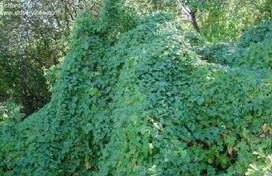
Bryonia alba L.
Cucurbitaceae
Cucumber
Common Names: wild hops, common bryony
Origin: Europe, Northern Iran
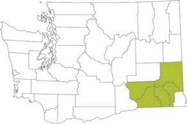
White bryony is a monoecious perennial vine that can grow dozens of feet in length. It has a thick, fleshy root. The stems are actually angular, branching vines. Its green, shiny leaves—resembling those of a cucumber plant—are alternate, somewhat triangular, and broadly toothed. The flowers are yellowish-white, green-veined, and appear in clusters. The fruit are smooth, black berries that reach nearly pea size when ripe and remain hanging after the vine withers. Birds are attracted to the berries and spread the seeds through feeding. White bryony is a climbing plant, attaching itself by means of long, spiral tendrils that spring from leaf axils. It is a vigorous vine that can form dense mats and block out the vegetation upon which it grows. White bryony reproduces only by seed. The plant is toxic to humans, although it is sometimes prescribed homeopathically in extremely small doses to treat various ailments.
Because of white bryony’s habit of attaching itself to other vegetation, it can be difficult to destroy without also harming the supporting vegetation; tracing the vine to its roots and severing it several inches below the soil surface is the safest option. Mechanical control is most easily accomplished during the fall after the plant has withered, but protective gear should still be worn to avoid irritation. Herbicides can be applied to the cut tuber to improve control. The site should be monitored for new growth, with follow-up treatment. Biological control is currently not available for white bryony.
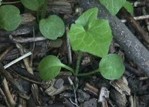
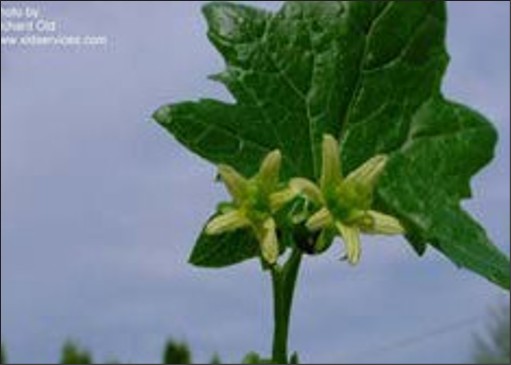
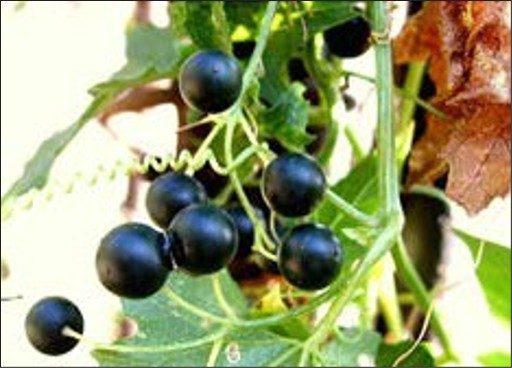
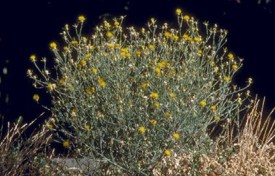
Centaurea solstitialis L.
Asteraceae
Sunflower
Common Names: St. Barnaby’s thistle, geeldissel, golden star thistle, yellow centaury, yellow cockspur
Origin: Mediterranean region of Europe and North Africa
Yellow starthistle, a winter annual that reproduces solely by seed, has a deep, vigorous taproot. Plant growth varies from 6 inches to 5 feet tall. The stem is rigid, spreading, and typically branching from the base. Basal leaves are deeply lobed, while up the plant, stem leaves become shorter, narrower, less lobed, and sharply pointed. Leaf bases extend down the stem, producing a winged effect. Both the stems and leaves are covered with cottony hairs, giving the plant a grayish-green appearance. Bright, dandelion-yellow flowers, located singly at branch ends, are armed with sharp spines up to ¾ inch long in a star-like formation at the base of the flower head. The seeds are both plumed and plumeless: most are plumed and disperse at maturity, but the plumeless seeds remain in the seed head until it falls apart, giving the plant a second period and method of seed dispersal. A single plant can produce as many as 150,000 seeds in a single year, and a large percentage of those are viable. The seeds can remain dormant in the soil for up to 10 years, germinating when conditions become favorable. Yellow starthistle is an adaptable weed that outcompetes native plants for nutrients and moisture, and reduces crop and forage production, biodiversity, and wildlife habitat. Yellow starthistle can also cause chewing disease in horses.
Proper land management aimed at creating a healthy, competitive plant community can help prevent yellow starthistle infestations. Small infestations can be effectively hand-pulled, hoed, or dug before flowering. If tillage is feasible, it should be done before seed set, with blades that sever the roots below the soil surface. The effectiveness of mowing depends on timing: mowing too early may actually extend the life cycle of yellow starthistle, and mowing too late can increase seed dispersal. Mowing should therefore occur at early flowering, but before seed production, cutting the plant below leaf level. Equipment should be cleaned before leaving an infested area to prevent weed spread. Combining herbicides with mowing, grazing, tillage, burning, or revegetation often provides better control than using any single method. Applying herbicides at the rosette stage is generally effective, although use of certain systemic herbicides during the winter and early spring may also serve to promote growth of other, more desirable plants. Biological control agents include the seed-head weevils Bangasternus orientalis, Eustenopus villosus, and Larinus curtus and seed-head flies Urophora sirunaseva and Chaetorellia australis. An accidentally-introduced seed-head fly, Chaetorellia succinea, is increasing in distribution. All these insects attack the flower head and reduce seed production; however, the most promising insects are E. villosus and C. succinea due to their effectiveness at reducing seed production. A rust fungus (Puccinia jaceae var. solstitialis), may be effective in areas with sustained morning moisture. Grazing with sheep, goats, or cattle after bolting but before the flowering spiny stage can help reduce yellow starthistle biomass and seed production.
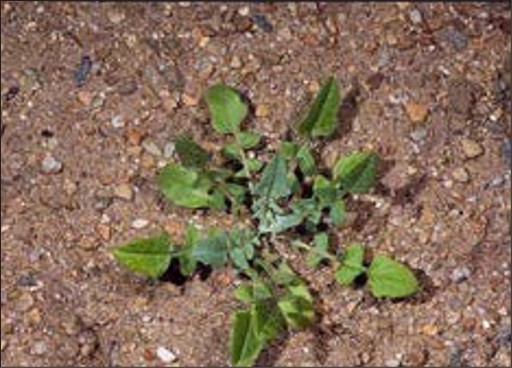
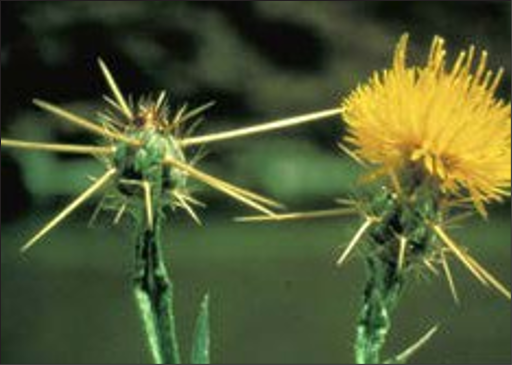
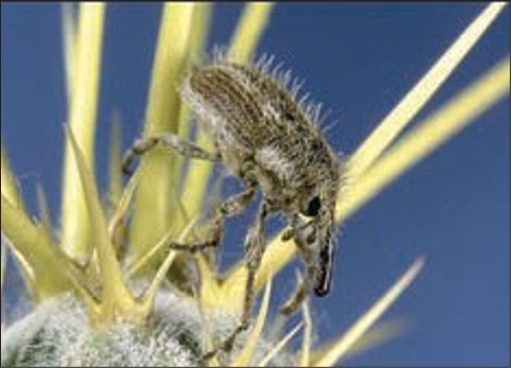
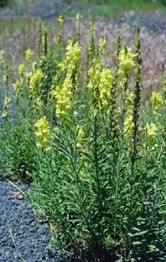
Linaria vulgaris P. Miller
Scrophulariaceae
Figwort
Common Names: butter and eggs, wild snapdragon, common toadflax, ramsted, flaxweed
Origin: Southcentral Eurasia
Yellow toadflax was introduced to the United States as an ornamental. This perennial plant reproduces from seed and underground rootstalks. It grows to a height of 2 feet and is rarely branched. The stems are smooth, erect, and leafy, and often grow in tight clumps that emanate from rootstalks. The leaves are alternate, long, narrow, and pointed at both ends, which help distinguish yellow toadflax from Dalmatian toadflax, whose leaves are broad, heart-shaped, and clasping. Yellow toadflax flowers resemble snapdragons, as they are yellow and/or white with an orange throat and appear in dense clusters on stems. The fruit is an egg-shaped capsule that contains flat, winged, ovate seeds with a dormancy of 8–10 years but poor viability. Because yellow toadflax has a low germination rate, it favors vegetative reproduction: adventitious buds on primary and lateral roots develop into independent plants. Yellow toadflax contains a poisonous glucoside that is moderately toxic to livestock if consumed in sufficient quantity, but this is rare because of the plant’s unpalatability. Yellow toadflax is adapted to a wide variety of environmental conditions and is an aggressive invader that can form dense colonies, crowding out other vegetation and reducing forage and ecological diversity.
Yellow toadflax is difficult to control because of its extensive root system. In general, a control strategy should be aimed at preventing seed production and exhausting the root reserves. Small infestations can be effectively removed by hand if done prior to seed set and if the entire root systems are removed from the site. Mowing before seed set can decrease seed production, but does not eliminate the plant. While tillage can decrease seed production, it can also promote plant regeneration from rootstocks. Intensive clean cultivation has been effective, but requires a 2-year period and typically involves use of sweep-type cultivators beginning in early June and repeated so that no more than 7–10 days of green growth appear. Several herbicides are available for yellow toadflax and generally work best when applied at early flowering. Herbicidal resistance has been reported. Chemicals can be applied as spot treatments and reapplied as necessary. Cultural control using competitive species should be integrated into a management plan; vigorous, well-adapted grasses are often recommended. Biological control has been relatively successful at reducing seed production; however, the overall impact to infestations is still unclear. The 2 available biological control agents are the capsule weevil Gymnetron antirrhini and the flower-feeding beetle Brachypterolus pulicarius. Research is ongoing to find a biocontrol agent that will attack the stems or roots of toadflax.
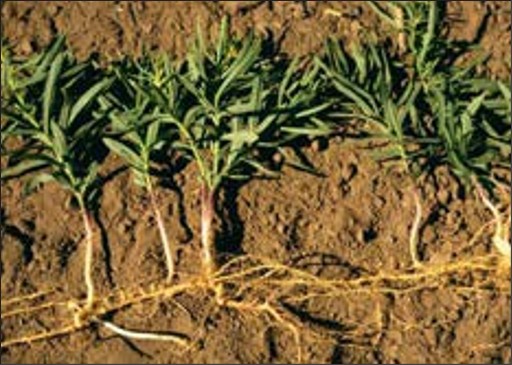
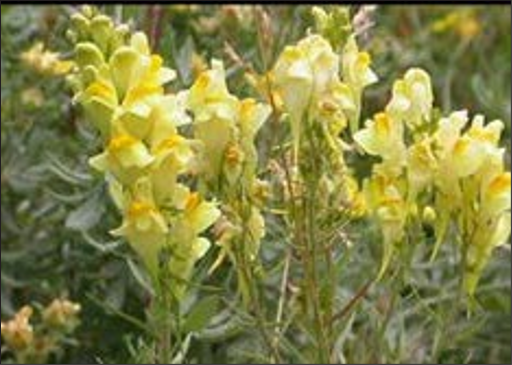
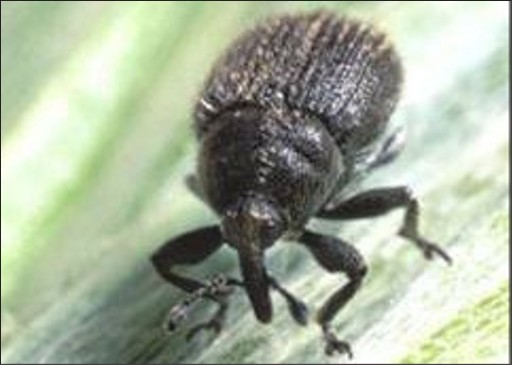
Acknowledgements. This publication was made possible in part from the support of the Asotin County Noxious Weed Control Board and Whitman Conservation District.
By Stephen M. Van Vleet, Ph.D. Washington State University Whitman County Extension
Use pesticides with care. Apply them only to plants, animals, or sites as listed on the label. When mixing and applying pesticides, follow all label precautions to protect yourself and others around you. It is a violation of the law to disregard label directions. If pesticides are spilled on skin or clothing, remove clothing and wash skin thoroughly. Store pesticides in their original containers and keep them out of the reach of children, pets, and livestock.
WSU Extension bulletins contain material written and produced for public distribution. Alternate formats of our educational materials are available upon request for persons with disabilities. Please contact WSU Extension Publishing and Printing for more information.
You may order copies of this and other publications from WSU Extension Publishing and Printing or at 1-800-723-1763.
Issued by Washington State University Extension and the U.S. Department of Agriculture in furtherance of the Acts of May 8 and June 30, 1914. Extension programs and policies are consistent with federal and state laws and regulations on nondiscrimination regarding race, sex, religion, age, color, creed, and national or ethnic origin; physical, mental, or sensory disability; marital status or sexual orientation; and status as a Vietnam-era or disabled veteran. Evidence of noncompliance may be reported through your local WSU Extension office. Trade names have been used to simplify information; no endorsement is intended. Published June 2009. Revised June 2015.