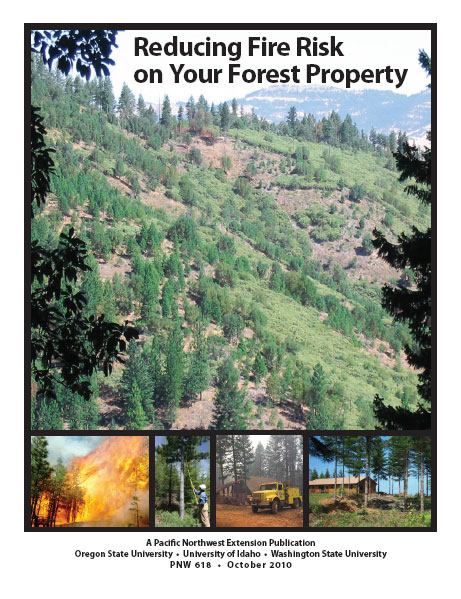
Reducing Fire Risk on Your Forest Property
$12.00
The degree of wildfire risk depends on both the probability of an ignition and the potential for loss of trees, homes, and even lives. Whether you own a few acres or thousands, this publication will help you make your property more resistant to wildfire damage as well as improve overall forest health and wildlife habitat. By following the guidelines in this publication, fires that do occur will be less severe.
Published: October 2010
Reviewed: October 2018
26 in stock
Related publications
-
Fire-Resistant Plants for Home Landscapes
As homeowners continue to build in the wild and urban interface, they must take special precautions to protect their homes. One way to do this is to create a defensible space around the home.
- Pages:
- 56
- Revised:
- October 2023
- SKU:
- PNW590
Authors: -
Enhancing Reforestation Success in the Inland Northwest
Vegetation control techniques to improve conifer seedling survival and growth are described and compared for common area-specific forest competitors. Mechanical methods (such as tilling and mowing) ...
- Revised:
- January 2020
- Reviewed:
- January 2023
- SKU:
- PNW520
Authors: -
A Primer for Timber Harvesting
Timber sales are complicated. The choices a forest landowner makes will influence financial return, future site productivity, soil erosion, and other factors. Here is a basic book for those who want t ...
Price: $4.95 -
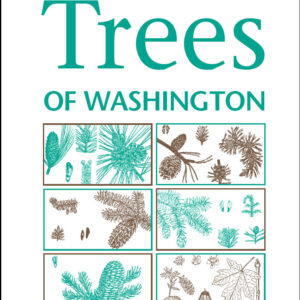
Trees of Washington
Keys to native conifers and broadleaf trees of Washington. Individual profiles of 32 native trees provide sketches of range, leaf and tree shape, fruit and bark characteristics.
- Pages:
- 44
- Published:
- April 1951
- Reprinted:
- May 2024
- SKU:
- EB0440
Authors:Price: $5.50