Description
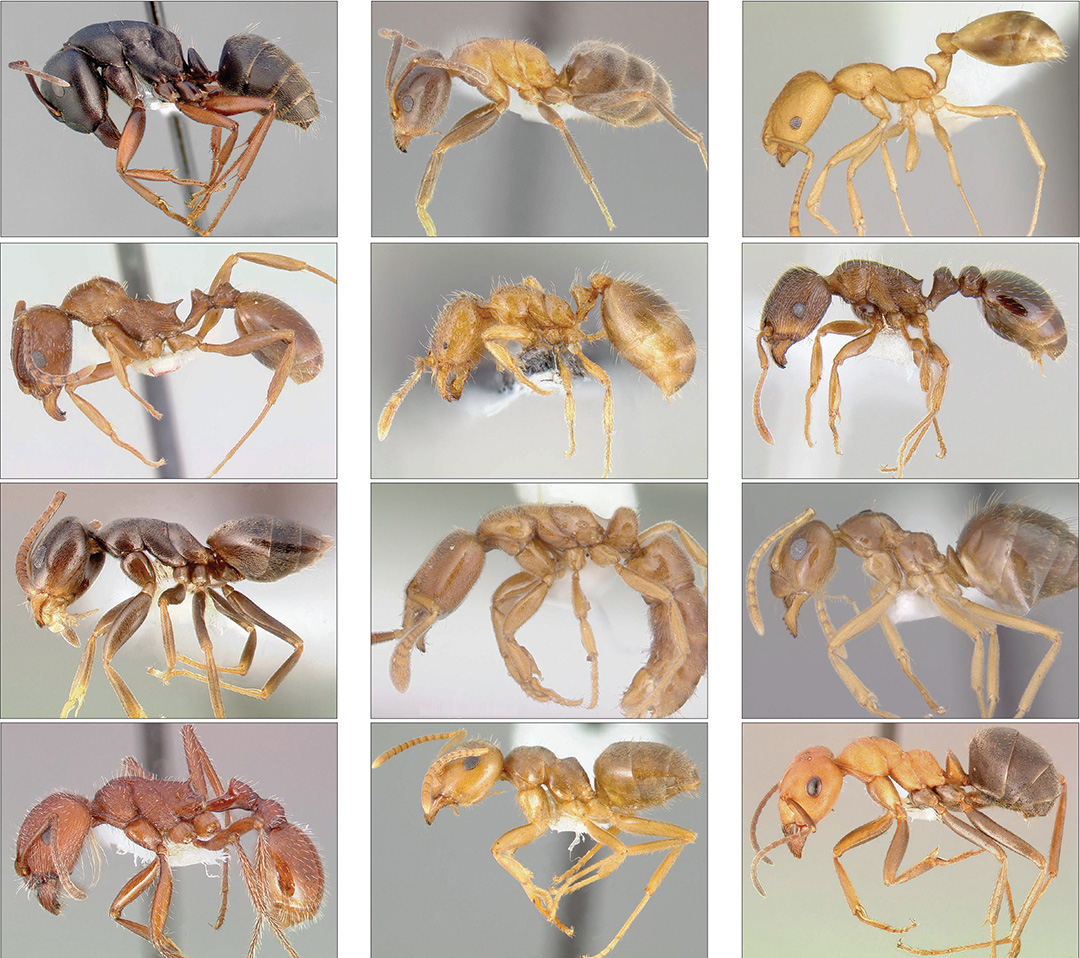
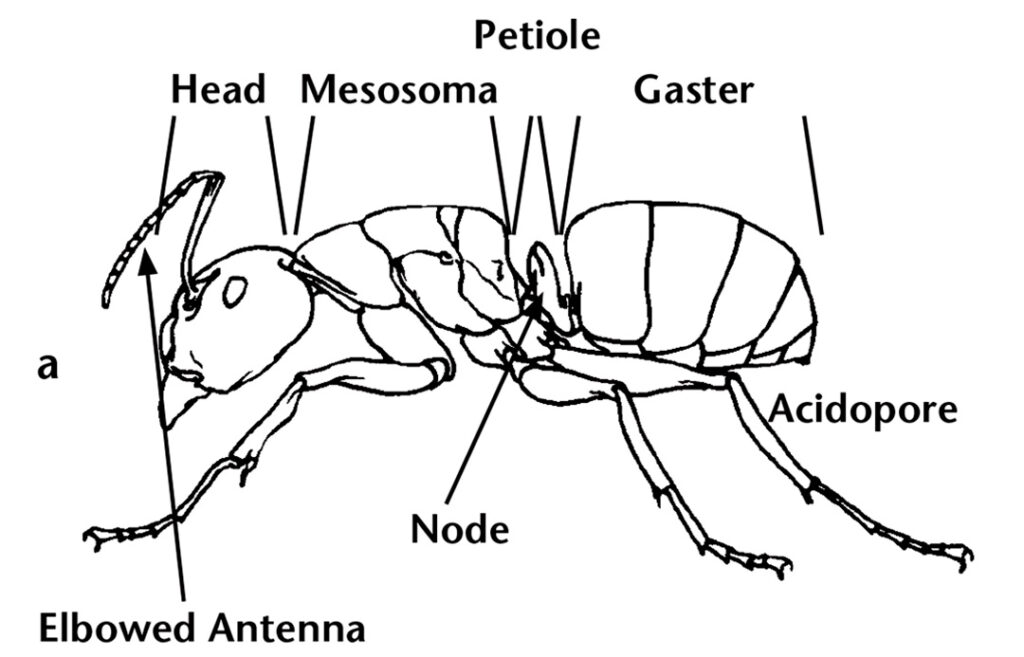
Ants (Hymenoptera: Formicidae) are an easily recognized group of social insects. The workers are wingless, have elbowed antennae, and have a petiole (narrow constriction) of one or two segments between the mesosoma (middle section) and the gaster (last section) (Figure 1).
Ants are one of the most common and abundant insects. A 1990 count revealed 8,800 species of ants had been described and that number has increased to more than 14,000. There are still a number of undescribed ant species in the world. The true number is probably more than 30,000.
Ants are also one of the most widely distributed of all insect groups. They occur from the Arctic tree line to the humid tropics, from Alaska to the extreme tip of South America, to the tip of Africa, Australia, and even to all the islands in the oceans. They are the most abundant of all social insects.
Since there are so many species of ants, and in such diverse habitats, it becomes obvious that ants are one of humans’ principal insect competitors. Ants infest buildings as a nuisance, feed on human foods, and even cause structural damage.
Ants are also annoying because of their biting or stinging habits. Ant stings are responsible for a number of human fatalities in the United States each year. The effects of stings on a human depend on the ant species and the sensitivity of the person. Most deaths are caused by a hypersensitive reaction leading to anaphylactic shock.
General Biology
Many ant colonies are started by a single inseminated female, called a queen. From this single individual, ant colonies can grow to contain anywhere from several hundred to millions of individuals. Among the largest ant colonies are the army ants of the American tropics, with up to several million workers, and the driver ants of Africa, with 30 million to 40 million workers. A thatching ant (Formica) colony in Japan covering many acres was estimated to have 348 million workers. However, most ant colonies probably fall within the range of 300 to 50,000 individuals.
Ants normally have three distinct castes: males, queens, and workers. Males are intermediate in size between queens and workers and can be recognized by ocelli (simple eyes) on top of the head, wings, protruding genitalia, and large eyes. The sole function of the male is to mate with a winged female during the nuptial flight.
The winged female loses her wings soon after mating and becomes a queen. However, scars where the wings were attached remain. Queens usually also have ocelli in addition to large compound eyes and a large gaster for egg production.
The worker, the smallest member of the colony, usually lacks ocelli and is never winged. Workers of a single species may be of one size (monomorphic) or may vary considerably in size (polymorphic).
Large workers are usually called soldiers or majors; very small workers are minors.
Ants pass through several distinct developmental stages in the colony: egg, larva, pupa, and adult. The egg is very small (less than 1 mm) and varies in shape according to species. The larva also varies in size and shape, but is usually white and is always legless. The pupal stage looks like the adult, but is soft, white, and motionless; many species are enclosed in a cocoon of a brownish or whitish papery material produced by the mature larva.
Ants produce winged reproductives usually at one time of the year (spring or fall, depending on species and colony disposition). Colony activity at the time of reproductive swarming is high. The winged females and males fly from colonies and mate, and shortly afterward the male dies. The inseminated queen then builds a small nest, lays a few eggs, and nurtures the developing larvae that soon hatch from the eggs. When adult workers appear, they take over the function of caring for the queen and the larvae, building the nest, and bringing in food for the colony. Colonies of some species may persist for 20 years or more.
Since there are so many species of ants with extremely diverse habits it is difficult to outline a common lifestyle. Some ants are strictly carnivorous, while others may specialize by eating fungi, seeds, or the “honeydew” of other insects. However, most ants that cause annoyance to homeowners are omnivorous and feed on a variety of foodstuffs.
Various ants make their nests in rotting logs, trees, soil, or even live inside the nests of other ants. Since they are such a diverse group, it is always best to check the habits of the particular species. Ants that are common in the Pacific Northwest states of Washington, Idaho, and Oregon occur in and around structures are presented in this publication.
Identification
Ants are often confused with termites by homeowners. Consider the following features to separate ants from termites:
Ants
- Strong constriction petiole or “waist” between mesosoma and gaster (Figure 1a).
- Elbowed antennae (Figure 1a).
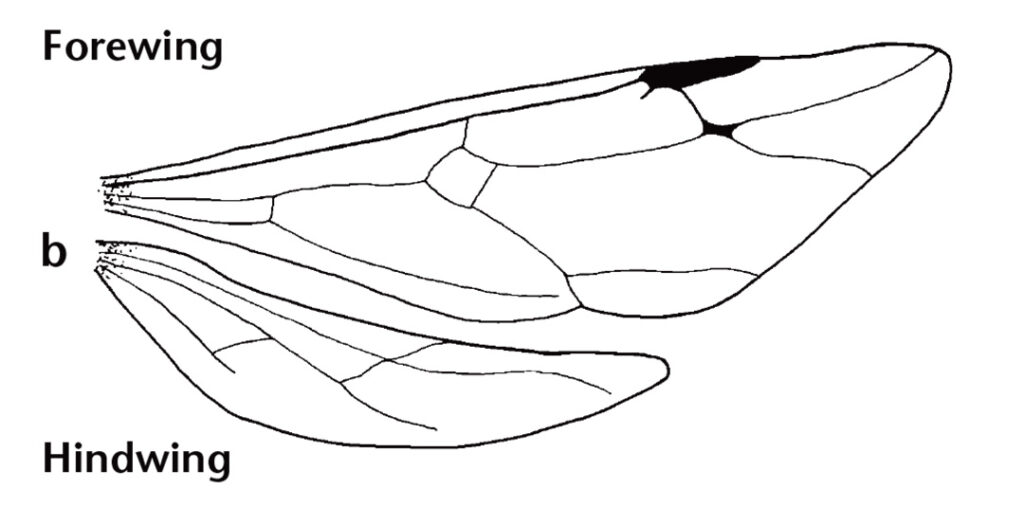
- Forewing, when present, much larger than hindwing (Figure 1b).
- Workers are various colors and hard-bodied.
Termites
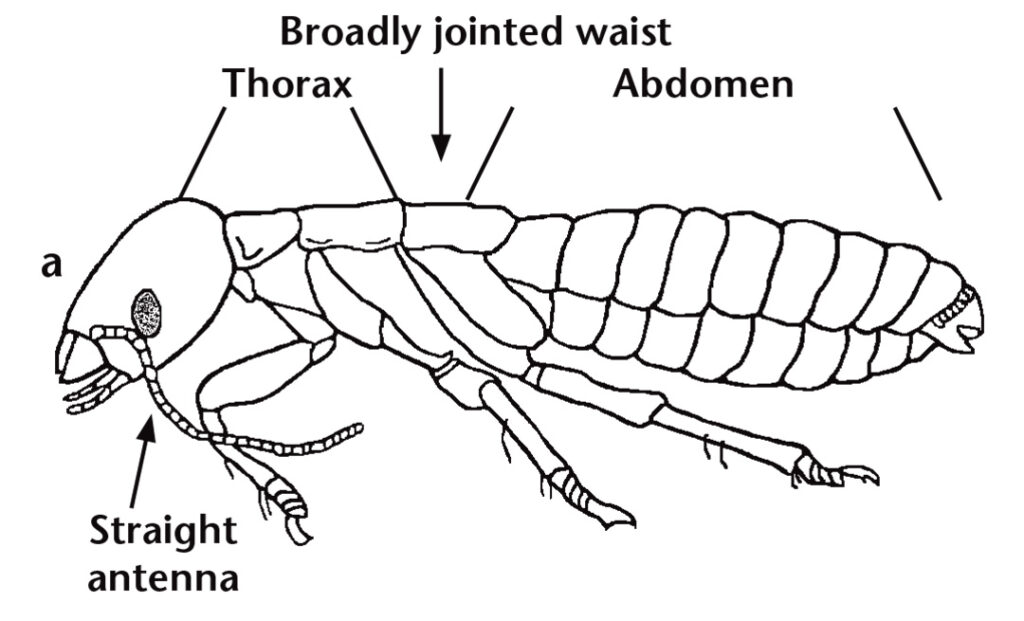
- Abdomen broadly joined to thorax (no waist) (Figure 2a).
- Straight antennae (Figure 2a).
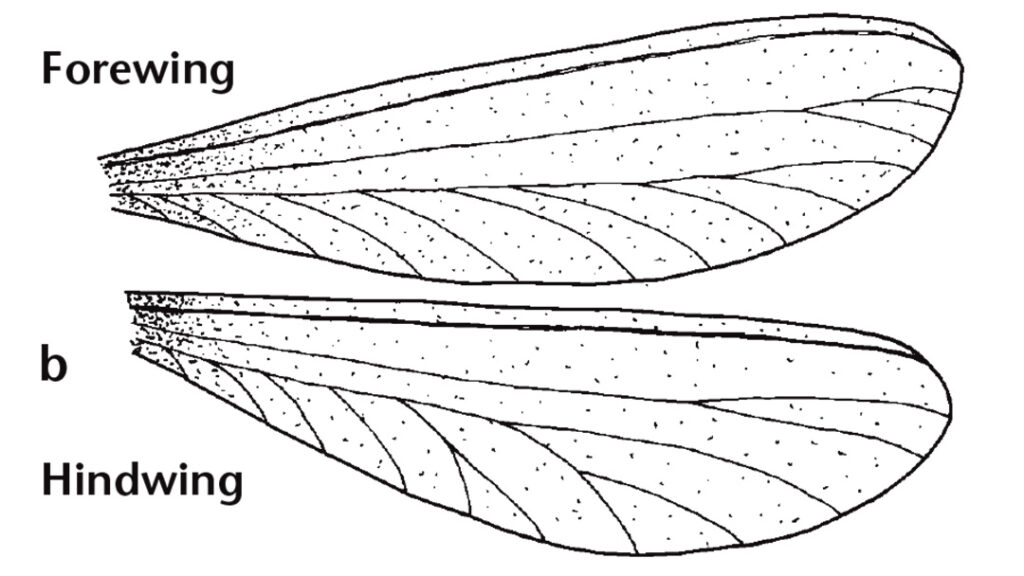
- Both pairs of wings, when present, of about equal size (Figure 2b).
- Workers are whitish and soft-bodied.
Ants in the Pacific Northwest that occur around structures are included in four subfamilies of ants:
- Formicinae: carpenter ants, thatching ants, moisture ants, and small honey ants
- Dolichodorinae: odorous house ants and velvety tree ants
- Myrmicinae: pharaoh ants, little black ants, pavement ants, harvester ants, Aphaenogaster spp.
- Ponerinae: ponerine ants
The following keys will assist in the identification of common household ants recorded as pests in the Pacific Northwest.
Note: The first key is for workers. Additional keys are provided for winged females and males. In selecting worker ants for the key, select the largest ants available.
Key to workers
(identifying many of the characteristics will require use of a hand lens)
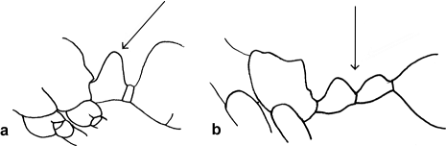
1) Abdominal petiole composed of one segment (Figure 3a)……………………………………2
Abdominal petiole composed of two segments (Figure 3b) (Subfamily Myrmicinae)………………………………………………….8
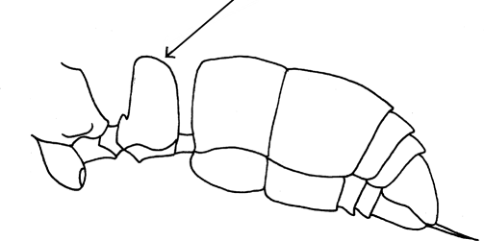
2) Node broad at the apex, rectangular (Figure 4) (Subfamily Ponerinae)……….Hypoponera punctatissima
Node not broad at the apex, flattened or pointed (Figure 1)……………………………………….3
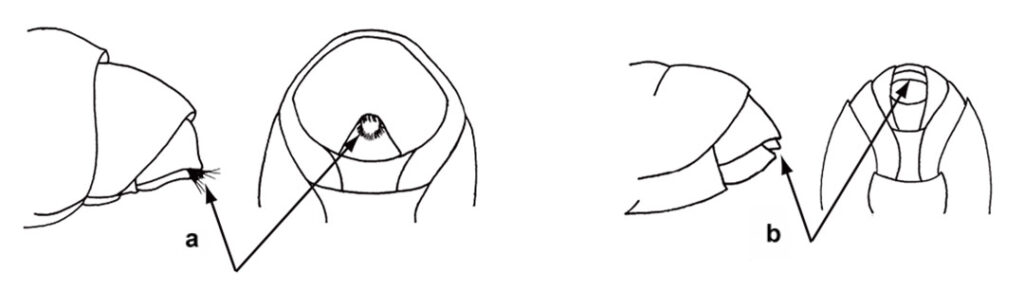
3) Tip of gaster with circular acidopore (opening) usually surrounded by a fringe of hairs (Figure 5a) (Subfamily Formicinae)………………………………………………….4
Opening at the end of the gaster slit-shaped, not surrounded by hairs (Figure 5b) (Subfamily Dolichoderinae)……………….7
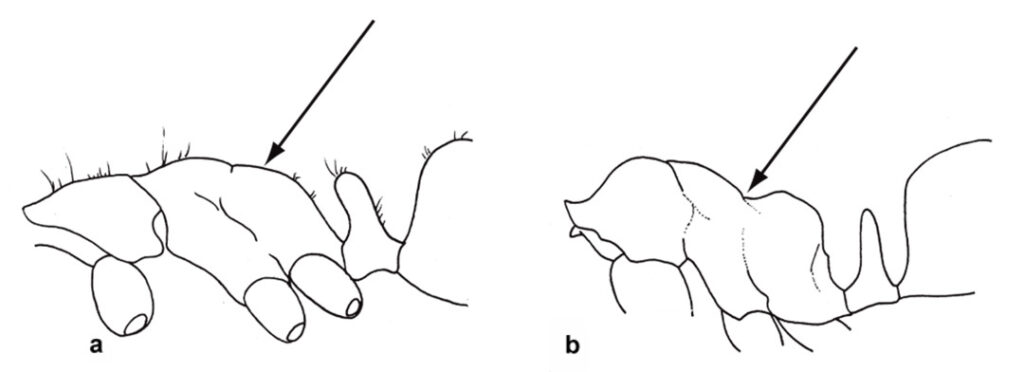
4) Profile of thoracic dorsum evenly convex (Figure 6a)………………carpenter ants, Camponotus spp.
Profile of thoracic dorsum not evenly convex, with notch (Figure 6b)………………….5
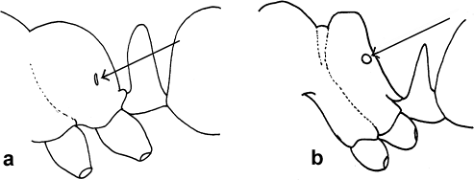
5) Epinotal spiracle a narrow slit (Figure 7a)………………….thatching ants, Formica spp.
Epinotal spiracle rounded (Figure 7b)……..6
Lasius spp.