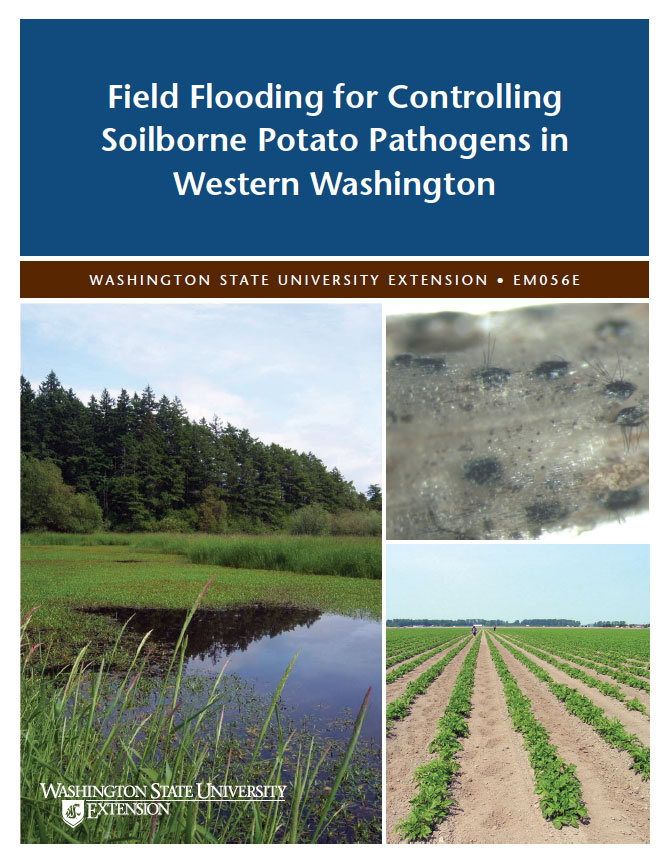
Archived - Field Flooding for Controlling Soilborne Plant Pathogens in Western Washington
Notice: The following publication has been archived and may not meet WCAG 2.1 accessibility standards. If you need an accessible copy, please contact us.
The Nature Conservancy of Washington’s Farming for Wildlife project, in cooperation with WSU, has been testing a novel concept of creating habitat for shorebirds on potato fields by employing field fl …
Published: October 2013
Hurry! Only left in stock.
Related publications
-
Advances in Dryland Farming in the Inland Pacific Northwest (PNW) (REACCh Handbook)
This item is free, just pay for shipping. Individual chapters available for viewing. See below. Table of Contents (pdf) Introduction (pdf) Chapter 1 (pdf) Chapter 2 (pdf) Chapter 3 (pdf) Chapter 4 (pdf) Chapter…
Authors:- Rakesh Awale
- Kirti Rajagopalan
- Kristy Borrelli
- Kurt Schroeder
- Laurie Houston
- Nicole Tautges
- Nilsa Bosque-Perez
- Paul Carter
- Prakriti Bista
- Rajan Ghimire
- Kendall Kahl
- Sanford Eigenbrode
- Silvia I. Rondon
- Stephen Machado
- Susan Capalbo
- Tabitha Brown
- Tai Maaz
- Timothy Murray
- Timothy Paulitz
- Xianming Chen
- Edward Bechinski
- Arash Rashed
- Bertie Weddell
- Bill Pan
- Bradley Stokes
- Chad Kruger
- Clark Seavert
- David R. Huggins
- David W. Crowder
- Donald J. Wysocki
- Andy Bary
- Elizabeth Allen
- Elizabeth Kirby
- Frank Young
- Georgine Yorgey
- Haiying Tao
- John Abatzoglou
- John Antle
- Kate Painter
Select options This product has multiple variants. The options may be chosen on the product page -
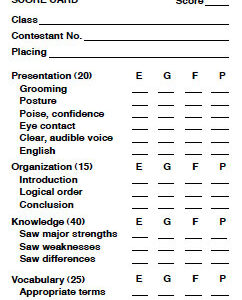
4-H Oral Reason Score Card (pad of 50)
A pad of 50 buff scorecards, 2.75 x 4.25 in., used to evaluate oral reasons.
Select options This product has multiple variants. The options may be chosen on the product page -
Agricultural Lime and Liming - Part 2. Laboratory testing to determine lime requirements (Soil Acidification Series)
Agricultural Lime and Liming is a three-part publication that introduces the basic principles of how and why calcareous amendments are land applied to elevate the pH of acid soils. Part 2 delves more ...
- Revised:
- June 2016
- SKU:
- FS217E
-