WA 38 Fruiting Habit, Pruning, Training Systems, Rootstocks, and Replanting (WA 38: Best Management Practices)
Description
Intended for Washington WA 38 growers, orchard managers, and researchers, this publication covers pruning, training systems, rootstocks, and replanting practices to improve orchard performance and fruit quality.Table of Contents
- Introduction
-
WA 38 Habit and Blind Wood
-
Apple Growth Habit
- Type 1: Spur-Type Red Delicious
- Type 2: Red Delicious, Reine des Reinettes, Stayman, and Gloster
- Type 3: Golden Delicious, Elstar, Jonagold, Royal Gala, Braeburn, and Cripps Pink
- Type 4: Rome Beauty, Granny Smith, Cortland, Fuji, and WA 38
Abbreviations
ARD = apple replant disease
B = brindilla
DAFB = days after full bloom
DM = dry matter
GS = Granny Smith
ha = hectare
HDP = high-density planting
IAD = index of absorbance difference
M = month
RM = ramo misto
S = spur
SSC = soluble solid content
SNK = Student–Newman–Keuls test
SRO = Sunrise Research Orchard
TA = titratable acidity
VHDP = very high-density planting
Introduction
New orchards in Washington State are characterized by high-density plantings (HDP) and dwarfing or semi-dwarfing rootstocks. The concept of HDP in apple orchards originated with the introduction of the M.9 rootstock by Hatton (1917) at the East Malling Research Station in the UK, marking a significant shift in modern orchard management.
One of the most significant effects of dwarfing rootstocks is the reduction in tree height and overall size (Wertheim 1998), which enabled the adoption of diverse training systems and facilitated early bearing, typically by the second or third growing season. A significant advantage of HDP using dwarfing rootstocks is the early return on initial investment, which significantly improves orchard profitability (Musacchi and Greene 2017). These systems often reach full production by year five, achieving maximum yield potential much earlier than traditional lower density orchard systems.
High-density orchards enable production to occur alongside canopy development, thanks to more efficient light interception and distribution within the canopy (Jackson 1980; Jackson and Palmer 1980; Robinson et al. 1991; Robinson and Lakso, 1991; Tustin et al. 2001a, 2001b; Hampson et al. 2002). Dwarfing rootstocks have also transformed key orchard management practices, including establishment, pruning, irrigation, and nutrition.
This publication outlines standard production practices for the WA 38 apple cultivar, focusing on planting distances, rootstocks, and training systems tailored to the cultivar’s growth and productivity characteristics, and provides guidance based on firsthand cultivar management. A reliable production protocol for new cultivars, such as WA 38, has been developed over time. Understanding how the cultivar performs during the initial training phase (one- to three-year-old trees) and after reaching the adult stage (four years and beyond) is crucial for optimizing orchard performance.
WA 38 Habit and Blind Wood
Apple Growth Habit
Defining appropriate pruning techniques and orchard planting systems is impossible without reference to the four cropping models originally proposed by Lespinasse (1977, 1980). Each apple cultivar requires a specific pruning strategy (Lespinasse 1977; Sansavini and Corelli-Grappadelli 1990; Lauri et al. 1995; Lauri and Laurens 2005). A clear understanding of where mixed buds develop on different types of bearing wood is critical, as this determines the approach to adopt in pruning and training the trees. This section describes the growth habit of common cultivars in comparison to the growth habit of WA 38.
Lespinasse (1977, 1980) identified four main tree habits based on branching behavior, bud positioning, and fruiting patterns.
Type 1: Spur-Type Red Delicious
These cultivars exhibit basitonic growth, with branches forming primarily in the lower part of the trunk. Leader dominance is weak and varies among cultivars. Most fruiting spurs (S) are found on branches that are at least two years old. Effective pruning requires careful thinning and the removal of small or poorly positioned mixed buds, particularly those located at the bottom of the branches (Lespinasse 1977, 1980; Sansavini and Corelli-Grappadelli 1990).
Type 2: Red Delicious, Reine des Reinettes, Stayman, and Gloster
These cultivars are well-suited for a free-growing form, with major branches inserted at wide angles into the trunk. The central leader is more dominant than in spur types, although basitonic tendencies persist, mainly when grown on vigorous rootstocks. Fruiting spurs are commonly found on two- to four-year-old wood, and brindilla (B) (short shoots, flowering at the tip) are more frequent. Branch bending is required to promote flowering and fruit set (Lespinasse 1977, 1980; Sansavini and Corelli-Grappadelli 1990).
Type 3: Golden Delicious, Elstar, Jonagold, Royal Gala, Braeburn, and Cripps Pink
These cultivars are ideal for vertical axis or spindle systems. Fruiting branches arise directly from the trunk at wide angles (60°–90°). Most fruiting spurs are borne on young wood (one-year-old). Brindilla (also known as brindles) are abundant, and the fruiting zone moves quickly away from the tree center, often resulting in branch bending. Some cultivars in this group are prone to biennial bearing when overcropped (Lespinasse 1977, 1980; Sansavini and Corelli-Grappadelli 1990).
Type 4: Rome Beauty, Granny Smith, Cortland, Fuji, and WA 38
These cultivars typically exhibit strong acrotonic growth, producing few lateral shoots on the lower trunk. On the contrary, WA 38 does not exhibit an acrotonic tendency, and branching in the nursery is relatively easy; however, it shows a strong tendency to crop centrifugally or outward to the canopy periphery. Branching is concentrated in the upper third of the tree, giving the canopy a cylindrical shape. Fruiting spurs typically develop on one- to two-year-old wood, and the fruiting zone tends to move toward the periphery of the canopy, especially in cultivars like Granny Smith and WA 38 (Lespinasse 1977, 1980; Sansavini and Corelli-Grappadelli 1990), causing the onset or formation of nonproductive blind wood. This group includes cultivars that have a genetic tendency to bear fruit at the tip of the brindilla (tip bearers).
Tree Habit of WA 38 (Cosmic Crisp®)
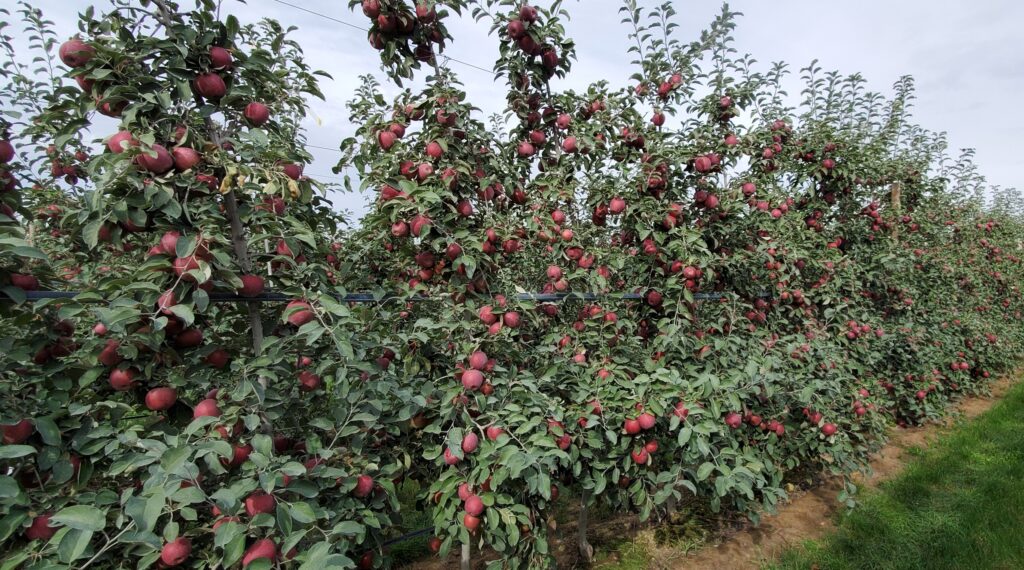
WA 38 is classified as a Type 4 tree, similar to Granny Smith, characterized by long branches and a tendency to develop blind wood (unproductive wood) near the trunk (Anthony et al. 2019, 2020). It is a moderately vigorous variety, with vigor that can be effectively managed through cropping. While young trees may initially exhibit high vigor, a noticeable reduction typically occurs once fruiting begins.
- Growth Type: Type 4.
- Branching: Tends to develop long branches with blind wood near the trunk (areas lacking fruitful buds) (Figure 1).
- Vigor (can be manipulated by the choice of rootstock).
- Naturally vigorous, especially in young trees.
- Vigor reduces once cropping begins, which helps with management.
- Management: Vigor can be effectively managed through appropriate pruning, training, and cropping practices.
Fruiting Characteristics of WA 38
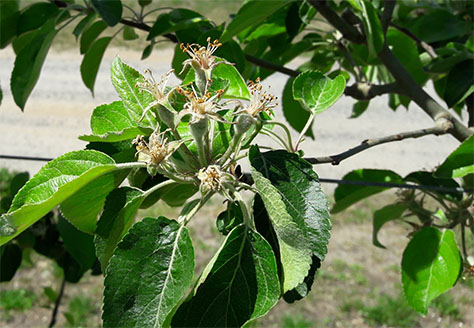
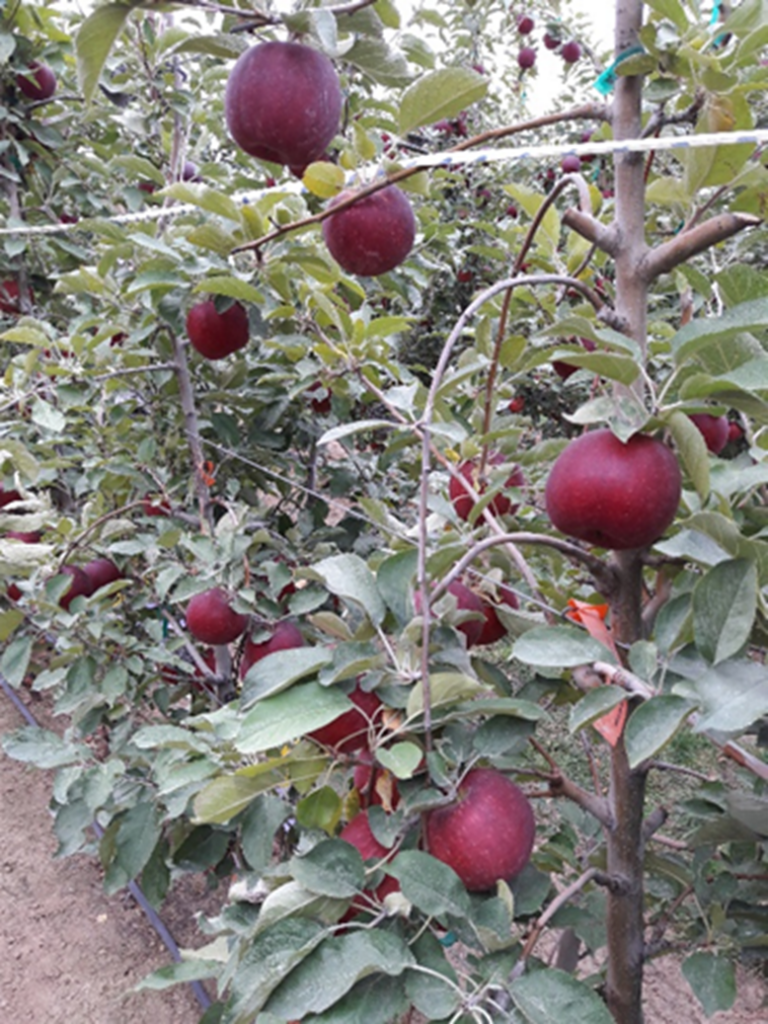
WA 38 exhibits a unique fruiting pattern. Apples can develop from three distinct types of bearing wood. Specifically, fruit can originate from spurs (S) on two- to three-year-old wood (Figure 2), from ramo misto (RM) on one-year-old shoots bearing lateral buds in its second year of development (Figure 3), and from brindilla (B) at the tips of bearing shoots (Figure 4).
WA 38 Fruiting Woods
Spur (S): Short and compact fruiting formation found on branches two years old or older (Figure 2).
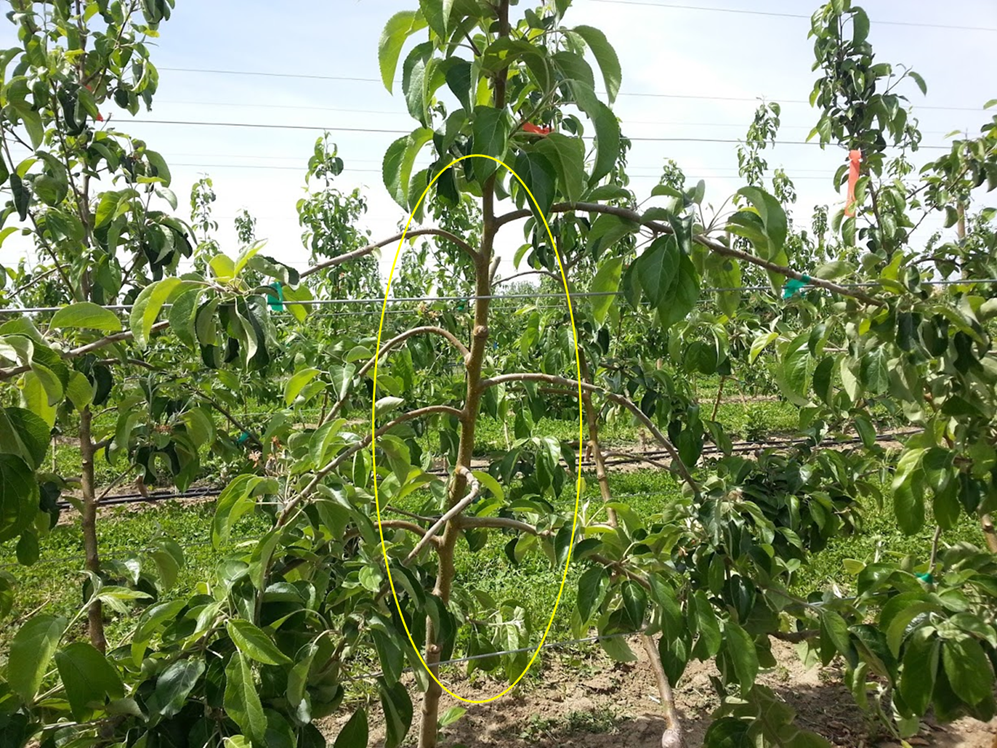
- Characterized by stacked rings of wood.
- Spur leaf growth is completed at the end of June (Flore et al. 1984).
- Traditional fruiting structure showing a zig-zag growth pattern (Flore et al. 1984).
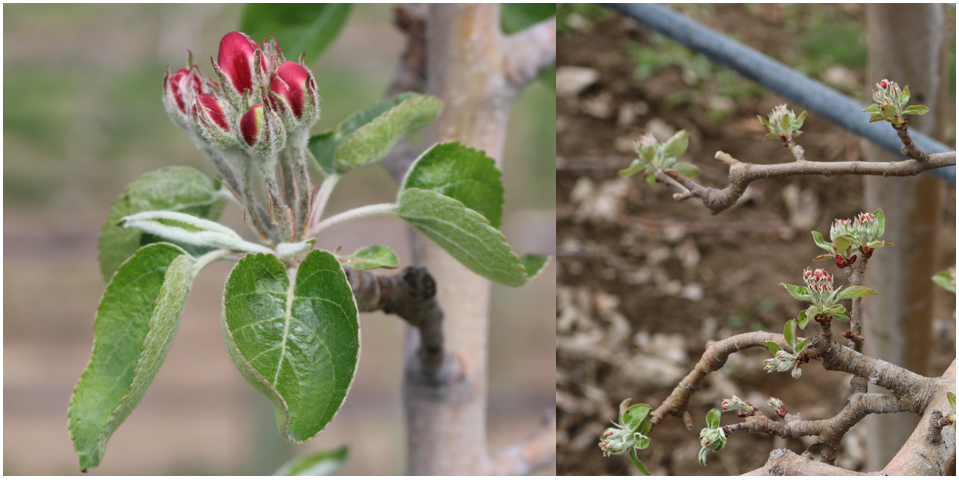
Ramo misto (RM): A spur-like, one-year-old shoot bearing on lateral buds and on tip bud in its second year of development (Figure 3).
- Fruit also develops from lateral buds along the shoot.
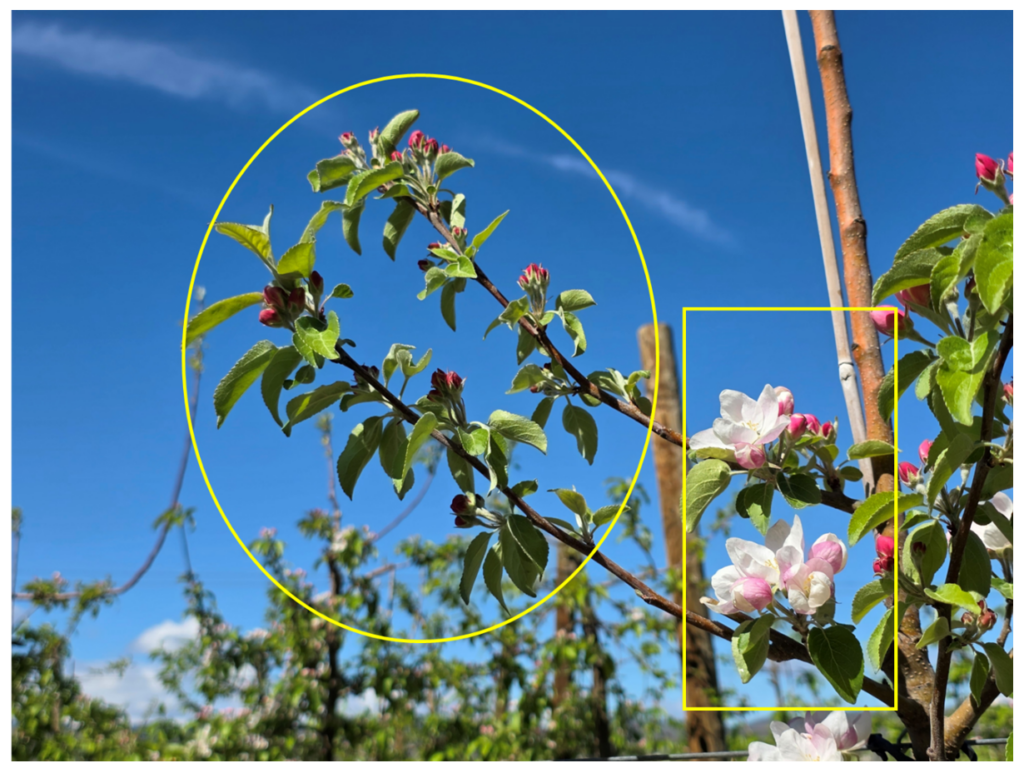
Brindilla (B): Tip bearing one-year-old shoot with vegetative lateral buds entering its second year of development (also known as brindle).
- Apples are produced on the terminal bud of the brindilla shoot, with a variable set of one to three apples (more frequently a single one).
Key Points on Fruiting Characteristics
- WA 38 is a Type 4 variety similar in its habit to Granny Smith.
- Depending on the rootstock, the variety can modulate its natural vigor.
- This variety sets fruit mainly on spurs, ramo misto, and brindilla.
- Bloom sequence from first to last is S (spur), then B (brindilla), then RM (ramo misto).
Investigation of WA 38 Fruiting Habit, Cluster Occupancy, and Quality in the Different Types of Wood
WA 38 is a self-thinning cultivar that exhibits a bloom gradient within each cluster, with king flower opening first and lateral blooms following 48–72 hours later. Under favorable conditions, the king flower is most likely to set fruit, while laterals act as a backup if the king fails. Under typical Washington State spring conditions, bloom within a cluster spans about five to eight days, with petal fall beginning as early as two days after king bloom and lasting eight to ten days (Serra et al. 2025). For this reason, chemical thinning is not necessary and could pose a problem due to the high risk of overthinning the fruit. Manual thinning can be adopted only in specific years with high fruit set.
To provide an analytical determination of the fruiting habit of WA 38 for two consecutive years, 2021 and 2022, samples from different sites were collected at harvest, keeping crop separated by the different bearing woods (S = spur [fruiting two- to three-year-old wood], RM = ramo misto [one-year-old shoot bearing on lateral buds], B = brindilla [tip bearing shoot]) and fruit type based on total occupancy within a cluster (S = single, D = double, T = triple, Q = quadruple, similarly to what reported in Serra et al. 2024).
Results of 2021 Studies and Observations
In 2021, we conducted a study on flower bud formation and potential differences in fruit set across five distinct apple cultivation scenarios in the Wenatchee and Columbia Basin regions of Washington State. These scenarios will be referred to as “combinations” (Table 1). At harvest, apples were collected from three trees per scenario and location, for a total of 15 trees. Each harvested apple was labeled based on its bearing wood type—spur (S), ramo misto (RM), or Brindilla (B)—and its fruit type, classified by the number of fruits per cluster—single (S), double (D), triple (T), or quadruple (Q). This resulted in up to 12 potential bearing wood–fruit combinations per tree (Musacchi et al. 2022).
Table 1. WA 38 combinations investigated in the 2021 survey on fruiting wood. All locations are commercial or research orchards in Washington State. GS = Granny Smith as interstem in the top graft scenario.| Combination | Location | Year of Planting | Density (trees/acre) | Training System | Rootstocks |
|---|---|---|---|---|---|
| WA 38/M.9-NIC29_Spindle | Quincy | 2018 | 1,584 | Spindle | M.9-NIC29 |
| WA 38/G.935_V_system | Royal City | 2018 | 1,980 | V system | G.935 |
| WA 38/M.9-T337 -GS_Spindle | Rock Island (SRO) | 2009 (top-worked 2016) | 1,499 | Spindle | GS/M.9-T337 |
| WA 38/M.9-T337 -GS_2-axis | Rock Island (SRO) | 2009 (top-worked 2016) | 1,499 | 2-axis | GS/M.9-T337 |
| WA 38/M.9-T337 -GS_3-axis | Rock Island (SRO) | 2009 (top-worked 2016) | 1,499 | 3-axis | GS/M.9-T337 |
For each tree, total yield (both number of fruits and weight in kg) was recorded. The harvested apples were then boxed and stored at 33°F in regular air. Seven weeks postharvest, apples were sorted and graded using an Aweta Cupsizer TV-HS 2–4 (2019) line, which grouped fruit by color and size. A customized program categorized fruit into four size classes (Serra et al. 2024):
- Small (≤ 215 g)—equivalent to ≥ 88 apples per box.
- Medium (216–263 g)—approximately 80 apples per box.
- Large (264–339 g)—approximately 72 to 64 apples per box.
- Extra-Large (≥ 340 g)—≤ 56 apples per box.
Table 2 presents the yield parameters from the 2021 harvest for each WA 38 training system and rootstock combination. On average (N = three trees per combination), the number of apples per tree ranged from 57 in the WA 38/M.9-T337 -GS_3-axis_SRO system to 159 in the WA 38/M.9-NIC29_Spindle_Quincy system. Corresponding fruit production ranged between 15.1 kg and 29.3 kg per tree (Table 3). As expected, the combination with the highest crop load (WA 38/M.9-NIC29_Spindle_Quincy) produced the lowest average fruit weight, at 184 g per apple (equivalent to approximately 110–113 apples per 40 lb box). In contrast, the WA 38/M.9-T337 -GS_3-axis_SRO combination yielded the highest average fruit weight, at 271 g per apple (large size, approximately 72 apples per box), as shown in Table 2.
Table 2. Productivity data for the WA 38 combinations evaluated at harvest 2021 are presented as the number of apples per tree, net yield (kg per tree; 1 kg = 2,205 lb), and average fruit weight (g). Values represent the average of three trees per combination. Statistical significance is indicated in the table as ** = p < 0.01 and *** = p < 0.001, and letters separating means were assigned using the SNK test.| Combination (2021) | No. Apples/Tree (***) | Yield (kg/tree) (**) | Yield (Mtons/acre) (**) | Avg. Apple Weight (g) (**) |
|---|---|---|---|---|
| WA 38/M.9-NIC29_Spindle_Quincy | 159 a | 29 a | 46 a | 184 b |
| WA 38/G.935_V_system_Royal_City | 71 b | 16 b | 31 b | 226 ab |
| WA 38/M.9-T337 -GS_Spindle_SRO | 64 b | 17 b | 25 b | 254 a |
| WA 38/M.9-T337 -GS_2-axis_SRO | 71 b | 19 b | 29 b | 267 a |
| WA 38/M.9-T337 -GS_3-axis_SRO | 57 b | 15 b | 23 b | 271 a |
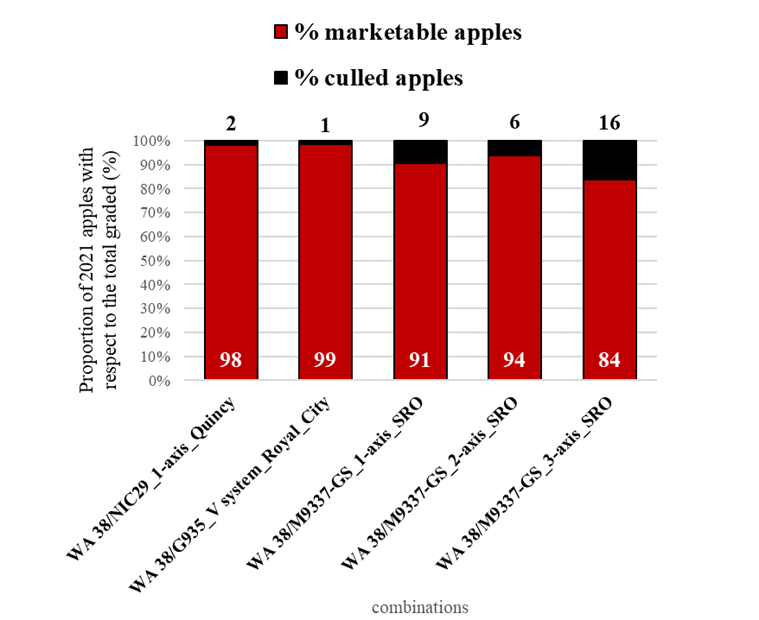
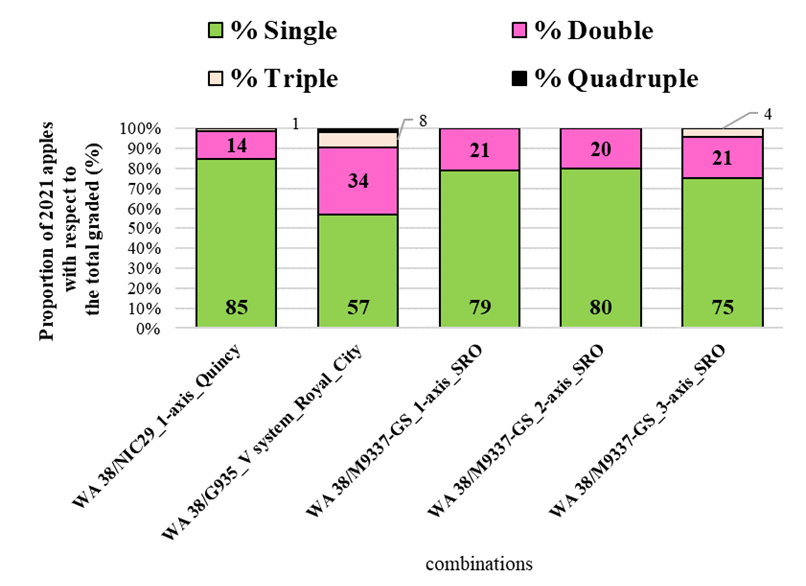
Working on orchards of different ages provided a broad range of information on the bearing wood characteristics of WA 38. We analyzed the types of apple set, determined by occupancy patterns within a cluster at harvest (S, D, T, Q/cluster), and the proportion of apples harvested from each bearing wood combination in the trial as a function of the aforementioned descriptors for each WA 38 cultivation scenario. This survey may have wide practical value, including generating knowledge to support targeted pruning that encourages fruiting on specific wood types or to adjust the training system (e.g., number of axes per tree) to achieve more uniform apple size. Overall, across the five combinations, the proportion of culled apples in 2021 ranged from 1% in WA 38/G.935_V system_Royal City to 16% in WA 38/M.9-T337 -GS_3-axis_SRO (Figure 5). In Figure 6, we present the yield distribution at harvest for each of the five combinations, based on fruit set occupancy within a cluster. Most WA 38 fruit was harvested as one fruit per cluster (single), accounting for 57% to 80% of the total fruit per tree, followed by two fruits per cluster (double), which represented 14% to 34% of the total yield per tree. The proportion of yield from triple clusters (three apples within the same cluster) was generally very low, as observed for WA 38/G.935_V_system_Royal_City and WA 38/M.9-T337 -GS_3-axis_SRO (Figure 6). The peculiar tendency of WA 38 to set a single fruit per cluster was already reported by Serra et al. (2024) and is further confirmed by these datasets.
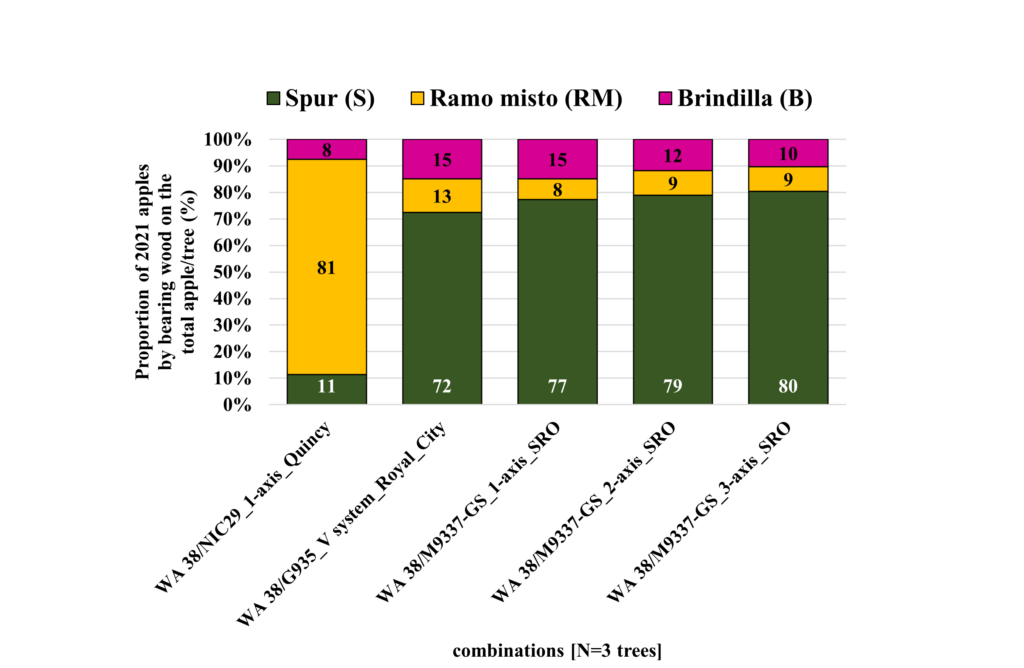
Figure 7 illustrates the proportion of apples harvested from each bearing wood type within each combination. In most cases (four out of five), 72% to 80% of the apples were produced on spurs (S), followed by 10% to 15% on brindilla (B), and 8% to 13% on ramo misto (RM). However, one combination—WA 38/M.9-NIC29_Spindle_Quincy—showed a different pattern, with 81% of the apples harvested from ramo misto (lateral buds on one-year-old shoots). In comparison, only 11% and 8% of the harvested fruit came from spurs and brindilla, respectively (Figure 7). The peculiar distribution of bearing wood in that block can be explained by the targeted pruning carried out in the orchard the year before the survey (2020). The specific pruning consisted of a moderate click-pruning approach (Anthony et al. 2019; Serra et al. 2025), with the preservation of young fruiting structures, such as brindilla and ramo misto.
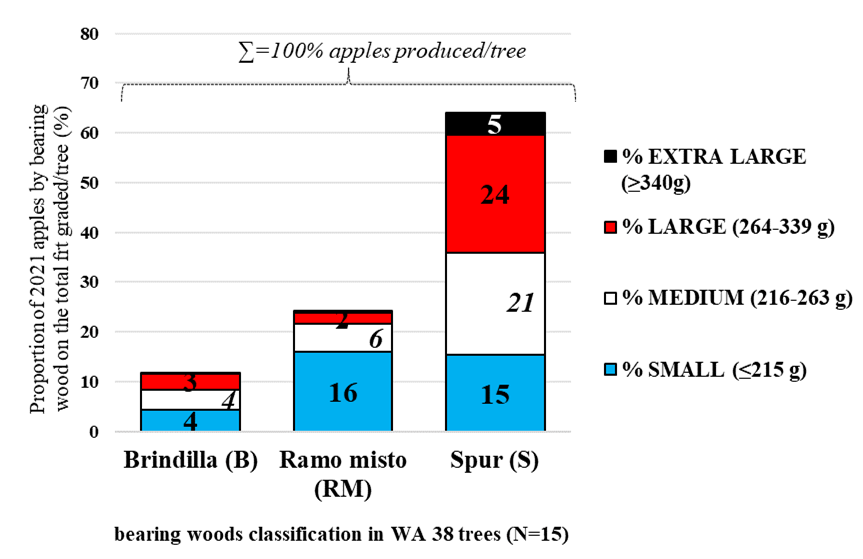
Merging data from all five combinations to evaluate overall variability in apple size, we found that apples produced on brindilla were distributed across small, medium, and large categories, with no clear tendency toward a specific size class. In contrast, apples borne on lateral buds of one-year-old shoots (RM) tended to be predominantly small (Figure 8). The tendency for fruit on ramo misto to produce smaller apples may be attributed to several factors. Lateral buds on one-year-old shoots are generally smaller, which implies a lower initial cell number. Additionally, these flowers typically bloom later than those on spurs or terminal buds (Figure 3); in some years, we have observed a five-to-seven-day delay, depending on the season. Spurs produced most of the WA 38 apples, with fruit sizes ranging from small to extra-large, and with a greater proportion in the medium and large size classes, corresponding to 80 and 72–64 apples per box, respectively (Figure 8). The fruit size distribution by wood type shown in Figure 8 reflects cumulative data across all five orchards.
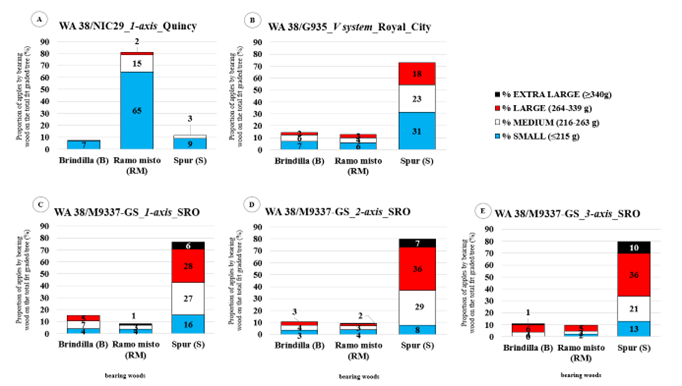
For this reason, the graphs shown in Figure 9 (A–E) provide a more realistic representation of each combination evaluated in this trial. The combination WA 38/M.9-NIC29_Spindle_Quincy, illustrated in Figure 9A as the proportion of apples produced per tree by bearing wood type and fruit size, demonstrates the predominance of fruit harvested from RM (lateral buds on one-year-old shoots) compared with the other two wood types and its tendency to set smaller WA 38 apples rather than medium or large ones. In contrast, all four size classes were represented among apples harvested from spur structures (S), with most fruit falling into the medium and large categories, accounting for 55% to 65% of production in fully cropping mature trees, such as those in the Sunrise block top-grafted in 2016 (Figure 9C, 9D, 9E), with the exception of the two younger orchards (Figure 9A and 9B). At the SRO site, we compared three training systems (Figure 9C, 9D, 9E)—a one-axis (spindle), a two-axis (bi-axis), and a three-axis (multi-leader) system—highlighting how the number of leaders per tree and overall architecture influence the distribution of apples by wood type and size. WA 38/M.9-T337 -GS_2-axis_SRO showed a tendency to produce up to 72% of its fruit on spurs and primarily in the medium to extra-large size classes (Figure 9D), with a lower proportion of small fruit compared to WA 38/M.9-T337 -GS_1-axis_SRO (Figure 9C). This observation supports previous studies in the literature, which have shown that spurs are the primary bearing wood in bi-axis (Musacchi et al. 2014) and exhibit greater uniformity of production in 2D canopies (Musacchi 2008; Sazo 2018).
Results of 2022 Studies and Observations
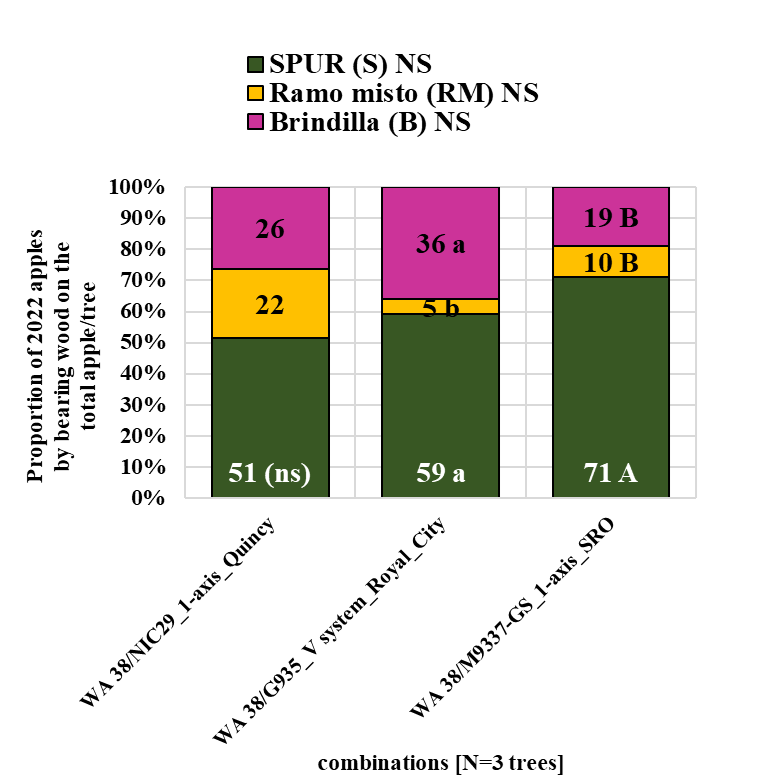
The 2022 survey focused on three WA 38 orchard sites, each varying in rootstock, planting density, planting year, and location (Table 3), to further explore the role of different bearing wood types in WA 38 production under diverse conditions. Unlike in 2021, the 2022 analysis excluded the two-axis and three-axis systems. Two sites, WA 38/M.9-NIC29_Spindle_Quincy and WA 38/G.935_V system_Royal City (both planted in 2018) demonstrated consistent productivity across both years (Tables 2 and 3). Among the sites, WA 38/M.9-NIC29_Spindle_Quincy recorded the highest apple count per tree (161), while WA 38/G.935_V system_Royal City had the lowest (66). This difference in crop load significantly influenced average fruit weight, which was 179 g (equivalent to approximately 113–100 apples per box) and 242 g (equivalent to approximately 80 apples per box), respectively (Table 3). A notable change occurred at the WA 38/M.9-NIC29_Spindle_Quincy site: in 2021, 81% of apples were borne on ramo misto shoots, but by 2022 this proportion dropped to 22% (Figure 10). This shift reflects the natural aging of fruiting structures, as many ramo misto from 2021 had transitioned into spur-bearing wood by 2022.
| Combination (2022) | No. Apples per Tree | Yield (kg/tree) | Yield (Mtons/acre) | Apple Weight (g) |
|---|---|---|---|---|
| WA 38/M.9M.9-NIC29_Spindle_Quincy | 161 a | 28 | 45 | 179 b |
| WA 38/G.935_V_system_Royal_City | 66 b | 16 | 31 | 242 a |
| WA 38/M.9-T337 -GS_Spindle_SRO | 109 ab | 22 | 33 | 202 ab |
| Significance | * | NS | NS | * |
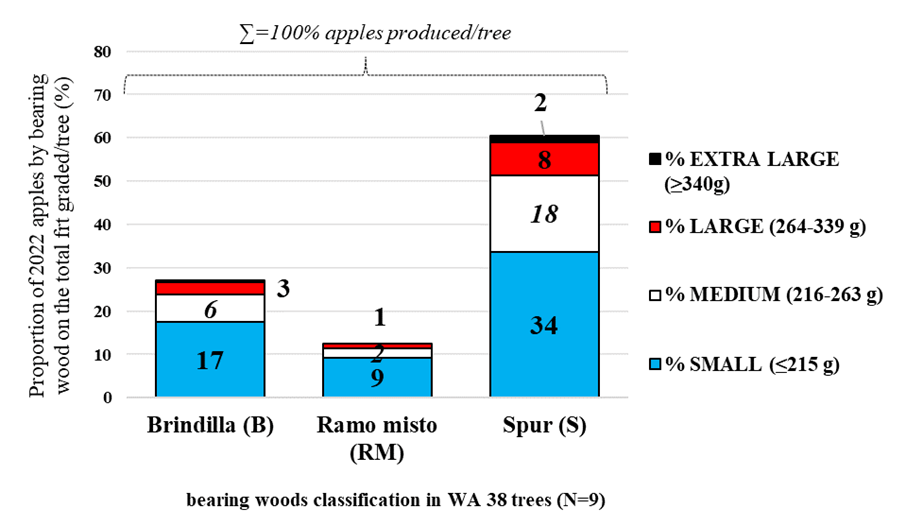
To picture the overall variability in apple size based on bearing wood, we averaged the three combinations and observed that apples from brindilla and ramo misto were mainly small (≥ 88 apples per box) in 2022; while spur-borne apples showed higher proportions in medium (80 apples per box) and large size (72–64 apples per box), despite 34% of the apples belonging to the small size category (Figure 11).
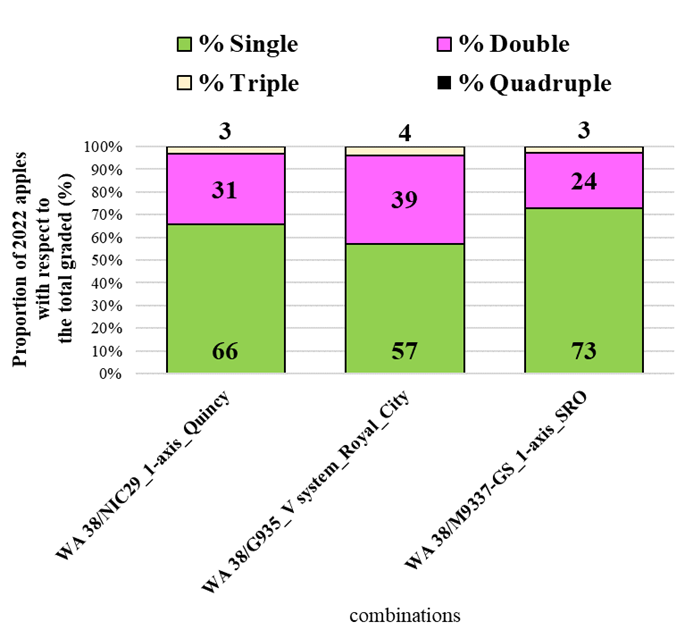
Due to WA 38’s natural self-thinning trait, the majority of clusters self-singularize (57% to 73% of apples harvested as single in a cluster), followed by doubles (Figure 12). This two-year survey confirmed previously published data (Serra et al. 2022; Serra et al. 2025).
Fruit Quality Analysis by Bearing Wood (2021–2022)
This study examined the impact of bearing wood on WA 38 fruit quality. Apples (crop 2021) from two combinations in two locations (WA 38/M.9-NIC29_Spindle_Quincy and WA 38/M.9-T337 -GS_Spindle_SRO, where the trees were trained as a spindle) were compared among the three bearing woods. The quality analysis was performed after six months of storage (1°C ± 1°C) on single (S) apples in the cluster, with the best overcolor, no defects, and a size of 65–90 mm (Table 4). Apples harvested in SRO—regardless of the bearing wood—were larger, heavier, and riper (lower IAD) (Ziosi et al. 2008), with higher firmness, soluble solid content (SSC), and dry matter (DM) than apples from Quincy (Table 4). This can likely be attributed to differences in crop load recorded in 2021, with the Quincy combination yielding 29 kg per tree and the SRO combination yielding just 17 kg per tree (Table 2). However, in 2022, the yield per tree was not different (Table 3). There were no significant differences among sites in the number of mature, healthy seeds per apple or in titratable acidity (TA). However, when comparing the three bearing wood types—a primary focus of this analysis—some differences were observed. Apples produced on ramo misto (RM) had a larger diameter and higher SSC and DM than those produced on brindilla (Table 4). No significant difference in maturity (IAD) emerged between apples of different woods after six months of storage, but differences can be expected at earlier postharvest durations. Parameters such as apple maximum diameter, apple mass, and SSC showed a significant location-by-wood interaction (Table 4), suggesting that differences in fruit quality may also reflect the influence of crop load.
In 2022, only IAD, firmness, and TA differed between the two locations (Table 5). Significant differences have been observed among the bearing types, with fruit from brindilla appearing smaller and less ripe than those from ramo misto and spur. Notably, WA 38 apples from spurs were larger and heavier and had a higher number of healthy, viable seeds, compared to apples from lateral shoots of ramo misto (Table 5). Some of the flower clusters in the lateral positions of ramo misto often bloom several days later than the majority of clusters on spurs; therefore, it is too late to have synchrony with ideal pollen donor trees (most likely at petal fall). In 2022, the TA of WA 38 apples from spurs was higher than that of apples from the other two bearing types, suggesting better postharvest storage potential. The recommended click-pruning practice to manage the blind wood in this variety can also help reduce variability in quality by limiting the proportion of one-year-old wood used for branch renewal, thereby increasing the proportion of high-quality fruit.
| WA 38 | Diameter (mm) | Weight (g) | IAD at 6M | Firmness (lb) | SSC (%) | DM (%) | TA (% malic acid) |
|---|---|---|---|---|---|---|---|
| Quincy | 75.1b | 198b | 0.92a | 14.0b | 13.5b | 13.9b | 0.38 |
| SRO | 79.8a | 243a | 0.13b | 14.8a | 14.2a | 14.6a | 0.38 |
| Significance | *** | *** | *** | *** | *** | *** | NS |
| Brindilla | 76.0b | 212 | 0.57 | 14.3ab | 13.6b | 14.0b | 0.38 |
| Ramo misto | 78.2a | 224 | 0.67 | 13.9b | 14.0a | 14.4a | 0.37 |
| Spur | 77.1ab | 216 | 0.54 | 14.7a | 13.8b | 14.4a | 0.39 |
| Wood Significance | * | NS | NS | * | * | ** | NS |
| Significance Location × Wood | ** | NS | NS | NS | NS | NS | NS |
| WA 38 | Diameter (mm) | Weight (g) | IAD at 3.5M | Firmness (lb) | SSC (%) | DM (%) | TA (% malic acid) |
|---|---|---|---|---|---|---|---|
| Quincy | 75.9 | 509 | 0.75a | 15.5a | 12.9 | 13.5 | 0.41a |
| SRO | 76.3 | 218 | 0.36b | 14.6b | 12.9 | 13.4 | 0.35b |
| Significance | NS | NS | *** | *** | NS | NS | *** |
| Brindilla | 73.8c | 194c | 0.67a | 15.1 | 12.8 | 13.2 | 0.36b |
| Ramo misto | 75.9b | 212b | 0.54b | 15.0 | 13.1 | 13.4 | 0.36b |
| Spur | 78.4a | 233a | 0.50b | 15.0 | 12.8 | 13.6 | 0.40a |
| Wood Significance | *** | *** | *** | NS | NS | NS | ** |
| Significance Location × Wood | NS | NS | NS | NS | NS | NS | *** |
Key Points on Fruit Quality Analysis
- The majority of WA 38 production occurs with one apple per cluster (65%–75%), followed by two apples per cluster, and a minimal number of clusters have three or more apples per cluster.
- If the blocks are managed with click-pruning from the beginning, 60%–77% of the apples are produced on spurs, followed by brindilla and by one-year-old shoot lateral buds (ramo misto).
- Apples from one-year-old shoots (ramo misto) were smaller, while spurs produced apples with more variable sizes, ranging from small to extra-large.
- Apples borne on brindilla and ramo misto are smaller in size than apples cropped on spurs.
“Spur Extinction” and Blind Wood Development in WA 38
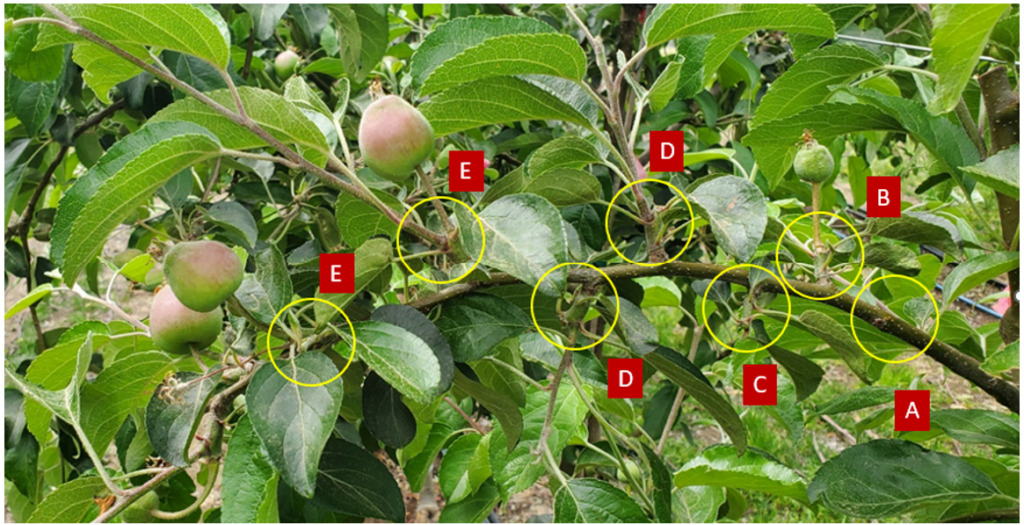
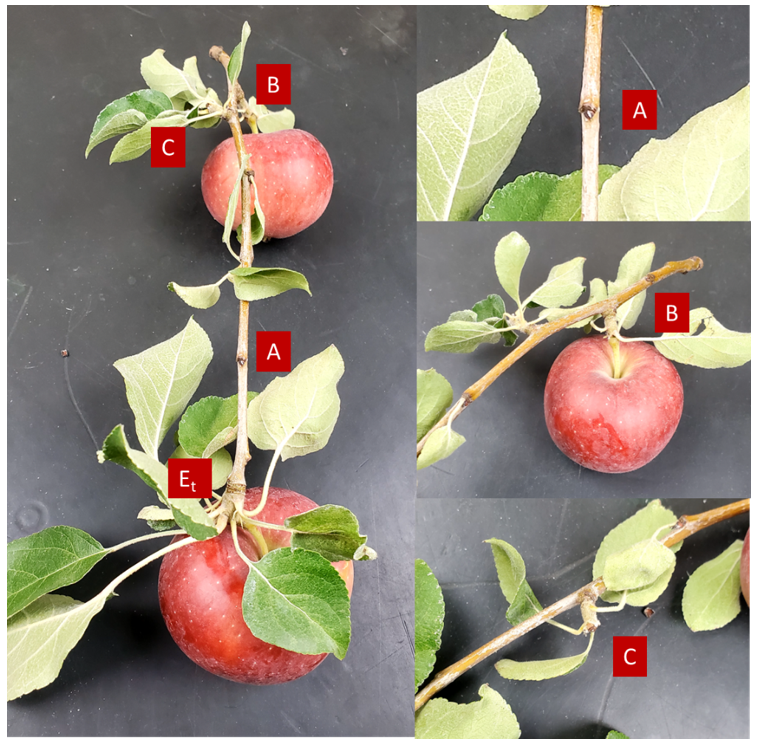
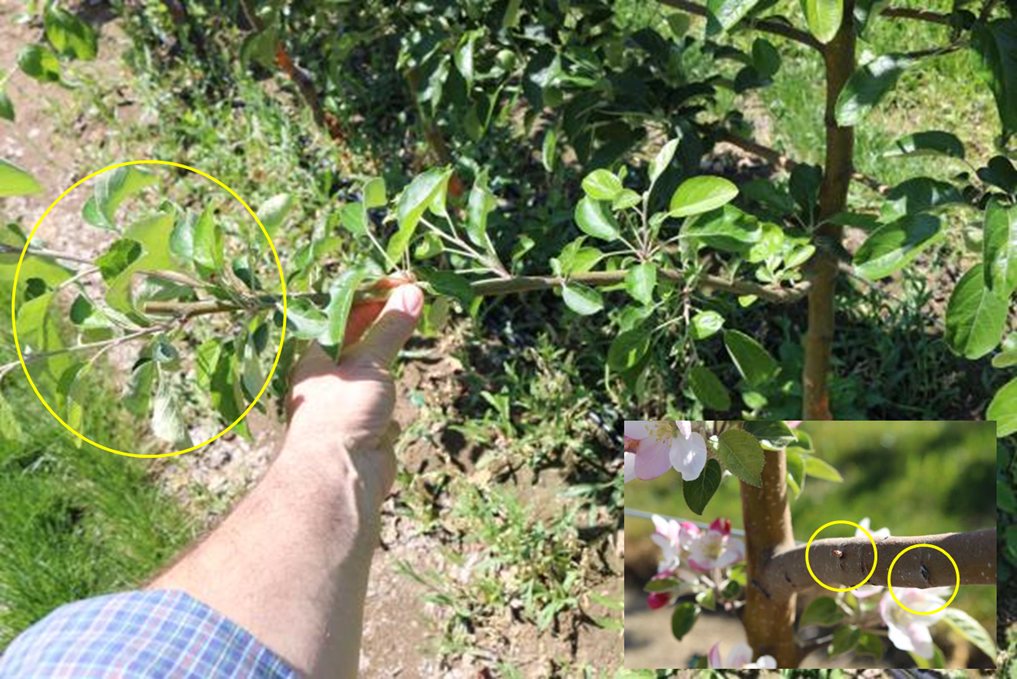
WA 38 commonly develops blind wood because of natural spur extinction. Lateral flower clusters on the ramo misto often exhibit weak floral development, particularly at the base of the shoot (proximal portion of the ramo misto, near the main leader). In many instances, the flower cluster is incomplete, consisting of fewer flowers lacking a vegetative meristem, leading to the extinction of the bearing spur. Additionally, young spurs (those in the second year of shoot development in a lateral direction) located in the basal to mid-section of the ramo misto often fail to set fruit or experience early fruit drop, leaving behind blind buds (Figures 13 and 14).
Spur extinction presents several cultural issues:
- Reduction in flower clusters: The annual number of flower clusters per tree is naturally diminished due to failed spur renewal and floral inhibition.
- Overreliance on one-year-old wood: A large portion of fruiting occurs on one-year-old shoots, which typically produce smaller fruit compared to older, well-established spurs (Tables 4 and 5).
- Shoot weeping: Fruit set predominantly at the distal end of the shoot (see the fruit indicated with Et in Figure 14), resulting in excessive bending or “weeping” of branches, negatively affecting canopy structure, blind wood, and light penetration.
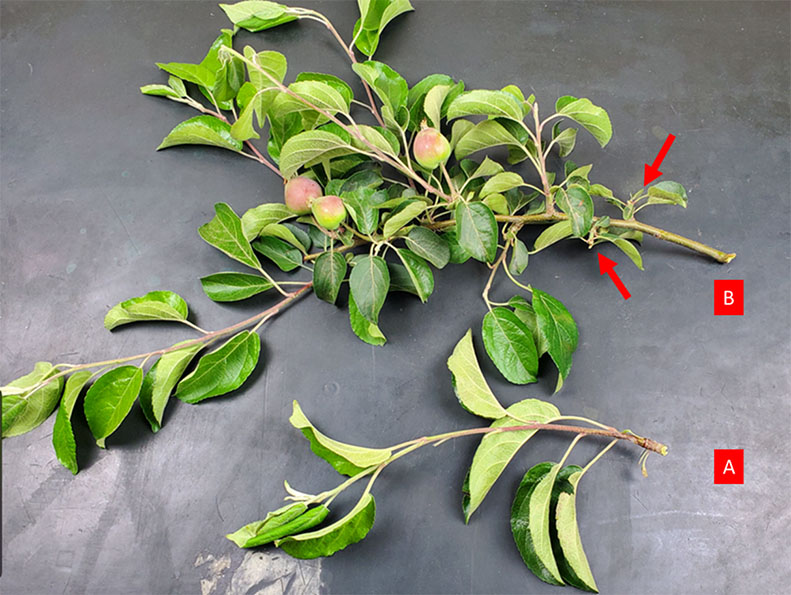
The weak flower clusters often have small leaves, reduced floral numbers, and reduced flower quality, contributing to poor fruit set and increasing the likelihood of spur abortion. Over time, this leads to widespread blind wood development, characterized by short stumps and the absence of viable buds for renewal, ultimately compromising both yield potential and fruit quality (Figure 15).
A similar pattern of spur degeneration and blind wood formation was documented in Scifresh (Jazz) by Palmer et al. (2008), suggesting a potentially broader issue among certain modern cultivars with similar architectural traits.
Key Points on “Spur Extinction” and Blind Wood
- Natural spur extinction and blind wood are commonly observed in the basal buds of one-year-old fruiting shoots in their second year of development.
- The variety shows a centrifugal or outward shift in the cropping zone, with the onset of blind wood at the base of the branch near its insertion into the trunk.
General Pruning Principles
Pruning plays a critical role in modern orchard management by influencing tree architecture, canopy porosity, crop load, and fruit quality. It also affects key physiological processes, including flowering, root-to-shoot growth ratio, and nutrient uptake (Ferree and Schupp 2003). Pruning techniques must be adapted over time to align with the tree’s training system, cultivar, and orchard age. As trees mature, pruning helps guide their natural bearing habits to optimize productivity during the commercial fruiting stage. Pruning should be considered the first tool for adjusting crop load in the new season.
In high-density (HDP) and very high-density (VHDP) orchard systems, pruning regimes have evolved to include innovative practices such as green (or summer) pruning, bending, and heading back (Li and Lakso 2004; Bhusal et al. 2017; Musacchi and Greene 2017; Dominguez and Robinson 2025). These techniques, used in conjunction with traditional winter pruning, promote efficient canopy management and sustained fruit quality.
Many of the cultivars suited to HDP and VHDP systems fall into Type 3 or Type 4 architectural categories, as defined by the Lespinasse model (1977, 1980). For these cultivars, two key pruning techniques are commonly applied: bending (Dominguez and Robinson 2025) to regulate vigor and encourage lateral development, and click-pruning (Musacchi and Greene 2017; Anthony et al. 2020) to renovate fruiting wood and reduce blind wood. Research by Mohammadi et al. (2013) found that click-pruning significantly enhances flower bud formation in apple trees. Click-pruning has been shown to reduce the biennial bearing index compared to bending (Anthony et al. 2020). To maintain fruit quality, 20%–25% of the branches should be renewed annually (Anthony et al. 2020).
Bending and Long Pruning
Bending is a traditional method used by horticulturists to open the crotch angle of shoots, reducing vigor and altering the vegetative-to-reproductive balance (Grisvard 1957; Giulivo 1990). Lespinasse and Delort (1986) showed that bending increases flower bud formation and carbohydrate accumulation while reducing shoot size:
- Bending at 30 degrees to 90 degrees (where zero degrees is the tree leader) increases flower buds by 64%.
- Bending to 120 degrees results in 2.2 times more flower buds than at 30 degrees.
Bending can occur in spring or summer to slow shoot growth and increase flower bud formation (Baldini 1990). The bending stress can stimulate ethylene production in the shoot’s internal air space (Ferree and Schupp 2003).
This principle underlies the long pruning technique, initially developed by Lespinasse and later by the Mafcot (1999, 2000) research group at the National Institute for Agricultural Research (INRA) in France (“Maitrise de la fructification, concepts et techniques”). In this method, shoots and leaders are bent horizontally without cutting or shortening the shoots. Fruiting density is adjusted through “extinction” (flower bud thinning) to enhance light penetration (Diemoz 2005). This is the basis for the Solaxe training system (Lauri and Lespinasse 1998). Bending has been widely adopted in spindles and other training systems to reduce vigor and increase flowering (Lauri et al. 2004).
The Mafcot research group developed a tool called Equilifruit, designed to determine the optimal number of fruiting units per branch by measuring branch diameter (Diemoz et al. 2002; Diemoz 2005). During the first two years, this method requires approximately 150 labor hours per hectare per year, but this decreases significantly once the tree structure is established (Diemoz et al. 2002). Our experience with bending branches in WA 38 showed more blind wood at the shoot base, which negatively impacted the trees in subsequent years.
For WA 38, specific modifications to standard apple pruning are necessary. Feathers often need trimming to prevent blind wood, a common issue in this variety. In some cases, removing the apical portion of shoots with flower buds helps prevent excessive arching under the weight of developing apples. Leaving branches too long frequently results in spur extinction and blind wood formation, as illustrated in Figure 16.
Click-Pruning
Click-pruning is ideal for Type 4 cultivars, which tend to produce terminal-bearing shoots and blind wood at the branch base (Lauri and Lespinasse 1998). Originating in northern Europe to improve light penetration (Dallabetta 2014), click-pruning involves:
- Stubbing feathers at planting (Figure 17 [before stubbing]—Figure 18 [after stubbing]).
- WA 38 requires a long stub under Washington climatic conditions to prevent stub dieback (Figure 19).
- Bending new, developing feathers 40 degrees to 45 degrees.
- Heading the tip of the one-year-old shoot growing from the previous year’s branches.
- Removing apical dominance to encourage lateral bud breaking closer to the trunk.
This rejuvenates branches, improves structure, and enhances flower bud development (Mohammadi et al. 2013; Musacchi and Green 2017). Since 20%–25% of branches must be renewed annually, trees should have 25–30 short branches to maintain yield.
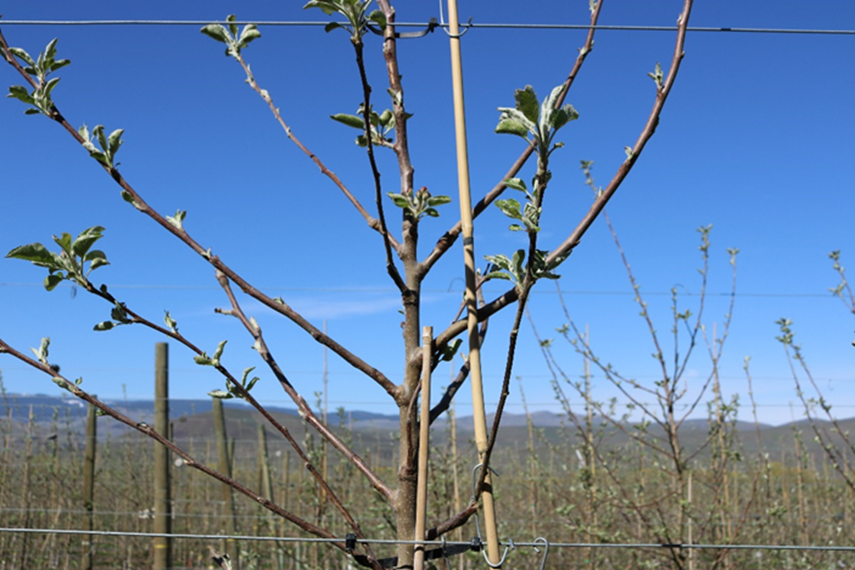
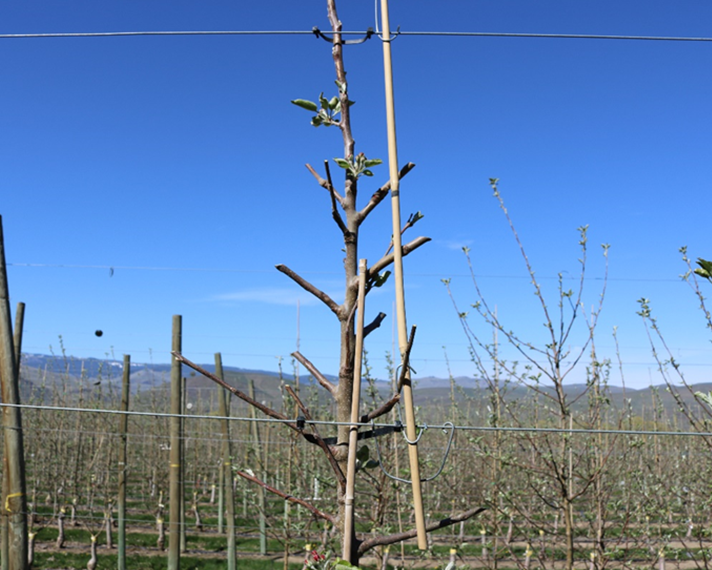
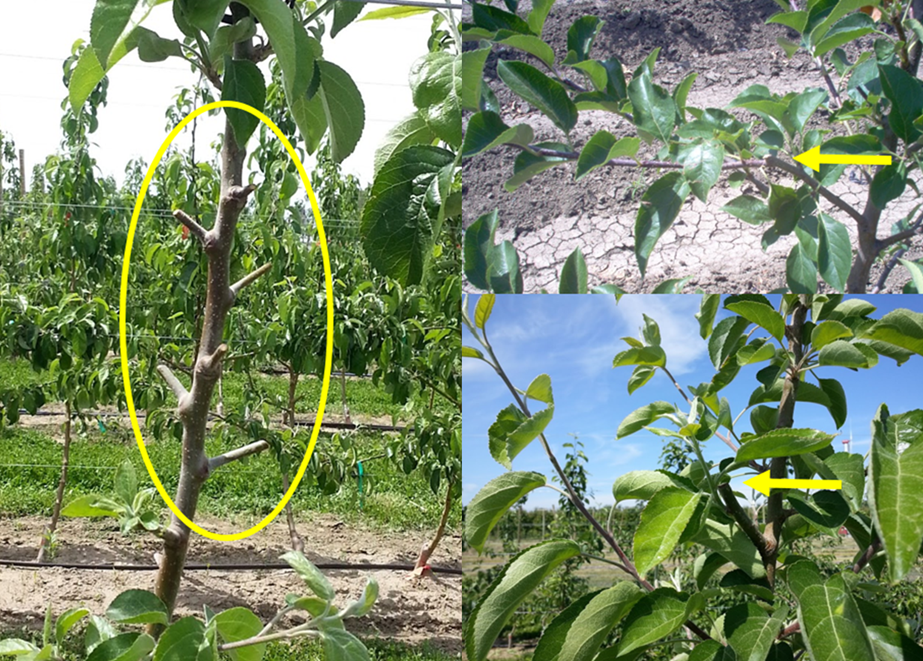
If click-pruning is adopted, feathers are shortened to two to four inches (5–10 cm) with the possibility of leafing out from several growing points, as shown in Figures 18 and 19 (right). Under Washington’s environmental conditions, the WA 38 branch collar rarely produces new shoots from latent buds, making proper stub length critical for successful renewal (Figure 19).
From each long stub, two or three shoots may develop (Figure 20). One or two of these shoots can be overly vigorous, but the shoot growing from the vegetative bud at the base of the stub will have a favorable crotch angle. This particular shoot will be used to build the branch, while the others will be stubbed again to reduce their vigor (Schupp et al. 2019).
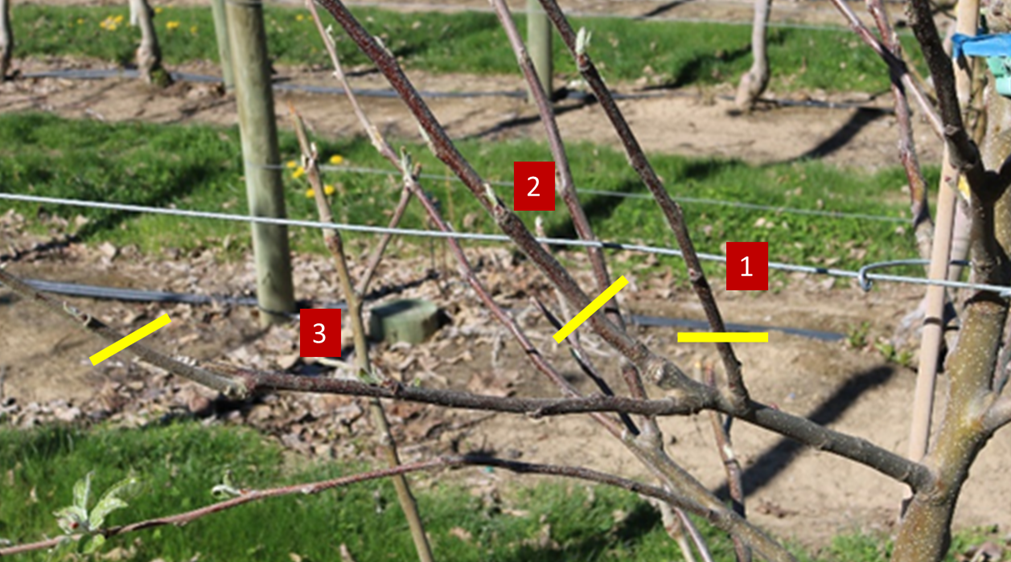
Overly vigorous branches should be removed to maintain the vegetative balance of the tree. When removing these branches, leaving a stub approximately two to four inches (5–10 cm) long is recommended to encourage the formation of a new shoot. Shorter stubs often die back, failing to regenerate growth (Figure 19, left).
For WA 38, it is recommended that the branches be trained at a 40- to 45-degree angle. The scaffold branches should be 1 to 1.5 feet (30 cm to 45 cm) above the ground. It is essential to maintain a good crotch angle of around 40 to 45 degrees between the branches and the main trunk to ensure structural integrity. Click-pruning with adequate vigor can improve bud swelling and minimize blind wood (Figure 21).
Management of the Central Leader and Development of Fruiting Wood
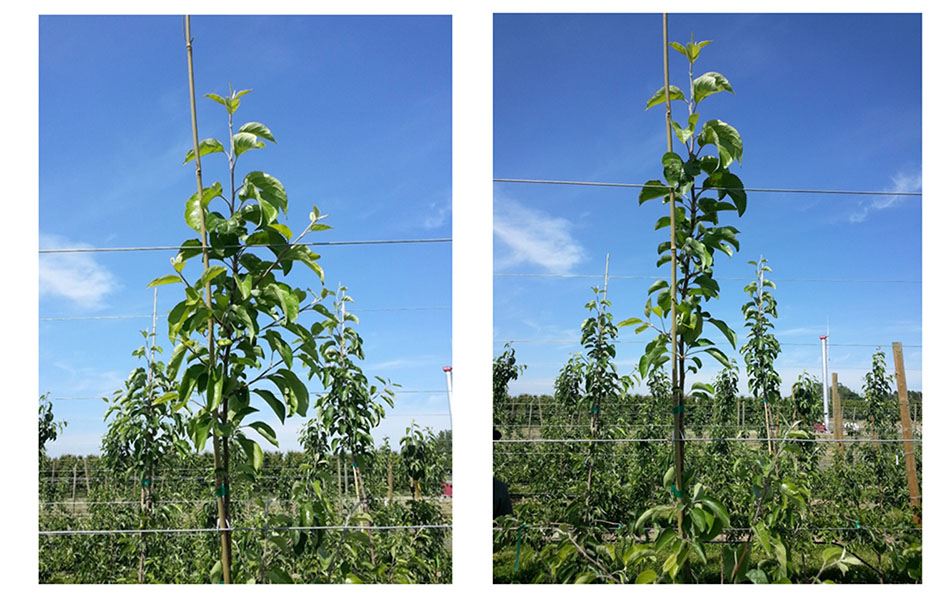
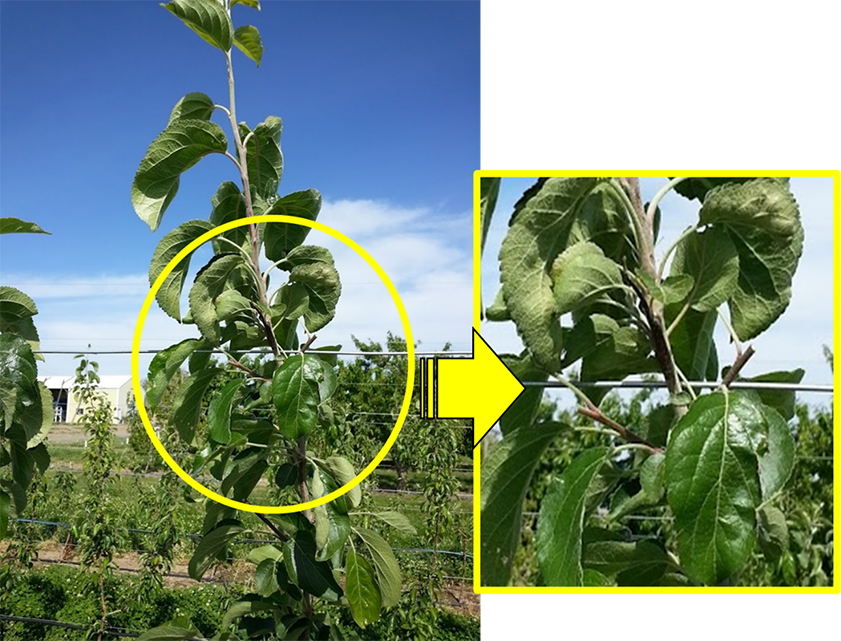
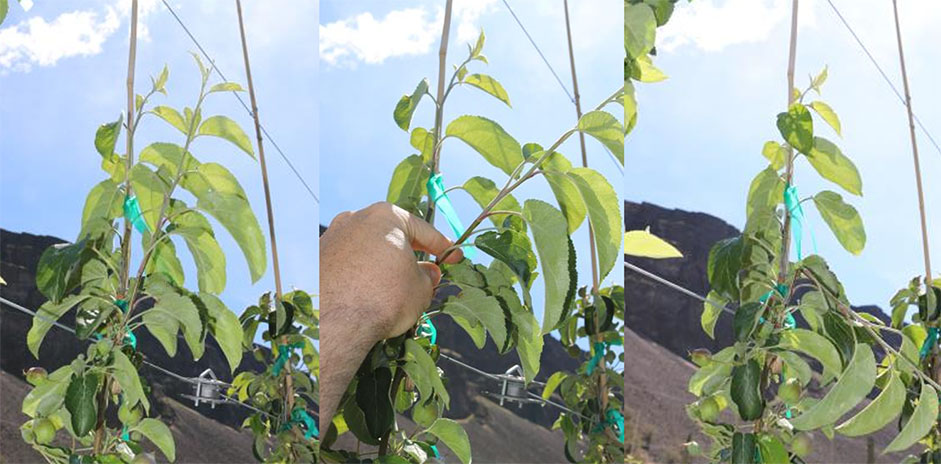
The central axis should be left free to grow, allowing for the development of short, one-year-old laterals. Over time, these will become productive branches through appropriate pruning, depending on the adopted training system. If vigorous shoots begin to compete with the central leader, they should be pruned (Figures 22 and 23) or snapped off (Figure 24) once or twice during the summer, depending on the tree’s vigor. Trees trained as a spindle can take various shapes depending on the spacing between trees within the row and the tree height, which is influenced by the row-to-row distance. As planting density increases, the tree shape becomes more cylindrical rather than conical. These trees are typically called slender spindle and are characterized by short branches that can be periodically renewed.
WA 38 requires specific adjustments in pruning and managing the tree during the growing season. Key points are:
- Excessive bending increases blind wood risk.
- Feather trimming and apical shoot removal help reduce spur extinction and manage branch structure.
- Shoots that develop from the base of long stubs exhibit favorable crotch angles.
- Overly vigorous or supernumerary shoots should be stubbed or removed, leaving stubs to encourage regrowth.
Key Points Specific for WA 38 Management
- Pruning is essential for managing tree architecture, canopy porosity, crop load, fruit quality, and physiological processes, like flowering and nutrient uptake.
- Techniques should match the training system, cultivar, and tree age and serve as a primary method to adjust crop load before the season.
- In HDP and VHDP systems, pruning practices include green or summer pruning, heading back, bending (to regulate vigor and encourage lateral growth), and click-pruning (to reduce blind wood and renew fruiting wood).
- Click-pruning involves stubbing feathers at planting (WA 38 requires longer stubs: 2–4 inches [5–10 cm]), orienting new shoots to 40 to 45 degrees, and heading one-year-old shoot tips to remove apical dominance.
- Click-pruning benefits include improved lateral bud development, flowering, and overall branch rejuvenation.
Techniques to Minimize Blind Wood
Scoring and Girdling
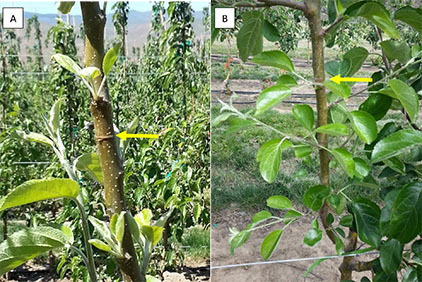
Scoring and girdling are horticultural techniques used to manipulate plant growth by temporarily disrupting phloem transport. Scoring involves severing the phloem without removing the bark, whereas girdling entails removing a strip of bark that includes the phloem layer (Ferree and Schupp 2003). Both methods alter the plant’s carbohydrate and hormone distribution, often stimulating localized vegetative growth and bud break. These practices are typically performed with a knife, a double-bladed shearer, or a small saw. The resulting wounds from light scoring generally heal within a couple of weeks.
In contrast, more aggressive girdling, such as that done with a scoring knife in grape production, removes a broader band of bark and takes longer to heal. Scoring or girdling is best performed in the spring at the green tip stage, either during the first year of growth (Figure 25A) or in the second year (Figure 25B), once the root system is well-established. At this stage, the plant’s response to the cut is often more vigorous, resulting in numerous new shoots and strong regrowth (Figure 25B). To minimize the risk of the trees snapping in high-wind conditions, orient the blades at a 45 degree angle to avoid completely incising the trunk circumference in the affected area.
Dutch Cut Stubbing to Increase Fruit Structure Formation
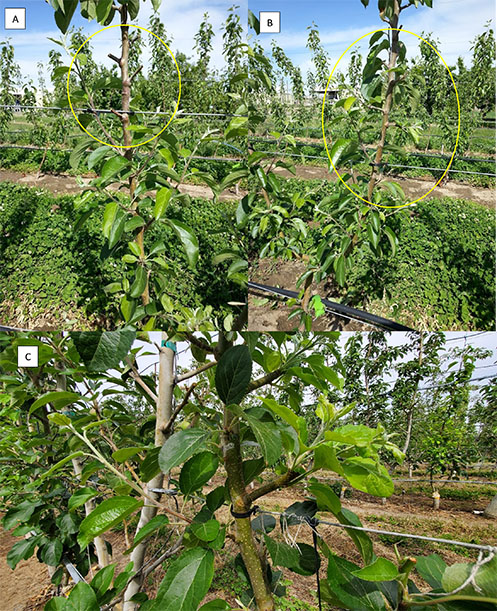
For training systems based on vertical axes with short fruiting shoots extending laterally from the trunk, if shoot renewal is lacking or a vigorous upright bud regrowth is present, an angled cut can be used to promote new growth. This can be remedied with a so-called “Dutch cut” (Musacchi and Greene 2017), which involves cutting horizontally rather than at an angle (Schupp et al. 2019; Einhorn 2022).
The horizontal cut often stimulates bud growth just below the cut, which emerges at a wider angle relative to the trunk. This results in the development of two new shoots that are typically less vigorous than the original shoot and have wider insertion angles, characteristics desirable for managing canopy structure and promoting fruiting. In WA 38, the response from the collar buds is relatively low. For this reason, it is better to leave a longer stub (2–4 inches [5–10 cm]) to ensure that at least one shoot is growing (Figures 18 and 26) (Schupp et al. 2019; Einhorn 2022).
Key Points for Minimizing Blind Wood in WA 38
- Temporarily, phloem disruption from scoring and girdling can allow bud break of latent buds beneath the cut.
- Depth and intensity of scoring and girdling practices should be adjusted to account for wind effects to preserve tree integrity.
- A “Dutch cut” can stimulate a latent bud that can generate a new shoot at a wider crotch angle.
- This type of cut requires a stub length of two to four inches to ensure renewal underneath the cut.
Summer Pruning and Mechanical Hedging
Summer pruning can be effectively used in WA 38 to manage excessive vigor, increase fruiting wood, and promote light and color distribution. During the summer, fully developed leaves become the source of carbohydrates and sugars for the developing fruit, buds, and root system. Pruning branches during the summer thus reduces the source of carbohydrates and the buildup of reserves for the next season, while helping to improve light and color distribution, air flow, water demand, and other hormonal regulation (Ferree and Schupp 2003).
In WA 38, summer pruning for vigor control and to promote fruiting buds has been adopted by many Washington growers who utilize different techniques and timings. For example, pruning during spring (May–June) removes remobilized carbohydrates and nutrients, reducing vigor. According to Ferree and Schupp (2003), pruning shortly after bloom time inhibits growth and may interfere with the initiation of flower buds. Summer pruning after the end of shoot growth (July–September) removes a portion of the leaf canopy, thereby affecting carbohydrate redistribution (Saure 1987).
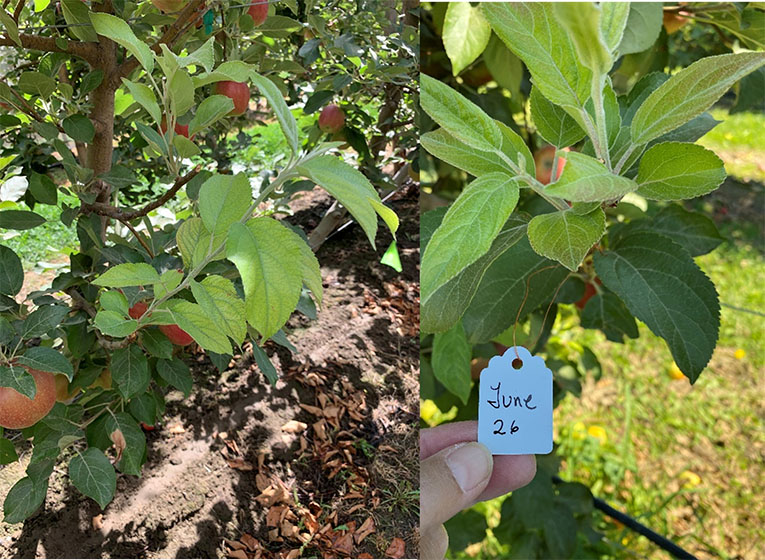
In the WA 38 experimental orchard in Prosser, spring pruning (May) led to reduced regrowth vigor (Figure 27), higher fruit set, but small fruit size (Sallato and Khot 2024). In some years, spring pruning also stimulated autumn flowering (Figure 28). Summer pruning after the end of shoot elongation (July–August) was more devigorating, with reduced regrowth, improved light distribution, and fruit coloring, particularly at the base of the trees. Summer pruning, accompanied by reduced irrigation in vigorous trees, helped balance the fruit-to-shoot ratio, yield, and fruit quality. Similar conclusions were reported by Quinlan and Preston (1971).
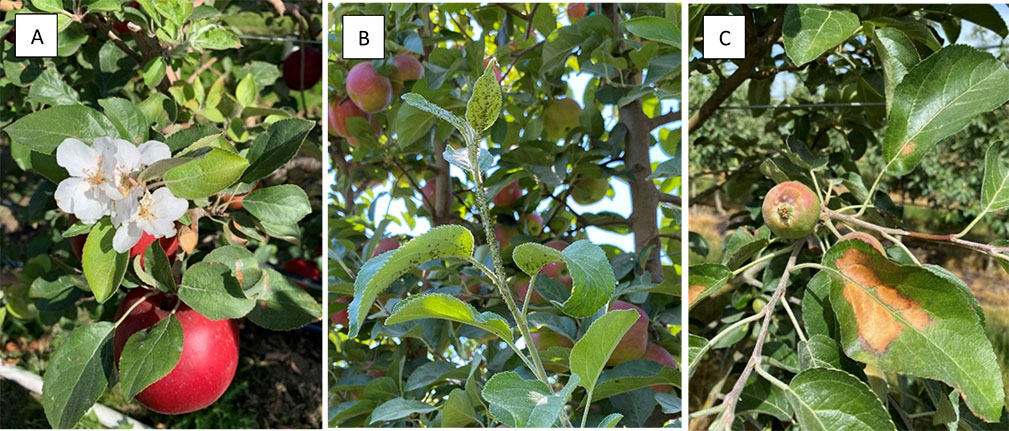
Summer-pruned regrowth can be more susceptible to pests like aphids (Figure 28B) or sunburn of unacclimated organs, such as leaves and fruit (Figure 28C). Avoiding hot weeks and applying sunburn protectants after summer pruning can reduce sunburn.
WA 38 Mechanical Hedging Experience
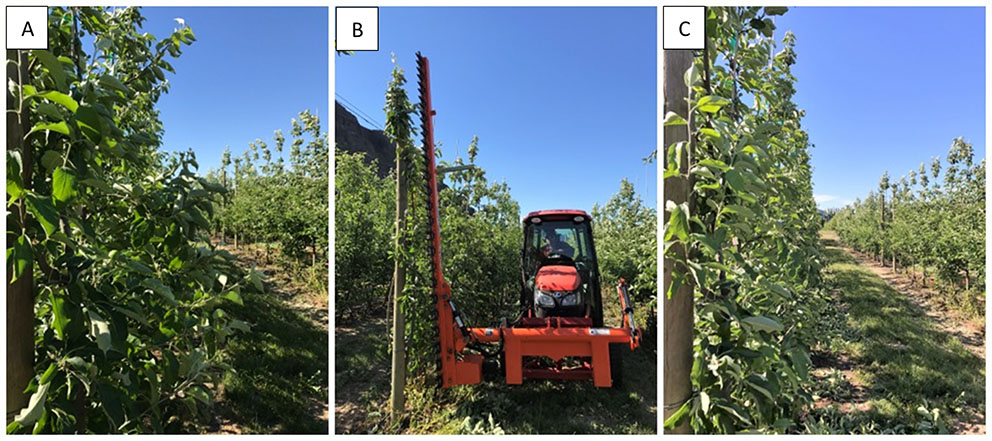
Mechanical pruning has been evaluated at the WSU Roza Farm in Prosser, Washington, and the Sunrise Research Orchard, in Rock Island, Washington, using spindle, bi-axis, and angled canopy systems. The horticultural response to mechanical pruning is directly correlated with the timing of the operation and the amount of wood accessible to the hedging blade.
Three timing options have been tested:
- Dormant (February)
- 12-leaf stage (early June)
- 22-leaf stage (mid July)
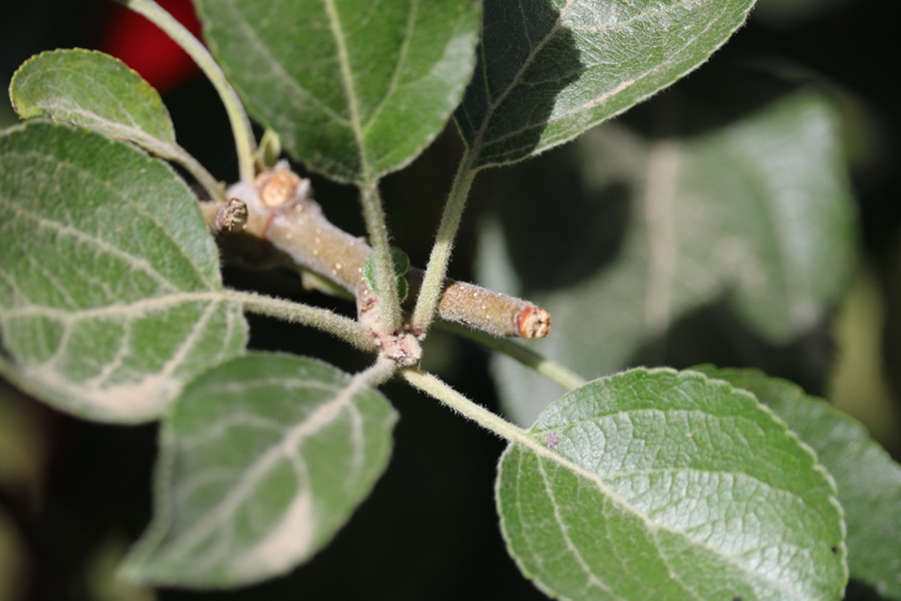
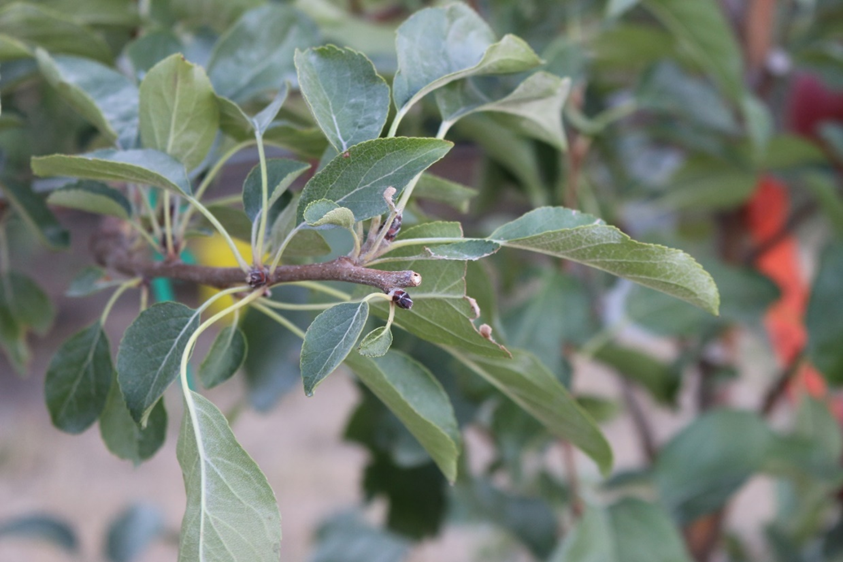
Dormant hedging reduces canopy depth and helps define the space assigned to the canopy. Pruning at the 12-leaf stage breaks apical dominance. It promotes latent bud break closer to the trunk and increases general bud activity in the portions of the branches usually more prone to blind wood (Figure 29). No significant positive or negative effects have been observed from pruning at the 22-leaf stage. Dormant mechanical pruning followed by selective hand removal of limbs produces a narrow, well-defined canopy. Mechanical summer pruning done in early June promotes the development of the flower bud below the cut (Figures 30 and 31). Pruning at 8 to 12 inches in length of current season growth led to vegetative regrowth of one or two shoots with lower vigor and less spur development at the base (Figure 30).
Key Points for Managing Summer Pruning in WA 38
- Summer pruning in WA 38 can be used to manage vigor, promote fruiting wood, and improve color.
- Spring (May–June) pruning removes stored nutrients, while summer (July–September) pruning removes leaf-based carbohydrates, reducing vigor and stimulating bud development.
- Mechanical pruning at the dormant and 12-leaf stages improves canopy structure and bud activity. Pruning after growth ends (August–September) enhances fruit color but may increase sunburn risk for newly exposed fruit.
- Potential drawbacks include aphid-susceptible regrowth, sunburn on exposed tissues, and a risk of fall bloom from early pruning of older wood. These can be mitigated with proper timing and protective strategies (e.g., netting, sunburn protectants).
Training Systems and Planting Distance for High-Density Apple Production in Washington
The primary training systems adopted for high-density apple orchards (HDP) in Washington include the spindle, angled canopy (V-system, Y-system), and, more recently, the bi-axis (Zhang et al. 2023). Among these, the spindle system has proven effective in optimizing light interception and canopy light availability, particularly in low-vigor sites. However, spindle trees are not ideal for high-vigor conditions, as excessive growth in the upper canopy often leads to shading of the lower canopy, resulting in poor light distribution (Tustin et al. 1998). Similar light distribution challenges in the slender spindle system were reported by Robinson and Lakso (1991) and Robinson et al. (1991).
Several alternative training systems have been developed since the 1980s to improve light interception, enhance light distribution, and control tree vigor, thereby addressing these limitations. These include the vertical axis (Lespinasse and Delort 1986), Y- and V-trellis systems (Robinson 1998), HYTEC system (Barritt 1998), Solaxe (Lauri and Lespinasse 1998), super spindle (Weber 2001), and slender pyramid (Tustin et al. 2001b). Despite these innovations, many systems still struggled to ensure uniform light distribution throughout the canopy (Lakso et al. 1989; Robinson et al. 1991). In response, more planar and two-dimensional (2D) canopy systems have been introduced and evaluated. Examples include the Washington V- trellis (Robinson 1998), Mur Fruitier in France (Masseron 2002), and the bi-axis system (Bibaum) in Italy (Musacchi 2006, 2008; Dorigoni et al. 2011). These systems aim to improve light penetration and promote balanced growth by creating narrow, vertically structured canopies.
A further evolution of these systems is evident in multi-leader training, which originated in European fruit gardens during the 15th and 18th centuries (Robinson 1878). Louis Lorette provided a detailed description of this system in 1925, highlighting its suitability for continuous fruiting rows (Lorette 1925). These systems typically consist of two (bi-axis) to six or more vertical, parallel leaders, aligned flat to the trellis and bearing numerous short, lateral limbs, resulting in a narrow 2D canopy (Musacchi 2006, 2008; Dorigoni et al. 2009).
More recent developments include the planar cordon (Tustin et al. 2018) and Guyot system (Dorigoni and Micheli 2019), which features up to ten unbranched vertical fruiting stems on a bi-cordon framework. These designs have gained popularity due to the increasing availability of preformed, split-branch nursery trees, which eliminate the need for post-planting topping and reduce delays in canopy formation (Musacchi 2006, 2008; Musacchi and Neri 2019) (Table 6).
Table 6. Between-row by in-row planting distances for WA 38 trees by rootstock and training system.| Rootstocks | Spindle Spacing (ft) | Bi-Axis Spacing (ft) | Y System Spacing (2-leader tree) (ft) | V System Spacing (single tree) (ft) |
|---|---|---|---|---|
| G.41 | 12 × 3–4 | 12 × 3–4 | 12 × 1.5–2 | 10–12 × 1.5–2 |
| M.9-NIC29 | 11–12 × 3 | 11–12 × 3 | 12 × 1.5–2 | 10–11 × 1.5–2 |
| M.9-T337 | 12 × 3 | 11–12 × 3 | 12 × 1.5–2 | 11–12 × 1.5 |
| G.935 | 12 × 3–4 | 12 × 4 | 12 × 1.5–2 | 12 × 1.5 |
| Pajam 2 | 12 × 3 | 12 × 3 | 12 × 1.5–2 | 12 × 2.0 |
| G.11 | 12 × 3 | 11–12 × 3 | 12 × 1.5–2 | 12 × 1.5 |
| Bud 9 | 11–12 × 2–3 | 11–12 × 2–3 | Not recommended | 10 × 1.5 |
| G.890 | 12–13 × 4 | 12 × 4–5 | 12 × 1.5–2 | 12 × 2.5 |
| Bud 10 | 12–13 × 3–4 | 12 × 4–5 | 12 × 1.5–2 | 12 × 1.5 |
| G.969 | 11–12 × 3–4 | 11–12 × 3–4 | 12 × 1.5–2 | 12 × 2 |
Spindle
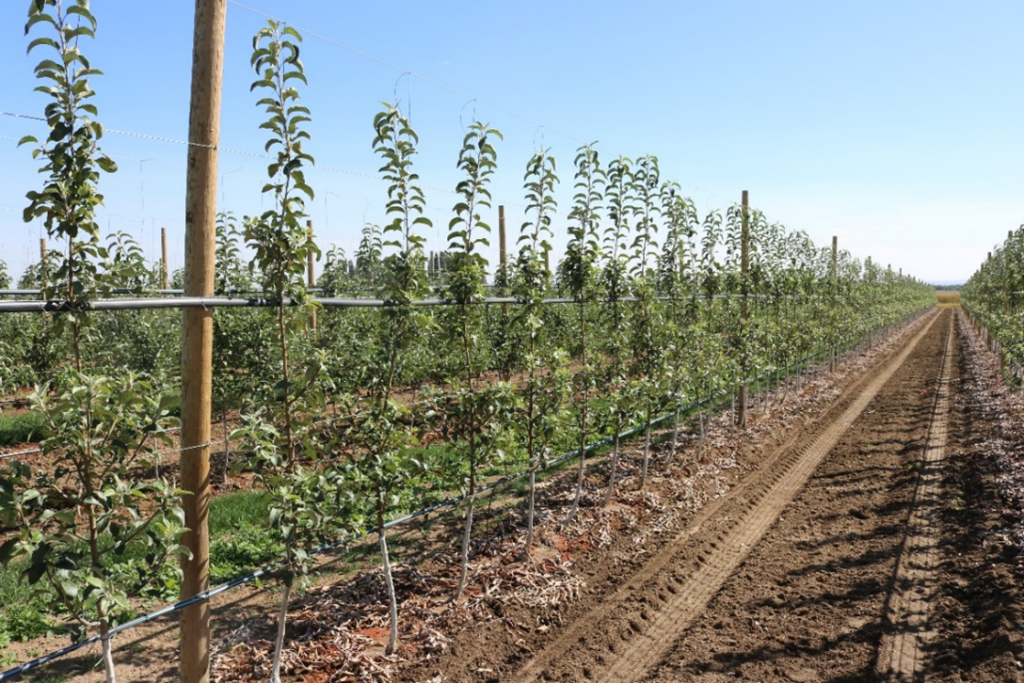
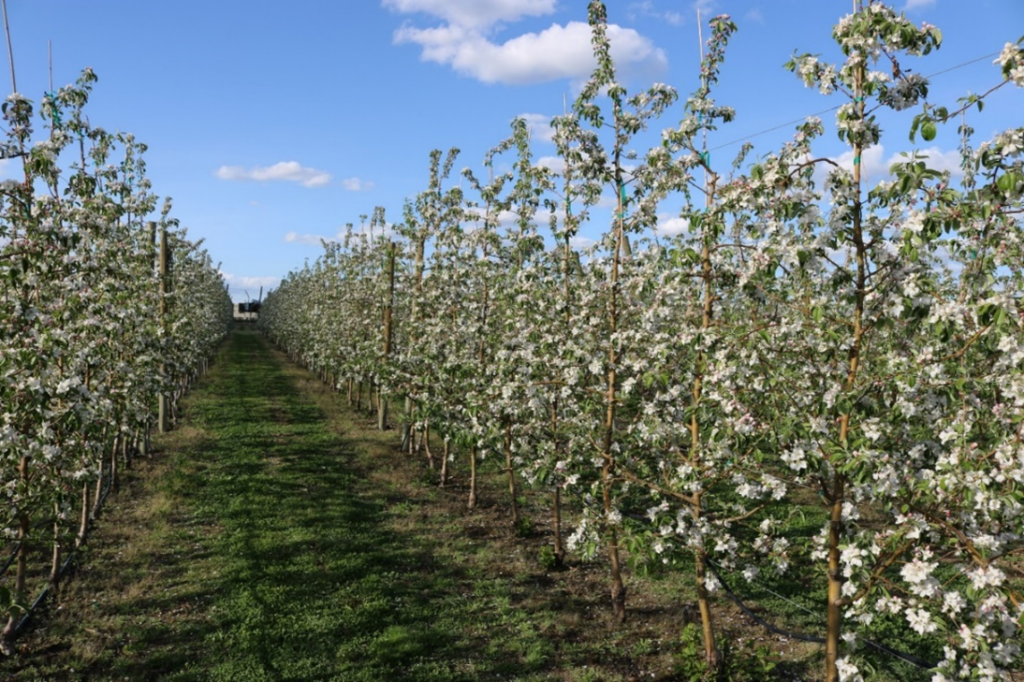
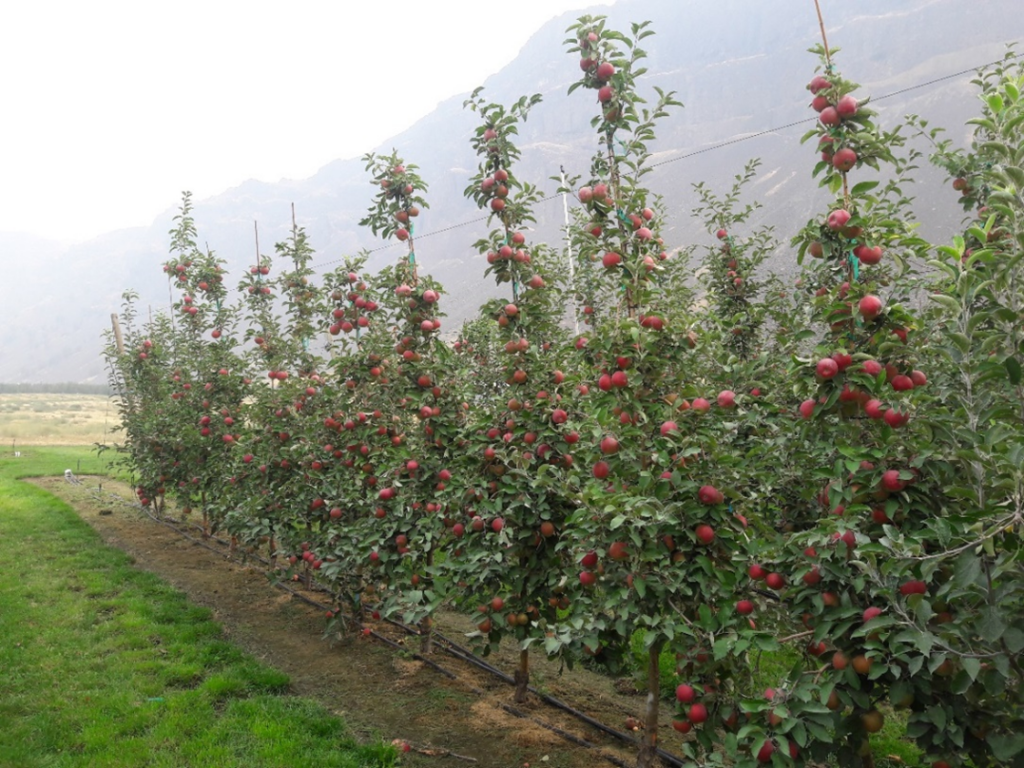
The spindle training system is the most widely adopted training system for medium- to high-density apple orchards globally, typically planted at 809–1,336 trees per acre (2,000–3,300 trees/ha). Its ability to maximize planting density while maintaining relatively low labor requirements makes it popular (Musacchi and Greene 2017). A critical component of spindle training is using well-feathered trees at planting. These feathers—preformed lateral shoots from the nursery—help establish the first scaffold of branches (Figure 32), enabling fruit production as early as the second year (Figures 32–34), often reaching 2.8–3.2 Mton/acre (7–8 Mton/ha) when paired with dwarfing rootstocks (Musacchi and Greene 2017).
The spindle system features a dominant central leader with lateral fruiting branches. Typically, five to seven branches are distributed around the trunk in a loose spiral or whorl without strict positioning rules, but care is taken to avoid overlap and shading between them. Starting with high-quality, well-feathered nursery trees is essential for efficient canopy development. However, if the tree lacks feathers or is poorly formed, it can be headed back two to three feet (60–90 cm) above the ground to stimulate shoot development.
Bi-Axis
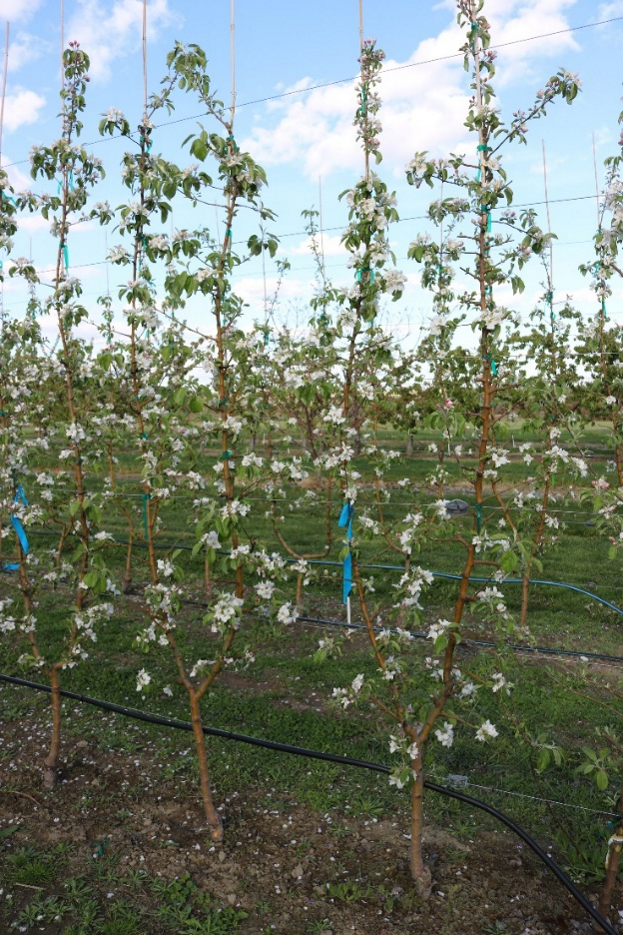
This training system modulates vegetative vigor and can be initiated in the nursery using double budding or a side grafting technique. A nursery company has patented this process, and the resulting trees are known as Bibaum (Musacchi 2006, 2008).
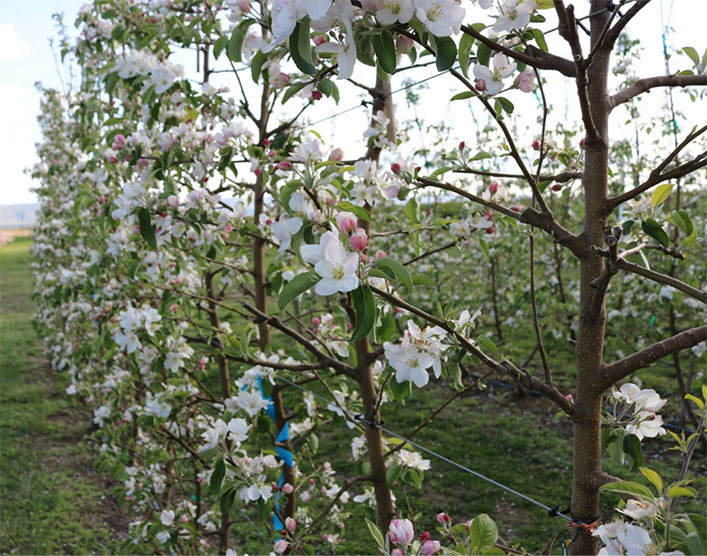
Alternatively, a single leader tree can be headed back in the field after planting and then two shoots are selected to produce a double-stem (or bi-axis) tree. Dividing the vigor offers several clear advantages, including improved control over vegetative growth. The bi-axis system is ideal for creating a fruiting wall or a thin canopy. Recommended planting distances range from 11 to 12 feet (3.4–3.7 m) between rows and 3 to 4 feet (90–120 cm) between trees, which support the development of short branches 9 to 12 inches (23–30 cm) in length (Figures 35 and 36). This system also requires click-pruning, which helps minimize the formation of blind wood, a common issue with WA 38. Large limbs should be removed, leaving a two-inch (5 cm) stub to reduce blind wood and encourage new branch growth.
Angled Canopy (V-Shape and Y-Shape)
In addition to spindle training systems, oblique tree training systems have gained popularity in Washington for their high yields. However, these training systems require substantial investment in support structures, trellises, and wiring, particularly for creating tree walls, resulting in a mirrored, symmetrical tree structure on both sides of each orchard row.
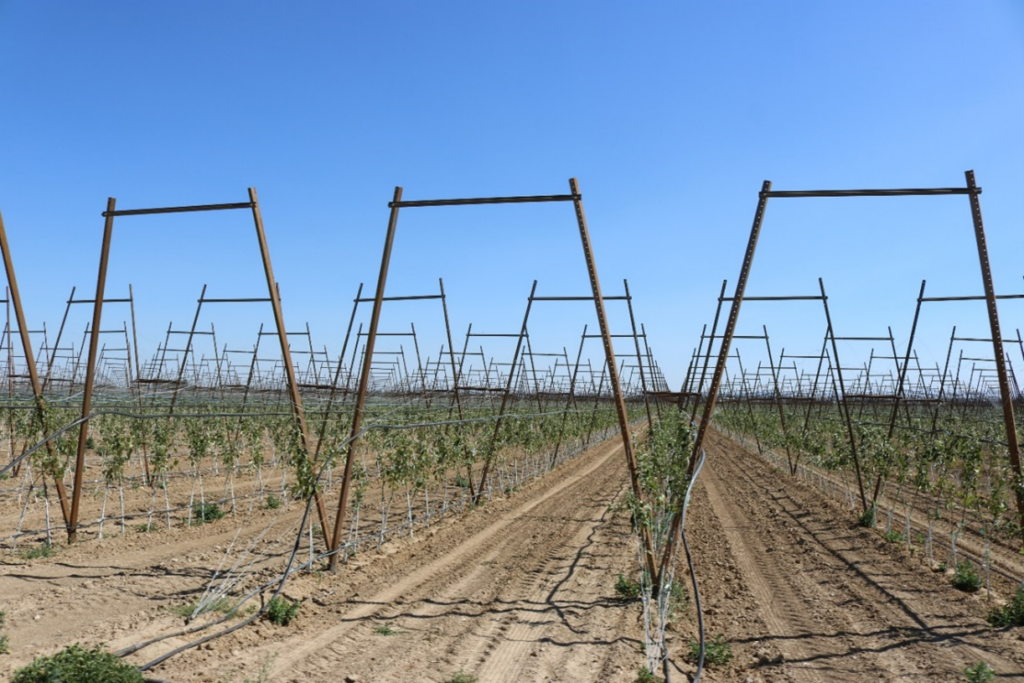
The principle behind these oblique forms is to split the tree structure of a single row into two separate fruit walls. These fruit walls can be arranged in various shapes: one option is a transverse Y-shape, where the branches diverge dichotomously at a height of 1.5–2 feet (40–60 cm) from the ground, or a V-shape, which is formed by planting two trees close together with a diverging angle between 15 degrees and 20 degrees (Figure 37). This results in a canopy structured on two inclined planes. The Y-shape is more difficult and slower to form than the V-shape, but it requires only half as many trees for the same skeletal structure (Musacchi and Greene 2017).
V-Shape
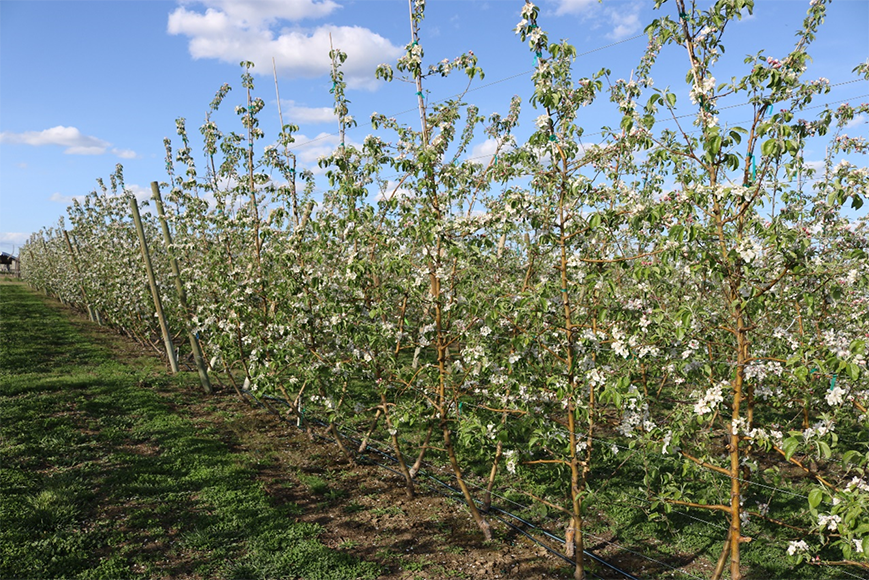
These training systems have been developed to increase planting density while maintaining a single row (instead of double or triple rows, as used in northern European countries), splitting the fruiting wall into two distinct units. The V-shape, created by tilting the trees alternately toward each other at a 15-degree angle from vertical, is well suited to the trees’ vegetative and productive habits. It has the advantage of double-wall production, which maximizes light interception. However, it entails higher support structure costs and is more labor-intensive to prune than a single-row system (Robinson 1998; Musacchi and Greene 2017).
This farming method allows for planting densities of over 2,000 trees per acre (5,000 trees per hectare) (Figure 38). By reducing planting distances, it is possible to grow trees with permanent branches near the base, with branch size decreasing as the tree height increases. Vegetative activity is controlled by strong competition for water and nutrients between the root systems.
Y-Shape
The Y-shaped system has been successfully tested in many countries. A notable example is the “Tatura Trellis” system developed in Australia, which requires a complex and expensive structure with more than ten wires (five per side) compared to simpler ones like the palmette. The main advantage of these systems is that they double the irradiated surface area of the fruiting wall while reducing the wall thickness (Sansavini and Corelli-Grappadelli 1997).
The method for achieving a double fruiting wall within a single Y-system is to obtain two axes that develop transversally at 1.5–2 feet (40–60 cm) from the ground. In contrast to the V-system, where the two distinct walls are formed by planting two trees with an inclination of 25 to 30 degrees, the Y-system takes longer and is more challenging to grow; however, the V-system requires about twice as many trees. Both systems require an expensive trellis structure with posts and wires for support.
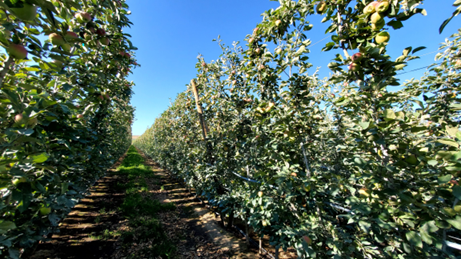
An alternative approach to creating Y-shaped training systems for WA 38 is to designate a secondary leader by promoting an existing lateral branch rather than appointing the primary leader (Figure 39). Although this method is operationally viable, it inherently results in structural asymmetry between the two axes. This disparity in vigor, orientation, and developmental timing is likely to persist throughout the tree’s productive life, potentially affecting canopy balance and long-term management.
Key Points for WA 38 Tree Training
Spindle
- Most widely used globally in HDP (809–1,336 trees/acre).
- Requires well-feathered nursery trees for rapid scaffold development.
- Dominating central leader with five to seven lateral branches in a loose spiral.
- Poorly feathered trees may be headed back 2–3 ft (60–90 cm) to stimulate lateral growth.
- Works best with dwarfing rootstocks, yielding early crops (2.8–3.2 Mtons/acre by year 2).
Bi-Axis
- Developed from double-budded nursery stock (Bibaum) or from headed trees post-planting.
- Produces two leaders for better vigor distribution and canopy flattening.
- Ideal for creating fruit walls with narrow branch architecture.
- Requires click-pruning and 2–4 in. stub cuts to prevent blind wood.
- Recommended spacing: 11–12 ft (3.4–3.7 m) between rows, 3–4 ft (0.9–1.2 m) between trees.
Angled Canopy Systems (V- and Y-Shape)
- Designed to split a single row into two oblique canopy units or fruiting walls.
- Y-shape: from a single tree, branches diverge at 1.5–2 ft (40–60 cm) height.
- V-shape: two trees planted closely at a 15- to 20-degree outward angle (diverging from the vertical).
- Y-shape is slower to establish but requires fewer trees.
- Support structure costs are high due to wiring and anchor systems.
- Enables planting densities of over 2,000 trees/acre (approximately 5,000 trees/ha).
- Improves light interception and canopy structure but increases pruning labor.
Rootstocks Commonly Used in WA 38 Orchard Establishment
In modern apple orchards, rootstock choice focuses on dwarfing genotypes with vigor levels similar to M.9 (Basile and DeJong 2019). These orchards are typically planted at a density of around 1,300 trees/acre (~3,200 trees/ha), requiring precise vigor control to manage tree growth within the limited space (Musacchi and Greene 2017). One of the most prominent rootstock breeding programs is based at Cornell University in New York, where the Geneva C.G. series was developed (Robinson et al. 1997). Several Geneva rootstocks have been released in the US, and many are now predominantly used in Washington State. The most commonly used rootstock for WA 38 in the Geneva series is G.41, followed by G.935 and G.11. G.41 is similar in size to the more vigorous M.9 clones, such as M.9-NIC29 or Pajam 2, and has a positive effect on fruit size (Figure 40). Additionally, it is highly resistant to fire blight and offers resistance to replanting and woolly apple aphids (Fazio et al. 2013; Cornell 2024).
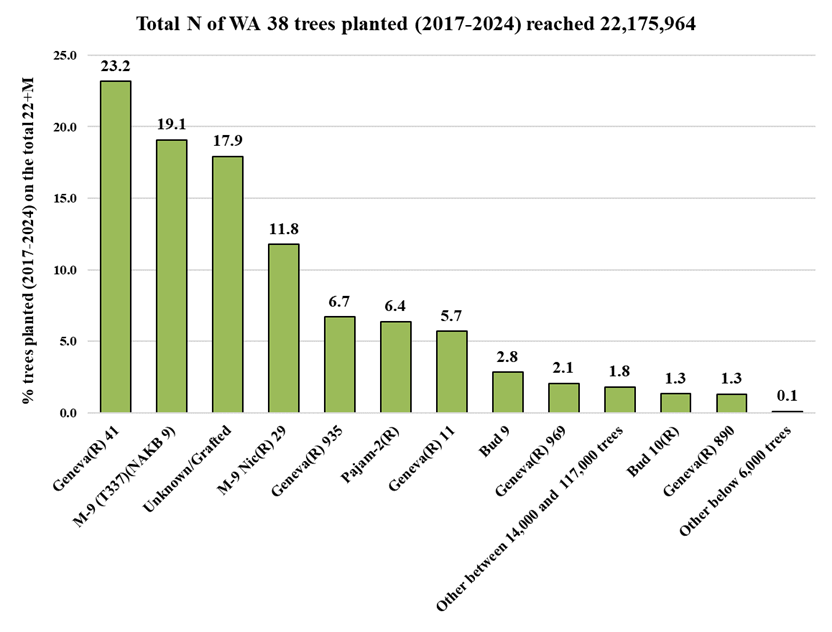
Of the total WA 38 trees planted by 2024 in Washington, 23% were on G.41, 19.1% on M.9-T337, and 11.8% on M.9-NIC29. At lower percentages, G.935, Pajam 2, and G.11 were planted, with values ranging from 6.7% to 5.7% (Figure 40). Interestingly, 17.9% of trees are unknown and have probably been top-worked with other cultivars that are no longer profitable.
In fertile soils with no limitations to root growth, G.41 can grow for longer periods and exhibits higher root growth rates and total root growth volume than M.9-NIC29 under the same conditions. In the seven-year trial described above, on sandy soil in Washington State, G.41 showed higher green spot incidence in only one of the five years in which fruit data were collected. Greater root growth was directly correlated with increased shoot growth, higher uptake of nitrogen, potassium, and magnesium, and a higher green spot incidence (Sallato et al. 2021). Under some conditions, G.41 also produces larger fruit than other rootstocks but may exacerbate green spot development (Sheick et al. 2022; Sheick et al. 2023).
WA 38 (commercialized as Cosmic Crisp®) can be a vigorous variety and requires careful rootstock selection to balance vegetative growth and optimize fruit quality and precocity.
Commonly adopted rootstocks:
M.9 (Various Clones, like T337, NIC29)
- Still used as a dwarfing rootstock in Washington.
- Controls vigor effectively, especially in high-fertility soils.
- Promotes early bearing and high fruit quality.
- Requires support structures due to limited anchorage.
- Fire blight susceptible.
G.41 (Geneva Series)
- Dwarfing capacity is similar to M.9, but under certain conditions, it can be 10%–20% more vigorous.
- Improved fire blight resistance.
- Better replant tolerance and root anchorage.
- Woolly aphid resistant.
G.935
- Semi-dwarf rootstock with good vigor control.
- Often used in replant situations or marginal soils.
- Better anchorage than M.9 but slightly more vigorous.
- Sensitive to latent viruses (Cornell 2024). Requires certified virus-free scionwood.
Bud.9 (Budagovsky Series)
- Dwarfing rootstock with excellent cold hardiness.
- Used in colder sites and very fertile soil in Washington.
- May be too nonvigorous for low-vigor sites and soils, and should not be used for some training systems, such as the two-leader Y-system.
Evaluation of New Rootstock Accessions in Washington State
From 2017 to 2023, rootstocks were evaluated for WA 38 on several Geneva rootstocks, with G.41 as the industry-standard control. Trees were planted in 2017 at a density of 3,010 trees/ha with a row spacing of 12 feet (3.6 m) and tree spacing of 3 feet (0.9 m). Cumulative yields for five cropping years (2019–2023) for all rootstocks ranged from 317 to 432 Mtons/ha (Table 7). Most rootstocks were similar, except for G.4288, which yielded less than G.5030, G.4292, G.4809, G.41, and G.5087. This was mainly due to a tendency to produce smaller fruit than the other rootstocks. Green spot incidence was 10.8% in 2020, then below 3% in the other four cropping years, and was not significantly different among rootstocks (Table 8). Rootstocks also varied in their tendency for biennial bearing. G.4809 was a stable bearing rootstock with consistently high yields (Table 9). Other rootstocks like G.41 and G.4292 also had high cumulative yields but were more inconsistent year to year.
Table 7. Mean cumulative yields for 2019–2023 for WA 38 apple grown on eight rootstocks.| Rootstocks | Cumulative Yield (Mtons/ha) | Statistical Differences | Mean Annual (Mtons/ha) | Statistical Differences |
|---|---|---|---|---|
| CG.5030 | 432 | a | 86 | a |
| CG.4292 | 427 | ab | 85 | ab |
| CG.4809 | 416 | a | 83 | a |
| G.41 | 393 | ab | 79 | ab |
| CG.5087 | 385 | ab | 77 | ab |
| CG.6040 | 358 | bc | 72 | bc |
| CG.4010 | 327 | bc | 65 | bc |
| CG.4288 | 317 | c | 63 | c |
| Rootstocks | 2019 | 2020 | 2021 | 2022 | 2023 |
|---|---|---|---|---|---|
| CG.4010 | 0.00 | 7.3ab | 1.0 | 0.0 | 6.2 |
| CG.4288 | 0.00 | 4.2b | 0.0 | 0.0 | 0.0 |
| CG.4292 | 0.00 | 9.4ab | 1.0 | 0.0 | 4.2 |
| CG.4809 | 2.08 | 18.8ab | 0.0 | 0.0 | 6.2 |
| CG.5030 | 0.00 | 10.4ab | 2.1 | 0.0 | 2.1 |
| CG.5087 | 4.17 | 0.0b | 1.0 | 0.0 | 4.2 |
| CG.6040 | 0.00 | 8.3ab | 0.0 | 0.0 | 4.2 |
| G.41 | 0.00 | 24.0a | 1.0 | 0.0 | 2.1 |
| Rootstocks | Biennial Bearing Tendency (1–2) | Statistical Differences |
|---|---|---|
| CG.5030 | 1.74 | bc |
| CG.4292 | 2.40 | a |
| CG.4809 | 1.51 | c |
| G.41 | 2.42 | a |
| CG.5087 | 2.07 | ab |
| CG.6040 | 1.34 | c |
| CG.4010 | 1.80 | bc |
| CG.4288 | 1.69 | bc |
Key Points for WA 38 Rootstocks
- G.41 is the most utilized WA38 rootstock and induces larger apple size.
- Green spot can be higher on G.41 in some years under conditions of excessive vegetative vigor that promote rapid fruit growth.
- M.9 rootstocks promote early bearing and high fruit quality.
- Bi-axis on Bud 9 is not recommended in low vigor and sandy soil conditions.
- G.890 is suitable for replant sites and poor soil conditions.
Top-Working an Apple Orchard and Apogee Application
Over 60 apple cultivars are grown in Washington State, and the continual release of new cultivars can quickly shift consumer demand. To respond to these changes, growers frequently use the top-working technique (Schupp 2023) to replace older cultivars with newer, more marketable ones. In addition to variety replacement, top-working enables the conversion of existing training systems into new ones—for example, transforming a single-leader tree into a multi-leader structure (Figure 41) (Schupp 2023).
However, top-working often stimulates excessive canopy growth, which may require additional summer pruning (Saure 1987) or the use of plant growth regulators to manage vigor effectively (Rademacher 2016).
Of the 22.2 million WA 38 apple trees that were planted in Washington State by 2024, an estimated 18% (approximately four million trees) were established through top-working. The most common approach involves converting a single-axis tree into a multi-leader system. The number of leaders typically depends on the trunk size of the original tree; large-diameter trunks are often restructured into multi-leader trees with six to eight new axes (Figure 42), frequently using a Y-transversal system.
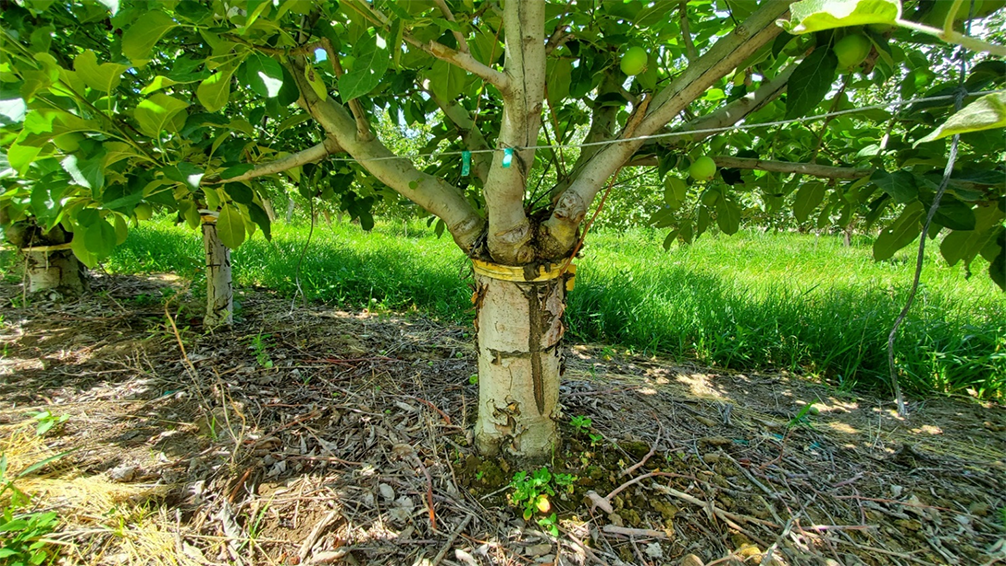
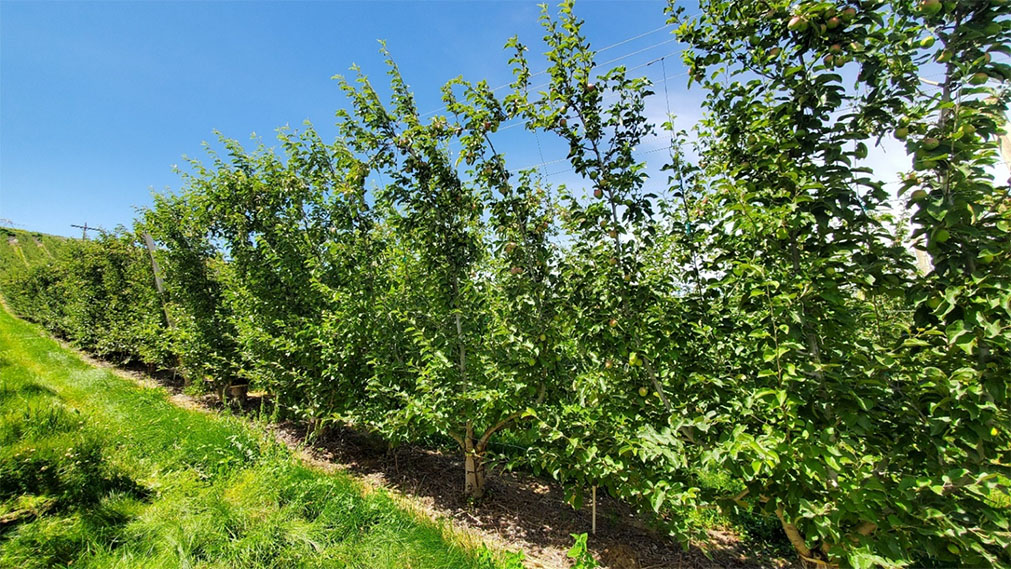
Managing excessive vegetative growth is essential to reduce competition between shoots and fruit (Meintjes et al. 2005), prevent internal canopy shading, enhance light interception, and ultimately improve fruit quality (Rademacher et al. 2004; Rademacher 2016; Musacchi and Serra 2018). Numerous studies have demonstrated that unmanaged vegetative growth has a negative impact on fruit quality, yield, and pest management (Greene 1999; Miller and Tworkoski 2003). Tree vigor is typically managed through a combination of pruning strategies, including hand, chemical, and mechanical methods, with manual methods remaining the most labor-intensive and costly (Carra et al. 2016).
WA 38 Top-Working Trial in Washington
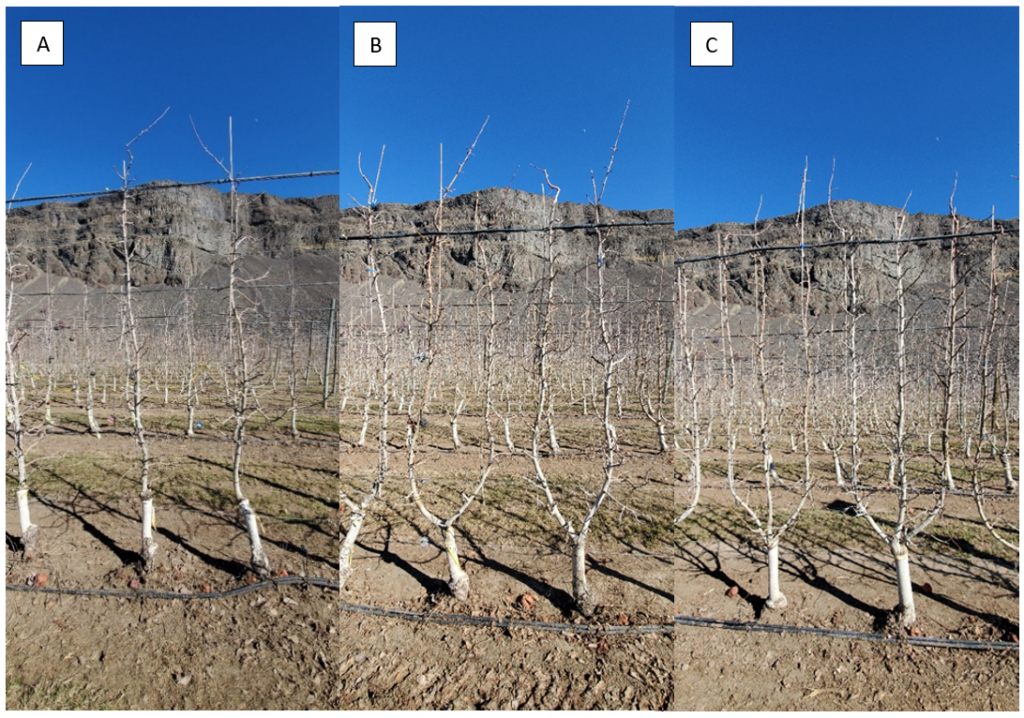
To support Washington growers with practical data, a top-working trial was established in March 2016 at the Washington State University Sunrise Research Orchard (Rock Island, Washington). An existing eight-year-old Granny Smith block on M.9-T337 rootstock was top-grafted with WA 38 budsticks. For experimental purposes, four bud sticks were grafted onto each Granny Smith interstem. By June 2016, successful grafts within each plot were trained to one of three systems: a single-leader (spindle), two-leader (bi-axis), or three-leader (candelabra) architecture (Figure 43). Surplus bud sticks were removed accordingly (Figure 43A–C). Trees were spaced 11 ft (3 m) between rows by 3 ft (0.9 m) within rows, resulting in a planting density of 1,500 trees per acre (3,703 trees per hectare) (Musacchi et al. 2023).
Apogee Applications to Control the Vigor
In 2016, to control vigor, all trees were mechanically hedged in July and stub-pruned during the winter of 2016–17. In addition to stubbing the branches at four inches (approximately 10 cm) in spring 2017, scoring and notching were executed on the leaders to promote bud swelling.
In 2018 and 2019, Apogee (3-oxido-4-propionyl-5-oxo-3-cyclohexenecarboxylate; prohexadione-calcium, or Pro-Ca; BASF Corp., Ludwigshafen, Germany) was sprayed three times at a concentration of 12 oz/acre/100 gal (247 mg/L) (approximately 250 ppm per application) using an air-blast sprayer. Each year, treatments were applied on three dates in the weeks following bloom (Musacchi et al. 2023). In 2018, the first Apogee spray was applied approximately seven days after first bloom (DAFB), followed by the other two at 15 DAFB and 26 DAFB. Whereas, in 2019, the three applications were performed at 9 DAFB, 16 DAFB, and 23 DAFB. In 2018, applications occurred on May 3, May 11, and May 22, with king bloom around April 26. In 2019, applications were made on May 9, May 16, and May 23, following the full bloom, which occurred approximately on April 30. In both years, the first application coincided with an average shoot length of roughly 4.7 inches (12 cm), which was around seven leaves. This relatively late timing, compared to Rothwell and Schwallier (2016), was chosen to minimize Apogee impact on the spur shoots formed from lateral buds on one-year-old wood.
In 2018, trees treated with Apogee had significantly shorter one-year-old shoots at the end of the growing season, averaging 29.5 cm (11.6 inches) compared to 50.9 cm (20.0 inches) in untreated control trees. Apogee treated trees also exhibited reduced internode length relative to controls (−44%). However, no significant differences were observed among training systems in terms of shoot length, leaf number per shoot, or internode length (Musacchi et al. 2023).
Key Points for Managing Top-Worked WA 38
- Top-work reduces unproductive time and quickly rebuilds a productive canopy.
- By top-working, it is possible to modify the training system of the new orchard, utilizing a multi-axis planar canopy.
- Unfortunately, if a virus infects the original tree, it can be transmitted to a new variety. Virus-infected rootstocks will reduce the performance of Washington top-worked trees. Likewise, virus-infected scionwood may reduce rootstock performance or delay death in some stocks.
- Scion budsticks must originate from a nursery and be certified virus-free.
- Applications of Apogee help control tree vigor and growth.
- Apogee did not negatively impact WA 38 productivity.
Avoiding Replant Problems
Apple replant disease (ARD) is a soilborne syndrome that occurs when new orchards are planted on sites previously planted to the same or closely related tree fruit species. Replant disease causes tree stunting and reduced yields (Mai and Abawi 1981). In Washington State, fungi, including Ilyonectria robusta, Rhizoctonia solani, multiple species of oomycetes in the genera Phytophthora and Pythium, as well as the lesion nematode Pratylenchus penetrans, are known components of the replant complex (Mazzola and Mullinix 2005).
If replanting in previously planted soil, whether for apples, pears, or cherries and regardless of the root’s ability to withstand replant disease, the ground should be deeply tilled and fumigated prior to planting. In Washington, the general practice is to fumigate with 1-3 dichloropropene plus chloropicrin (e.g., Telone C-35). 1,3-dichloropropene is nematicidal, while chloropicrin is fungicidal. Remember that when fumigating, it is essential to remove crowns and roots that can harbor nematodes. Rip to break up compaction layers that can also limit root growth of young trees. Adequate soil moisture and temperature is critical for the fumigant to move properly through the soil. Make sure you allot enough time for fumigation chemicals to fully dissipate from the soil before planting. Check this by digging test holes throughout the orchard and checking for fumigation odor. Follow fumigation labels.
Reducing replant pressure before planting is critical. For example, recent studies found that growth of WA 38 trees on M.9 rootstock was significantly lower in non-fumigated soil than in soil fumigated with 1-3 dichloroprene plus chloropicrin or treated with a brassica seed meal bioremediation at a site in Rock Island (DuPont et al. 2021). “In the first three harvest years, trees in non-fumigated soils averaged four to six bins fewer per acre on G.41 and four to eight bins fewer per acre on M.9 rootstock than soil treated with fumigation, brassica seed meal biorenovation, or anaerobic soil disinfestation” (p < 0.05; directly reported from DuPont et al. [2026]).
Key Points for Managing WA 38 Orchard Replant Problems
- It is critical to prevent apple replant disease (ARD) in new plantings, as it can stunt trees and reduce yield.
- The most common practice to mitigate apple replant disease (ARD) in Washington is to fumigate the orchard with 1-3 dichloroprene plus chloropicrin before planting.
- Brassica seed meal biorenovation is a promising new alternative to fumigation and may be suitable for organic systems.
References
Anthony, B.M., S. Serra, and S. Musacchi. 2019. Optimizing Crop Load for New Apple Cultivar: WA 38. Agronomy 9: 107.
Anthony, B., S. Serra. and S. Musacchi. 2020. Optimization of Light Interception, Leaf Area and Yield in WA38: Comparisons Among Training Systems, Rootstocks and Pruning Techniques. Agronomy 10: 689.
Baldini, E. 1990. Arboricoltura Generale. Clueb.
Barritt, B.H. 1998. The Hytec (Hybrid Tree Cone) Orchard System for Apples. Acta Hort. 513: 303–310.
Basile, B., and T.M. DeJong. 2019. Control of Fruit Tree Vigor Induced by Dwarfing Rootstocks. Horticultural Reviews 39–97.
Bhusal, N., S.G. Han, and T.M. Yoon. 2017. Summer Pruning and Reflective Film Enhance Fruit Quality in Excessively Tall Spindle Apple Trees. Horticulture, Environment, and Biotechnology 58: 560–567.
Carra, B., M.S. Pasa, J.C. Fachinello, D. Spagnol, E.S. Abreu, and M.A. Giovanaz. 2016. Prohexadione-Calcium Affects Shoot Growth, but Not Yield Components, of’ Le Conte’ Pear in Warm-Winter Climate Conditions. Sci. Hortic. 209: 241–248.
Cornell. 2024. Geneva® Rootstocks Comparison Chart v.5 from Center for Technology Licensing (CTL).
Dallabetta, N. 2014. Effect of Training Systems and Pruning Methods on Fruit Quality in Apple. Ph.D. thesis. Alma Mater Studiorum—University of Bologna, Italy.
Diemoz, M. 2005. Allevamento del Melo: Il Solaxe e la “conduite Centrifuge.” Institut Agricole Regional.
Diemoz, M., G. Vittone, M. Peano, and T. Pantezzi. 2002. La Potatura Lunga del Melo con Diradamento delle Lamburde. L’informatore Agrario 25: 43–44.
Dominguez, L.I., and T.L. Robinson. 2025. Effects of Tree Lateral Branch Number and Angle on Early Growth and Yield of High-Density Apple Trees. HortTechnology 35(2): 191–201.
Dorigoni, A., P. Lezzer, N. Dallabetta, S. Serra, and S. Musacchi. 2011. Bi-Axis: An Alternative to Slender Spindle for Apple Orchards. Acta Hort. 903: 581–588.
Dorigoni, A., P. Lezzer, F. Micheli, N. Dallabetta, J. Pasqualini, and A. Guerra. 2009. Parete Fruttifera Stretta per Mele Redditizie e Sostenibili. L’Informatore Agrar. 2009(48): 54–58.
Dorigoni, A., and F. Micheli. 2019. Development of a Cultivation System for Multi-Leader Trees. EFM 5: 8–13.
DuPont, S.T., S.S. Hewavitharana, and M. Mazzola. 2021. Field Scale Application of Brassica Seed Meal and Anaerobic Soil Disinfestation for the Control of Apple Replant Disease. Appl. Soil Ecol. 166.
DuPont, S.T., M. Mazzola, S. Hewavitharana, A. Baró, and T. Somera. 2026. Multi-Year Effects of Brassicaceae Seed Meal and Anaerobic Soil Disinfestation Treatments on Apple Tree Growth and Yield at Replant Orchard Sites. Journal of Agriculture and Food Research 102975.
Einhorn, T. 2022. Stub Length for Renewal Cuts in High-Density Apples. Michigan State University Extension.
Fazio, G., H. Aldwinckle, and T. Robinson. 2013. Unique Characteristics of Geneva® Apple Rootstocks. New York Fruit Quarterly 21(2): 25–28.
Ferree, D.C., and J.R. Schupp. 2003. Pruning and Training Physiology. In Apples, Botany, Production and Uses, D.C. Ferree and I.J. Warrington, eds., 319–344. CABI Publishing.
Flore, J.A., G. DeGrandt-Hoffman, and R.L. Perry. 1984. Apple Tree Growth and Development. Monitoring in Apple Orchards: An Instruction Manual. Battenfield and Berney.
Giulivo, C. 1990. Principi fisiologici della potatura degli alberi da frutto.
Greene, D.W. 1999. Tree Growth Management and Fruit Quality of Apple Trees Treated with Prohexadione-Calcium (BAS 125). HortScience 34: 1209–1212.
Grisvard, P. 1957. La taille des arbres fruitiers. La Maison Rustique.
Hampson, C.R., H.A. Quamme, and R.T. Brownlee. 2002. Canopy Growth, Yield, and Fruit Quality of ‘Royal Gala’ Apple Trees Grown for Eight Years in Five Tree Training Systems. Hortscience 37(4): 627–631.
Hatton, R. 1917. ‘Paradise’ Apple Stocks. J. Royal Hort. Soc. 42: 361–399.
Jackson, J.E. 1980. Light Interception and Utilization by Orchard System. Hort. Rev. 2: 208–267.
Jackson, J.E., and J.W. Palmer. 1980. A Computer Model Study of Light Interception by Orchards in Relation to Mechanised Harvesting and Management. Scientia Horticulturae 13(1): 1–7.
Lakso, A.N., T.L. Robinson, and R.M. Pool. 1989. Canopy Microclimate Effects on Patterns of Fruiting and Fruit Development in Apples and Grapes. In Manipulation of Fruiting, 47th Nottingham Easter School, 263–274.
Lauri, P., and F. Laurens. 2005. Architectural Types in Apple (Malus × domestica). In Crops: Growth and Biotechnology, Ed. R. Dris. World Food Limited, 1300–1313.
Lauri, P.E., and J.M. Lespinasse. 1998. The Vertical Axis and Solaxe Systems in France. Acta Hort. 513: 287–296.
Lauri, P.E., E. Terouanne, J.M. Lespinasse, J.L. Regnard, and J.J. Kelner. 1995. Genotypic Differences in the Axillary Bud Growth and Fruiting Pattern of Apple Fruiting Branches Over Several Years—An Approach to Regulation of Fruit Bearing. Scient. Hort. 64: 265–281.
Lauri, P.E., M. Willaume, G. Larrive, and J.M. Lespinasse. 2004. The Concept of Centrifugal Training in Apple Aimed at Optimizing the Relationship Between Growth and Fruiting. Acta Hort. 636: 35–42.
Lespinasse, J.M. 1977. La conduite du pommier. I-Types de fructification. Incidence sur la conduite de l’arbre, INVUFLEC, 80.
Lespinasse, J.M. 1980. La conduite du pommier II. L’axe vertical. La renovation des vergers. INVUFLEC, ed., 120. CTIFL.
Lespinasse, J.M., and F. Delort. 1986. Apple Tree Management in Vertical Axis: Appraisal After Ten Years of Experiments. Acta Hort. 160: 120–155.
Li, K.T., and A.N. Lakso. 2004. Photosynthetic Characteristics of Apple Spur Leaves After Summer Pruning to Improve Exposure to Light.
Lorette, L. 1925. Lorette System of Pruning. Translated by W.R. Dykes (Secretary of the Royal Horticultural Society), 1–153. London Martin Hopkinson & Company LTD.
Mafcot, 1999. Conduite du pommier—Branche Fruitière et extinction. Réussir Fruits & Légumes 173: 27–34.
Mafcot, P.E. 2000. Pommier: Extinction et conduite centrifuge. Réussir Fruits & Légumes 182: 4.
Mai, W.F., and G.S. Abawi. 1981. Controlling Replant Diseases of Pome and Stone Fruits in Northeastern United States by Preplant Fumigation.
Masseron, A. 2002. Pommier, le Mur fruitier, 1–113. Éditions Centre Technique interprofessionnel des fruits et légumes.
Mazzola, M., and K. Mullinix. 2005. Comparative Field Efficacy of Management Strategies Containing Brassica Napus Seed Meal or Green Manure for the Control of Apple Replant Disease. Plant Disease 89(11): 1207–1213.
Meintjes, J.J., P. Stassen, and K.I. Theron. 2005. The Effect of Different Rates of Prohexadione-Calcium and Girdling on Shoot Growth and Fruit Quality When Applied to Different Pear Cultivars. Acta Hort. 671: 539–546.
Miller, S.S., and T. Tworkoski. 2003. Regulating Vegetative Growth in Deciduous Fruit Trees. PGRSA Quarterly 31: 8–46.
Mohammadi, A., M.J. Mahmoudi, and R. Rezaee. 2013. Vegetative and Reproductive Responses of Some Apple Cultivars (Malus domestica Borkh.) to Heading Back Pruning. International Journal of AgriScience 3(8): 628–635.
Musacchi, S. 2006. Recenti innovazioni dell’impiantistica e della tecnica colturale del pero. Italus Hortus 13: 24–31.
Musacchi S. 2008. Bibaum®: A new Training System for Pear Orchard. Acta Hort. 800: 763–768.
Musacchi, S., D. Bucci, V. Ancarani, F. Gagliardi, and S. Serra. 2014. Investigation of ‘Modi®‘ Habitus in Relation to Training Systems. Acta Hort. 1058: 121–128.
Musacchi, S., and D. Greene. 2017. Innovations in Apple Tree Cultivation to Manage Crop Load and Ripening. In Achieving Sustainable Cultivation of Apples, K. Evans, ed., 195–237. Burleigh Dodds Science Publishing Limited.
Musacchi, S., and D. Neri. 2019. Optimizing Production of Quality Nursery Plants for Fruit Tree Cultivation. Achieving Sustainable Cultivation of Temperate Zone Tree Fruits and Berries. Burleigh Dodds Science Publishing.
Musacchi, S., and S. Serra. 2018. Apple Fruit Quality: Overview on Pre-Harvest Factors. Scientia Horticulturae 234: 409–430.
Musacchi, S., S. Serra, B. Sallato, and K. Lewis. 2022. WA 38: SOP from Planting to Cropping. Washington Tree Fruit Research Commission project report.
Musacchi, S., R. Sheick, M.J. Mia, and S. Serra. 2023. Studies on Physiological and Productive Effects of Multi-Leader Training Systems and Prohexadione-Ca Applications on Apple Cultivar ‘WA 38′. Scientia Horticulturae 312: 111850.
Palmer, J.W., R. Diack, S. Seymour, and D. Dayatilake. 2008. Overcoming Barewood in Apple Trees—Prevention and Reinvigoration Treatments. Acta Hort. 772: 113–120.
Quinlan, J.D., and A.P. Preston. 1971. The Influence of Shoot Competition on Fruit Retention and Cropping of Apple Trees. Journal of Horticultural Science 46: 525–534.
Rademacher, W. 2016. Chemical Regulators of Gibberellin Status and Their Application in Plant Production. In Chemical Regulators of Gibberellin Status and Their Application in Plant Production, P. Hedden and S.G. Thomas, eds. Annu. Plant Rev. 49: 359–403.
Rademacher, W., K. van Saarloos, and G. Porte, et al. 2004. Impact of Prohexadione-Ca on the Vegetative and Reproductive Performance of Apple and Pear Trees. Europ. J. Hort. Sci. 69 (6): 221–228.
Robinson, W. 1878. The Parks and Gardens of Paris: Considered in Relation to the Wants of Other Cities and of the Public and Private Gardens; Being Notes on a Study of Paris Gardens. Macmillan.
Robinson, T.L. 1998. V-Shaped Apple Planting Systems. Acta Hort. 513: 337–348.
Robinson, T., J.N. Cummins, S. Hoying, and W. Smith. 1997. Performance of New Cornell-Geneva Apple Rootstocks. Compact Fruit Tree 30: 1–5.
Robinson, T.L., and A.N. Lakso. 1991. Bases of Yield and Production Efficiency in Apple Orchard Systems. J. Am. Soc. Hortic. Sci. 116: 188–194.
Robinson, R.L., A.N. Lakso, and R. Zhongbo. 1991. Modifying Apple Tree Canopies for Improved Production Efficiency. Hortscience 26: 1005–1012.
Rothwell, N., and P. Schwallier. 2016. Apogee Application Time in Apples. Michigan State University Extension.
Sallato, B., and L. Khot. 2024. WA 38 Applied Research and Demonstration Block. Final project report. Washington Tree Fruit Commission.
Sallato, B., M.D. Whiting, and J. Munguia. 2021. Rootstock and Nutrient Imbalance Leads to ‘‘Green Spot’’Development in ‘WA 38’Apples. HortScience 56(12): 1542–1548.
Sansavini, S., and L. Corelli-Grappadelli.1990. La potatura e le forme di allevamento del melo. La potatura degli alberi da frutto negli anni. Atti del convegno 65–99.
Sansavini, S., and L. Corelli-Grappadelli.1997. Yield and Light Efficiency for High Quality Fruit in Apple and Peach High Density Planting. Acta Hort. 451: 559–568.
Saure, M.C. 1987. Summer Pruning Effects in Apple—A Review. Scientia Horticulturae 30(4): 253–282.
Sazo, M.M. 2018. New Advances to Narrower Canopy Systems: Transitioning from 3-D to 2-D Canopies or Fruiting Walls—Part 3. Fruit Q. 26(1): 31–36.
Schupp, J. 2023. Apple Top-Working: Managing the New Grafts. Penn State Extension.
Schupp, J.R., H.E. Winzeler, and M.A. Schupp. 2019. Stub Length and Stub Angle Did Not Influence Renewal Shoot Number or Branch Angle of Tall Spindle ‘Gala’/Malling 9 Apple Trees. HortTechnology 29(1): 46–49.
Serra, S., R. Sheick, S. Roeder, and S. Musacchi. 2022. WA 38 Abscission and Fruit Development in an Open Pollination Scenario. Acta Hort. 1346: 129–138.
Serra, S., R. Sheick, B. Sallato, T. Schmidt, and S. Musacchi. 2025. WA 38 Flower Biology, Fruit Set, and Crop Load Management (Series: WA 38: Best Management Practices). Washington State University Extension Publication EM129E. Washington State University.
Serra, S., R. Sheick, T. Schmidt, and S. Musacchi. 2024. Effects of Reflective Material Deployed at Bloom for 1, 2 or 5 Months on ‘WA 38’ Apple Fruit Set, Quality and Yield. Scientia Horticulturae 338: 113700.
Sheick, R., S. Serra, S. Musacchi, and D. Rudell. 2023. Metabolic Fingerprint of ‘WA 38’ Green Spot Symptoms Reveals Increased Production of Epicuticular Metabolites by Parenchyma. Scientia Horticulturae 321: 112257.
Sheick, R., S. Serra, D. Rudell, and S. Musacchi. 2022. Investigations of Multiple Approaches to Reduce Green Spot Incidence in ‘WA 38’ Apple. Agronomy 12(11): 2822.
Tustin, D.S., W.M. Cashmore, and R.B. Bensley. 1998. The Influence of Orchard Row Canopy Discontinuity on Irradiance and Leaf Area Distribution in Apple Trees. The Journal of Horticultural Science and Biotechnology 73(3): 289–297.
Tustin, D.S., W.M. Cashmore, and R.B. Bensley. 2001. Pomological and Physiological Characteristics of Slender Pyramid Central Leader Apple (Malus domestica) Planting Systems Grown on Intermediate Vigour, Semi‐Dwarfing, and Dwarfing Rootstocks. New Zealand Journal of Crop and Horticultural Science 29(3): 195–208.
Tustin, D.S., B.M. van Hooijdonk, and K.C. Breen. 2018. The Planar Cordon—New Planting Systems Concepts to Improve Light Utlization and Physiological Function to Increase Apple Orchard Yield Potential. Acta Hort. 1228: 1–11.
Weber, M.S. 2001. Optimizing the Tree Density in Apple Orchards on Dwarf Rootstocks. Acta Hort. 557: 229–234.
Wertheim, S.J. 1998. Rootstock Guide: Apple, Pear, Cherry, European Plum; Fruit Research Station.
Zhang, C., S. Serra, J. Quirós-Vargas, W. Sangjan, S. Musacchi, and S. Sankaran. 2023. Non-Invasive Sensing Techniques to Phenotype Multiple Apple Tree Architectures. Information Processing in Agriculture 10(1): 136–147.
Ziosi, V., M. Noferini, G. Fiori, et al. 2008. A New Index Based on Vis Spectroscopy to Characterize the Progression of Ripening in Peach Fruit. Postharvest Biology and Technology 49(3): 319–329.
Stefano Musacchi, Professor and Endowed Chair of Tree Fruit Physiology and Management, Department of Horticulture, Wenatchee Tree Fruit & Extension Center, Washington State University
Karen Lewis, Extension Regional Specialist, Grant County, Washington State University
Bernardita Sallato, Associate Professor and Tree Fruit Extension Specialist, Prosser Irrigated Agriculture Research and Extension Center, Washington State University
S. Tianna DuPont, Associate Professor and Tree Fruit Extension Specialist, Wenatchee Tree Fruit Research & Extension Center, Washington State University
Lee Kalcsits, Professor and Endowed Chair of Environmental Tree Fruit Physiology and Management, and Wenatchee Tree Fruit Programmatic Lead, Department of Horticulture, Wenatchee Tree Fruit Research & Extension Center, Washington State University
Sara Serra, Research Associate Professor, Department of Horticulture, Wenatchee Tree Fruit & Extension Center, Washington State University*
*Sara Serra is now an Assistant Professor at Pennsylvania State University, Department of Plant Science, University Park, PA 16802, and is affiliated with Fruit Research and Extension Center, Pennsylvania State University, Biglerville, PA, USA.

EM137E

Copyright © Washington State University
WSU Extension publications contain material written and produced for public distribution. Alternative text descriptions for select complex images were generated using ChatGPT (OpenAI), then reviewed and adapted to ensure compliance with Web Content Accessibility Guidelines (WCAG) accessibility standards.
Issued by Washington State University Extension and the US Department of Agriculture in furtherance of the Acts of May 8 and June 30, 1914. Extension programs and policies are consistent with federal and state laws and regulations on nondiscrimination regarding race, sex, religion, age, color, creed, and national or ethnic origin; physical, mental, or sensory disability; marital status or sexual orientation; and status as a Vietnam-era or disabled veteran. Evidence of noncompliance may be reported through your local WSU Extension office. Trade names have been used to simplify information; no endorsement is intended.