2026 Cost Estimates of Establishing, Producing, and Packing Yellow Sweet Cherries in Washington State
Description
By using these assumed costs and the latest data from 2025 and 2026, producers can gain insights into the costs, requirements, and economic feasibility of establishing, producing, or packing yellow sweet cherries.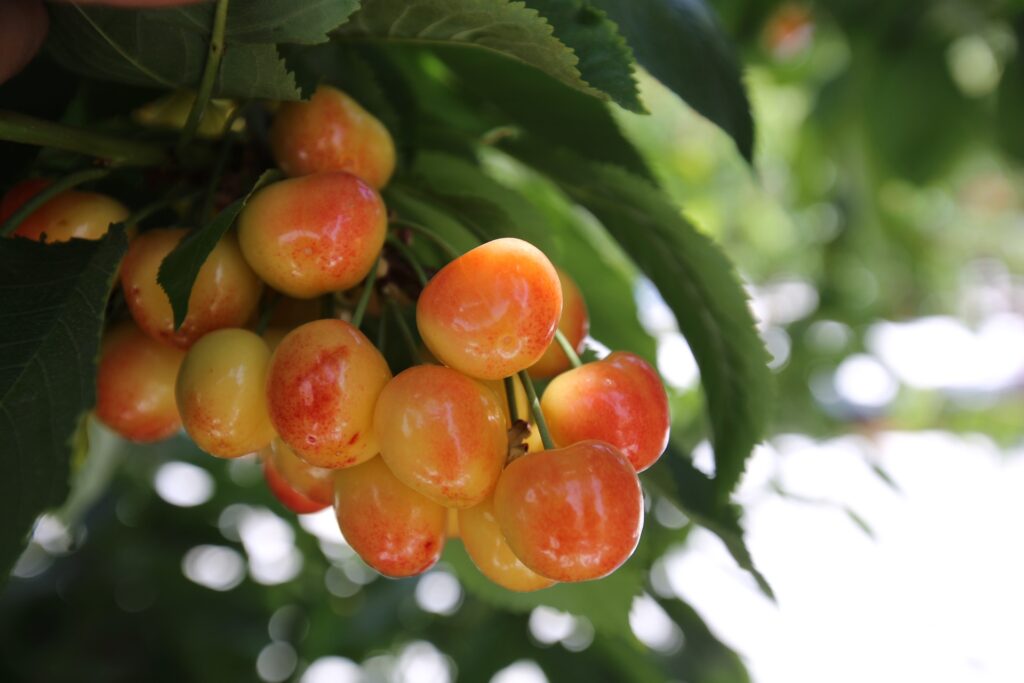
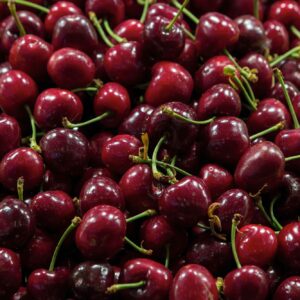
Photo: Northwest Cherry Growers.
Preface
The results presented in this WSU publication serve as a general guide for evaluating the feasibility of producing yellow sweet cherries in Washington State. The analysis relies primarily on input cost centers representative of the 2025 production year, with labor rates updated to reflect prevailing conditions as of 2026.
This publication is not intended to be a definitive guide to production practices, but it is intended to be helpful in estimating the physical and financial requirements of comparable plantings. Specific budget assumptions were adopted for this study, but these assumptions may not represent the conditions in all production and marketing situations since production costs and returns vary across orchard operations, depending on the following factors:
- Capital, labor, and natural resources
- Crop yields
- Type and size of machinery, irrigation, and frost control systems
- Input prices
- Cultural practices
- Sweet cherry prices
- Orchard size
- Management skills
Cost estimations in the enterprise budget also vary depending on the budget’s intended use. To avoid drawing unwarranted conclusions for any particular orchard, readers must closely examine the assumptions made in this guide and then adjust the costs, returns, or both as appropriate for their own orchard operation.
Yellow Sweet Cherry Production in Washington State
Washington State is the leading producer of sweet cherries in the United States. According to the USDA Noncitrus Fruits and Nuts 2024 Summary (May 2025), the utilized production of sweet cherries totaled 360,710 tons in 2024, of which Washington accounted for 200,970 tons or about 56%. Sweet cherries remain one of Washington State’s highest value specialty crops, with a farm–gate value of approximately $434.8 million in 2024. In recent years, Washington’s share of total US sweet cherry production has generally ranged between 55% and 63%, depending on relative crop sizes and weather conditions across producing states (USDA NASS 2025). Within this production mix, yellow sweet cherries—most notably the Rainier variety—represent a differentiated, high-value segment of the market.
Rainier is the dominant yellow sweet cherry cultivar grown in Washington and is recognized for its yellow-to-cream background color with a red blush, high soluble solids content, and relatively low perceived acidity (WSU Tree Fruit 2026). Developed in Washington State, Rainier is valued in both domestic and export markets for its distinctive appearance and flavor profile. Compared to dark sweet cultivars, Rainier requires careful harvest and postharvest handling because its lighter skin color makes bruising, pitting, and other surface defects more visible (WSU Tree Fruit 2026). Early Robin is another yellow sweet cherry variety that is similar to Rainier but is produced earlier in the season.
During the 2021–2025 period, Washington State total sweet cherry shipments reached approximately 832,134 tons, of which mahogany sweet cherries accounted for about 779,468 tons (93.67%) and yellow sweet cherries totaled approximately 52,666 tons (6.33%) (WSTFA 2026). Yellow cherry shipments are highly concentrated in the mid-season, representing 78.6% of total yellow cherry volume, with smaller shares in the early (9.4%) and late (12.0%) marketing windows (WSTFA 2026). As with mahogany sweet cherries, harvest timing varies by elevation and growing district, with warmer sites harvesting earlier and cooler, higher-elevation orchards maturing later (WSU Tree Fruit 2026).
Yellow sweet cherries command a substantial price premium relative to mahogany cherries. For the 2021–2025 period, the overall weighted average price was $4.09 per pound for yellow compared to $2.26 per pound for mahogany, implying an average premium of $1.83 per pound (approximately 81%) (WSTFA 2026).
Study Objectives
The primary use of this report is in identifying inputs, costs, and yields considered typical of well-managed yellow sweet cherry orchards.
This publication is designed to enable growers to estimate (1) the costs of equipment, materials, supplies, and labor required to establish and produce yellow sweet cherries, including packing costs, and (2) the ranges of price and production at which yellow sweet cherry production would be a profitable enterprise.
Information Sources
The data used in this study were collected from information shared by a group of experienced yellow cherry growers in Washington. Selected orchard specifications are summarized in Table 1, while production, price, and cost assumptions are presented in the Budget Assumptions section and Table 2. Additionally, the data represent what these owner-operators anticipate would occur over an orchard’s life, if no unforeseen failures occur. Given that many factors affect production costs, pack-out, and returns, individual growers can use the Excel Workbook (available at the WSU School of Economic Sciences Crop Enterprise Budgets) to make necessary modifications and estimate their own costs and returns.
| Block Specification | Description |
|---|---|
| Architecture | 2-leader non-formal V |
| In-row spacing | 6 feet |
| Between-row spacing | 14 feet |
| Rootstock | G-12 |
| Block size | 12 acres |
| Productive block size | 11 acres |
| Life of planting | 25 years |
| Tree density | 519 trees per acre |
Budget Assumptions
- Yellow cherries are assumed to be harvested mid-season, which extends from June 19 to July 15. Large fruit correspond to 9.5-row and larger, and medium fruit ranges from 9.5- to 10.5-row. It is assumed that yellow cherries 11-row and smaller are not packed, therefore small fruit will not be considered a category for this study.
- The area of the total farm operation is 300 acres of mixed conventional tree fruits. Bearing acres include: 225 acres of apples (75% of total area), 48 acres of sweet cherries (16%), and 27 acres of pears (9%).
- The 48-acre orchard is divided into four equal 12-acre blocks: three planted with mahogany sweet cherries scheduled for early-, mid-, and late-harvest windows, and one planted with yellow sweet cherries. In each block, one acre is allocated to infrastructure (roads, pond, loading area, and buildings), resulting in 11 bearing acres per block.
- The total value of bare, unimproved, agricultural land (including senior water rights) is $18,000 per acre with annual property taxes of $120 per acre.
- The irrigation system consists of overhead cooling and under tree drip lines, with two separate sub-main lines. Water is provided through a public irrigation district.
- Cultural practices and harvest activities are done by using a combination of manual labor, ladders and labor-enhancing equipment. The hourly manual labor rate is $21.63/hour, calculated using the minimum wage for 2026 of $17.13/hour, plus the H-2A fixed cost of $4.50/hour. For chemical and fertilizer application, irrigation, and frost protection, the labor rate is $22.63/hour, a dollar more than the manual labor rate. These labor rates are assumed the same for all years of production.
- Free-on-board (FOB) prices are defined as the prices at the packinghouse door. FOB prices vary by fruit size: $4.03/lb for large-size cherries, $3.73/lb for medium sizes, and $0.04/lb for cull.
- Gross production refers to total harvested production (18,000 lb per acre) prior to sorting. Net production reflects marketable production after pack-out, where pack-out denotes the removal of cull fruit (20%) arising from preharvest, harvest, or storage losses. The remaining 80% of gross production is allocated across large-, medium-, and small-size categories.
- Management salary is valued at $700 per acre.
- Interest on investment represents a 5% opportunity cost to the enterprise. These are forgone earnings for investing money in orchard, equipment, and buildings rather than in an alternative activity. This also represents interest on funds borrowed to finance orchard, equipment, and building purchases.
Summary of Study Results
The estimated annual cost and returns for a 12-acre block of yellow sweet cherries in Washington are shown in Table 2. Production costs are classified into variable costs and fixed costs. Variable costs comprise orchard operations, harvest activities, materials, maintenance and repairs, and packing costs. Fixed costs are incurred whether or not sweet cherries are produced. These costs will generally be calculated for the whole farm enterprise and allocated across each unit of production. The fixed costs include depreciation on capital, interest, taxes, insurance, management, and amortized establishment costs. Management is treated as a fixed cost rather than a variable cost because, like land, management has been committed to the production cycle of the crop.
| Return or Cost | Description or Activity | Year 1 | Year 2 | Year 3 | Year 4 | Year 5 | Years 6–20 (Full Production, Annual Average) |
|---|---|---|---|---|---|---|---|
| Net production | Estimated production (lb/acre)a, large | 0.00 | 0.00 | 1,500.00 | 4,000.00 | 8,000.00 | 9,000.00 |
| Net production | Estimated production (lb/acre)a, medium | 0.00 | 0.00 | 900.00 | 2,400.00 | 4,800.00 | 5,400.00 |
| Net production | Estimated production (lb/acre)a, small | 0.00 | 0.00 | 0.00 | 0.00 | 0.00 | 0.00 |
| Culls | Estimated culls (lb/acre)a | 0.00 | 0.00 | 600.00 | 1,600.00 | 3,200.00 | 3,600.00 |
| Price | Estimated FOB price ($/lb)b, large | 0.00 | 0.00 | 4.03 | 4.03 | 4.03 | 4.03 |
| Price | Estimated FOB price ($/lb)b, medium | 0.00 | 0.00 | 3.73 | 3.73 | 3.73 | 3.73 |
| Price | Estimated FOB price ($/lb)b, small | 0.00 | 0.00 | 0.00 | 0.00 | 0.00 | 0.00 |
| Price | Estimated FOB price ($/lb)b, cull | 0.00 | 0.00 | 0.04 | 0.04 | 0.04 | 0.04 |
| Return | TOTAL RETURNS ($/acre) | 0.00 | 0.00 | 9,426.00 | 25,136.00 | 50,272.00 | 56,556.00 |
| Variable cost | Soil preparation | 2,811 | 0 | 0 | 0 | 0 | 0 |
| Variable cost | Trees (including labor) | 7,507 | 0 | 0 | 0 | 0 | 0 |
| Variable cost | Pruning & trainingc | 324 | 541 | 887 | 1,233 | 1,255 | 1,255 |
| Variable cost | Thinningc | 0 | 0 | 0 | 0 | 0 | 0 |
| Variable cost | Chemicalsd,e | 731 | 1,181 | 1,814 | 2,077 | 2,147 | 2,147 |
| Variable cost | Fertilizerd,e | 183 | 253 | 323 | 411 | 411 | 411 |
| Variable cost | Irrigation water & electric charge | 275 | 275 | 275 | 275 | 275 | 275 |
| Variable cost | Irrigation labore | 226 | 226 | 226 | 226 | 226 | 226 |
| Variable cost | Reflective cover laborf | 0 | 0 | 300 | 300 | 300 | 300 |
| Variable cost | Netting laborf | 0 | 0 | 0 | 0 | 0 | 0 |
| Variable cost | Beehives | 0 | 0 | 195 | 195 | 195 | 195 |
| Variable cost | General farm laborg | 100 | 100 | 100 | 100 | 100 | 100 |
| Variable cost | Picking laborh | 0 | 0 | 1,020 | 2,720 | 5,280 | 5,940 |
| Variable cost | Other labor (checkers, tractor drivers, supervisors)h | 0 | 0 | 450 | 1,200 | 2,400 | 2,700 |
| Variable cost | Hauling sweet cherriesh | 0 | 0 | 150 | 400 | 800 | 900 |
| Variable cost | Warehouse packing charges | 0 | 0 | 2,700 | 7,200 | 14,400 | 16,200 |
| Variable cost | Maintenance & repair | 250 | 250 | 285 | 285 | 285 | 285 |
| Variable cost | Fuel & lube | 180 | 135 | 140 | 160 | 180 | 180 |
| Variable cost | Overhead (5% of variable costs)i | 629 | 148 | 443 | 839 | 1,413 | 1,556 |
| Variable cost | Interest (5% of variable costs)j | 661 | 155 | 465 | 881 | 1,483 | 1,225 |
| Sum of all variable costs | Total variable costs | 13,878 | 3,265 | 9,774 | 18,503 | 31,150 | 33,895 |
| Return | Returns over variable costs | -13,878 | -3,265 | -348 | 6,633 | 19,122 | 22,661 |
| Fixed cash cost | Miscellaneous supplies | 190 | 190 | 190 | 190 | 190 | 190 |
| Fixed cash cost | Land & property taxes | 120 | 120 | 120 | 120 | 120 | 120 |
| Fixed cash cost | Insurance cost (farm and property) | 425 | 425 | 425 | 425 | 425 | 425 |
| Sum of fixed cash costs | Total fixed cash cost | 735 | 735 | 735 | 735 | 735 | 735 |
| Sum of all variable costs and fixed cash costs | Total cash costs | 14,613 | 4,000 | 10,509 | 19,238 | 31,885 | 34,630 |
| Return | Return over cash costs | -14,613 | -4,000 | -1,083 | 5,898 | 18,387 | 21,926 |
| Depreciation | Irrigation system | 128 | 128 | 128 | 128 | 128 | 128 |
| Depreciation | Reflective cover | 350 | 350 | 350 | 350 | 350 | 350 |
| Depreciation | Netting | 0 | 0 | 0 | 0 | 0 | 0 |
| Depreciation | Machinery, equipment & building | 378 | 378 | 378 | 378 | 378 | 378 |
| Depreciation | Main line & pump | 0 | 0 | 0 | 0 | 0 | 0 |
| Depreciation | Pond | 0 | 0 | 0 | 0 | 0 | 0 |
| Depreciation | Trellis | 140 | 140 | 140 | 140 | 140 | 140 |
| Depreciation | Wind machine | 132 | 132 | 132 | 132 | 132 | 132 |
| Interest | Irrigation system | 96 | 96 | 96 | 96 | 96 | 96 |
| Interest | Reflective cover | 88 | 88 | 88 | 88 | 88 | 88 |
| Interest | Netting | 0 | 0 | 0 | 0 | 0 | 0 |
| Interest | Landk | 900 | 900 | 900 | 900 | 900 | 900 |
| Interest | Machinery, equipment & building | 121 | 121 | 121 | 121 | 121 | 121 |
| Interest | Main line & pump | 0 | 0 | 0 | 0 | 0 | 0 |
| Interest | Pond | 0 | 0 | 0 | 0 | 0 | 0 |
| Interest | Trellis | 88 | 88 | 88 | 88 | 88 | 88 |
| Interest | Wind machine | 99 | 99 | 99 | 99 | 99 | 99 |
| Interest | Establishment costs (5%) | 0 | 892 | 1,297 | 1,577 | 1,522 | 0 |
| Other fixed cost | Management cost | 700 | 700 | 700 | 700 | 700 | 700 |
| Other fixed cost | Amortized establishment costsl | 0 | 0 | 0 | 0 | 0 | 1,347 |
| Sum of depreciation, interest and other fixed costs | Total fixed non-cash costs | 3,218 | 4,110 | 4,515 | 4,795 | 4,740 | 4,566 |
| Return | Return over cash costs and depreciation | -15,741 | -5,128 | -2,211 | 4,770 | 17,259 | 20,798 |
| Sum of fixed cash and non-cash costs | Total fixed costs | 3,953 | 4,845 | 5,250 | 5,530 | 5,475 | 5,301 |
| Sum of all costs | TOTAL PRODUCTION COSTS | 17,831 | 8,110 | 15,025 | 24,033 | 36,626 | 39,196 |
| Total returns minus total production costs | ESTIMATED NET RETURNS | -17,831 | -8,110 | -5,599 | 1,103 | 13,646 | 17,360 |
| Establishment cost | Accumulated establishment costs | 17,831 | 25,941 | 31,540 | 30,437 | 16,791 | - |
a Estimated production considers the respective portions of gross production that are classified as large, medium, small and cull.
b These are packinghouse door prices. They reflect the return before any expenses are subtracted.
c Hand labor rate is $21.63/hour and includes all applicable taxes and benefits.
d Includes materials and labor.
e Tractor/machinery labor for chemical application, fertilizer application and irrigation is $22.63 per hour, including all applicable taxes and benefits.
f Labor cost to deploy and pull back.
g General farm labor rate is a lump sum per acre and applied to miscellaneous/all other labor. Rate includes applicable taxes and benefits.
h Picking rate = $0.34/lb in Years 3-4 and $0.33/lb in Years 5-25; Checkers & tractor drivers’ rate = $0.15/lb; Hauling rate = $0.05/lb (hauling refers to transportation cost from the orchard to the warehouse. It is assumed that warehouse will cover additional transportation expenses (if any) when the orchard is located in remote areas.
i Captures indirect costs of operations in the orchard that fluctuate with the level of production but are not accounted by the variable costs already identified. Also captures unforeseeable expenses.
j Interest expense on full year during establishment years and for 3/4 of a year during full production.
k Land cost is approximated by using the 5% interest rate multiplied by the land value of $18,000 per acre.
l Represents the costs incurred during the establishment years (minus revenues during those years) that must be recaptured during the full production years. It is calculated as: accumulated establishment costs in Year 5 amortized at 5% for 20 years.
The study assumed that a yellow sweet cherry orchard could achieve full production in the sixth year. Based on the above assumptions, under full production, estimated total returns reach $56,556 per acre. Total variable costs average $33,895 per acre, generating returns over variable costs of $22,661. When fixed cash costs are included, total cash costs are $34,630 per acre, leaving returns over cash costs of $21,926. After accounting for depreciation and other fixed non-cash costs, total cash costs plus depreciation imply returns over cash costs and depreciation of $20,798 per acre. Total production costs, which include all cash and non-cash costs as well as amortized establishment and opportunity costs, average $39,196 per acre. After covering total costs, estimated net returns during full production are $17,360 per acre.
Table 3 reports break-even returns per pound for yellow sweet cherries of different sizes under four cost categories—variable, cash, cash plus depreciation, and total economic costs—during full production. For any given cost category, the enterprise breaks even only if the break-even prices for all sizes are achieved at the same time.
| Levels of Enterprise Costs | Sweet Cherry Size | Proportional Cost by Size ($/acre) | Break-Even Returna by Grade ($/lb) |
|---|---|---|---|
| Total Variable Costsb | Large | $21,737.28 | 2.42 |
| Total Variable Costsb | Medium | $12,071.47 | 2.24 |
| Total Variable Costsb | Small | - | - |
| Total Variable Costsb | Culls | $86.30 | 0.02 |
| Total Cash Costsc,d | Large | $22,208.64 | 2.47 |
| Total Cash Costsc,d | Medium | $12,333.24 | 2.28 |
| Total Cash Costsc,d | Small | - | - |
| Total Cash Costsc,d | Culls | $88.17 | 0.02 |
| Total Cash Costs + Depreciation Costse | Large | $22,932.01 | 2.55 |
| Total Cash Costs + Depreciation Costse | Medium | $12,734.94 | 2.36 |
| Total Cash Costs + Depreciation Costse | Small | - | - |
| Total Cash Costs + Depreciation Costse | Culls | $91.05 | 0.03 |
| Total Costf,g | Large | $25,136.71 | 2.79 |
| Total Costf,g | Medium | $13,959.29 | 2.59 |
| Total Costf,g | Small | - | - |
| Total Costf,g | Culls | $99.80 | 0.03 |
Notes: This table shows break-even returns for different levels of total enterprise cost. For each cost level, there are four break-even returns—one for each sweet cherry size—and they should be viewed as a group that occurs together. The enterprise breaks even only when all four returns are achieved at the same time. The break-even returns are calculated by sharing total costs across cherry sizes based on their contribution to total returns: about 63.8% for large cherries, 35.9% for medium, none for small, and 0.3% for Cull. These return shares reflect the assumed mix of cherry sizes produced, which is approximately 50% large, 30% medium, 0% small, and 20% Cull of total production.
a The break-even return per size is obtained as follows: proportional cost divided by the production of each cherry size.
b If the return is below this level, sweet cherries are uneconomical to produce.
c If there are other cash costs on an individual’s orchard, these costs must be identified and included in the cash cost break-even return calculation.
d The second break-even return allows the producer to stay in business in the short run.
e The third break-even return allows the producer to stay in business in the long run.
f Total cost includes interest costs, which consist of both interest on owned capital and actual cash interest payments on borrowed funds.
g The fourth break-even return is the total cost break-even return. Only when this break-even return is received can the grower recover all out-of-pocket expenses plus opportunity costs.
Assuming a production of 18,000 pounds per acre with a 50% large, 30% medium, and 20% cull distribution, break-even returns rise as additional cost components are included. At the variable cost level, break-even returns are $2.42 per pound for large fruit and $2.24 for medium fruit. Including fixed cash costs increases these to $2.47 and $2.28, respectively; adding depreciation raises them to $2.55 and $2.36. At the full cost level—accounting for all cash and non-cash costs—the break-even returns reach $2.79 per pound for large cherries and $2.59 for medium cherries.
Importantly, break-even returns are directly influenced by the percentage distribution of production volumes across size categories. Total costs are allocated across sizes in proportion to their contribution to total returns—63.8% to large fruit, 35.9% to medium fruit, and 0.3% to culls, reflecting the assumed 50:30:0:20 production mix of large, medium, small, and cull. Because break-even price equals proportional cost divided by size-specific production, any change in the share of output assigned to each size category alters the cost burden carried by that size and, consequently, its required break-even return.
Table 4 specifies the underlying baseline assumptions driving these results, including FOB prices of $4.03 per pound for large fruit and $3.73 for medium fruit, harvest labor costs of $0.33 per pound, packing charges of $0.90 per pound, and a 5% interest rate.
| Variables | Value |
|---|---|
| Gross production | 18,000 |
| Size distribution: Large, % of gross yielda | 50% |
| Size distribution: Medium, % of gross yielda | 30% |
| Size distribution: Small, % of gross yielda | 0% |
| Size distribution: Cull, % of gross yielda | 20% |
| FOB price ($/lb), large | $4.03 |
| FOB price ($/lb), medium | $3.73 |
| FOB price ($/lb), small | $0.00 |
| FOB price ($/lb), cull | $0.04 |
| Picking labor cost ($/lb) | $0.33 |
| Other harvest labor cost ($/lb)b | $0.15 |
| Hauling cost ($/lb) | $0.05 |
| Packing charges ($/lb) | $0.90 |
| Overhead (%) | 5% |
| Interest rate (%) | 5% |
Notes: These are baseline values. Changing values in Table 4 in the Excel workbook will automatically update the numbers shown in Table 3.
a Important note: When changing the percentages of size distribution, they must sum up to 100%.
b Refers to checking, tractor drivers, and supervisors.
Most of the budget values given in Table 2 are based on more comprehensive underlying cost data, which are shown in Appendix A, Tables A1 to A4. Appendix A, Table A1, presents the annual capital requirements for a 12-acre yellow sweet cherry block. Appendix A, Table A2, specifies the machinery and building requirements for the 300-acre multi-crop cultivar orchard. Interest costs are listed in Appendix A, Table A3, and depreciation costs are listed in Appendix A, Table A4. Interest costs represent the required return on investments. They can be actual interest payments on funds borrowed to finance farm operations and physical capital investments, an opportunity cost (a return that would have been received if the investment had been in an alternative activity), or a combination of the two. All interest and amortization costs assume a 5% interest rate. The amortized establishment costs assume a total productive life of 25 years, which includes 5 years of establishment and 20 years of full production. The amortized establishment costs must be recaptured during the full production years in order for an enterprise to be profitable. Depreciation costs are annual, non-cash expenses that are calculated over the asset’s useful life. These expenses represent the loss in an asset’s value due to use, age, and obsolescence.
The key results of this enterprise budget are formed by production-related assumptions established for the study. Production costs and returns for individual owner-operators may differ; thus, the results cannot be generalized to represent the population of sweet cherry operations in Washington State. An interactive Excel Workbook, described below, is provided to enable individual owner-operators to estimate their returns based on the costs of their production.
Excel Workbook
An Excel spreadsheet version of the 2026 enterprise budget (Table 2) as well as associated data underlying the per-acre cost calculations (Appendix Tables A5 through A9 for establishment costs, full production costs, calculation of salvage value and depreciation costs, amortization calculator, all production-related data for the yellow sweet cherry orchard investment) are available at the WSU School of Economic Sciences Extension website.
Owner-operators can modify select values and thus use the Excel Workbook to evaluate their own production costs and returns.
Acknowledgements
The authors acknowledge the information provided by a group of anonymous yellow sweet cherry orchard and packinghouse owner-operators, pesticide consultants, nursery representatives, financial institution representatives, and WSU Extension educators.
Appendix A
| Requirements and Receipts | Year 1 | Year 2 | Year 3 | Year 4 | Year 5 | Years 6–25 (Full Production, Annual Average) |
|---|---|---|---|---|---|---|
| Land (12 acres) | 216,000 | - | - | - | - | - |
| Trellis system | 38,500 | - | - | - | - | - |
| Reflective cover | - | - | 38,500 | - | - | - |
| Netting | - | - | - | - | - | - |
| Irrigation system | 42,147 | - | - | - | - | - |
| Main line & pump | 0 | - | - | - | - | - |
| Pond | 0 | - | - | - | - | - |
| Wind machine | - | - | 43,500 | - | - | - |
| Operating expensesa | 168,443 | 51,697 | 123,301 | 219,316 | 358,438 | 388,631 |
| Total requirements ($) | 465,089 | 51,697 | 205,301 | 219,316 | 358,438 | 388,631 |
| Receipts ($) | 0 | 0 | 103,686 | 276,496 | 552,992 | 622,116 |
| Net requirements ($) | 465,089 | 51,697 | 101,615 | -57,180 | -194,554 | -233,485 |
Notes: The full production year is representative of all the remaining years the orchard is in full production (Year 6 to Year 25).
a Operating expenses are the sum of the total variable costs, miscellaneous supplies, land and property taxes, insurance cost, and management cost.
| Requirements | Description | Purchase Price ($)a | Number of Units | Total Cost ($) |
|---|---|---|---|---|
| Machine shop/shedb | - | 150,000 | 1 | 150,000 |
| Tractor-70HP, 4WD | 70HP, 4WD | 65,000 | 5 | 325,000 |
| Tractor-40HP, 4WD | 40HP, 4WD | 60,000 | 2 | 120,000 |
| 4-wheeler | 2WD | 8,000 | 3 | 24,000 |
| Speed sprayer | - | 30,000 | 5 | 150,000 |
| Weed spray boom & tank | - | 7,000 | 1 | 7,000 |
| Mower-rotary | 7 ft | 7,800 | 1 | 7,800 |
| Flail mower | - | 12,000 | 1 | 12,000 |
| Fork lift | - | 50,000 | 2 | 100,000 |
| Bin trailer | - | 11,000 | 4 | 44,000 |
| Pickup truck | Full size | 65,000 | 2 | 130,000 |
| Ladder | 8 ft | 120 | 100 | 12,000 |
| Platforms | - | 60,000 | 3 | 180,000 |
| Miscellaneous equipmentc | - | 50,000 | 1 | 50,000 |
| Shop equipmentd | - | 20,000 | 1 | 20,000 |
| Total cost | - | - | - | 1,331,800 |
Notes: Machinery, equipment, and building requirements are utilized in growing diverse crops in the 300-acre farm, which include yellow sweet cherries. The costs of fixed capital are allocated on the entire farm operation.
a Purchase price corresponds to new machinery, equipment, or building.
b Includes manager office, restroom, pesticide handling area and storage, dry storage, area for equipment cover, and shop bay for equipment work/repair.
c Includes mobile portable toilet (2), box blade, straight blade, quick connect loader, mechanical weeder, detachable bucket for loading fertilizer, gopher baiter, soil aerator, utility trailer, and ladder trailer (2).
d Includes compressor, welder, pressure washer, and miscellaneous tools.
| Capital Requirements | Total Purchase Price ($) | Salvage Value ($)a | Number of Acres | Total Interest Cost ($) | Interest Cost per Acre ($)b |
|---|---|---|---|---|---|
| Irrigation systemc | 42,147 | 0 | 11 | 1,054 | 96 |
| Reflective coverc | 38,500 | 0 | 11 | 963 | 88 |
| Nettingc | 0 | 0 | 11 | 0 | 0 |
| Land | 216,000 | N/A | 12 | 10,800 | 900 |
| Machinery, equipment & buildingd,e | 1,331,800 | 118,180 | 300 | 36,250 | 121 |
| Main line & pumpc | 0 | 0 | 11 | 0 | 0 |
| Pondc | 0 | 0 | 11 | 0 | 0 |
| Trellisc | 38,500 | 0 | 11 | 963 | 88 |
| Wind machinec | 43,500 | 0 | 11 | 1,088 | 99 |
a Not applied to land because land is not a depreciable asset.
b Interest Cost is calculated as: (Total Purchase Price + Salvage Value) ÷ 2 × Interest Rate. For land, the calculation is: Total Purchase Price × Interest Rate, because there is no salvage value for land.
c The irrigation system, reflective cover, netting, main line and pump, pond, trellis system, and wind machine are used for the direct production of the fruit.Hence, their respective interest costs are divided by the production area (11 acres) to get the interest cost per acre.
d Total area of the farm operation is 300 acres and the machinery, equipment, and building are used in the entire, diverse cultivar farm. Thus, the corresponding interest costs are divided by the total area (300 acres) to derive the interest cost per acre.
e See Appendix A, Table A7, in the Excel Workbook for a detailed calculation of the salvage value of the machinery, equipment, and building.
| Capital Requirements | Total Purchase Price ($) | Number of Acres | Total Value per Acre ($) | Years of Useful Life | Depreciation Cost per Acre ($/yr)a |
|---|---|---|---|---|---|
| Irrigation system | 42,147 | 11 | 3,832 | 30 | 128 |
| Reflective cover | 38,500 | 11 | 3,500 | 10 | 350 |
| Netting | 0 | 11 | 0 | 20 | 0 |
| Main line & pump | 0 | 11 | 0 | 30 | 0 |
| Pond | 0 | 11 | 0 | 50 | 0 |
| Trellis | 38,500 | 11 | 3,500 | 25 | 140 |
| Wind machine | 43,500 | 11 | 3,955 | 30 | 132 |
| Machinery, equipment & buildingb | - | - | - | - | 378 |
a The depreciation cost is calculated as straight-line depreciation: (Total Purchase Price − Salvage Value) ÷ Years of Use.
b See Appendix A, Table A7, in the Excel Workbook for a detailed calculation of the depreciation cost of the machinery, equipment, and building.
References
USDA NASS (United States Department of Agriculture National Agricultural Statistics Service). 2025. 2024 State Agriculture Overview. Washington.
WSTFA (Washington State Tree Fruit Association). 2026. Shipment and FOB price sweet cherry data 2021–2025.
WSU Tree Fruit (Washington State University Tree Fruit. Comprehensive Tree Fruit Site). 2026. Varieties. Sweet Cherry.
R. Karina Gallardo, Professor and Extension Specialist, School of Economic Sciences, Puyallup Research and Extension Center, Center for Precision and Automated Agricultural Systems, Washington State University
Suzette P. Galinato, Associate Professor and Extension Specialist, Agricultural Economics Agriculture and Natural Resources, Washington State University Extension
Bernardita Sallato C., Associate Professor and Tree Fruit Extension Specialist, Irrigated Agriculture Research and Extension Center, Washington State University
Photo credits: Northwest Cherry Growers

TB116E

Copyright © Washington State University
WSU Extension publications contain material written and produced for public distribution. Alternative text descriptions for select complex images were generated using ChatGPT (OpenAI), then reviewed and adapted to ensure compliance with Web Content Accessibility Guidelines (WCAG) accessibility standards.
Issued by Washington State University Extension and the US Department of Agriculture in furtherance of the Acts of May 8 and June 30, 1914. Extension programs and policies are consistent with federal and state laws and regulations on nondiscrimination regarding race, sex, religion, age, color, creed, and national or ethnic origin; physical, mental, or sensory disability; marital status or sexual orientation; and status as a Vietnam-era or disabled veteran. Evidence of noncompliance may be reported through your local WSU Extension office. Trade names have been used to simplify information; no endorsement is intended.