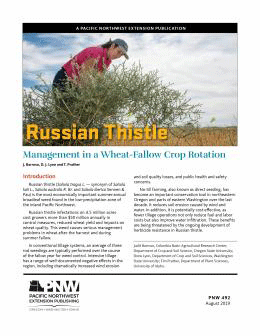
Russian Thistle: Management in a Wheat-Fallow Crop Rotation
Reviews Russian thistle biology as it relates to management, including seed dormancy and longevity in soil, seed distribution, seed germination and emergence, plant growth after establishment, crop competition, and resistance to herbicides. Outlines key considerations for managing for 3 crop years and 1 fallow year. Describes results from a residue management experiment designed to determine how to reduce tillage while maintaining winter wheat production.
Page Count: 10
Published: November 1995
Revised: August 2019
Reviewed: January 2023
Hurry! Only left in stock.
Related publications
-
Pacific Northwest (PNW) Insect Management Handbook
A comprehensive guide to insect management in commercial crops and environments and in home landscapes and gardens in the Pacific Northwest. Covers pesticide safety and toxicity, protecting bees, adjuvants, mixing tables, calibration, and biological control.…
-
Pest Watch: European Chafer (Home Garden Series)
This Pest Watch fact sheet provides information about how to identify and manage European chafer beetles that feed on turf and cereal crops during their larval stage. Because this pest has been confir ...
- Published:
- November 2012
- SKU:
- FS078E
Authors: -
Seed Treatment: A Study Guide for Seed Treaters
Authors explain reasons for treating seeds and describe appropriate uses against pathogens and soil insects (the major seed pests). Topics include seed pest management: cultural, physical, biological, ...
Authors:Price: $13.20 -
Organic Management of Flea Beetles
Flea beetles are common garden pests found throughout the Pacific Northwest. Flea beetle feeding on plants in the Brassicaceae and Solanaceae families can scar foliage and potato tubers, often leading to total crop loss.
- Published:
- November 2012
- SKU:
- PNW640