For home gardeners in the Northwest, garlic (Allium sativum) is easy to grow, prolific, and can be stored for several months after it is harvested in midsummer. This publication offers information on planting, maintenance, pest management, and harvest and storage.
Growing season: Fall—midsummer. Time of planting: Fall. Spacing: 4–6 inches apart in rows spaced 12–24 inches apart. Days to harvest: Approximately 240 days. Yield: 10–30 bulbs per 10-foot row. Common starting method: Direct sowing seed garlic.
Introduction
For home gardeners in the Northwest, garlic (Allium sativum) is easy to grow, prolific, and can be stored for use for several months after it is harvested in midsummer. A hardy perennial that can overwinter, garlic is grown as an annual because it is harvested in its first year of growth. Garlic is related to onion (Allium cepa), both are members of the lily family. It is distinguished from onions by its flat leaves and flower buds, although most softneck types of garlic do not produce flower stalks or buds.
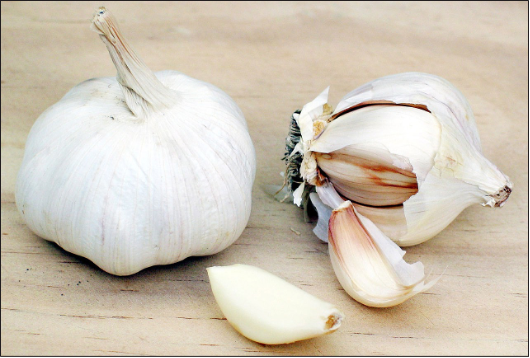
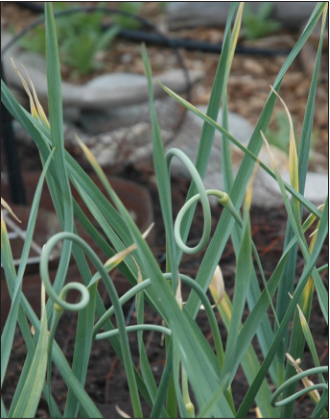
Enclosed in a parchment-like sheath, a garlic bulb consists of several small cloves (Figure 1). The cloves are situated around a sturdy modified flower stem. The immature flower stems of garlic plants are called scapes (Figure 2). Scapes begin to form in midsummer. When the scape is removed, the plant can focus more of its energy on bulb production, which results in a larger bulb. Garlic scapes are edible and should be carefully pinched or cut off just above the top leaf of the garlic plant. Scapes are most tender and have the best flavor if they are harvested when they begin to curl. Hardneck garlics are best for producing scapes since most softneck garlics have been bred not to produce them.
Figure 1. Garlic bulbs and garlic cloves. By Donovan Govan, Wikimedia Commons
Figure 2. Garlic scapes. By Bill Thorness, Washington State University
Garlic is classified into two types (or subspecies)—hardneck (A. sativum var. ophioscorodon) and softneck (A. sativum var. sativum). In general, hardneck types grow well in colder climates, produce larger, but fewer, cloves and have a shorter shelf life than softneck types. Softneck types are commonly found in supermarkets and are used to make garlic braids. Garlic braids are made for storing garlic and can be simple bundles held together by string or more elaborate pigtail-like braids.
In the Northwest, garlic is planted as cloves in the fall. Garlic grows roots until the ground freezes, which is when it goes dormant. It does not start to produce green foliage until March or April, when the temperatures begin to warm. Garlic is typically harvested between June and August, depending on the variety and the climate in which it is grown. Each garlic clove that is successfully grown produces a bulb by harvest time.
Hardneck (Also Known as Stiffneck) Types
The garlic cloves of hardneck types surround a stiff central stem that curls as it grows. This is the most cold-hardy of the garlics. The flavor is milder than softneck garlics and while it does not store as well as softneck garlics, the cloves are easier to peel. There are three main groups of hardneck garlic. They include Rocambole, Porcelain, and Purple Stripe.
Rocamboles generally grow well in cold winter climates. They produce large, tan- or brown-colored cloves. Rocam-bole varieties include Spanish Roja, Amish, German Red, and Killarney Red. Covered in a satiny white sheath, Por-celains produce four to six cloves around a sturdy scape. Porcelain varieties include Georgian Crystal, Extra Hardy, Romanian Red, and Music.
Purple Stripe garlic is named for its vivid purple striping on the bulb wrappers and clove skins. Varieties of Purple Stripe include Standard Purple Stripe, Glazed and Marbled. Standard Purple Stripe subvarieties include Chesnok Red and Persian Star. Marbled subvarieties include Siberian and Belarus. Glazed subvarieties include Purple Gazer and Brown Tempest.
Softneck Types
Softneck garlic is most commonly found in supermarkets due to its longer shelf life. Softneck garlics are used to make garlic braids because they have more flexible and softer stems than hardneck garlics. Softneck garlics can be recognized by their papery, white sheaths and abundance of cloves. This is the most adaptable garlic and will grow in a variety of climates.
There are two main groups of softneck garlic, Silverskin and Artichoke. Easy to grow, Silverskin is the most common group of softneck garlic. Three varieties of Silverskin include Silver White, Nootka Rose, and S&H Silver.
Artichoke varieties are larger and have fewer but larger cloves compared to other garlics. The bulb sheath on Artichoke varieties is coarser than the Silverskin and may have some purple blotches. Artichoke varieties include Inchellium Red, Red Toch, and Susanville.
Elephant or Great-Headed Garlic (Allium ampeloprasum)
Elephant or great-headed garlic is not a true garlic and is more closely related to the garden leek. It has a milder flavor than true garlic with an intermediate flavor between garlic and onions. Elephant garlic grows a larger bulb with fewer large cloves and is not as hardy as true garlic.
Choosing a Planting Site
Planting Guidelines
Garlic requires full sun (at least 6 hours per day). It is best started by direct sowing seed garlic that can be purchased through some garden centers, catalogs, and online websites. Certified seed garlic has been grown specifically for planting in the garden and is free of insects and diseases. Garlic bulbs purchased at the grocery store should not be planted due to the likelihood of diseases being present on the bulb and given the persistence of certain garlic diseases in the soil. This could prohibit planting garlic or onions in the same bed for several years.
Plant garlic in early to mid-fall (September to October) in eastern Washington gardens and late fall (November) in western Washington gardens. To prepare the planting area, loosen the soil to improve drainage. A soil test will determine the amount and ratio of fertilizer that should be applied to provide nutrients for developing roots. Compost can also be worked into the planting area to support the growth of developing roots and to loosen the soil. Mulch, such as weed-seed-free straw or other organic materials, can be used to protect the growing plants from cold damage during the winter, conserve water, and help prevent weeds from competing with the garlic plants. Spread 3–4 inches of mulch over the planting area.
Plant large cloves that are clean and dry and plant them the same day the bulb is broken apart. Plant the cloves so that the tops are 2 inches below the soil line, and place the garlic clove flat-side down and pointed-side up in the hole. Garlic should be planted 4–6 inches apart in rows that are spaced 12–24 inches apart.
Plant Maintenance
Keep the planting area free of weeds because garlic competes poorly with other plants. Side-dress the garlic plants with compost in late April or May when the tops are 6–8 inches tall. During spring and early summer, provide about 1 inch of water per week or enough water to prevent the soil from drying out. Stop watering when the tops of the plants begin to fall over and dry up, about two to four weeks before harvest.
Pest Management
Garlic is more susceptible to diseases than to insect pests. A garlic clove infected with a disease or insect pest may produce small, misshapen, and inedible bulbs. To prevent pest problems in garlic, only plant seed garlic that is certified free of disease and insect pests. Each clove should be checked for damage before planting. Cloves showing any discoloration, stippling, or bruising should be discarded. Rotation of plantings on a three-year basis will also reduce pressure from diseases and insects. Do not plant onions in the same area as garlic because garlic is susceptible to many of the same diseases and insects as onions. Onions should be included in the rotation of plantings every three years. It is also important to keep planting areas free of weeds and plant debris. For help identifying diseases and insect pests on your garlic plant, contact your local WSU Master Gardener Program.
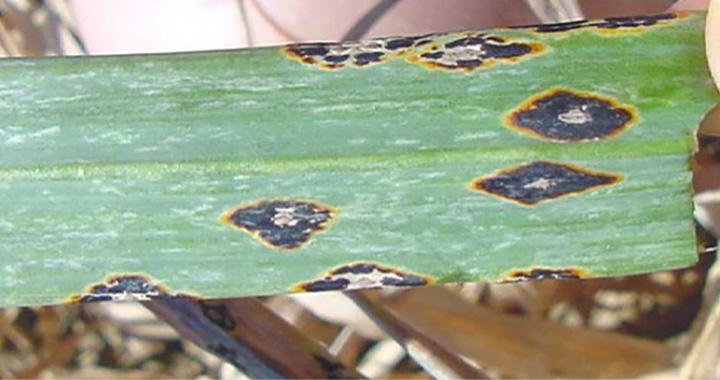
Garlic Rust (Puccinia porri)
Symptoms: Small white to yellow flecks and spots that may become elongate or diamond shaped.
Corrective Action: Avoid planting onion and garlic in the same place each year. Use a three-year planting rotation for onions and garlic. Keep planting area weed free.
Photo: Lindsey duToit, WSU Extension, Mount Vernon
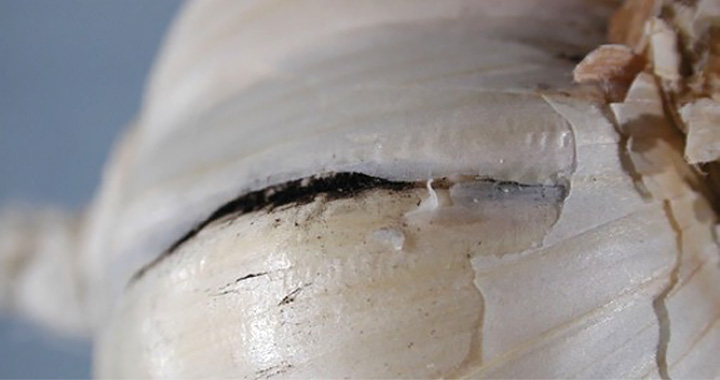
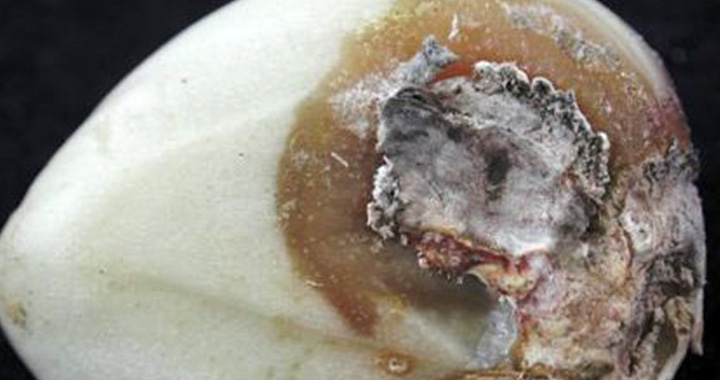
Black Mold(Aspergillus niger or A. ochraceous K. Wilh.)
Symptoms: Discoloration at neck with lesions and streaks of black. Common in warm dry climates.
Corrective Action: Store bulbs at low temperature and low humidity. Avoid bruising and mechanical injury to bulbs at harvest and when storing. Promptly dry bulbs after harvesting and before storing.
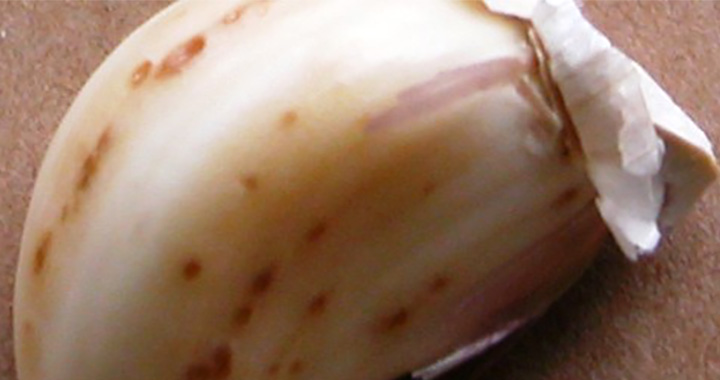
Symptoms: Cloves with brown streaks, indents, or stippling.
Corrective Action: Onion should be included, in addition to garlic, in the three year planting rotation. Promptly dry bulbs after harvesting and before storing.
Photo: Melodie Putnam, Oregon State University
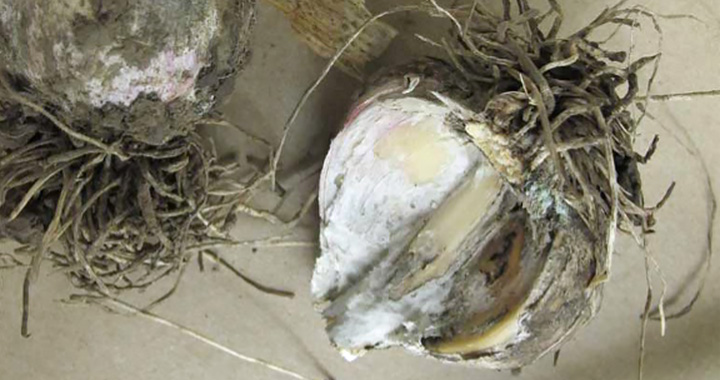
White Rot(Sclerotium cepivorum)
Symptoms: Cloves with brown streaks, indents, or stippling.
Corrective Action: Onion should be included, in addition to garlic, in the three year planting rotation. Promptly dry bulbs after harvesting and before storing.
Photo: Melodie Putnam, Oregon State University
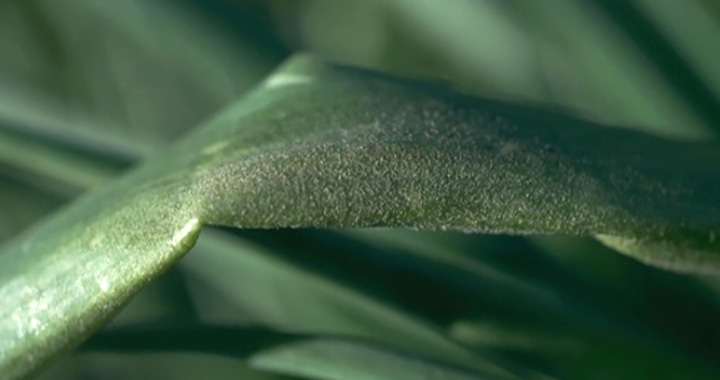
Downy Mildew(Peronospora destructor) on Onion Leaf
Symptoms: A grayish or white, downy fungal growth on leaves, which often die back. The result is smaller than normal bulbs that are poor quality. Bulbs infected with downy mildew may shrivel in storage and sprout early.
Corrective Action: This fungus prefers cool, damp weather. To manage and reduce the risk of downy mildew avoid overwatering and control weeds in and around the garden. Keep planting area free of diseased plants and debris, and discard or destroy diseased materials—do not compost them.
Photo: Howard F. Schwartz, Colorado State University, Bugwood.org
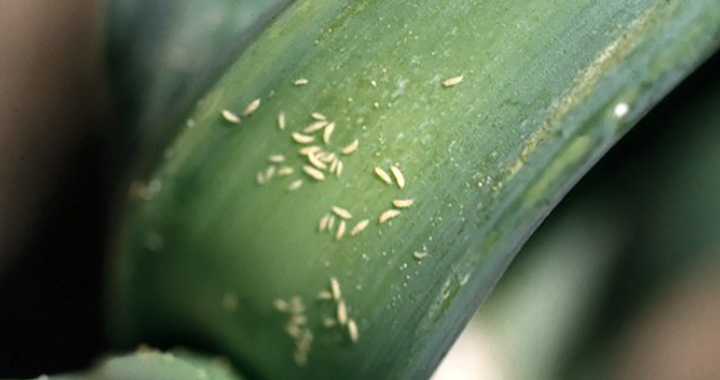
Thrips(Thrips tabaci) on Onion Leaf
Symptoms: About 1/16-inch long, thrips are tiny, slender, and yellowish to dark in color. They can be identified by a mottling or longitudinal streaking, typically on the tender, young leaves on which they feed. Frass (excrement) may be seen as tiny black specks, and leaves damaged by thrips may wither and droop.
Corrective Action: To help prevent an infestation of thrips, keep the planting area free of weeds and host plant debris.
Photo: Whitney Cranshaw, Colorado State University, Bugwood.org
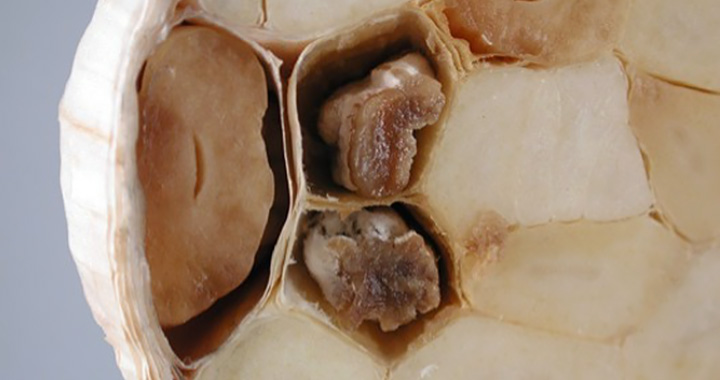
Gray Mold(Botrytis porri and B. aclada)
Symptoms: A yellow, water-soaked discoloration around the neck of the garlic plant. It is also known as neck rot. Symptoms are usually seen around the time of harvest. Fuzzy, grayish mold can be found between the sheathed cloves, and small black fungal structures may be seen around the neck of the garlic.
Corrective Action: To help manage this disease, allow the foliage to mature completely before harvest. Cure bulbs 6–10 days prior to storage. Avoid over-fertilization and overwatering.
Photo: Melodie Putnam, Oregon State University
Basal Rot(Fusarium culmorum)
Symptoms: Decay may occur on cloves and seedlings before foliage emerges. Leaves and basal plate (where roots form on the bottom of the bulb) may show signs of rotting in the garden. Basal rot may affect a single clove or the entire bulb.
Corrective Action: Plant cloves in well-drained soils. Control insects and do not overfertilize. Dry bulbs before storing. Do not plant garlic, onions, or leeks in the same location each year. Rotate these crops on a three year basis.
Photo: Melodie Putnam, Oregon State University
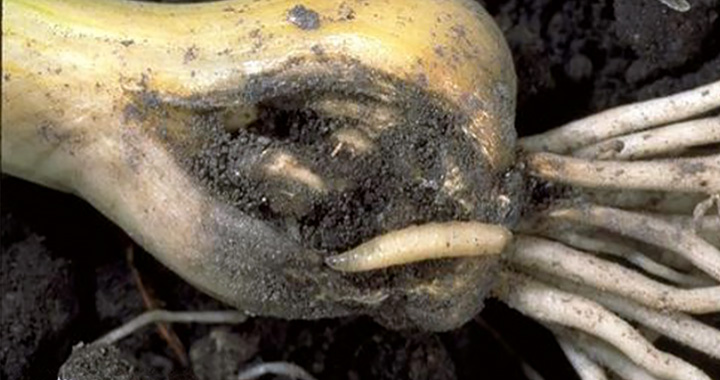
Onion Maggot (Delia antiqua)
Symptoms: Adult larvae are grayish white and about 1/3-inch long. The larvae tunnel through the underground portions of the stem and the bulb, where they feed. Bulbs may appear hollowed out.
Corrective Action: Remove plant debris. Floating row covers can prevent egg-laying female flies. Rotate crops on a three-year basis, to include onions.
Photo: Jack Kelly Clark, University of California
Harvest and Storage
After the leaves on the lower third of the plant have turned yellow, garlic is ready to harvest. This usually occurs during late June and mid-July depending on the growing climate and the garlic variety planted. Be careful not to damage the bulb during harvest—any wounds or bruises make the bulb more susceptible to disease and deterioration during storage. Use a trowel or spade to gently loosen the soil under the bulb. Remove any soil from the bulb and its roots gently. Place the garlic with the tops intact in a dry, cool, well-ventilated place to cure. Store in mesh bags, braided, or in hanging bunches. After several weeks, the garlic will be cured. To prepare the garlic for use, cut the tops to roughly 1 inch and trim the roots. After curing, the garlic will keep for several months.
End Uses
Garlic can be used fresh, chopped and frozen, or dehydrated. It is often used as an addition to soups, stews, sauces, meats, and other main and side dishes. Garlic scapes have a milder flavor than garlic bulbs and can be used as a substitute for garlic or onion in any dish. Green garlic is a term used to refer to vegetative parts of the young, immature garlic plant. Green garlic is also edible and is used like scallions in Asian cultures.
Further Reading
Miles, C., G. Sterrett, L. Hesnault, C. Benedict, and C. Daniels. 2012. Home Vegetable Gardening in Washington. Washington State University Extension Publication EM057E.
Miles, C. 2014. Garlic Scapes. WSU Mount Vernon Northwestern Washington Research and Extension Center. Vegetable Research and Extension.
Parker, J., C. Miles, T. Murray, and W. Snyder. 2012. How to Install a Floating Row Cover. Washington State University Extension Publication FS089E.
Pscheidt, J.S., and C.M. Ocamb (eds). 2014. Pacific Northwest Plant Disease Management Handbook. Corvallis, OR: Oregon State University.
University of Georgia. 2013. National Center for Home Food Preservation.
Waters, T., and C. Wohleb. 2014. Onion Thrips. Washington State University Extension Publication FS126E.
WSU Extension. 2013. Hortsense: Home Gardener Fact Sheets for Managing Plant Problems with IPM or Integrated Pest Management. Washington State University.
By
Nicole Martini, Master Gardener Program Leader, WSU Puyallup Research and Extension Center.
Use pesticides with care. Apply them only to plants, animals, or sites as listed on the label. When mixing and applying pesticides, follow all label precautions to protect yourself and others around you. It is a violation of the law to disregard label directions. If pesticides are spilled on skin or clothing, remove clothing and wash skin thoroughly. Store pesticides in their original containers and keep them out of the reach of children, pets, and livestock.
WSU Extension publications contain material written and produced for public distribution. Alternative text descriptions for select complex images were generated using ChatGPT (OpenAI), then reviewed and adapted to ensure compliance with Web Content Accessibility Guidelines (WCAG) accessibility standards.
Issued by Washington State University Extension and the US Department of Agriculture in furtherance of the Acts of May 8 and June 30, 1914. Extension programs and policies are consistent with federal and state laws and regulations on nondiscrimination regarding race, sex, religion, age, color, creed, and national or ethnic origin; physical, mental, or sensory disability; marital status or sexual orientation; and status as a Vietnam-era or disabled veteran. Evidence of noncompliance may be reported through your local WSU Extension office. Trade names have been used to simplify information; no endorsement is intended.
What is a foodborne illness? What causes it? How can you reduce your risk of getting it? Known causes of foodborne illnesses, practicing good personal hygiene, cooking foods adequately, keeping foods ...
This revision looks at several aspects of a successful farm-direct enterprise, including benefits of good farm financial planning, explanation of important terms used in financial planning, keys to su ...